
Clocks · Clock
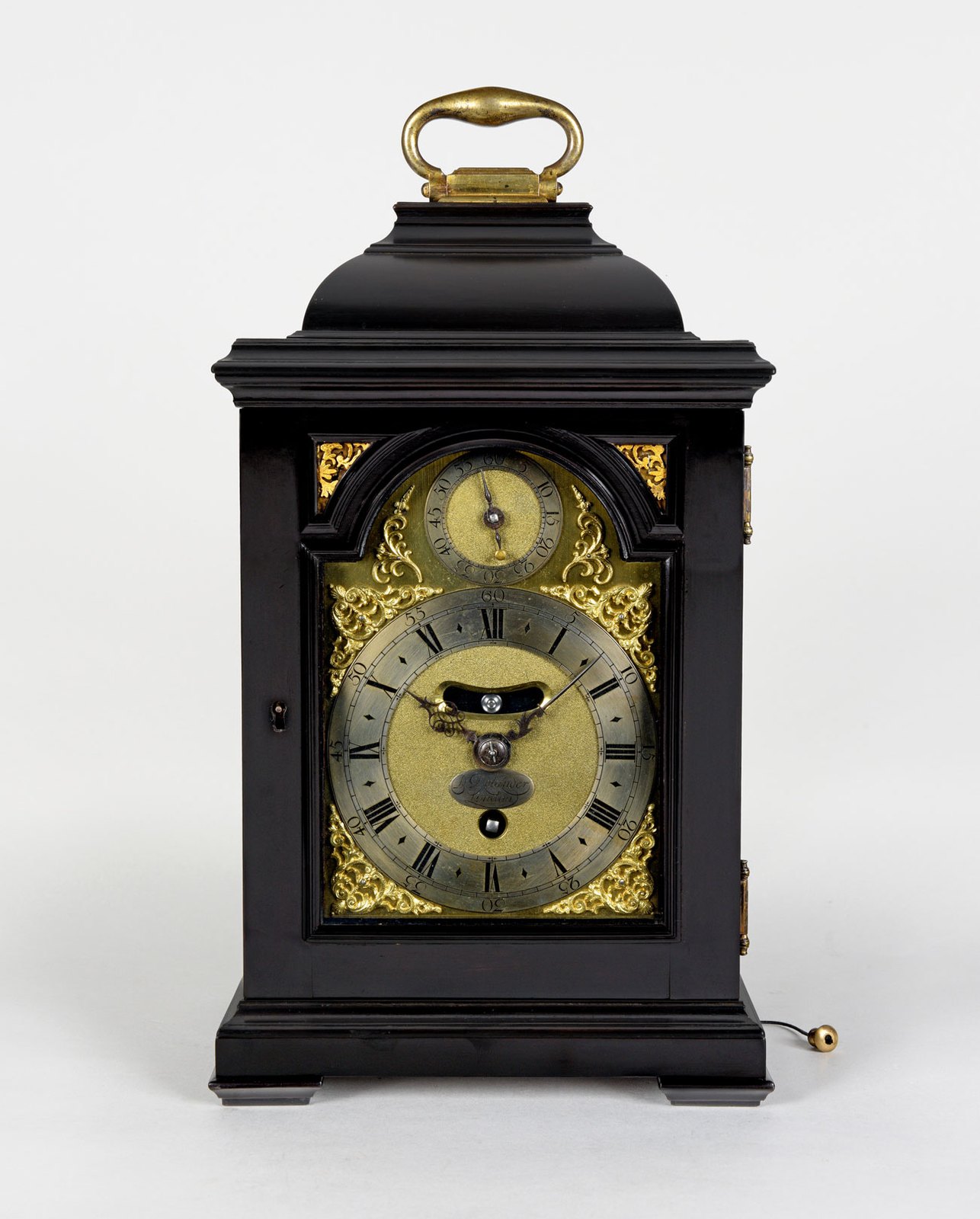
Clock by Daniel Delander, c. 1715
- Maker / attribution
- Daniel Delander (maker)
- Date
- c. 1715
- Historical period
- Early Modern Horology (1600 – 1750)
- Country of origin
- Unrecorded in source
- Object type
- Clock
- Materials / technique
- ebonised
- Dimensions
- Height 33 cm
- Stock no.
- Product 4325
- Credit line
- Dealer listing, Howard Walwyn (product 4325)
- Catalogue title (original)
- DANIEL DELANDER. A fine early 18th century ebonised timepiece by this famous London clockmaker. (English)
View the source record (dealer listing) ↗ (opens another website in a new tab)Suggest a correction
Record summary
Catalogued by Howard Walwyn Fine Antique Clocks (dealer), London (stock number Product 4325), this is a clock by Daniel Delander, dated c. 1715. The Atlas places it in the Early Modern Horology period (1600 – 1750) of its Clocks collection. Materials and techniques recorded by the source: ebonised. Recorded dimensions: Height 33 cm. The record is illustrated with 3 photographs.
Assembled from the source record's structured fields. Dates and attributions are given as the source states them; where a field is missing the Atlas leaves it blank rather than estimating.
Catalogue description
Dealer description — Howard Walwyn
A fine early 18th century ebonised timepiece by this famous London clockmaker. The case is veneered in ebonised pearwood and has an inverted bell top surmounted by a boldly cast brass carrying handle. It has a plain moulded cornice, glazed front and sides, and rests on a shallow plinth with block feet. The 6-inch break-arch dial has a finely matted centre, and there is a silvered chapter ring engraved with Roman hour numerals and diamond half-hour markers. It has a subsidiary dial for Rise/Fall in the arch, and it retains its original pierced steel hands. The matted centre features a dummy pendulum and the maker’s signature Daniel Delander, London on a silvered brass oval cartouche. The clock has a high-quality single-fusee movement with a spring-suspended verge escapement . There is a pull quarter-repeat mechanism on three bells. The backplate is simply signed Dan. Delander, London with a flowing script. Date : circa 1715 Height : 13 in (33 cm) excluding handle Height : 14 ½ in (37 cm) including handle Width : 8 in. (20.25 cm) Depth : 6 ½ in (16.5 cm) *Daniel Delander (c.1678–1733) was one of London’s most respected clockmakers, apprenticed to Charles Halstead and later associated with Thomas Tompion and George Graham. His work is characterised by technical refinement and understated elegance, with examples held in major collections including the British Museum. HW6210
Historical context
Early Modern Horology (1600 – 1750)
Huygens' pendulum and balance spring transform accuracy; English makers develop the anchor and deadbeat escapements.
Huygens's pendulum (1656–57) improved clock accuracy from about a quarter of an hour to under a minute a day. The anchor escapement (c. 1670) and the long seconds pendulum created the longcase clock; London makers such as Fromanteel, Knibb, Tompion and Quare led European clockmaking, and French makers created the Boulle pendule.
Read the period in the timelineMore clocks from this periodEarlier: Renaissance Horology
Atlas type guide
Domestic clocks
A clock combines four systems: a source of power (falling weight, coiled spring, or later electricity), a gear train that divides time, an escapement and oscillator that regulate it (foliot, pendulum or balance), and an indicating system of dial and hands or a bell. Its history runs from the large iron weight-driven clocks of the late thirteenth century to Renaissance spring-driven table clocks, the pendulum revolution of 1656, the factory clocks of the nineteenth century and electric and quartz clocks of the twentieth.
Domestic clocks also reflect regional furniture and decorative traditions — English longcase and bracket clocks, French pendules, Viennese regulators, Black Forest and American shelf clocks — and therefore record changing tastes as much as technical progress.
What to look for
- How the clock is powered: weights, spring barrel, fusee, electric coil.
- The oscillator: foliot, short pendulum, long seconds pendulum or balance.
- Whether it strikes: hour only (count wheel) or hours and quarters (rack striking).
- The maker or retailer's name on dial and movement, and any factory trademarks.
- Signs of alteration — replaced dials, converted escapements, 'married' cases.
Dating clues
- Before 1656 clocks used foliots or balances; after, most domestic clocks have pendulums.
- Anchor escapements spread after c. 1670; minute hands became common at the same time.
- Factory production in America and Germany transformed prices after c. 1840.
General guidance written by the Atlas editors about this kind of object. It is not a statement about this particular piece; for that, rely on the source record above and on physical examination.
Read next:Anchor (recoil) escapementFoliot
Related records
Clocks · probably c. 1720
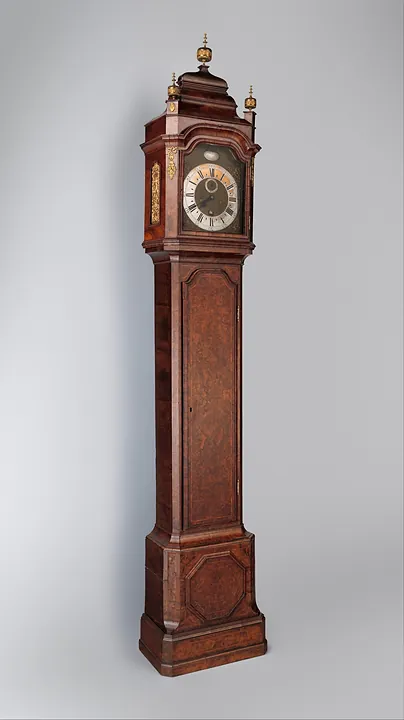
Longcase clock by Daniel Delander, England, probably c. 1720
The Metropolitan Museum of Art, New York
Pocket Watches · 1729–1730
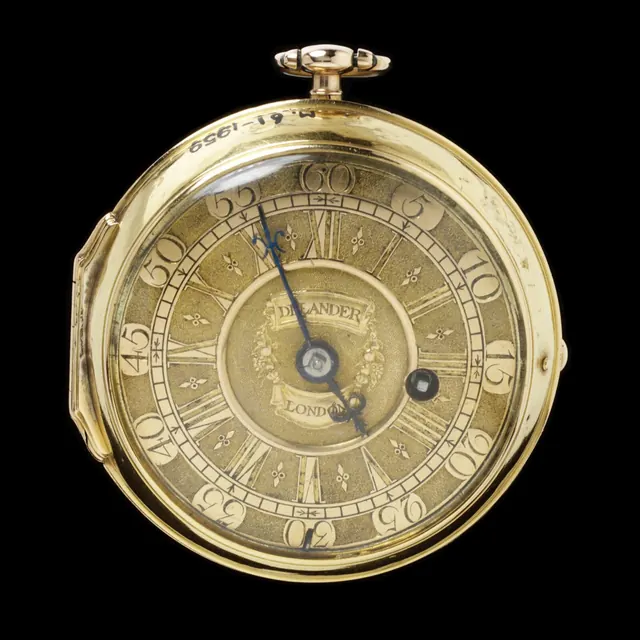
Watch by Daniel Delander, England, 1729–1730
Victoria and Albert Museum, London
Clocks · c.1740
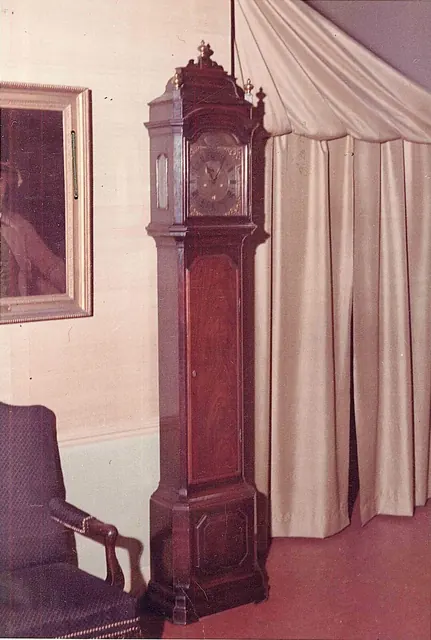
Longcase clock by Daniel Delander, England, c.1740
Victoria and Albert Museum, London
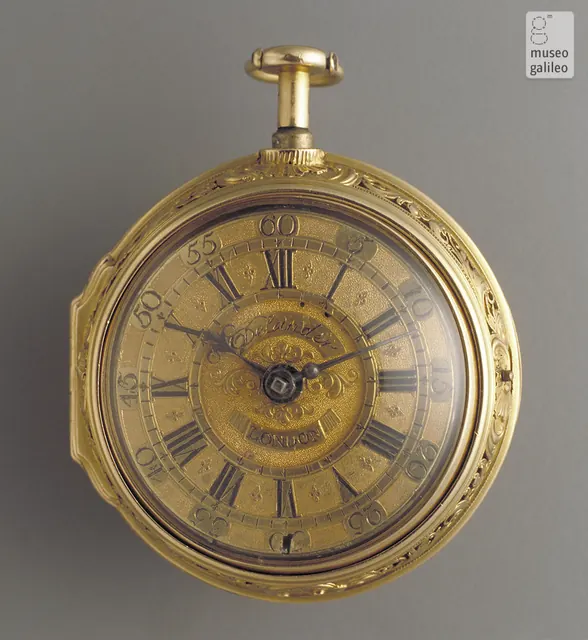
Pocket Watches · 1739
Double-case watch by Daniel Delander, England, 1739
Museo Galileo, Florence
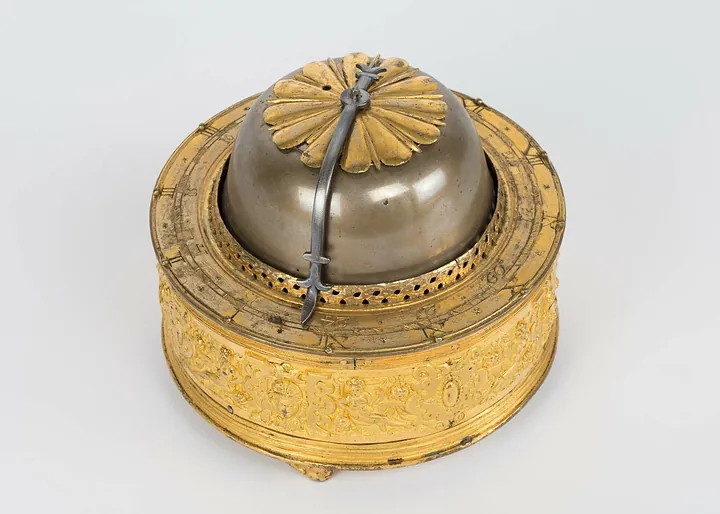
Clocks · Early 17th century
Table clock, probably Denmark, early 17th century
German Clock Museum
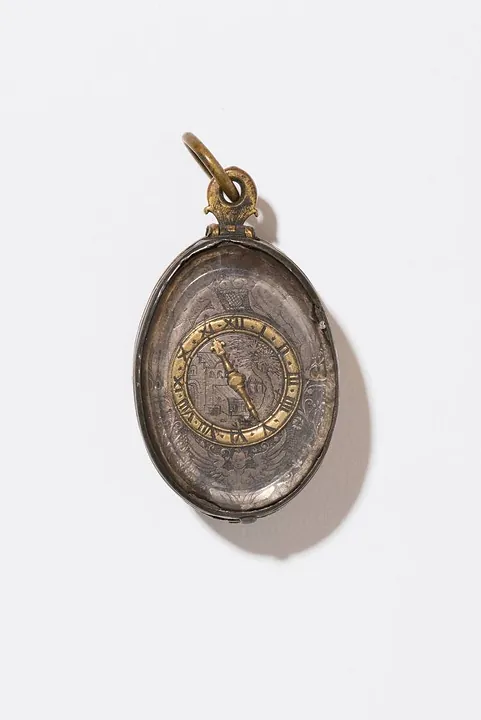
Clocks · 1590–1610
Clock, France, 1590–1610
MAK – Museum of Applied Arts
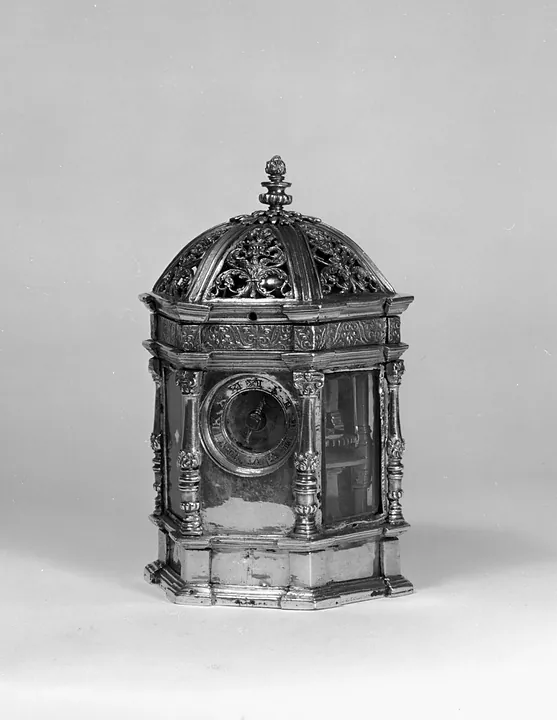
Clocks · c. 1600
Table Clock, sheet brass, engraved, pierced and gilt, Paris, ca.1600, signed 'B(?) Pichard, à Paris'
Victoria and Albert Museum, London
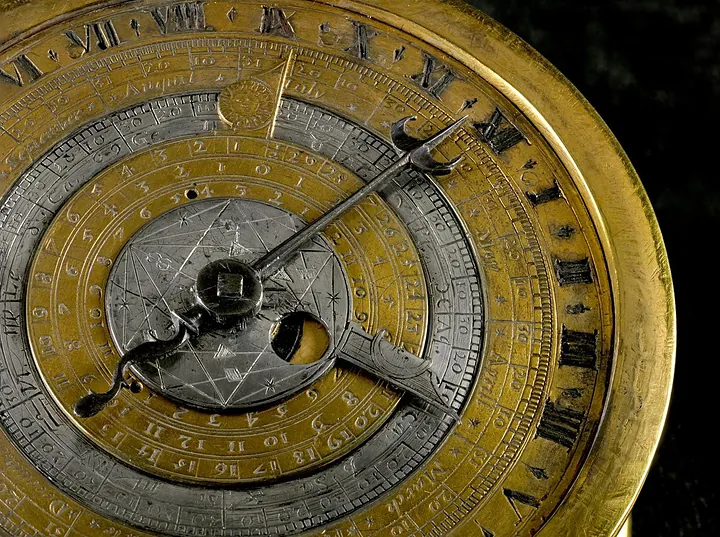
Clocks · 1598–1603
Circular table-clock with calendrical and lunar indications made by Nicholas Vallin in London between 1598 and 1603.
Science Museum Group, London