
Clocks · Clock
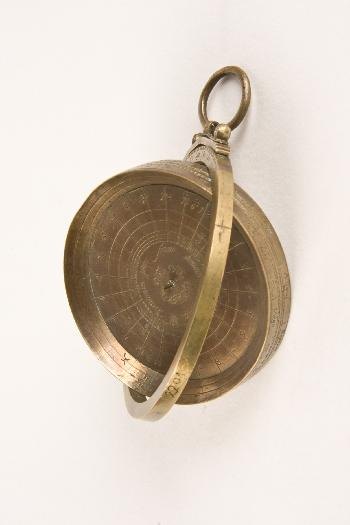
Clock, 1571
- Maker / attribution
- Unrecorded in source
- Date
- 1571
- Historical period
- Renaissance Horology (1400 – 1600)
- Country of origin
- Unrecorded in source
- Object type
- Clock
- Materials / technique
- Latón
- Dimensions
- Anillo meridiano: Grosor = 4 mm Diámetro exterior = 70 mm Diámetro interior = 62 mmCírculo ecuatorial: Diámetro exterior = 60,50 mm Grosor = 11 mmGnomon: Altura = 9 mm
- Holding institution
- Cerralbo Museum
- Accession / object no.
- pages_Main_idt_2202_inventary_02201_table_FMUS_museum_MCM
- Credit line
- Cerralbo Museum
- Catalogue title (original)
- Reloj (Spanish)
View the source record ↗ (opens another website in a new tab)Suggest a correction
Record summary
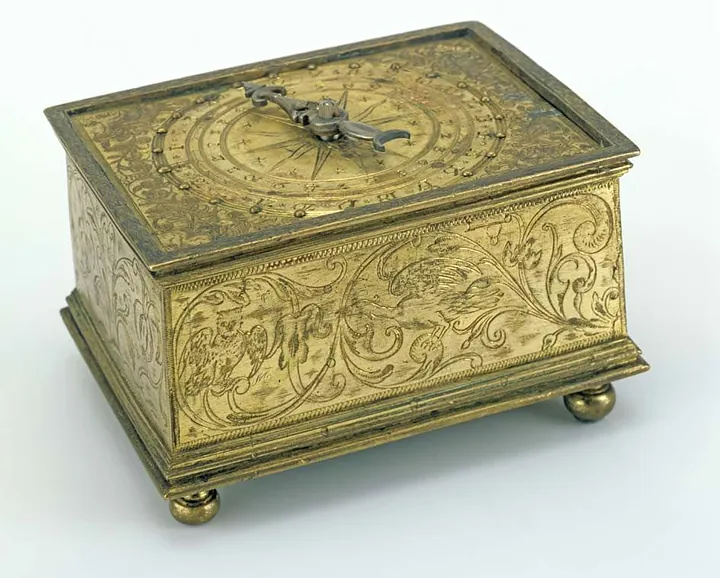
Held and catalogued by Cerralbo Museum (object number pages_Main_idt_2202_inventary_02201_table_FMUS_museum_MCM), this is a clock, dated 1571. The Atlas places it in the Renaissance Horology period (1400 – 1600) of its Clocks collection. Materials and techniques recorded by the source: Latón. Recorded dimensions: Anillo meridiano: Grosor = 4 mm Diámetro exterior = 70 mm Diámetro interior = 62 mmCírculo ecuatorial: Diámetro exterior = 60,50 mm Grosor = 11 mmGnomon: Altura = 9 mm. The record is illustrated with 1 photograph.
Assembled from the source record's structured fields. Dates and attributions are given as the source states them; where a field is missing the Atlas leaves it blank rather than estimating.
Catalogue description
Catalogue description from Cerralbo Museum
Reloj de sol ecuatorial con cuerpo circular que consta de un anillo meridiano, un círculo ecuatorial y un colgadero. El anillo tiene grabada la escala de latitudes de 0 a 90 y en su interior hay una placa en la que están marcados los signos del zodiaco correspondientes a la primavera y verano por una cara y por la otra los del otoño e invierno. En el canto de la placa hay grabadas dos escalas paralelas, una con los meses del año y otra con los signos del zodiaco. El exterior del anillo tiene adaptada una lámina deslizante con aro para suspender el reloj y poder orientarlo para que indique la hora.
Shown in the original language of the source catalogue. An editor-reviewed English translation has not yet been published; we do not publish machine translations as authoritative text.
Historical context
Renaissance Horology (1400 – 1600)
Spring power makes clocks portable; Nuremberg and Augsburg produce the first watches; the Prague Orloj is built.
Spring power made the domestic clock portable. Augsburg and Nuremberg produced gilt-brass table clocks, often with astronomical dials and alarms; weight-driven Gothic wall clocks and English lantern clocks served households. Clocks of this period have foliot or balance-wheel control and usually only an hour hand.
Read the period in the timelineMore clocks from this periodEarlier: Medieval Period
Atlas type guide
Domestic clocks
A clock combines four systems: a source of power (falling weight, coiled spring, or later electricity), a gear train that divides time, an escapement and oscillator that regulate it (foliot, pendulum or balance), and an indicating system of dial and hands or a bell. Its history runs from the large iron weight-driven clocks of the late thirteenth century to Renaissance spring-driven table clocks, the pendulum revolution of 1656, the factory clocks of the nineteenth century and electric and quartz clocks of the twentieth.
Domestic clocks also reflect regional furniture and decorative traditions — English longcase and bracket clocks, French pendules, Viennese regulators, Black Forest and American shelf clocks — and therefore record changing tastes as much as technical progress.
What to look for
- How the clock is powered: weights, spring barrel, fusee, electric coil.
- The oscillator: foliot, short pendulum, long seconds pendulum or balance.
- Whether it strikes: hour only (count wheel) or hours and quarters (rack striking).
- The maker or retailer's name on dial and movement, and any factory trademarks.
- Signs of alteration — replaced dials, converted escapements, 'married' cases.
Dating clues
- Before 1656 clocks used foliots or balances; after, most domestic clocks have pendulums.
- Anchor escapements spread after c. 1670; minute hands became common at the same time.
- Factory production in America and Germany transformed prices after c. 1840.
General guidance written by the Atlas editors about this kind of object. It is not a statement about this particular piece; for that, rely on the source record above and on physical examination.
Related records
Clocks · 16th century
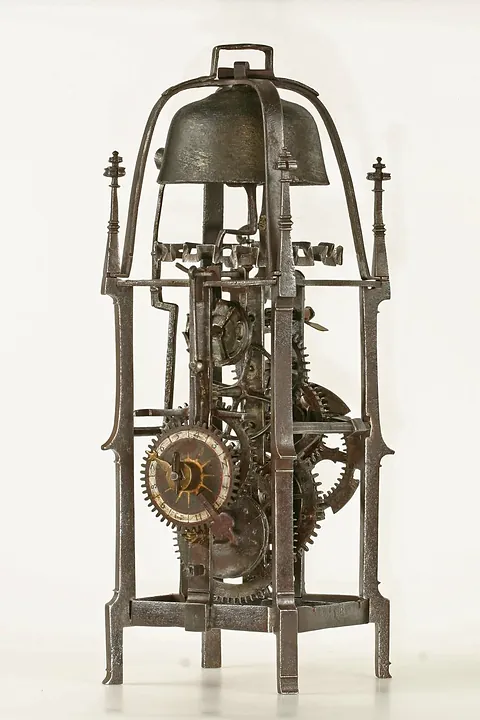
Iron alarm clock, Central Europe, 16th century
German Clock Museum
Clocks · Mid-15th century
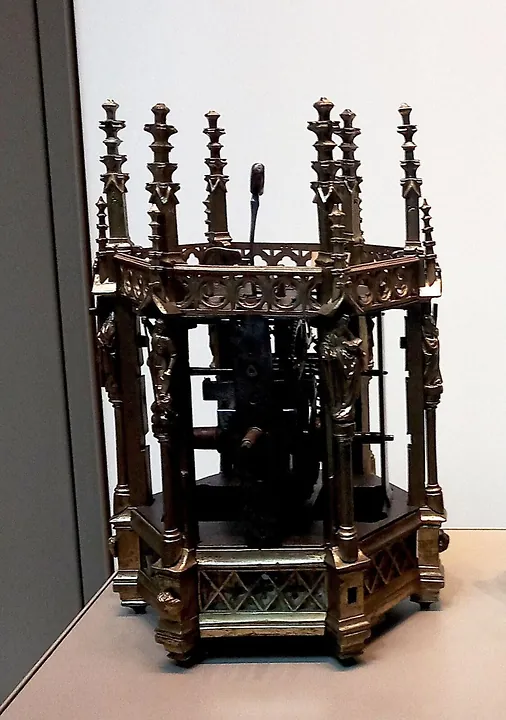
Clock with iron movement in gilt brass case. Burgundian; mid-15th-century (with later restorations).
Victoria and Albert Museum, London
Clocks · 1400–1499
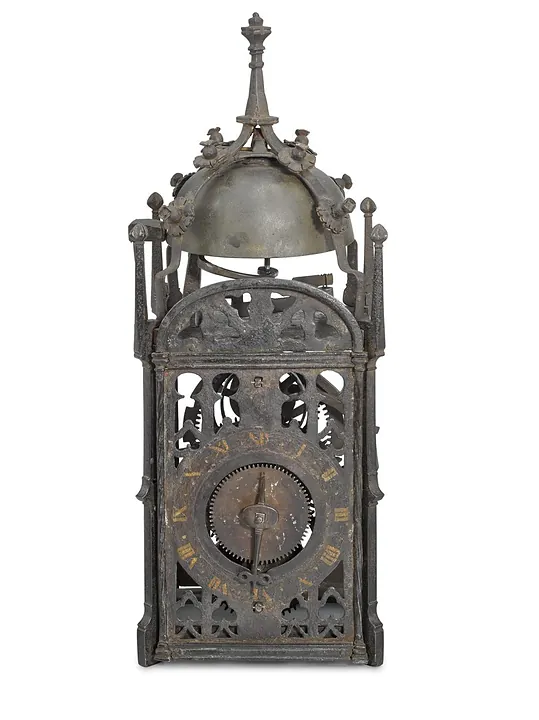
Lantern clock, Germany, 1400–1499
Science Museum Group, London
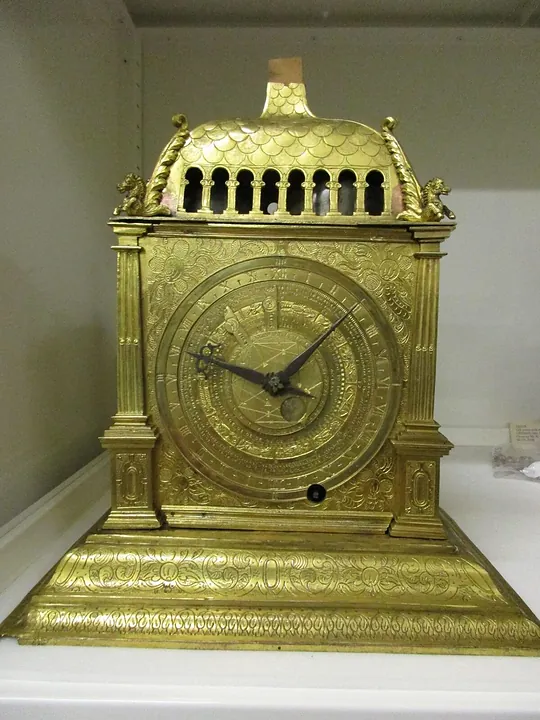
Clocks · 1500–1600
An astronomical clock in a gilt-bronze case, Venetian, sixteenth century.
Victoria and Albert Museum, London
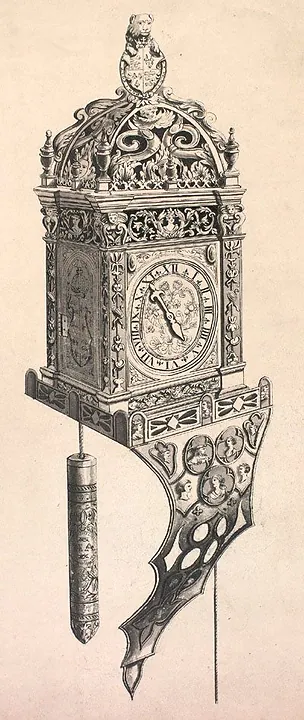
Clocks · 1500–1599
Bracket clock by Anne Boleyn, England, 1500–1599
Archaeology Data Service
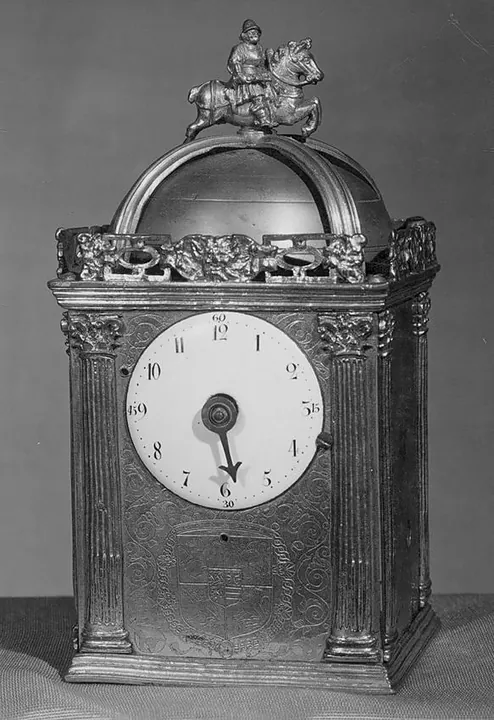
Clocks · 1500–1599
Clock by P. Plantart, Belgium, 1500–1599
Royal Institute for Cultural Heritage
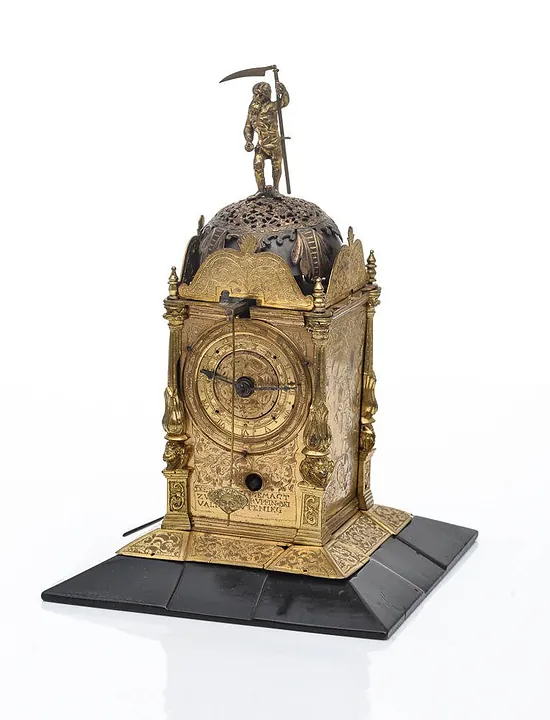
Clocks · 1500–1599
Table clock by Valentin Rutenieg, Germany, 1500–1599
City Museum Berlin
Clocks · 1500–1599
Table clock, Karlsruhe, 1500–1599
Badisches Landesmuseum Karlsruhe