
Pocket Watches · Pocket watch
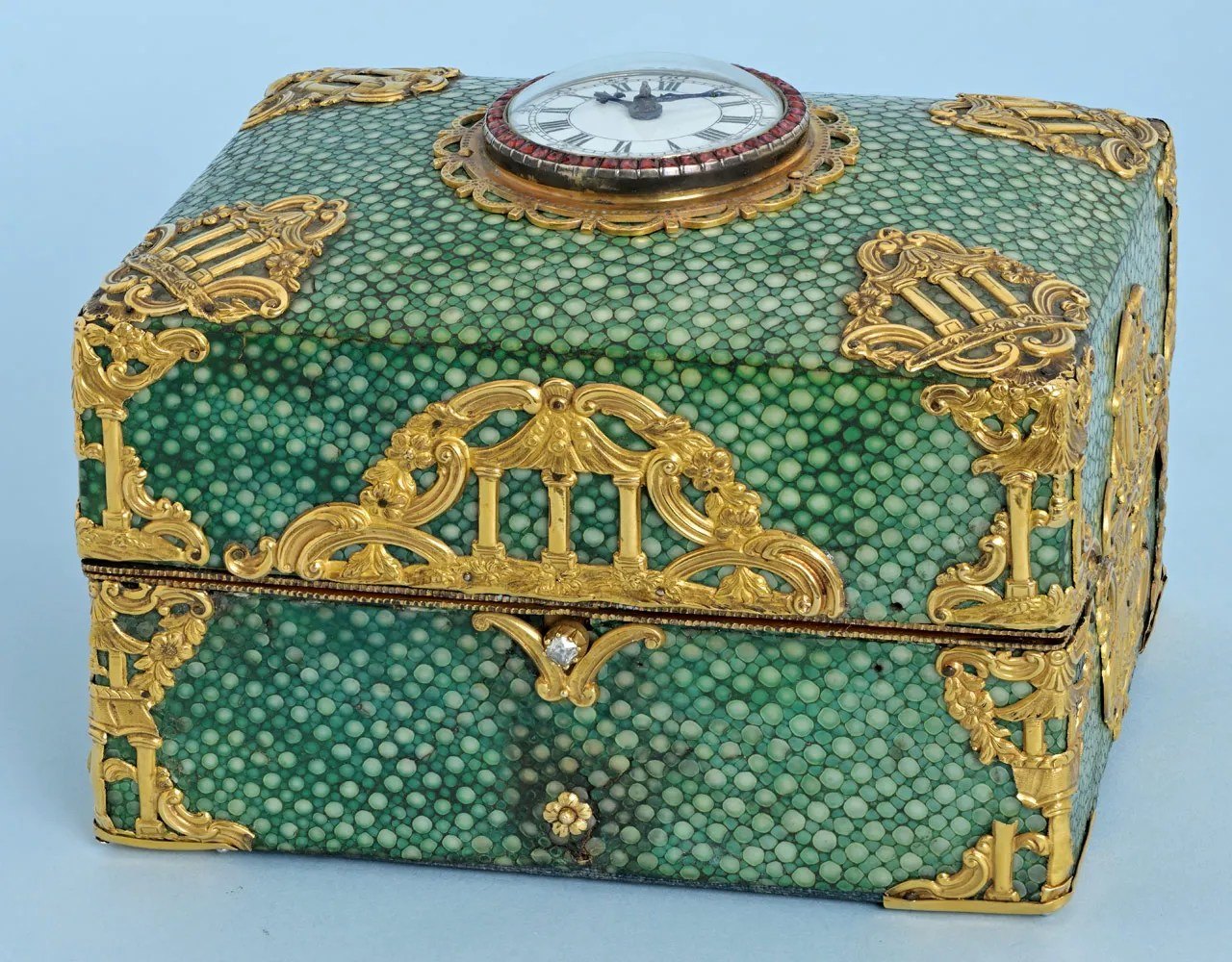
Chinese Market Shagreen Box with Watch, 1748
- Maker / attribution
- Unrecorded in source
- Date
- 1748 (hallmarked London)
- Historical period
- Early Modern Horology (1600 – 1750)
- Country of origin
- Unrecorded in source
- Object type
- Pocket watch
- Materials / technique
- shagreen
- Stock no.
- A11054
- Credit line
- Dealer listing, Pieces of Time (A11054)
- Catalogue title (original)
- Chinese Market Shagreen Box with Watch (English)
View the source record (dealer listing) ↗ (opens another website in a new tab)Suggest a correction
Record summary
Catalogued by Pieces of Time (dealer), London (stock number A11054), this is a pocket watch, dated 1748 (hallmarked London). The Atlas places it in the Early Modern Horology period (1600 – 1750) of its Pocket Watches collection. Materials and techniques recorded by the source: shagreen. The record is illustrated with 6 photographs.
Assembled from the source record's structured fields. Dates and attributions are given as the source states them; where a field is missing the Atlas leaves it blank rather than estimating.
Catalogue description
Dealer description — Pieces of Time
A fine mid 18 th Century gold mounted shagreen casket surmounted by a watch made for the Chinese market. Full plate fire gilt movement with square baluster pillars. Pierced and engraved masked cock, garnet endstone in a blue steel setting, pierced and engraved foot and plate for the silver regulator disc. Fusee and chain with worm and wheel barrel setup between the plates. Plain three arm steel balance, blue steel spiral hairspring. White enamel dial with Roman and Arabic numerals, fine blue steel beetle and poker hands. The movement contained in a 22 carat gold dome with London hallmark, aperture for winding from inside the box. Hinged silver bezel set with a row of square rubies. Rectangular box with domed top to the lid covered in polished green shagreen on all sides apart from the base. Gilt metal frames to the base and lid with two stopped five joint hinges. Decorating the corners of the box are gold pierced mounts chased and engraved in Chinese style architecture. The interior of the box lined with silk depicting Chinese imperial dragons.
Historical context
Early Modern Horology (1600 – 1750)
Huygens' pendulum and balance spring transform accuracy; English makers develop the anchor and deadbeat escapements.
The balance spring (c. 1675) improved watches dramatically and introduced the minute hand. English pair-cased verge watches with pierced balance cocks and French oignons were typical; enamel painting at Blois and Geneva, and the repeating watch (1680s), made watches objects of great refinement.
Read the period in the timelineMore pocket watches from this periodEarlier: Renaissance Horology
Atlas type guide
Watches for the Chinese and Ottoman markets
From the late eighteenth century English and Swiss makers produced watches specifically for export to China and the Ottoman Empire. For China, Fleurier houses such as Bovet, Juvet and Vrard made matching pairs of watches with richly engraved and decorated movements, often with the duplex escapement whose centre seconds hand jumps in full seconds. For Ottoman buyers, London makers such as George Prior and Markwick Markham supplied verge watches with Turkish numerals in triple or quadruple cases of tortoiseshell and silver.
These watches reflect global trade networks and the tastes of distant markets, and are important evidence for cross-cultural exchange in horology.
What to look for
- Engraved, fully decorated movements visible under a glass back.
- Duplex escapement with a jumping centre seconds hand.
- Chinese characters on the movement (e.g. the maker's name in transliteration).
- Turkish (Ottoman) numerals on the dial and multiple protective outer cases.
Dating clues
- Chinese-market Fleurier watches: c. 1820–1900.
- English Ottoman-market watches: c. 1770–1850.
General guidance written by the Atlas editors about this kind of object. It is not a statement about this particular piece; for that, rely on the source record above and on physical examination.
Read next:Verge escapement
Related records
Pocket Watches · 1600–1699
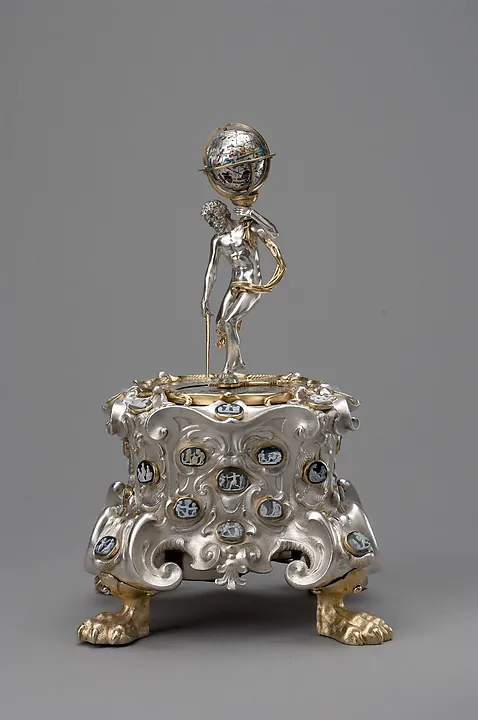
Pocket watch by Georg Ernst, Germany, 1600–1699
Fine Arts Museum Vienna
Pocket Watches · c. 1600
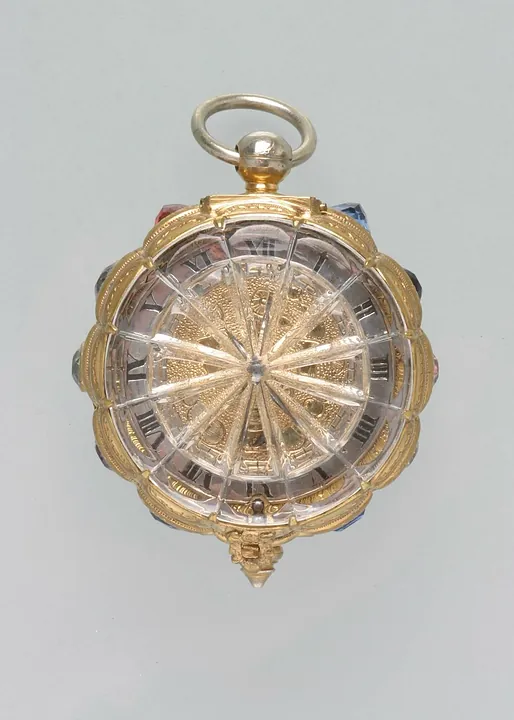
Pocket watch by Balthasar de Paep, Belgium, c. 1600
German Clock Museum
Pocket Watches · c. 1600
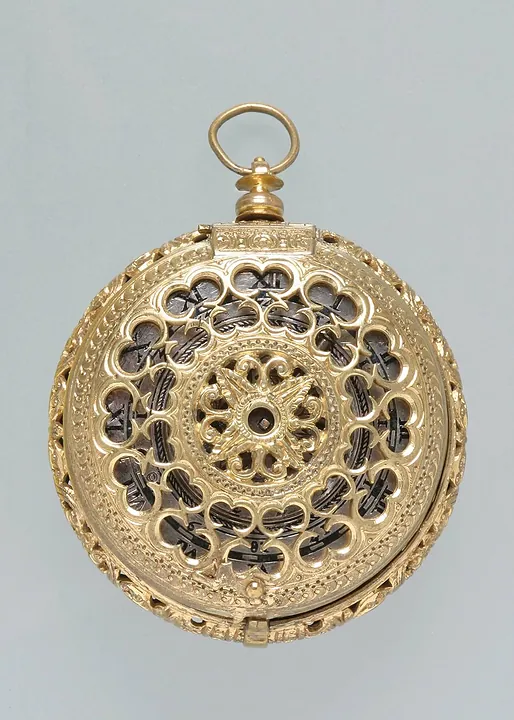
Pocket watch by Hans Reinboldt, France, c. 1600
German Clock Museum
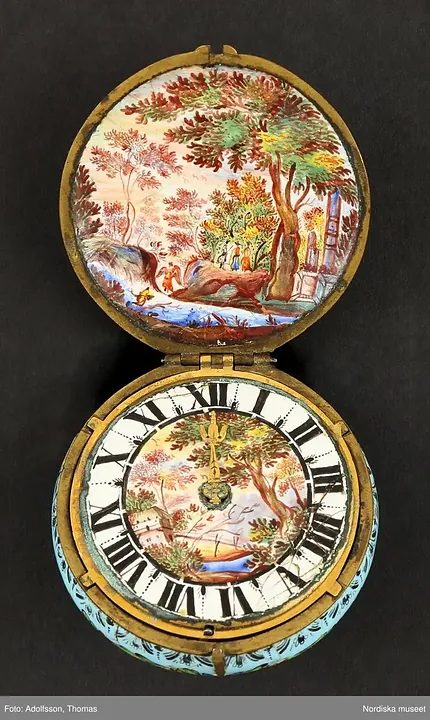
Pocket Watches · 1600–1699
Pocket watch by Johan Etmiller, Germany, 1600–1699
Nordic Museum Foundation
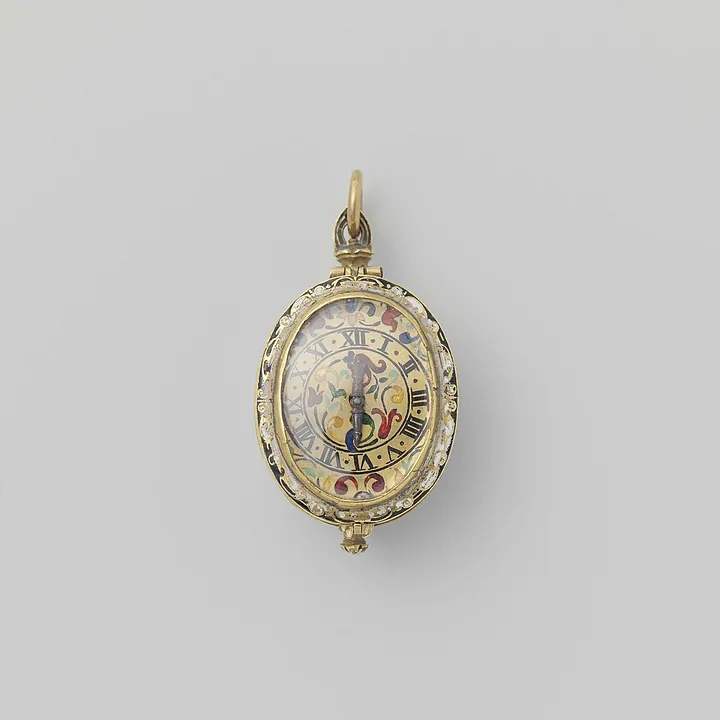
Pocket Watches · 1600
Pocket watch, France, 1600
Rijksmuseum
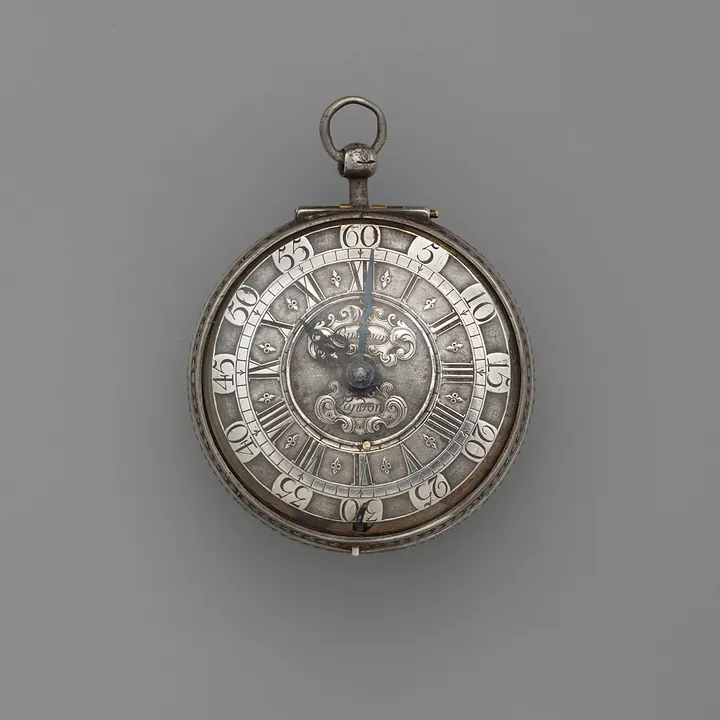
Pocket Watches · 17th century
Watch by John Bushman, England, 17th century
The Metropolitan Museum of Art, New York
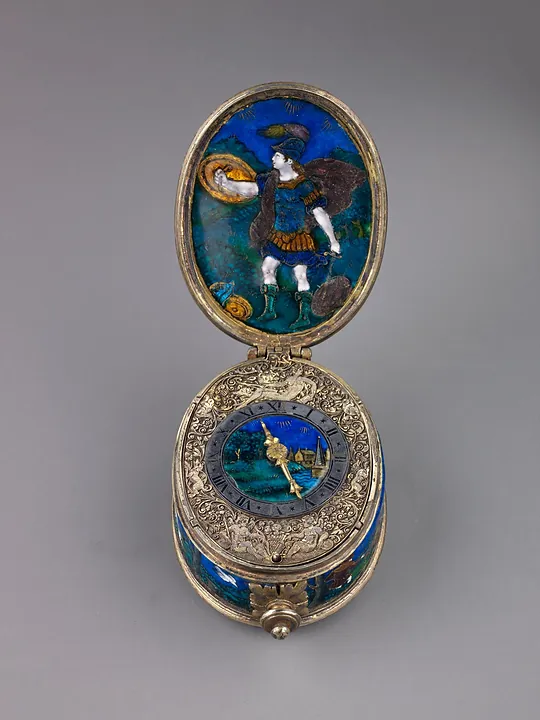
Pocket Watches · first quarter of 17th century
Watch by Suzanne de Court, France, first quarter of 17th century
The Metropolitan Museum of Art, New York
Pocket Watches · early 17th century
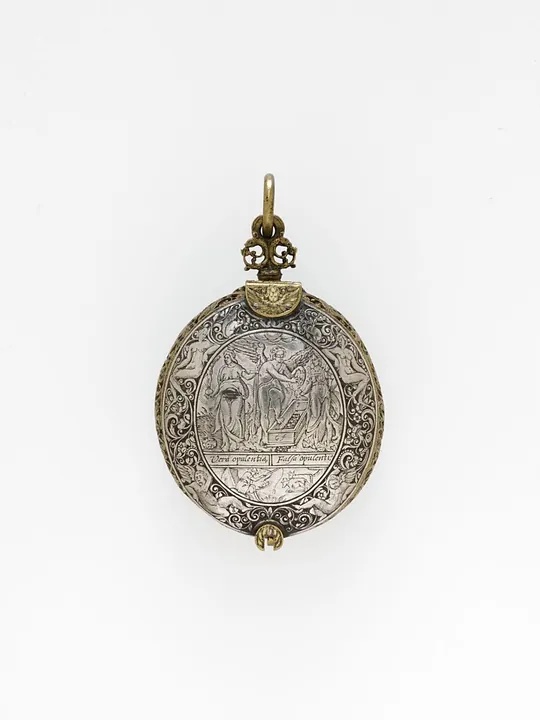
Watch of engraved and pierced silver and gilt brass, signed 'Noel Hubert A Rouen', France, early 17th century
Victoria and Albert Museum, London