
Wristwatches · Wristwatch
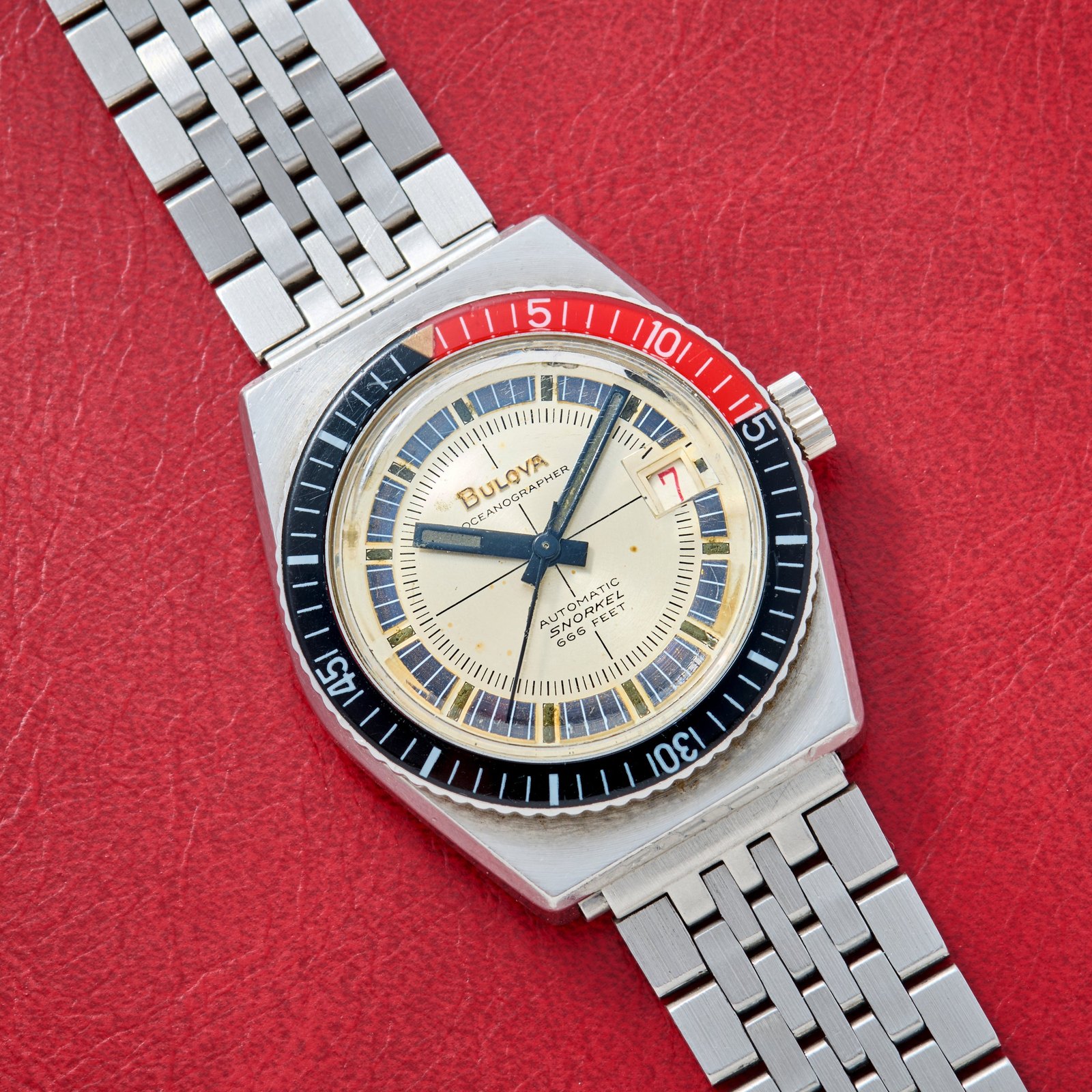
Bulova Oceanographer Snorkel 'Devil Diver', c. 1970s
- Maker / attribution
- Bulova (maker)
- Date
- c. 1970s
- Historical period
- Quartz Revolution (1969 – 1990)
- Country of origin
- United States
- Object type
- Wristwatch
- Stock no.
- 40992862
- Credit line
- Dealer listing, Analog/Shift (40992862)
- Catalogue title (original)
- Bulova Oceanographer Snorkel 'Devil Diver' (English)
View the source record (dealer listing) ↗ (opens another website in a new tab)Suggest a correction
Record summary
Catalogued by Analog/Shift (dealer), New York (stock number 40992862), this is a wristwatch by Bulova, made in United States, dated c. 1970s. The Atlas places it in the Quartz Revolution period (1969 – 1990) of its Wristwatches collection. The record is illustrated with 6 photographs.
Assembled from the source record's structured fields. Dates and attributions are given as the source states them; where a field is missing the Atlas leaves it blank rather than estimating.
Catalogue description
Dealer description — Analog/Shift
When we think of watches from the 1970's one thing comes to mind: Funky case shapes! Brands from all over the world experimented with obtuse, asymmetric, and innovative case designs around this time for both sport and dress watches alike. Bulova was one such brand. Thriving in the 1960s-1970s, the American company had a seemingly endless catalog of funky sports watches, particularly in the dive and chronograph categories. Divers featuring a "666 Feet" depth reading on the dial have colloquially become known as 'Devil Divers' and have developed a cult-following. This particular piece, a Oceanographer Snorkel - known as a Devil Diver, dates to circa 1970s and features a stainless steel cushion case with an acrylic crystal, a signed crown, a screw-down caseback, a pepsi dive bezel, a silver crosshair Tritium dial with applied block' indices, and an automatic movement within. Paired to a multi-link stainless steel bracelet, it remains in very good condition throughout - clearly spared of the normal abuse that watches like these were subjected to in the ear it was birthed. With all of these fine details, features and designs, it is easy to see why these 'Devil Divers' are quickly developing a cult following. Whether you're a seasoned collector or just getting started, it's hard to go wrong with a stylish, automatic-winding dive watch such as this - and from a good strong brand like Bulova.
Historical context
Quartz Revolution (1969 – 1990)
Seiko's Astron begins mass quartz timekeeping; traditional industries contract sharply.
Quartz and digital watches transformed the market after 1969. Swiss employment collapsed, Japanese and Hong Kong production soared, and the Swatch (1983) helped the Swiss industry recover; mechanical watches survived as luxury goods.
Read the period in the timelineMore wristwatches from this periodEarlier: Modern Mechanical Horology
Atlas type guide
Dive and water-resistant watches
Keeping water and dust out of a wristwatch was a long-standing challenge. Rolex's screw-down Oyster case (1926) and Omega's Marine (1932) were landmarks; in the early 1950s Blancpain's Fifty Fathoms and Rolex's Submariner defined the professional dive watch with rotating bezels for timing dives, luminous dials and high water resistance. The ISO 6425 standard (1982) later codified what a 'diver's watch' must do.
Dive watches became icons of post-war design and exploration, and their evolution — helium escape valves, ceramic bezels, saturation-diving depth ratings — records the history of underwater work.
What to look for
- Unidirectional or bidirectional rotating bezel with minute markings.
- Screw-down crown and case back; depth rating printed on the dial.
- Luminous hands and markers (radium before c. 1960, tritium c. 1960–1998, then Super-LumiNova).
- Reference numbers on the case between the lugs or inside the back.
Dating clues
- Screw-down Oyster cases: from 1926.
- Professional dive watches: from 1953.
- Tritium 'T' marks on dials: c. 1960–1998.
General guidance written by the Atlas editors about this kind of object. It is not a statement about this particular piece; for that, rely on the source record above and on physical examination.
Related records
Wristwatches · c. 1969
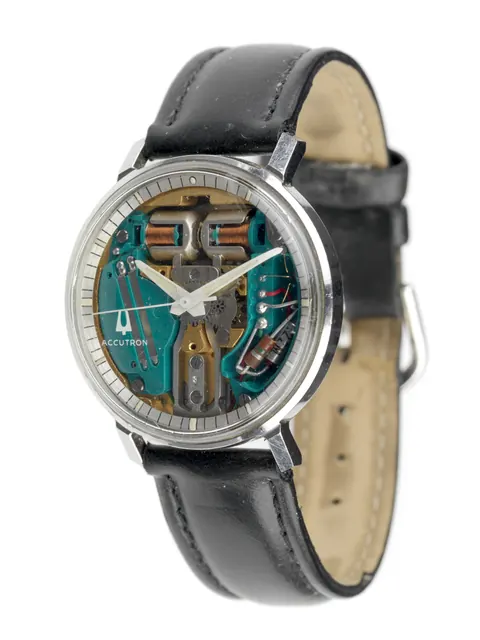
Bulova 'Accutron' tuning-fork wristwatch by Bulova
Royal Museums Greenwich
Wristwatches · c. 1965
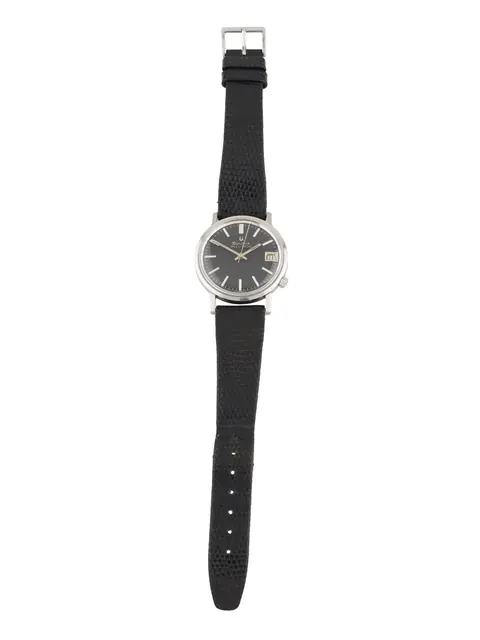
Wristwatch Accutron by Knud Geelmuyden Bull
Royal Museums Greenwich
Clocks · c. 1960s
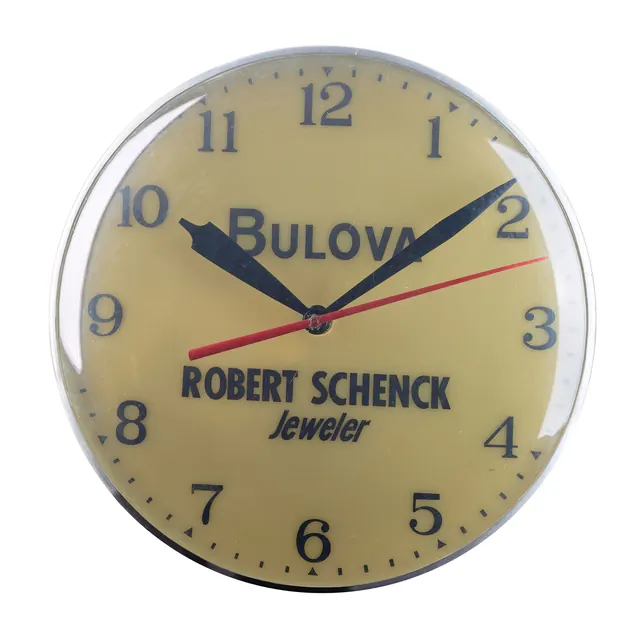
Bulova wall clock, Lighted Advertising Wall Clock for Robert Schenck Jeweler, circa 1960s
Antiquorum auction archive, Geneva
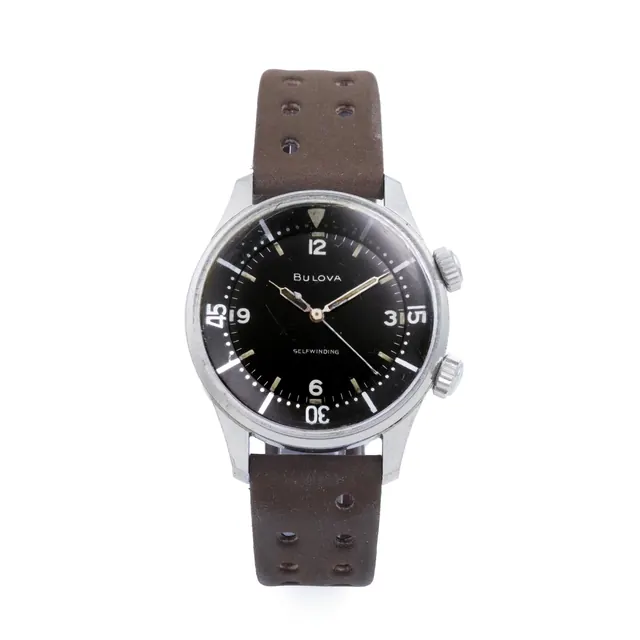
Wristwatches · 1963
Bulova wristwatch, ref. 314, Diver Super Compressor, 1963
Antiquorum auction archive, Geneva
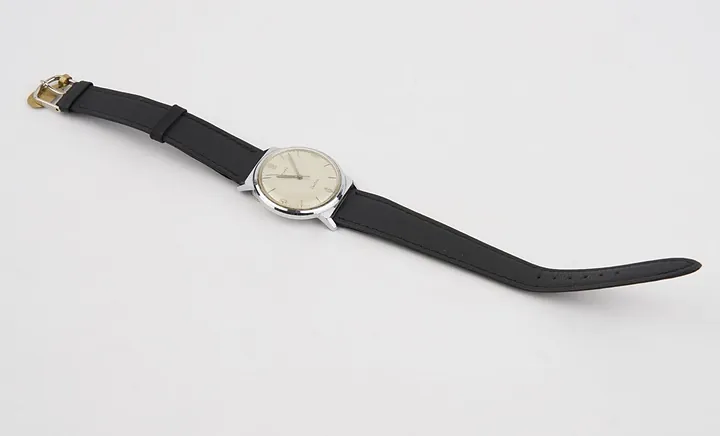
Wristwatches · 1949–1992
Timex `Electric' wristwatch, with electrically operated balance wheel mechanism, United States, 1949–1992
Science Museum Group, London
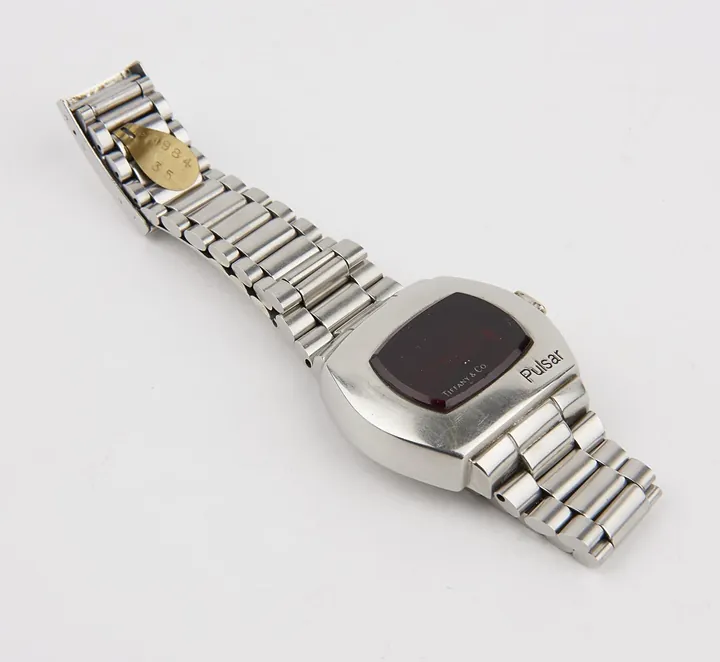
Wristwatches · 1972
Wristwatch by Hamilton Watch Company and Electro-Data Inc, United States, 1972
Science Museum Group, London
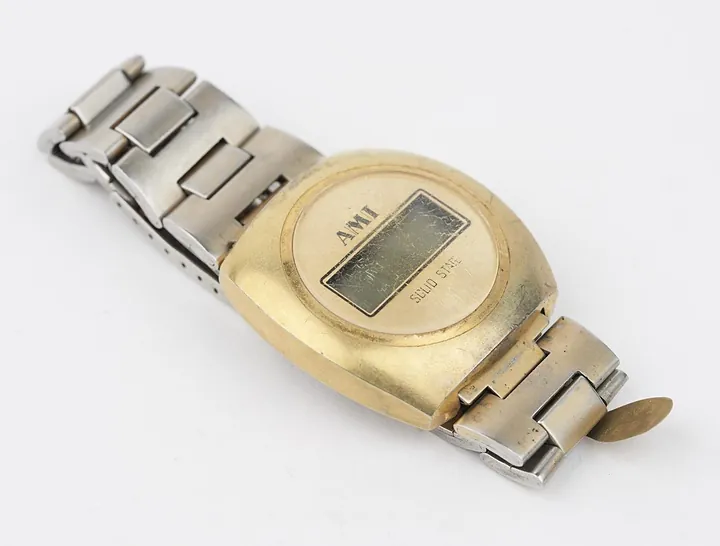
Wristwatches · 1973–1974
Quartz watch with liquid crystal digital display, made by American Microsystems Inc. (AMI) . 1973/74
Science Museum Group, London
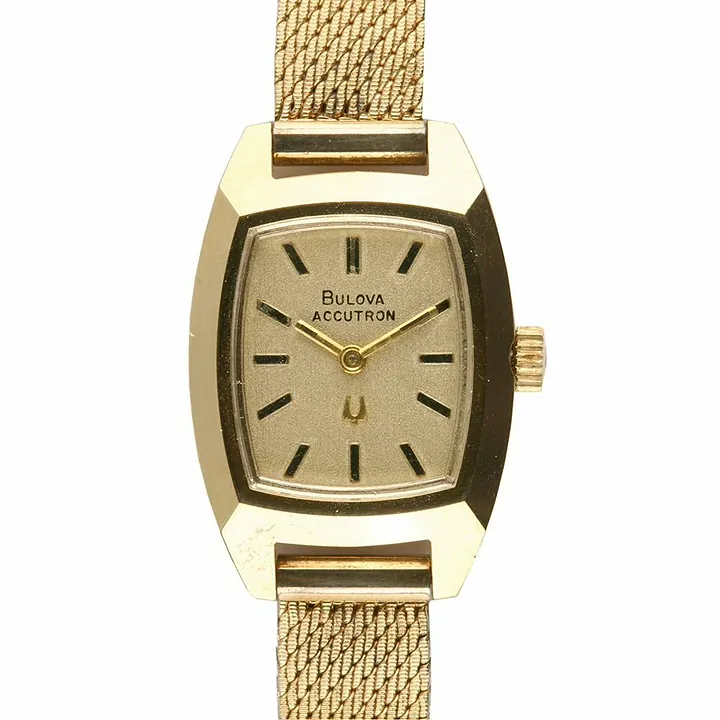
Wristwatches · c. 1973
Wristwatch by Josef Bulova, United States, c. 1973
German Clock Museum