
Wristwatches · Wristwatch
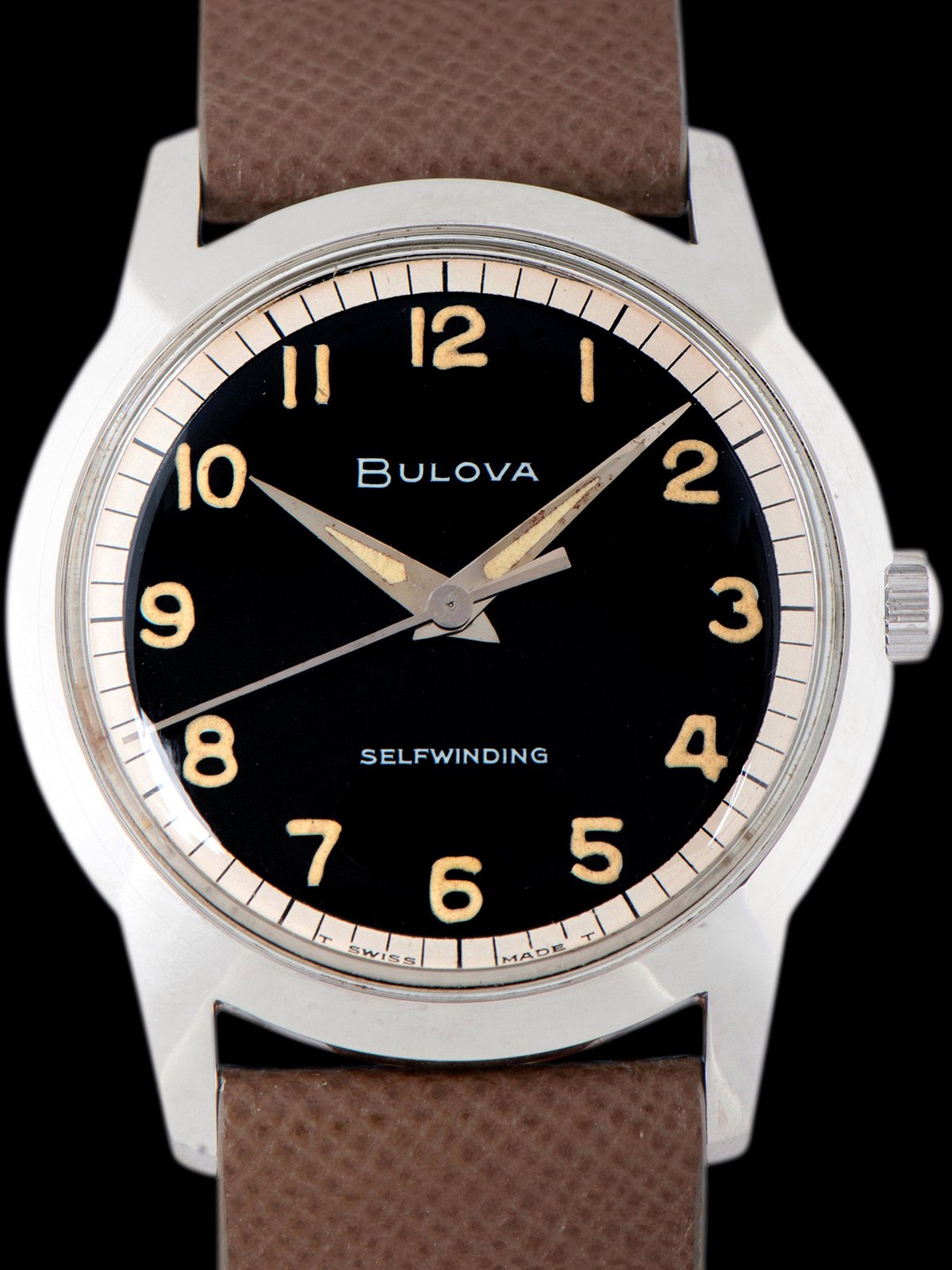
Bulova Automatic Dress Watch (Ref. 2682) "Mini 565", 1967
- Maker / attribution
- Bulova (maker)
- Date
- 1967
- Historical period
- Modern Mechanical Horology (1945 – 1969)
- Country of origin
- United States
- Object type
- Wristwatch
- Stock no.
- BLV2682
- Credit line
- Dealer listing, Craft & Tailored (BLV2682)
- Catalogue title (original)
- 1967 Bulova Automatic Dress Watch (Ref. 2682) "Mini 565" (English)
View the source record (dealer listing) ↗ (opens another website in a new tab)Suggest a correction
Record summary
Catalogued by Craft & Tailored (dealer), Los Angeles (stock number BLV2682), this is a wristwatch by Bulova, made in United States, dated 1967. The Atlas places it in the Modern Mechanical Horology period (1945 – 1969) of its Wristwatches collection. The record is illustrated with 6 photographs.
Assembled from the source record's structured fields. Dates and attributions are given as the source states them; where a field is missing the Atlas leaves it blank rather than estimating.
Catalogue description
Dealer description — Craft & Tailored
Founded in New York by Czech immigrant, Joseph Bulova, in 1875, Bulova began as a jewelry and clock repair store before moving into the manufacturing of watch components and jeweled movements in the early 1900s. Over time, the brand would come to be known for both its unique and funky watches made between the '60s and '80s, ranging from colorful diving chronographs like the "Devil Diver" to eccentric electric watches like the famous Accutron. This piece, however, is a much more classic, military-esque offering from 1967, reminiscent of the Patek Philippe Calatrava 565. Featuring a fantastic two-tone dial with an off-white chapter ring and creamy Arabic numerals at each hour, this is a really beautiful watch that would fit into just about any situation. SPECS Stock # BLV2682 Brand Bulova Style Automatic Dress Watch Model 2682 Serial M7 Size Men's Material Stainless Steel Dial Glossy Black Millimeters 33 Strap 2pc Handmade Leather Strap CASE & BRACELET The Calatrava style case is in excellent vintage condition, showing very little signs of use, and appears to remain minimally polished in the past with the factory dimensions still fully present. The smooth integrated stainless steel bezel is clean, showing almost no signs of use. The unsigned crown is believed to be original to the watch. The case back is clean with factory engravings still legible and only minor signs of wear present. The watch will come supplied on a two-piece handmade leather strap. DIAL & HANDS The original rich black military-style dial with white chapter ring is in truly exceptional condition, showing very little age and no damage whatsoever. The Arabic numerals are nearly flawless and have aged to a perfectly creamy patina. The tritium dauphine-style hands have aged to match the dial perfectly, and show almost no signs of oxidation. ACCESSORIES None. The previous service history of the watch is unknown but the watch is operating perfectly and keeping time. A movement service can be provided upon request.
Historical context
Modern Mechanical Horology (1945 – 1969)
Tool watches for divers, pilots and astronauts; electric watches anticipate the electronic age.
The classic era of the mechanical wristwatch: dive watches, chronographs for motor racing and space flight, GMT watches for jet travel, slim dress watches, automatic calendars, and the rise of Japanese manufacturers alongside Swiss, American, German and Soviet industries.
Read the period in the timelineMore wristwatches from this periodEarlier: Golden Age of Mechanical Watchmaking
Atlas type guide
Automatic (self-winding) watches
Self-winding watches use the wearer's motion to wind the mainspring. Abraham-Louis Perrelet and Breguet made 'perpétuelle' pocket watches with oscillating weights in the late eighteenth century, but the principle only became practical in the wristwatch. John Harwood patented a bumper automatic in 1923; Rolex's Perpetual rotor (1931) winding in one direction, and later bidirectional rotors (Eterna, Felsa Bidynator), established the modern form. Micro-rotors (Universal Genève, Buren) and peripheral rotors made automatic watches thinner.
What to look for
- A semicircular rotor turning 360° over the movement, or a 'bumper' weight that rebounds between springs.
- 'Automatic', 'Perpetual' or 'Self-winding' on the dial.
- A sealed screw-back case, since automatic watches are wound less often by the crown.
Dating clues
- Bumper automatics: 1923–c. 1955.
- Full rotors: from 1931 (Rolex); widespread after c. 1950.
- Micro-rotors: from 1954–1958.
General guidance written by the Atlas editors about this kind of object. It is not a statement about this particular piece; for that, rely on the source record above and on physical examination.
Related records
Wristwatches · c. 1969
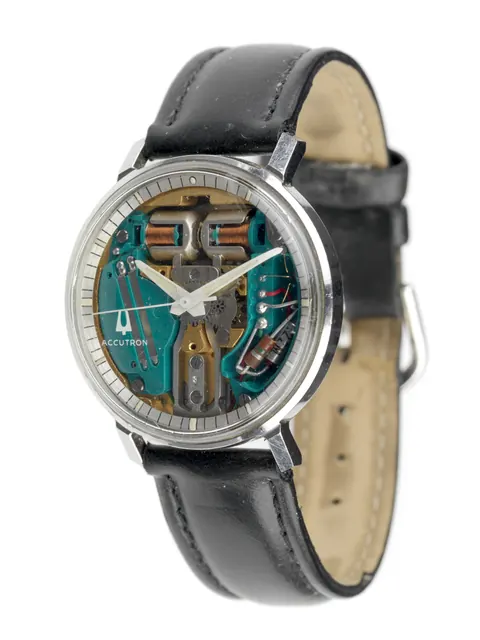
Bulova 'Accutron' tuning-fork wristwatch by Bulova
Royal Museums Greenwich
Wristwatches · c. 1965
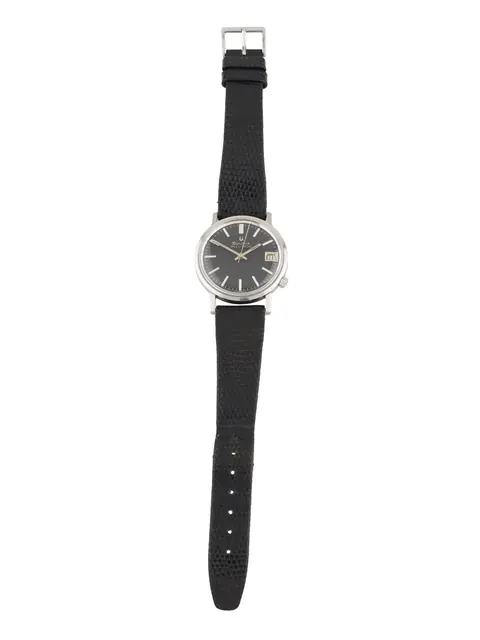
Wristwatch Accutron by Knud Geelmuyden Bull
Royal Museums Greenwich
Clocks · c. 1960s
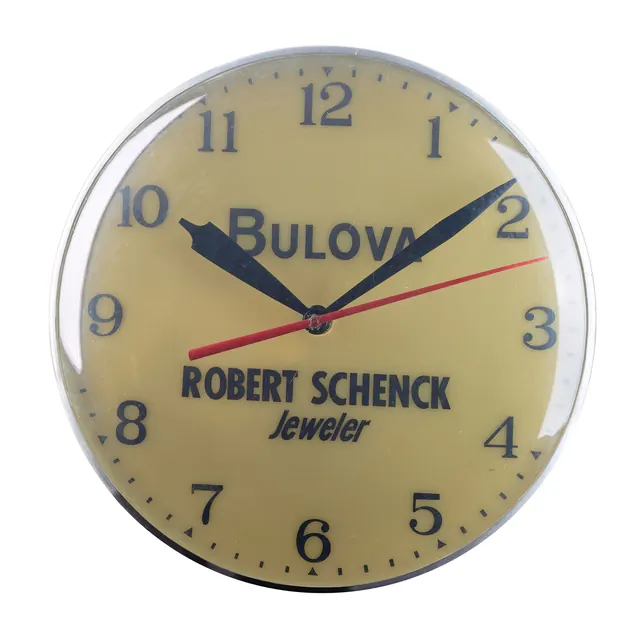
Bulova wall clock, Lighted Advertising Wall Clock for Robert Schenck Jeweler, circa 1960s
Antiquorum auction archive, Geneva
Wristwatches · 1963
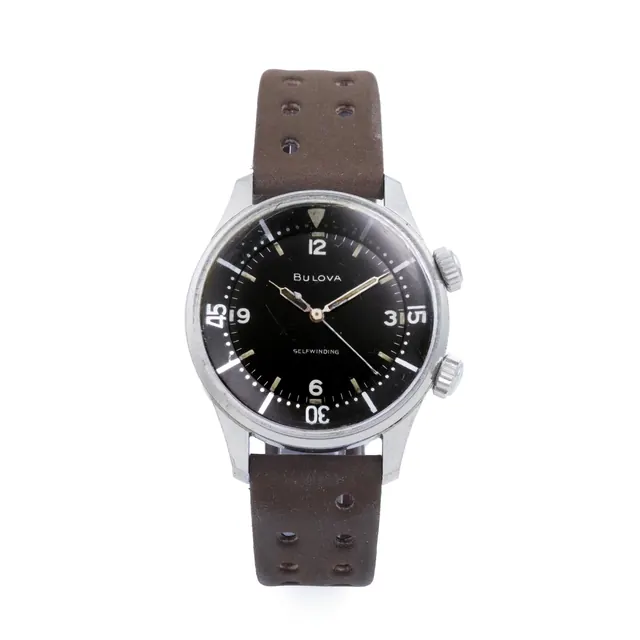
Bulova wristwatch, ref. 314, Diver Super Compressor, 1963
Antiquorum auction archive, Geneva
Wristwatches · c. 1957
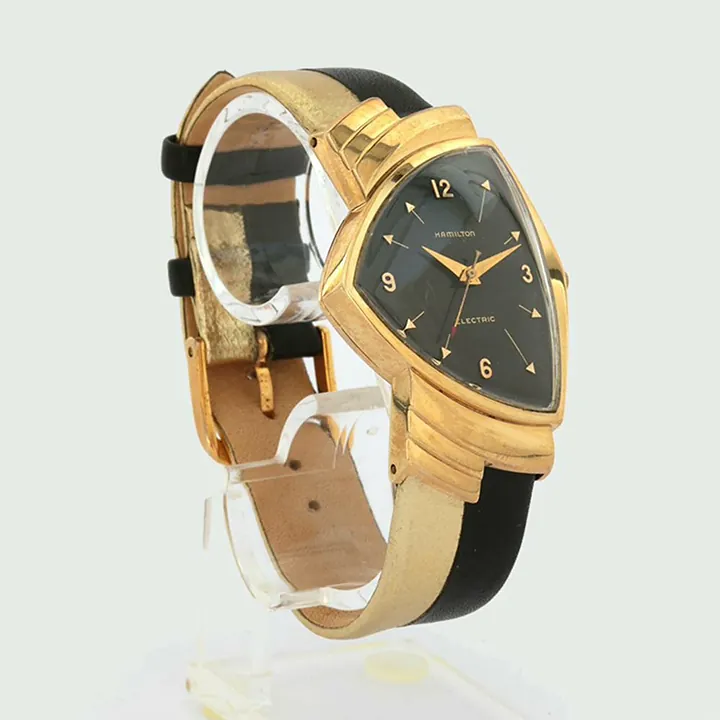
Wristwatch by Richard H. Arbib, United States, c. 1957
German Clock Museum
Wristwatches · 1959
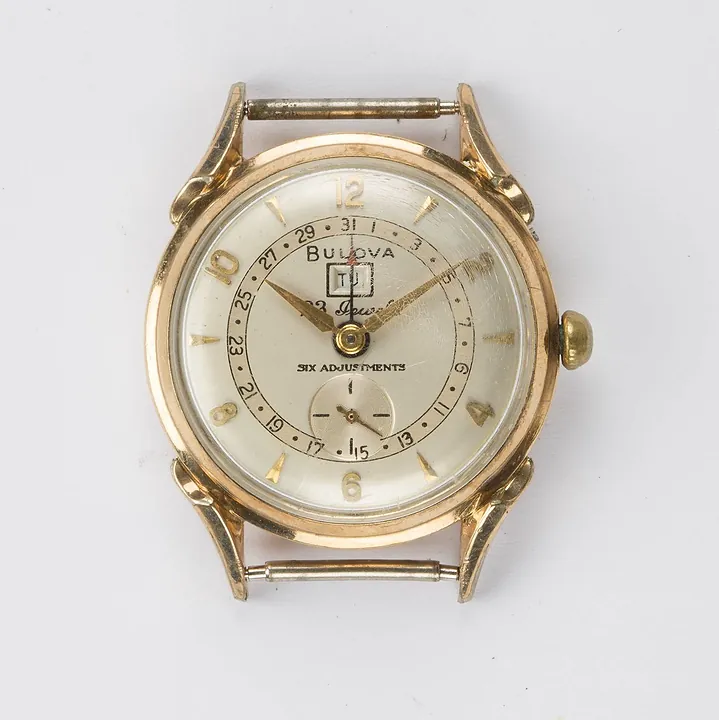
Wristwatch by Josef Bulova, United States, 1959
German Clock Museum
Wristwatches · 1960–1963
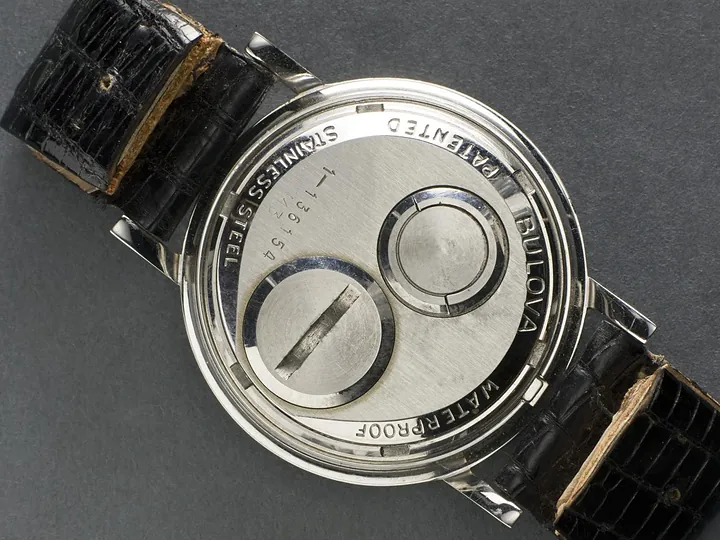
Bulova Accutron tuning-fork wristwatch on a demonstration stand, designed by Max Hetzel, United States, 1960–1963
Science Museum Group, London
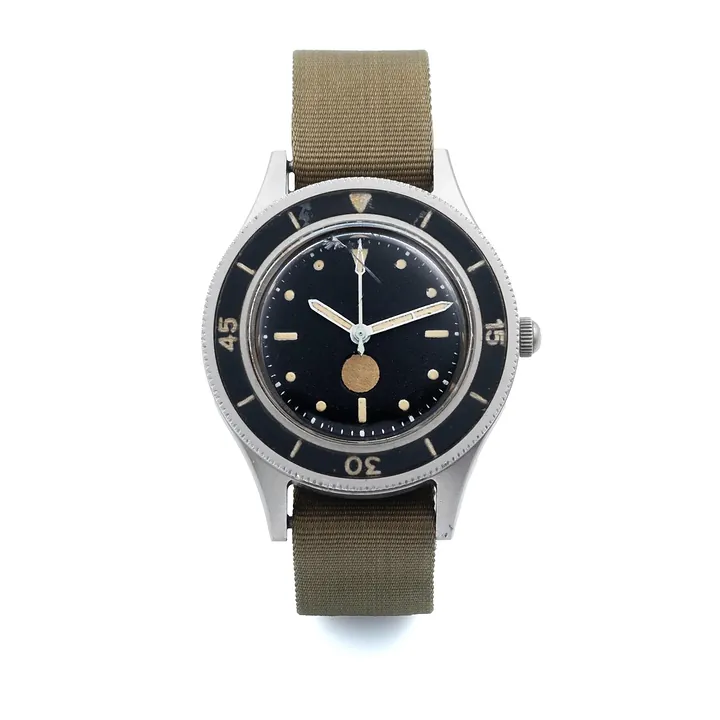
Wristwatches · 1964
Tornek-Rayville wristwatch, ref. TR 900, 1964
Antiquorum auction archive, Geneva