
Wristwatches · Wristwatch
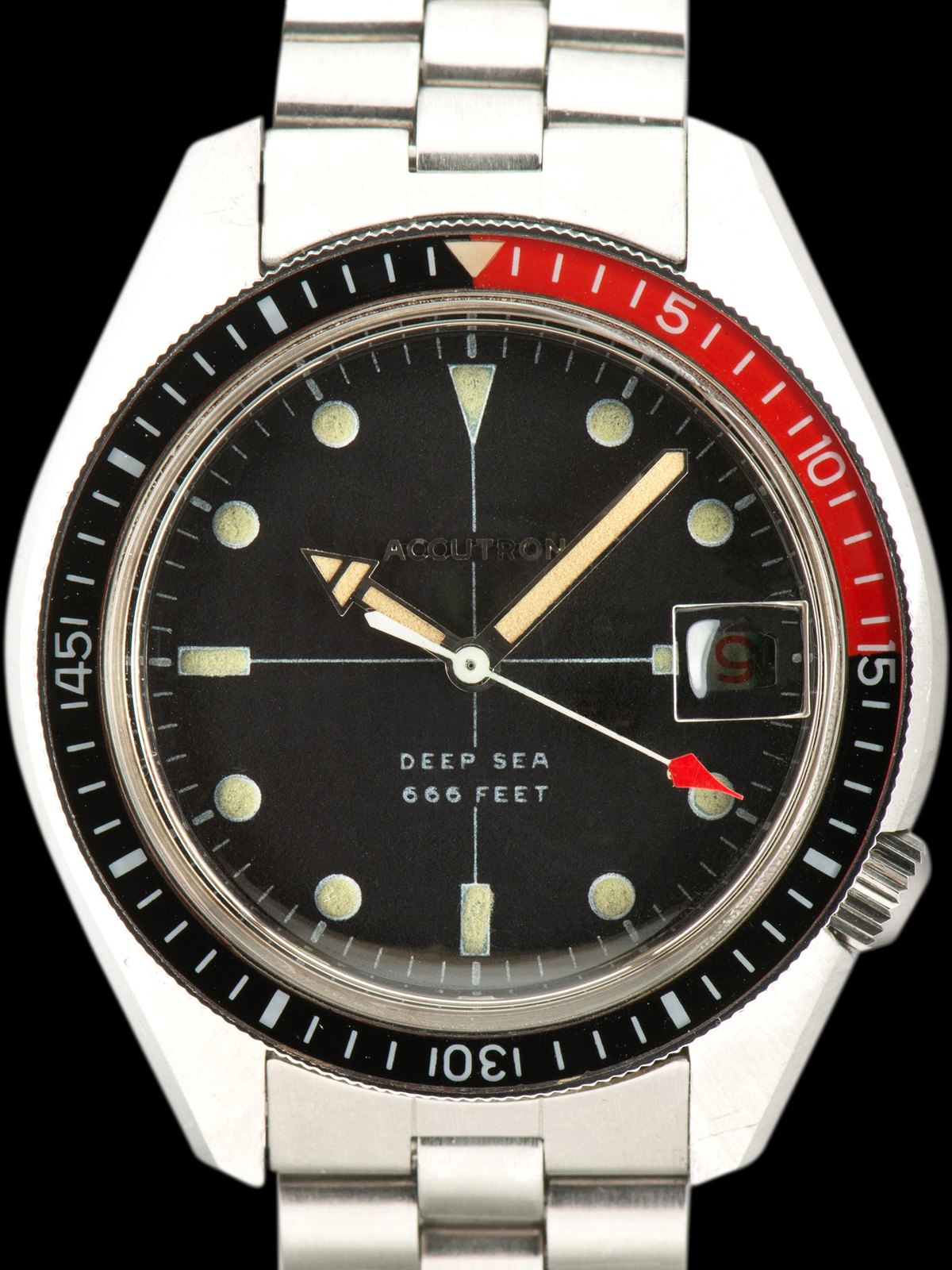
Bulova Accutron Deep Sea (Ref. 702-1), 1970
- Maker / attribution
- Bulova (maker)
- Date
- 1970
- Historical period
- Quartz Revolution (1969 – 1990)
- Country of origin
- United States
- Object type
- Wristwatch
- Dimensions
- Case 36 mm
- Stock no.
- BLVA702-2
- Credit line
- Dealer listing, Craft & Tailored (BLVA702-2)
- Catalogue title (original)
- 1970 Bulova Accutron Deep Sea (Ref. 702-1) (English)
View the source record (dealer listing) ↗ (opens another website in a new tab)Suggest a correction
Record summary
Catalogued by Craft & Tailored (dealer), Los Angeles (stock number BLVA702-2), this is a wristwatch by Bulova, made in United States, dated 1970. The Atlas places it in the Quartz Revolution period (1969 – 1990) of its Wristwatches collection. Recorded dimensions: Case 36 mm. The record is illustrated with 6 photographs.
Assembled from the source record's structured fields. Dates and attributions are given as the source states them; where a field is missing the Atlas leaves it blank rather than estimating.
Catalogue description
Dealer description — Craft & Tailored
The vintage Bulova obsession in the watch community is very real and here to stay! The unique and funky watches that Bulova made from the 60s-80s are always a cause for conversation, ranging from colorful diving chronographs to eccentric electric watches like the famous Accutron. This ref. 702-1 blends the best of both worlds, offering an electric watch with serious diving chops. SPECS Stock # BLVA702-2 Brand Bulova Accutron Style Deep-Sea Model 702-1 Serial N0 Size Men's Material Stainless Steel Dial Black Millimeters 36 Bracelet Accutron Stainless Steel "Kreisler Stelux" Bracelet CASE & BRACELET The 36mm stainless steel case is believed to remain unpolished and is in fantastic condition with lugs that show crisp factory finishing and light signs of use. The "Coke" acrylic bezel is in near flawless condition, showing no damage or separation whatsoever. It retains its original Bulova-signed crown at 4 o'clock and the case back is clean showing no signs of a previous polish. The watch will be supplied on its original Accutron stainless steel bracelet which retains 19 links and will fit up to a 7 1/4 inch wrist. DIAL & HANDS The matte black dial features a crosshair design and highly visible hour indices with lume that has aged to a greenish hue. The lume in the hour and minute hands has aged to a cream color. The dial and hands both exhibit no degradation when inspected under U.V. light. ACCESSORIES None. The watch is operating perfectly and keeping excellent time, and just received a new battery.
Historical context
Quartz Revolution (1969 – 1990)
Seiko's Astron begins mass quartz timekeeping; traditional industries contract sharply.
Quartz and digital watches transformed the market after 1969. Swiss employment collapsed, Japanese and Hong Kong production soared, and the Swatch (1983) helped the Swiss industry recover; mechanical watches survived as luxury goods.
Read the period in the timelineMore wristwatches from this periodEarlier: Modern Mechanical Horology
Atlas type guide
Dive and water-resistant watches
Keeping water and dust out of a wristwatch was a long-standing challenge. Rolex's screw-down Oyster case (1926) and Omega's Marine (1932) were landmarks; in the early 1950s Blancpain's Fifty Fathoms and Rolex's Submariner defined the professional dive watch with rotating bezels for timing dives, luminous dials and high water resistance. The ISO 6425 standard (1982) later codified what a 'diver's watch' must do.
Dive watches became icons of post-war design and exploration, and their evolution — helium escape valves, ceramic bezels, saturation-diving depth ratings — records the history of underwater work.
What to look for
- Unidirectional or bidirectional rotating bezel with minute markings.
- Screw-down crown and case back; depth rating printed on the dial.
- Luminous hands and markers (radium before c. 1960, tritium c. 1960–1998, then Super-LumiNova).
- Reference numbers on the case between the lugs or inside the back.
Dating clues
- Screw-down Oyster cases: from 1926.
- Professional dive watches: from 1953.
- Tritium 'T' marks on dials: c. 1960–1998.
General guidance written by the Atlas editors about this kind of object. It is not a statement about this particular piece; for that, rely on the source record above and on physical examination.
Related records
Wristwatches · c. 1969
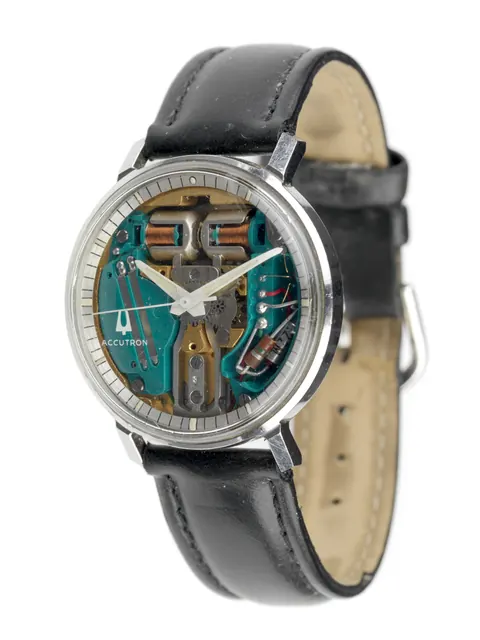
Bulova 'Accutron' tuning-fork wristwatch by Bulova
Royal Museums Greenwich
Wristwatches · c. 1965
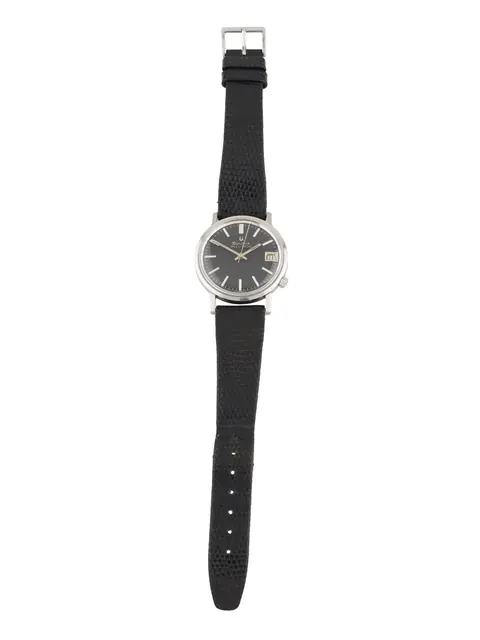
Wristwatch Accutron by Knud Geelmuyden Bull
Royal Museums Greenwich
Clocks · c. 1960s
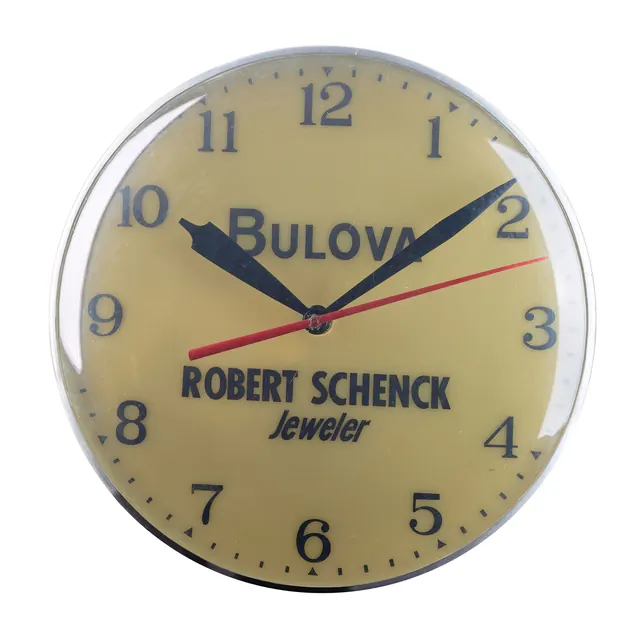
Bulova wall clock, Lighted Advertising Wall Clock for Robert Schenck Jeweler, circa 1960s
Antiquorum auction archive, Geneva
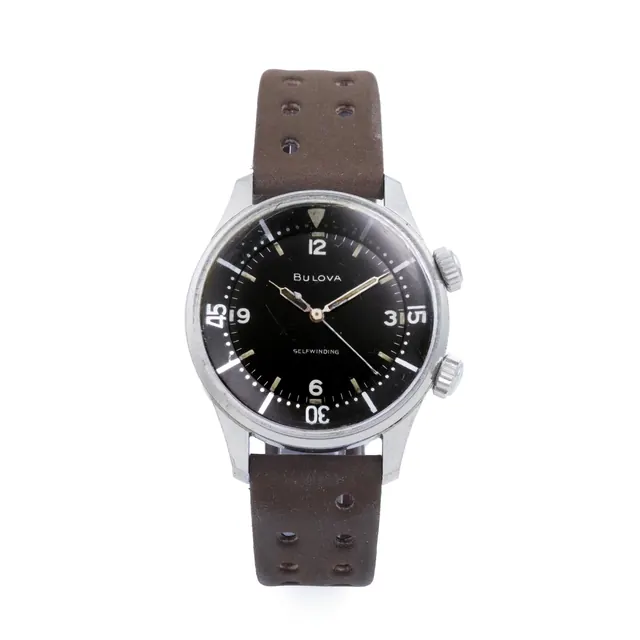
Wristwatches · 1963
Bulova wristwatch, ref. 314, Diver Super Compressor, 1963
Antiquorum auction archive, Geneva
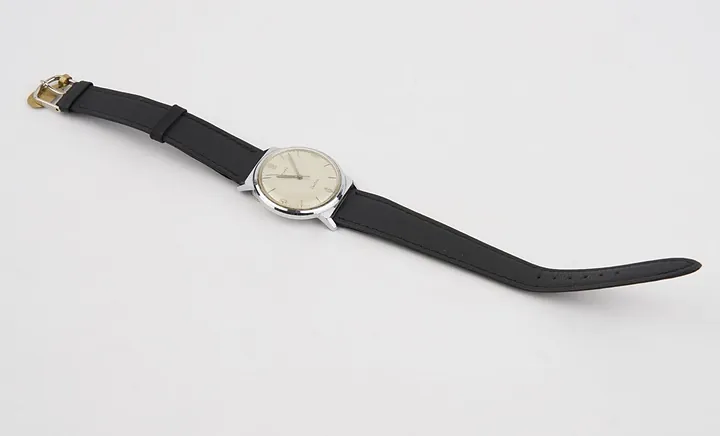
Wristwatches · 1949–1992
Timex `Electric' wristwatch, with electrically operated balance wheel mechanism, United States, 1949–1992
Science Museum Group, London
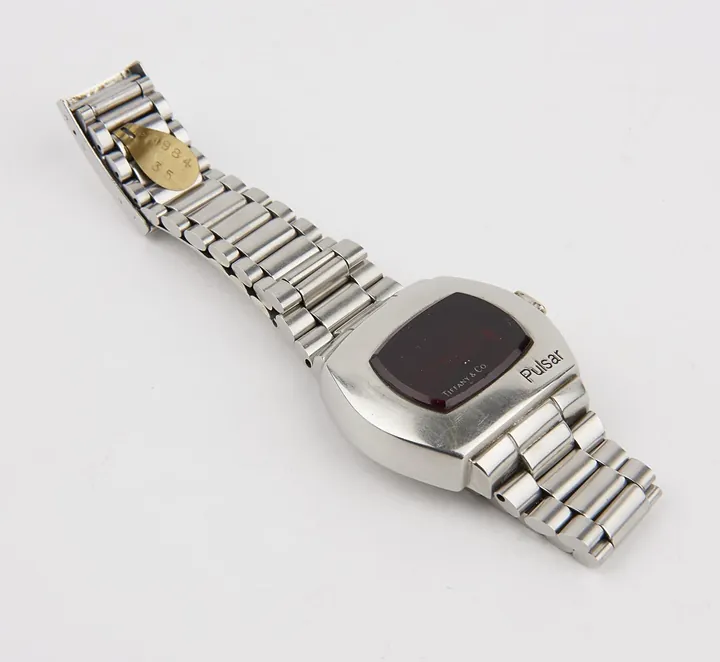
Wristwatches · 1972
Wristwatch by Hamilton Watch Company and Electro-Data Inc, United States, 1972
Science Museum Group, London
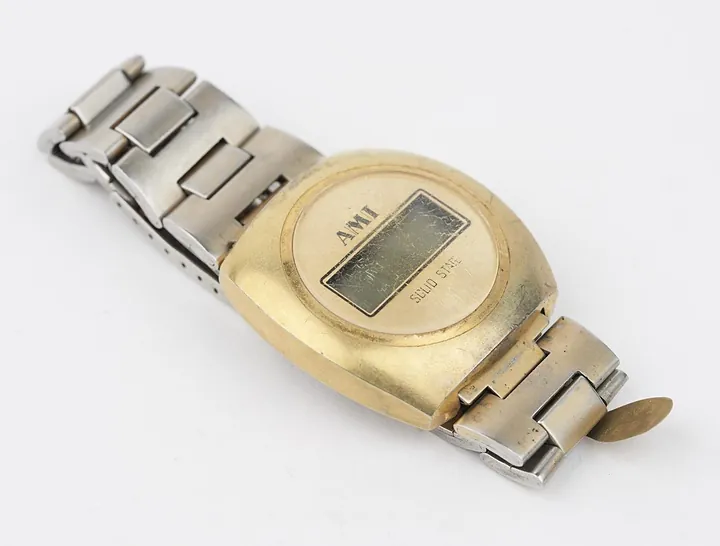
Wristwatches · 1973–1974
Quartz watch with liquid crystal digital display, made by American Microsystems Inc. (AMI) . 1973/74
Science Museum Group, London
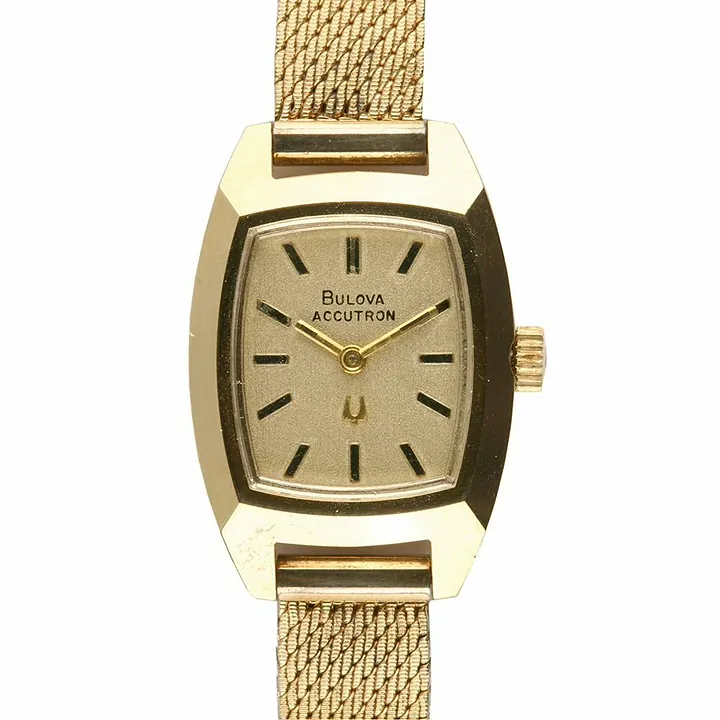
Wristwatches · c. 1973
Wristwatch by Josef Bulova, United States, c. 1973
German Clock Museum