
Pocket Watches · Pocket watch
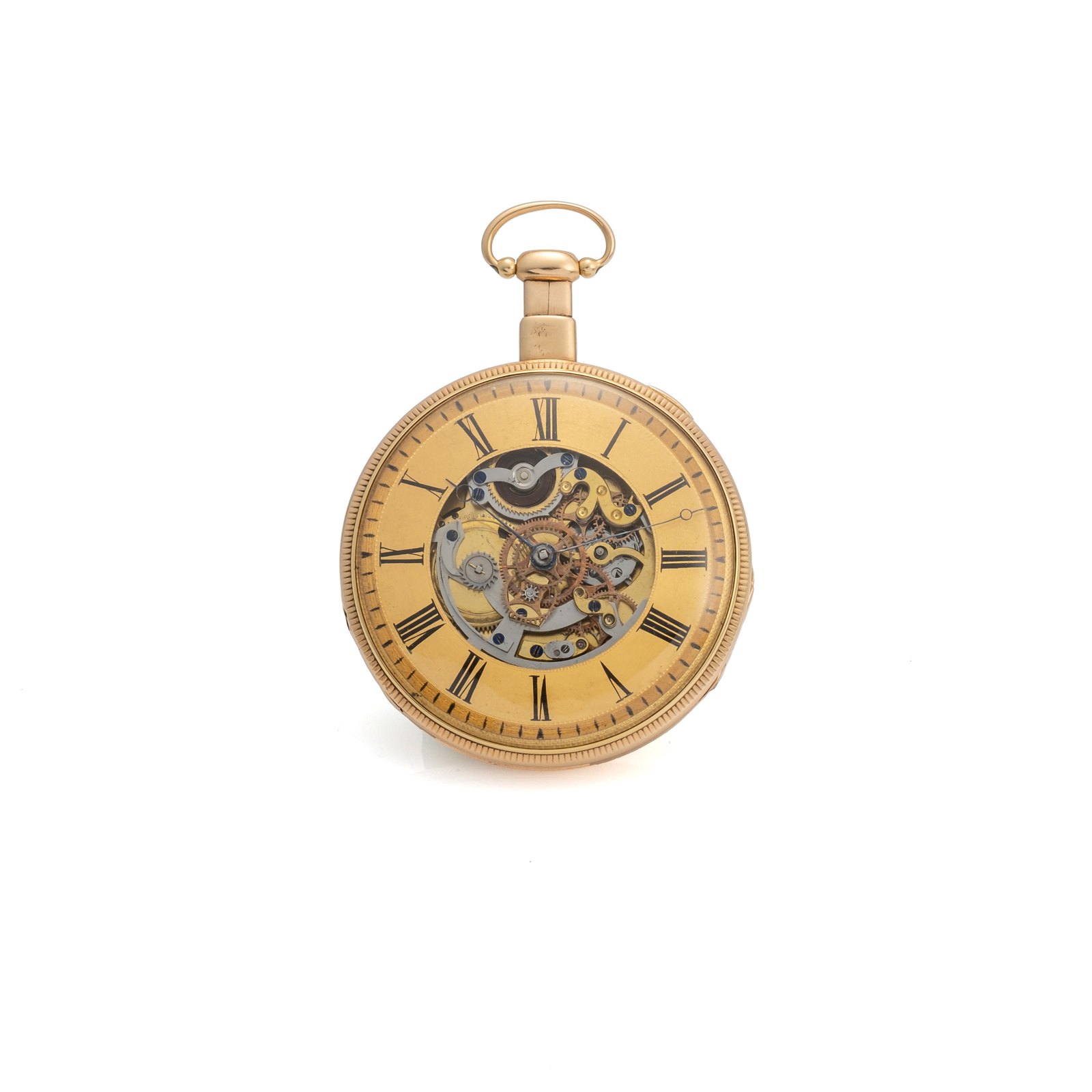
Breguet & Fils pocket watch, circa 1810
- Maker / attribution
- Breguet & Fils (brand / maker)
- Date
- c. 1810
- Historical period
- Precision & Scientific Horology (1750 – 1850)
- Country of origin
- France
- Object type
- Pocket watch
- Materials / technique
- 18k yellow gold
- Dimensions
- diameter 57.7 mm
- Auction house
- Antiquorum auction archive, Geneva
- Lot
- Lot 346-28
- Credit line
- Auction lot record: LOT 28, Geneva,January 3, 2022
- Catalogue title (original)
- Breguet & Fils Large half-skeleton pocket watch, quarter-repeater; 18K yellow gold (English)
View the source record (auction lot) ↗ (opens another website in a new tab)Suggest a correction
Record summary
Catalogued by Antiquorum auction archive, Geneva (lot Lot 346-28), this is a pocket watch by Breguet & Fils, made in France, dated c. 1810. The Atlas places it in the Precision & Scientific Horology period (1750 – 1850) of its Pocket Watches collection. Materials and techniques recorded by the source: 18k yellow gold. Recorded dimensions: diameter 57.7 mm. The record is illustrated with 4 photographs.
Assembled from the source record's structured fields. Dates and attributions are given as the source states them; where a field is missing the Atlas leaves it blank rather than estimating.
Catalogue description
Antiquorum catalogue description
18K yellow gold, open-face, key-winding, round-shaped, large “Empire”, half-skeleton, pocket watch, with one horological complication:· Quarter-repeater by two hammers on two steel gongs (activated by depressing the pendant); safety bolt locking the repeater’s functions (slide located on the case-band at 1 o’clock)Case-back guilloché (engine-turned), with, in the low part, an escutcheon; fluted case-band.Gilded metal ring dial, with radial Roman numerals; blued steel “Breguet” hands.Movement 23’’’, gilded brass, going barrel, cylinder escapement, monometallic balance (gilded brass) and blued steel flat hairspring, pierced and engraved gilded continental cock; repeater work on the top plate.
Lot specifications (Antiquorum)
Model: apocryphal signature, not Abraham-Louis Breguet, probably made in the Neuchâtel mountains; Movement No.: 1 091; Case No.: 2 091 (by “E & M / F”, Neuchâtel mountains); Material: 18K yellow gold; Caliber: 23’’’, cylinder escapement; Diameter: 57.7 mm.; Weight: 99.2 gr. (approx.); Signature: cuvette (dome)
Inscriptions & marks
cuvette (dome)
Historical context
Precision & Scientific Horology (1750 – 1850)
Harrison solves longitude; Mudge invents the lever; Breguet's Paris workshop defines the modern watch.
From 1750 to 1850 the watch became a precision instrument. Mudge's lever escapement, the cylinder escapement, Lépine's thin bar calibre, Breguet's innovations (overcoil, tourbillon, perpétuelle) and the pocket chronometer of Arnold and Earnshaw all date from this period, while verge watches remained common in cheaper production.
Read the period in the timelineMore pocket watches from this periodEarlier: Early Modern Horology
Atlas type guide
Repeating watches
Before electric light, telling the time in the dark was a real problem. Repeating watches strike the time on demand when a slide or push-piece is operated: quarter repeaters sound hours and quarters, minute repeaters hours, quarters and minutes. Edward Barlow and Daniel Quare disputed the invention in London in the 1680s. Early repeaters struck on a bell inside the case; Abraham-Louis Breguet introduced the gong (a coiled steel wire) around 1780, allowing thinner watches.
Repeaters require a separate train with racks, snails and a governor to control the striking speed, and are among the most demanding complications to make and adjust. Swiss makers of the Vallée de Joux specialised in repeating ébauches in the nineteenth century.
What to look for
- A slide on the case band or a push-piece through the pendant.
- Gongs encircling the movement (after c. 1780) or a bell in the case (earlier); pierced case for sound.
- The racks, snails and governor visible under the dial or on the movement.
- Terms such as 'Minutes', 'Quarts' or 'Répétition' on the dial or cuvette.
Dating clues
- Bell-striking quarter repeaters: c. 1690–1800.
- Gong repeaters and dumb repeaters (striking on the case): after c. 1780.
- Minute repeaters became more common after c. 1830 with Vallée de Joux ébauches.
General guidance written by the Atlas editors about this kind of object. It is not a statement about this particular piece; for that, rely on the source record above and on physical examination.
Read next:Minute repeater
Related records
Pocket Watches · Sold to the Russian Consul the 25 August 1817 Mr Hercevanoff
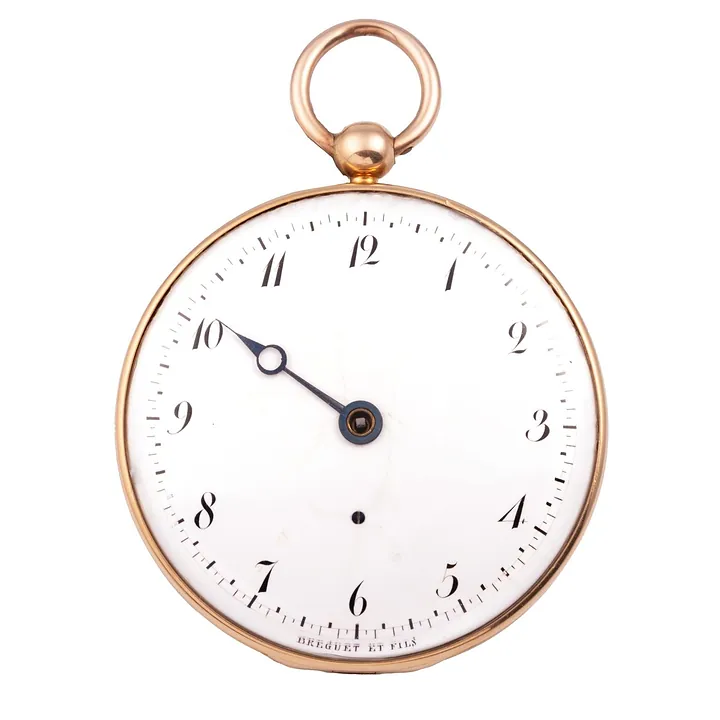
Breguet & Fils pocket watch, Sold to the Russian Consul the 25 August 1817 Mr Hercevanoff
Antiquorum auction archive, Geneva
Pocket Watches · Delivered to Jousselin & Brasch the 19 April 1823.
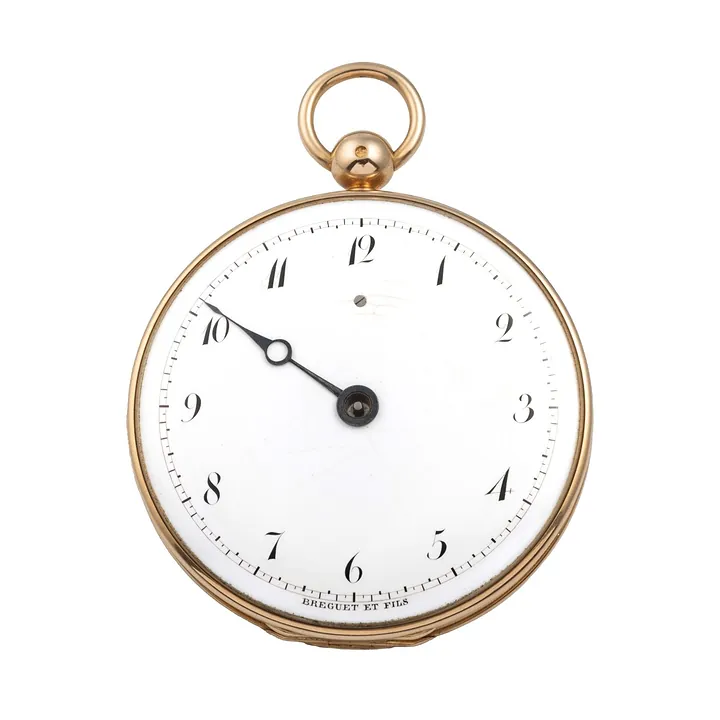
Breguet & Fils pocket watch, Delivered to Jousselin & Brasch the 19 April 1823.
Antiquorum auction archive, Geneva
Pocket Watches · c. 1800-1810
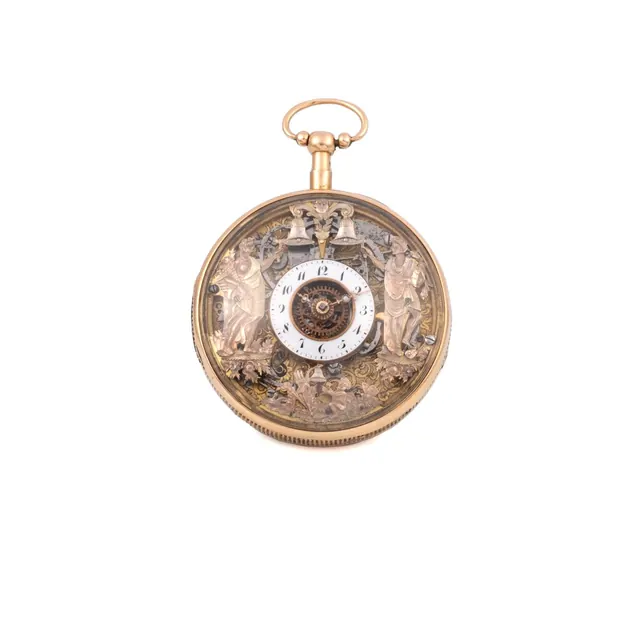
Breguet & Fils pocket watch, skeleton quarter-repeater, circa 1800-1810
Antiquorum auction archive, Geneva
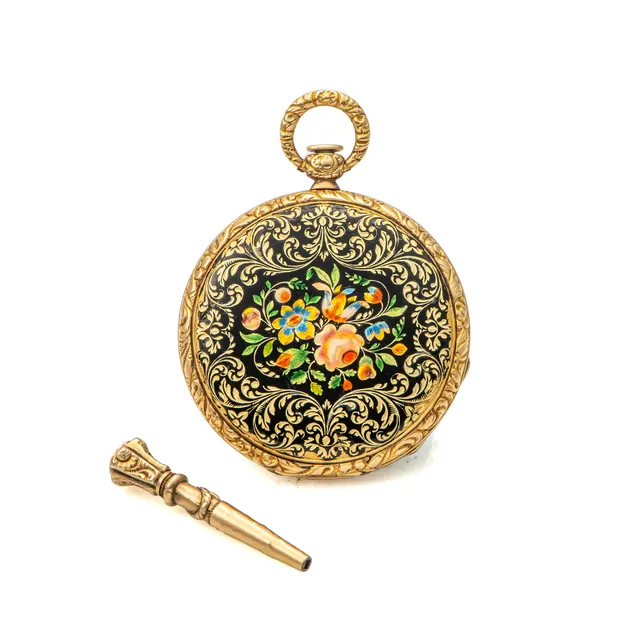
Pocket Watches · c. 1850
Breguet & Fils pocket watch, circa 1850
Antiquorum auction archive, Geneva
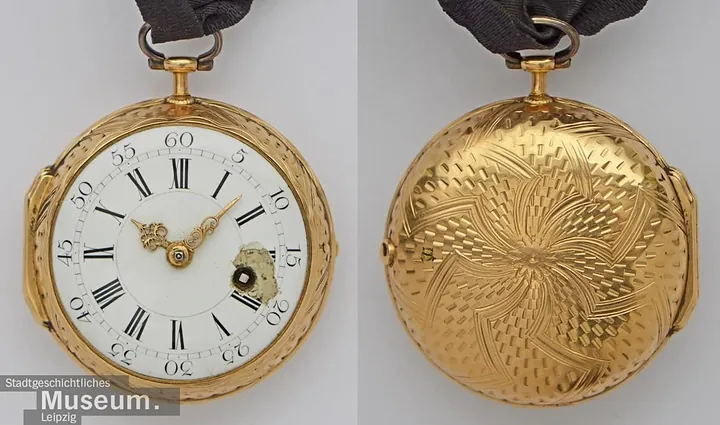
Pocket Watches · 1745–1755
Pocket watch by Jean Baptiste Baillon, France, 1745–1755
Museum of City History Leipzig
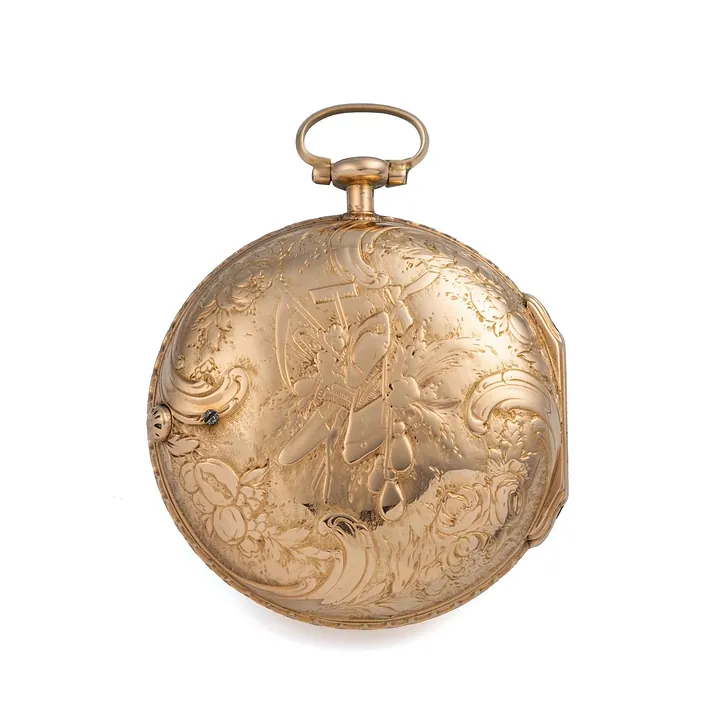
Pocket Watches · c. 1750
Baillon À Paris pocket watch, c. 1750
Antiquorum auction archive, Geneva
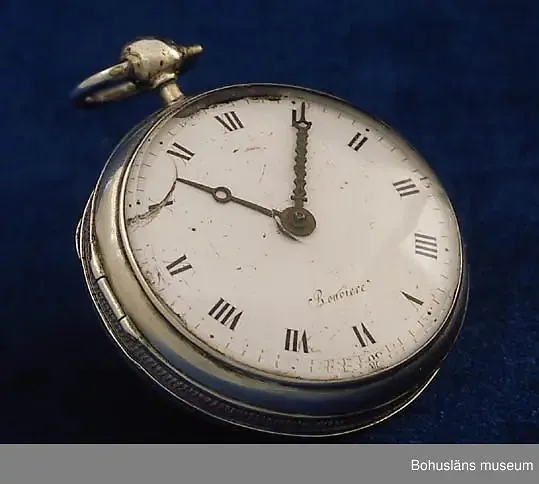
Pocket Watches · 1750–1780
Pocket watch by BONBIERE, France, 1750–1780
Bohuslän Museum
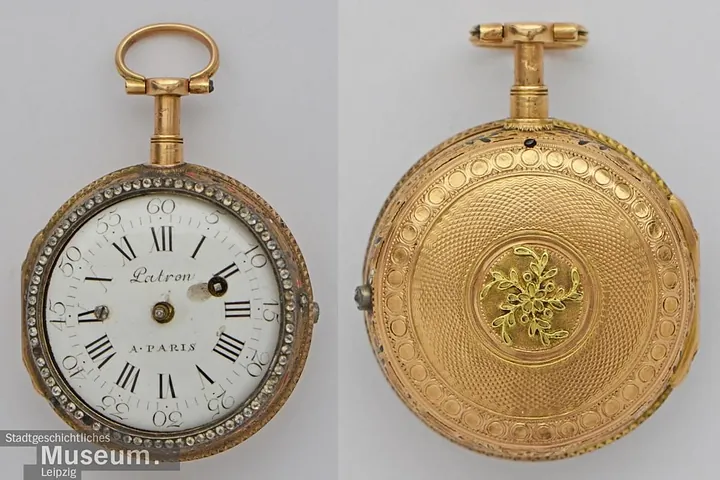
Pocket Watches · 1750
Pocket watch by Patron, France, 1750
Museum of City History Leipzig