
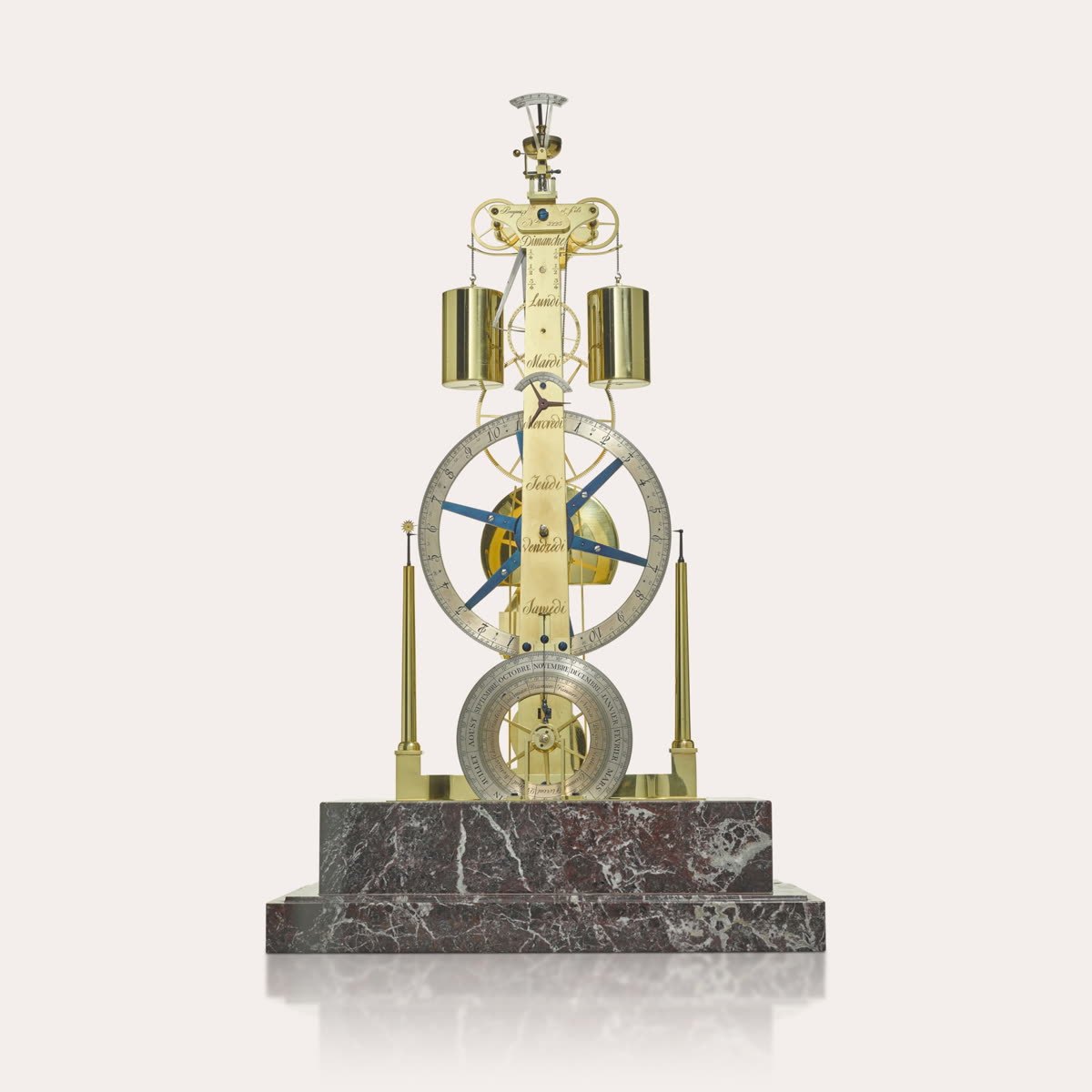
Clocks · Skeleton clock
Breguet et Fils / George Daniels No. 3225 pendule à trois roues skeleton clock
- Maker / attribution
- Breguet et Fils / George Daniels (source attribution)
- Date
- 1968
- Historical period
- Modern Mechanical Horology (1945 – 1969)
- Country of origin
- United Kingdom
- Object type
- Skeleton clock
- Dimensions
- 660 mm height overall
- Auction house
- Sotheby's
- Lot
- 59
- Credit line
- Sotheby's
- Catalogue title (original)
- A weight-driven pendule à trois roues skeleton timepiece with (English)
View the source record (auction lot) ↗ (opens another website in a new tab)Suggest a correction
Record summary
Catalogued by Sotheby's (lot 59), this is a skeleton clock attributed to Breguet et Fils / George Daniels, made in United Kingdom, dated 1968. The Atlas places it in the Modern Mechanical Horology period (1945 – 1969) of its Clocks collection. Recorded dimensions: 660 mm height overall. The record is illustrated with 1 photograph.
Assembled from the source record's structured fields. Dates and attributions are given as the source states them; where a field is missing the Atlas leaves it blank rather than estimating.
Catalogue description
Original object description
George Daniels completed this weight-driven skeleton timepiece (No. 3225) in 1968, basing its design on an antique Breguet pendule à trois roues he examined in Paris; it is one of merely two such examples he produced. In accordance with a historical arrangement negotiated with Breguet head George Brown, standard retail margins were granted in exchange for registering the clock under entry 3225 in the firm's ledgers, and the piece remained in Daniels's personal residence at Riversdale until his death. Mounted atop a veined red marble plinth, the eight-day movement features maintaining power and a high-count three-wheel train. Power is supplied by two chain-hung weights in brass casings, whose upper rims track down the central pillar to register weekdays inscribed in French. Regulation relies on a pin wheel escapement alongside a knife-edge suspended compound pendulum, which incorporates a sub-bob gridiron assembly and a top bimetallic strip serving both regulation and thermal indication. Mean time is shown via fixed pointers on a 7-inch silvered annular chapter ring inscribed with dual twelve-hour tracks, accompanied by an equation kidney cam driving a solar hand and a ten-minute sector. At the base, an annual calendar indicator displays both French Revolutionary and Gregorian dates and months, aligned against a built-in levelling plumb line.
Inscriptions & marks
3225
Historical context
Modern Mechanical Horology (1945 – 1969)
Tool watches for divers, pilots and astronauts; electric watches anticipate the electronic age.
Post-war clocks combined new materials and industrial design: plastic and metal cases, battery-powered transistor movements from the late 1950s, and design classics by George Nelson, Max Bill and others. The first caesium atomic clock (1955) moved the definition of time from astronomy to physics.
Read the period in the timelineMore clocks from this periodEarlier: Golden Age of Mechanical Watchmaking
Atlas type guide
Skeleton clocks
A skeleton clock displays its movement: the plates are pierced to a minimum so that wheels, escapement and fusee can be seen, usually under a glass dome. French makers produced fine skeleton clocks in the late eighteenth century; in Victorian England they became popular showpieces, with frames in the shapes of cathedrals and famous buildings.
What to look for
- Pierced brass plates in scroll or architectural shapes.
- A glass dome and wooden or marble base.
- Fusee movements and sometimes passing strike on a bell.
Dating clues
- French skeleton clocks: c. 1780–1830.
- English cathedral-style skeleton clocks: c. 1840–1890.
General guidance written by the Atlas editors about this kind of object. It is not a statement about this particular piece; for that, rely on the source record above and on physical examination.
Read next:FuseeAnchor (recoil) escapement
Related records
Clocks · c. 1960
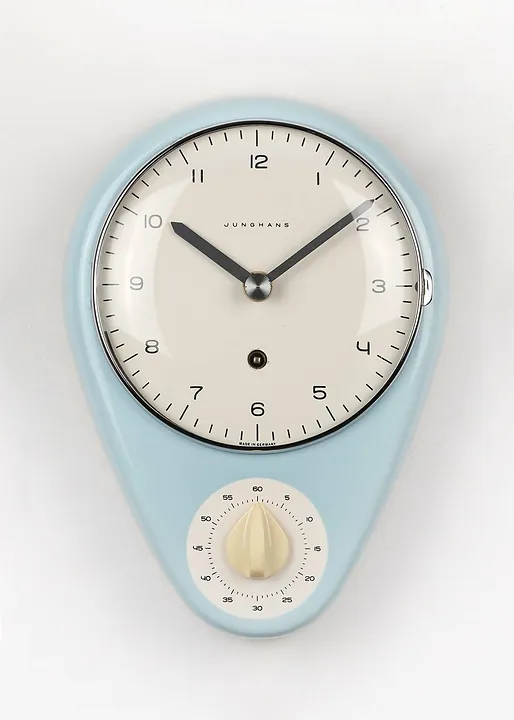
Clock, Germany, c. 1960 (no. 58196)
German Clock Museum
Clocks · 1930–1960
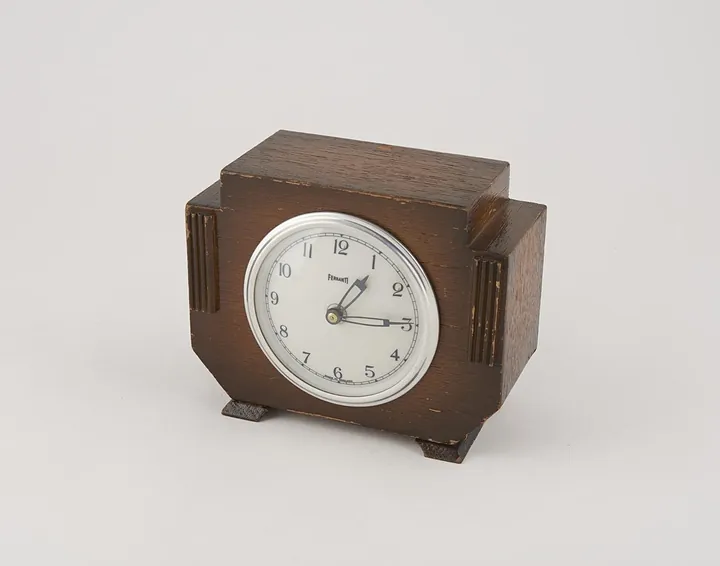
Ferranti electric mantel clock. (no. Y1996.10.820)
Science Museum Group, London
Clocks · 1931–1970
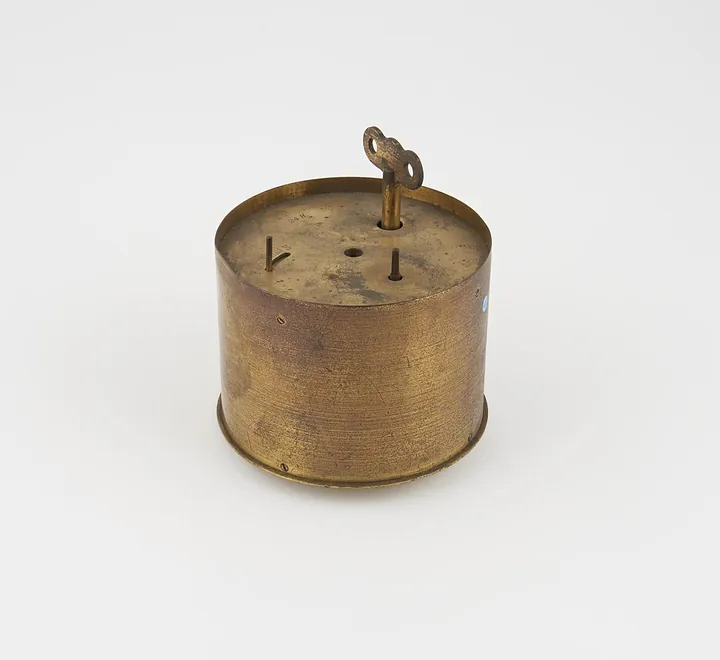
Clock and drum for recorder, 24 hours, English, 1931–1970.
Science Museum Group, London
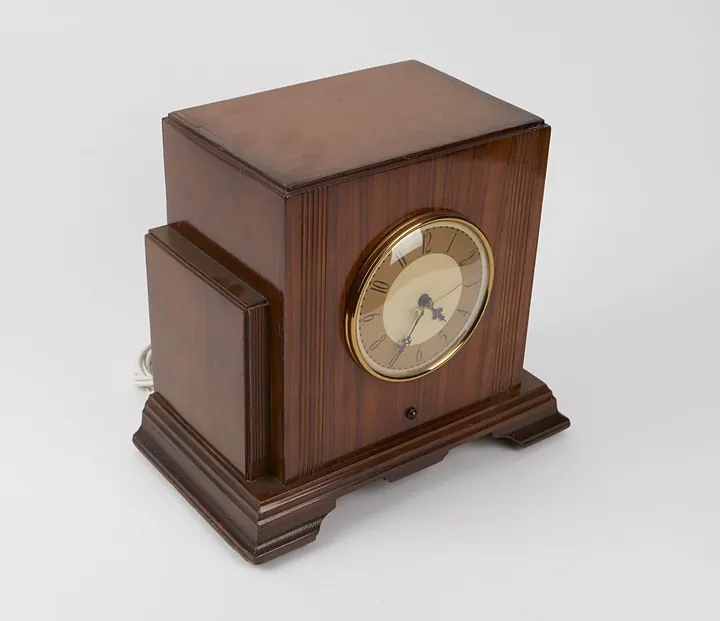
Clocks · 1937; 1980
Clock by Bestone and Hammond, United States, 1937; 1980
Science Museum Group, London
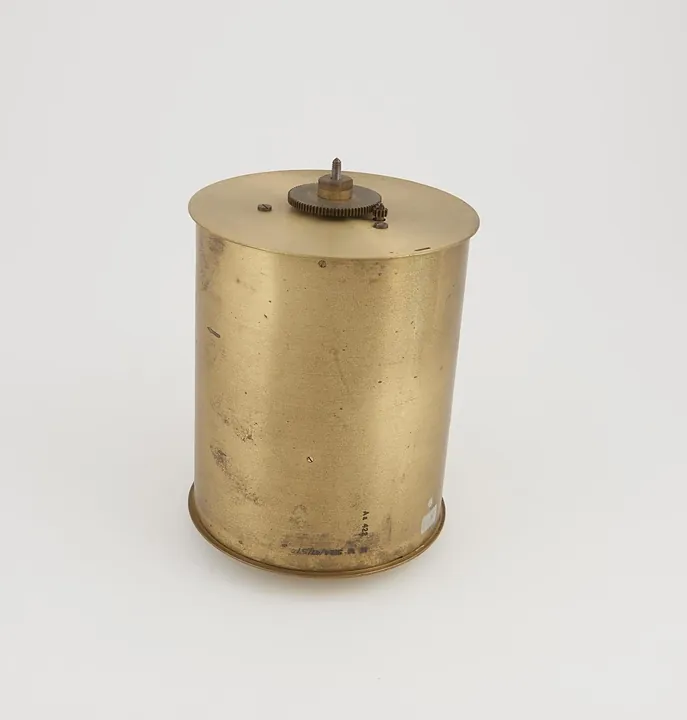
Clocks · 1940–1967
Drum and clock, English, 1940-1947, MO W 5124/ 47/ 57.
Science Museum Group, London
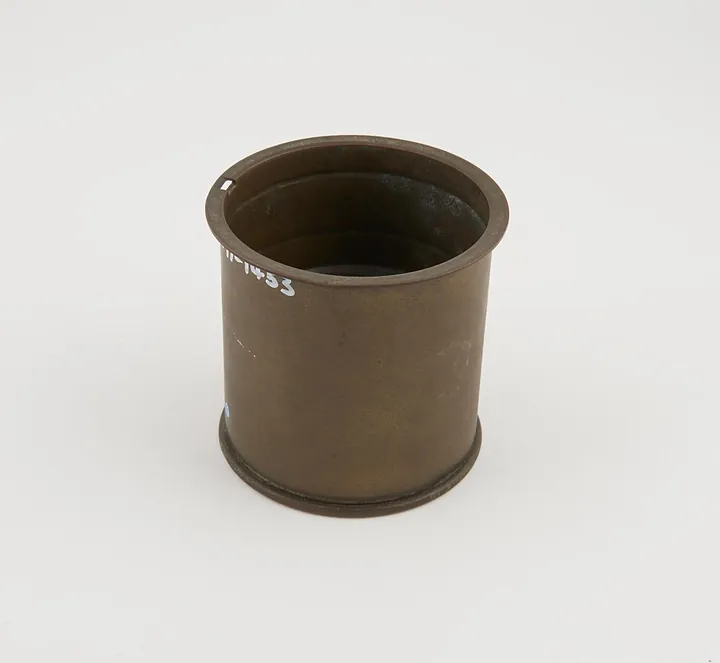
Clocks · 1940–1950
Drum and clock. by Smith's English Clocks Ltd., London, for Air Ministry.
Science Museum Group, London
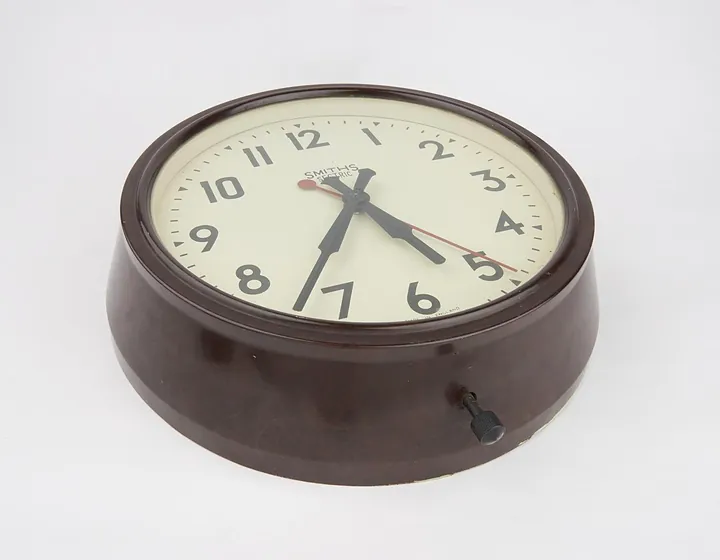
Clocks · c. 1946
Smiths Sectric synchronous motor electric wall clock with centre seconds hand, by Smiths English Clocks Ltd, England c. 1946
Science Museum Group, London
Clocks · c. 1947
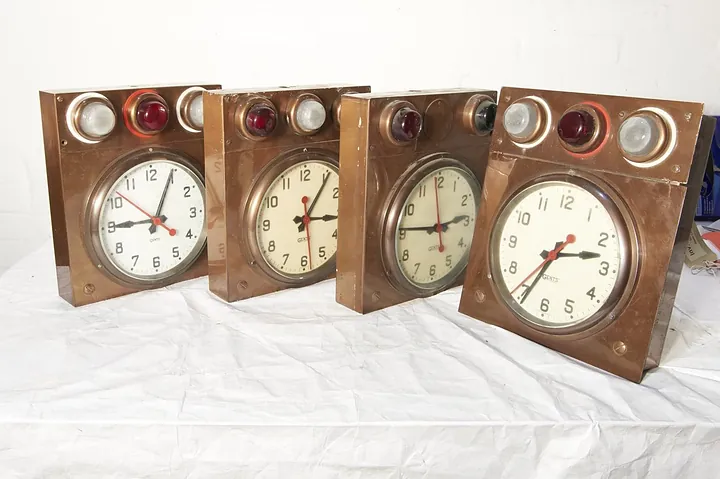
Four studio slave clocks installed at BBC Broadcasting House made by Gents of Leicester.
Science Museum Group, London