
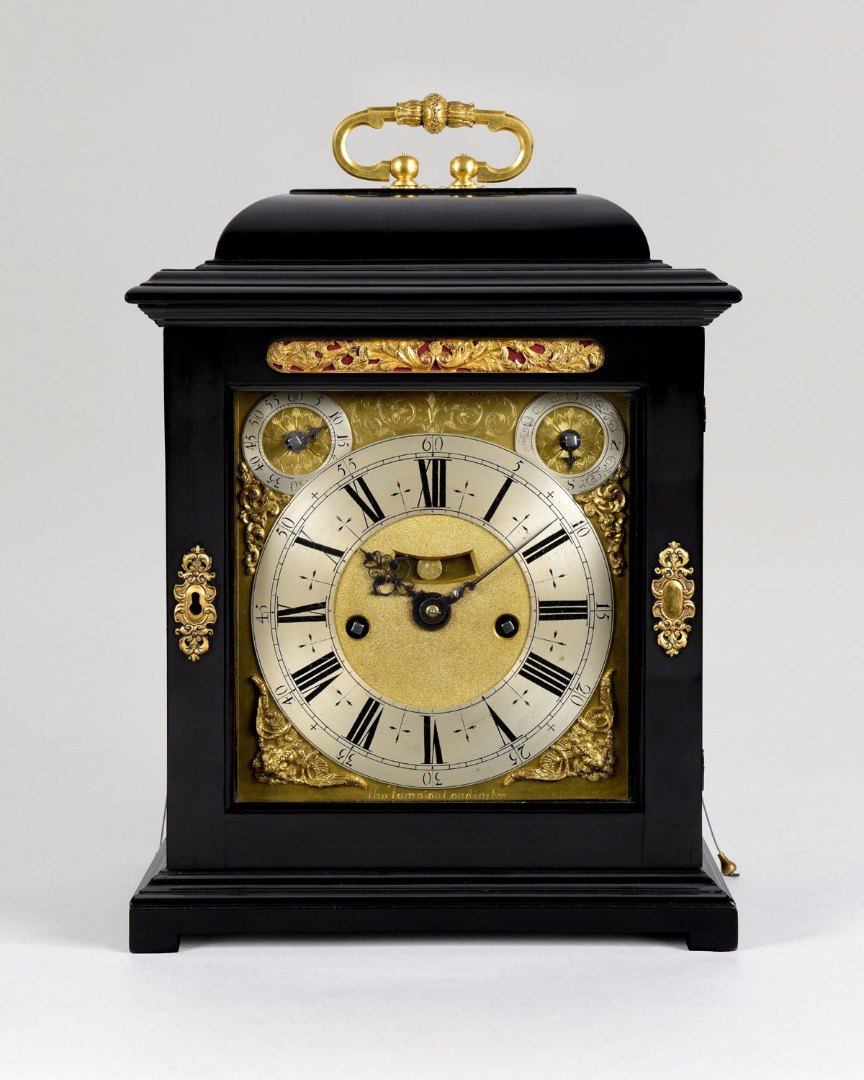
Clocks · Bracket clock
Bracket clock by Thomas Tompion, London, c. 1691
- Maker / attribution
- Thomas Tompion (maker)
- Date
- c. 1691
- Historical period
- Early Modern Horology (1600 – 1750)
- Country of origin
- England
- Place
- London
- Object type
- Bracket clock
- Materials / technique
- ebony
- Stock no.
- SKU 404
- Credit line
- Dealer listing, Howard Walwyn (SKU 404)
- Catalogue title (original)
- THOMAS TOMPION, N° 182. A fine William & Mary period transitional Phase I-II ebony veneered striking and pull-quarter repeating bracket clock by England’s most famous clockmaker. (English)
View the source record (dealer listing) ↗ (opens another website in a new tab)Suggest a correction
Record summary
Catalogued by Howard Walwyn Fine Antique Clocks (dealer), London (stock number SKU 404), this is a bracket clock by Thomas Tompion, made in London, England, dated c. 1691. The Atlas places it in the Early Modern Horology period (1600 – 1750) of its Clocks collection. Materials and techniques recorded by the source: ebony. The record is illustrated with 5 photographs.
Assembled from the source record's structured fields. Dates and attributions are given as the source states them; where a field is missing the Atlas leaves it blank rather than estimating.
Catalogue description
Dealer description — Howard Walwyn
A fine William & Mary period transitional Phase I-II ebony veneered striking and pull-quarter repeating bracket clock by England’s most famous clockmaker. The 7 x 8 inch rectangular gilt-brass dial is signed Tho. Tompion Londini Fec to the lower edge. It has Rise/Fall and Strike/Silent in the top corners and finely chased gilt-brass winged cherub spandrels adorning the bottom corners to the engraved silvered chapter ring. It has both Roman and Arabic chapters and Tompion’s sword hilt half hour markers. The elaborately pierced and finely sculpted blued steel hour and minute hands which are set off by the finely matted centre with its dummy pendulum aperture are typical of his work. The substantial twin fusee 8-day key wound movement has latched dial feet and further latches for the six ring-turned movement pillars. It has a spring suspended verge escapement with a lenticular shaped brass pendulum bob. The hours are sounded upon a single bell with the quarters repeated via Tompion’s ingenious pull-repeat system. This superb and beautifully designed mechanism operates the quarter hammer and sounds one to three on a further smaller bell. The backplate with its exquisite foliate engraving is the work of Tompion’s Graver 155 . The oval reserve below the centre is signed Tho Tompion Londini Fecit , and it has Tompion’s punch number 182 to the centre lower edge of the backplate. The beautifully proportioned Phase I case has an oak carcass and is veneered in ebony. It has a chased gilt foliate sound fret along the top cross rail at the front and carved wood ebony frets to each side. The chased gilt brass thistle bud carrying handle is typical of those Tompion used at this time. Height: 13 ⅞ in (35.25 cm) excluding handle Width: 10 ¾ in (27.25 cm) Depth: 6 ⅞ in (17.5 cm) * This clock belongs to a small group of about six Tompion table clocks which mark the transition from his Phase I type square dials with no subsidiary dials to the full Phase 2 type which have taller rectangular dials and cases with two subsidiary dials at the top for strike/silent and rise/fall . One such very similar transitional striking and quarter-repeating table clock is The Churchill Tompion N° 168. The ebony veneered case can be attributed to the workshop of Jasper Braem who was Tompion’s cabinet maker at this date. In 1703 Tompion was elected Master of the Clockmakers’ Company. He is known to have made about 650 clocks, approximately 16-20 clocks a year. Sometime between 1680 and 1685 he devised a numbering system for his clocks and watches which go up to 542. The present clock is remarkably similar to N° 171 illustrated in figure 125 on page 150 in R.W. Symonds’ book. His numbering system was continued after Tompion’s death by his successor George Graham. Provenance : Sotheby’s 11:7:1947, lot 120A to Goldsmiths’ & Silversmiths’ Co., 880gns, advertised Antique Collector 9-10:1947, Apollo, 11:1947 and Connoisseur 12:1947; Old Clocks for Modern Uses, Edward Wenham, 1951, fig.XXIII; Sir Henry Barnard, sold Sotheby’s 6:6:1985, lot 278; References : Dawson, Drover, Parkes, Early English Clocks Jeremy Evans, Thomas Tompion at The Dial and Three Crowns, Evans, Carter, Wright, Thomas Tompion 300 Years, R. W. Symonds, Thomas Tompion His Life and Work, TT N° 171 fig.125 p.150, TT N° 220 fig.120 p.149 J. Carlton-Smith advert, Antiquarian Horology Journal, Spring 1999
Historical context
Early Modern Horology (1600 – 1750)
Huygens' pendulum and balance spring transform accuracy; English makers develop the anchor and deadbeat escapements.
Huygens's pendulum (1656–57) improved clock accuracy from about a quarter of an hour to under a minute a day. The anchor escapement (c. 1670) and the long seconds pendulum created the longcase clock; London makers such as Fromanteel, Knibb, Tompion and Quare led European clockmaking, and French makers created the Boulle pendule.
Read the period in the timelineMore clocks from this periodEarlier: Renaissance Horology
Atlas type guide
Bracket, table and spring-driven clocks
Spring-driven clocks freed timekeeping from the hanging weight. The coiled mainspring, documented from the fifteenth century, made portable table clocks possible; to even out its declining force, makers used the fusee, a conical pulley connected to the barrel by a gut line or chain. Renaissance table clocks from Augsburg and Nuremberg — drum-shaped, square or tower-shaped in gilt brass — were luxury scientific objects, often with astronomical dials and alarms.
After the pendulum, English makers developed the bracket clock: a wooden case with a carrying handle, a short pendulum with a verge escapement, and often repeating work to sound the hours on demand at night. Later examples use the anchor escapement. In the nineteenth century, 'table clock' became a broad term for spring clocks of every nationality.
What to look for
- A fusee in the movement (cone-shaped pulley) and the type of line — gut or chain.
- Verge escapement with a short bob pendulum, often with a decoratively engraved backplate.
- Repeat cords or buttons that make the clock strike again on demand.
- Gilt-brass engraved cases and horizontal dials on Renaissance pieces.
- Case shapes: inverted bell, bell top, break-arch, lancet or balloon.
Dating clues
- Drum and tower table clocks: c. 1520–1650.
- Ebony veneered English bracket clocks with verge escapements: c. 1670–1800.
- Engraved backplates were usual on English clocks until c. 1800, then generally plain.
General guidance written by the Atlas editors about this kind of object. It is not a statement about this particular piece; for that, rely on the source record above and on physical examination.
Read next:Anchor (recoil) escapement
Related records
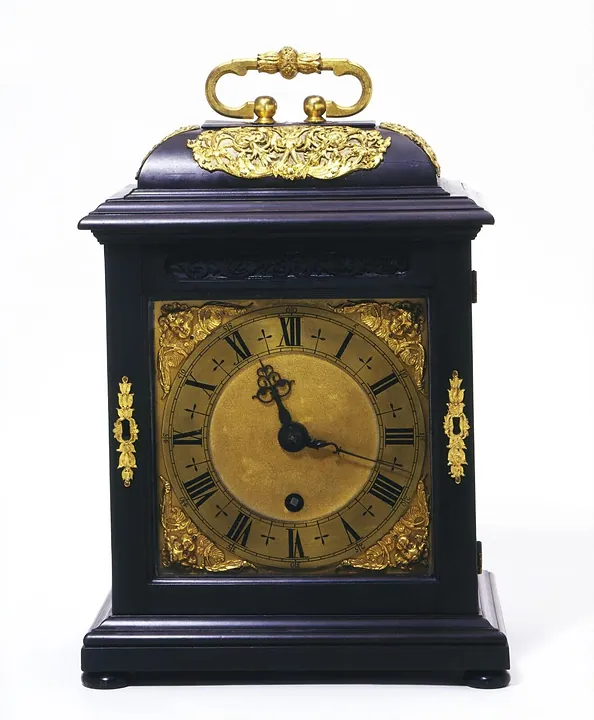
Clocks · c. 1690
Bracket clock by Thomas Tompion, England, c. 1690
Victoria and Albert Museum, London
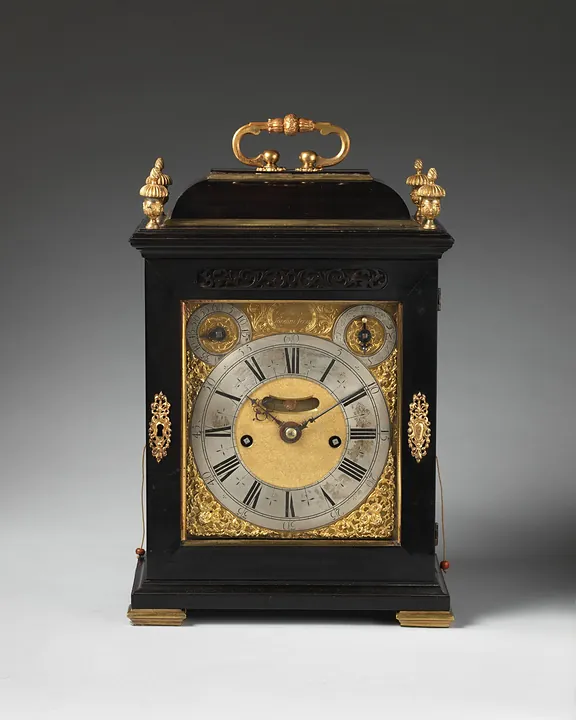
Clocks · c. 1696
Table or bracket clock by Thomas Tompion, England, c. 1696
The Metropolitan Museum of Art, New York
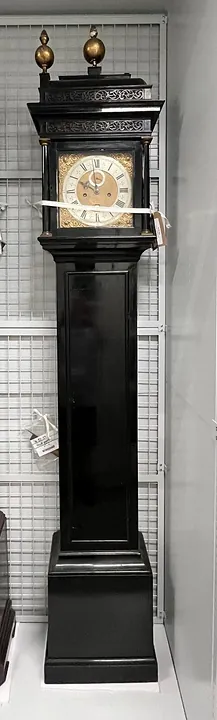
Clocks · c.1705
Eight day long case clock, ebonised pearwood veneer on oak carcase, inscribed 'Tho Tompion and Edw Banger London', made in about 1705
Victoria and Albert Museum, London
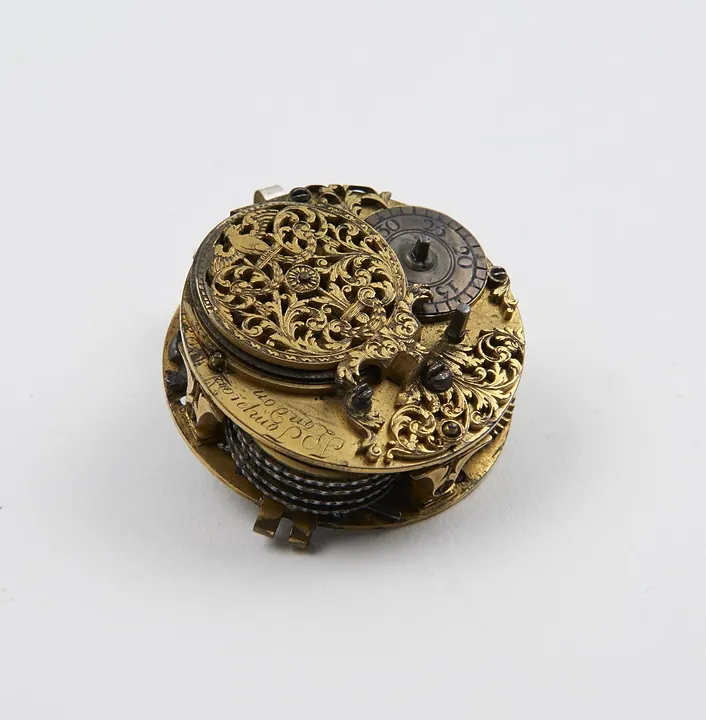
Movements & Components · 1690
Pocket watch verge escapement movement by Thomas. Tompion, London, England,1690
Science Museum Group, London
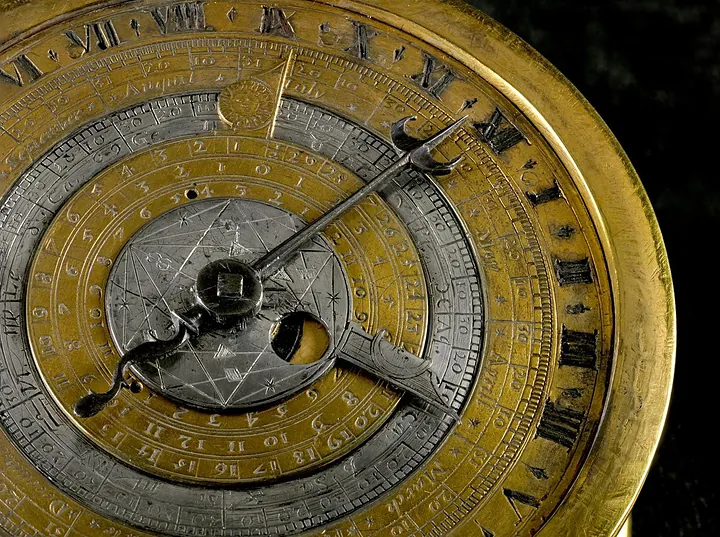
Clocks · 1598–1603
Circular table-clock with calendrical and lunar indications made by Nicholas Vallin in London between 1598 and 1603.
Science Museum Group, London
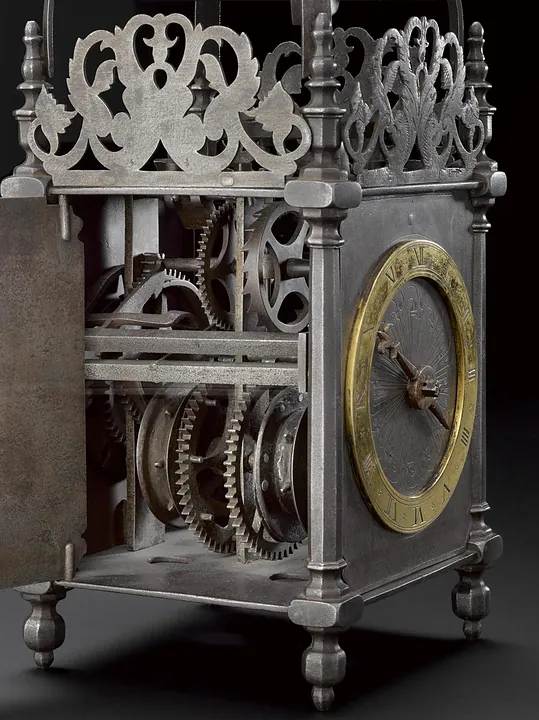
Clocks · 1611
English iron lantern clock, with wheel balance, by John Holloway, Market Lavington, Wiltshire, England, 1611.
Science Museum Group, London
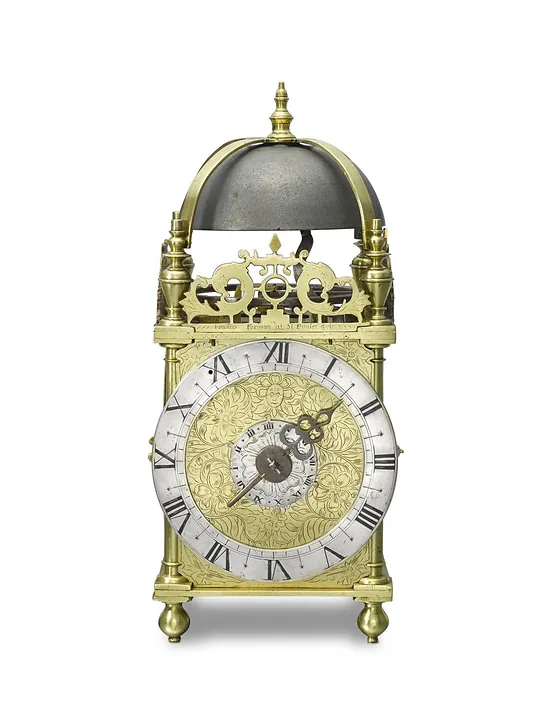
Clocks · 1630
Lantern clock by Francis Forman, England, 1630
Science Museum Group, London
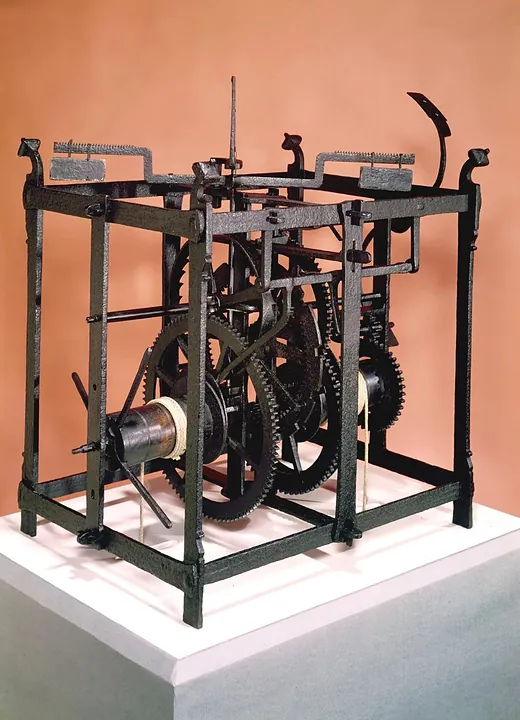
Clocks · 1632–1640
Turret clock, England, 1632–1640
Science Museum Group, London