
Wristwatches · Wrist-watch
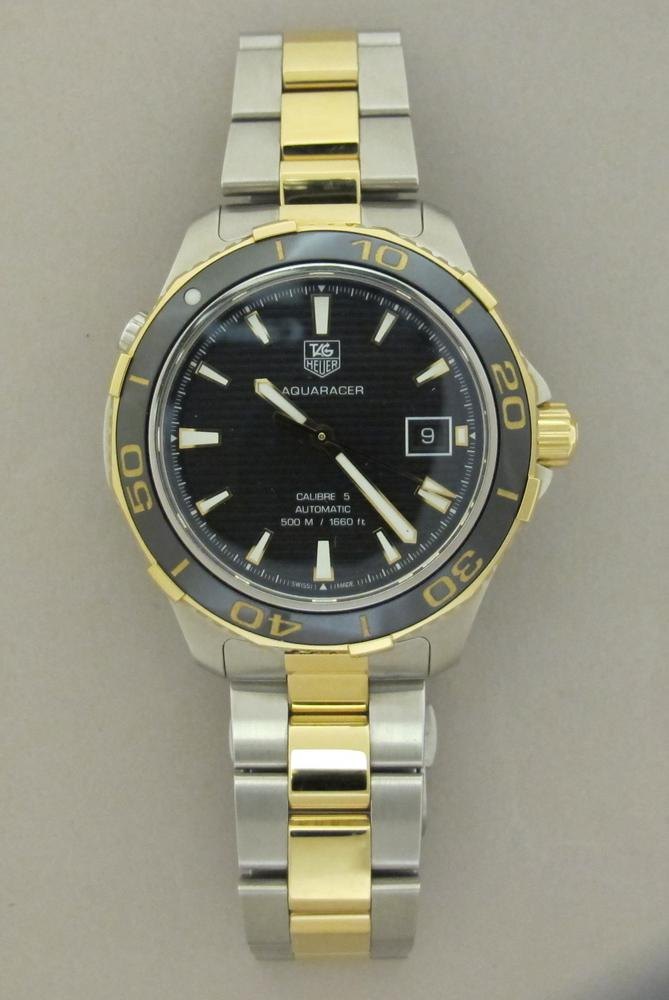
Automatic wristwatch with date
- Date
- 2012
- Historical period
- Contemporary Horology (2010 – Present)
- Country of origin
- Switzerland
- Place
- Switzerland
- Object type
- Wrist-watch
- Materials / technique
- stainless steel, gold, ceramic, sapphire
- Dimensions
- Height: 104 millimetres (max inc strap) Width: 46 millimetres (max) Depth: 17 millimetres (max inc strap)
- Holding institution
- British Museum
- Accession / object no.
- 2018,8024.1
- Credit line
- British Museum, London
- Catalogue title (original)
- Automatic wristwatch with date (English)
View the source record ↗ (opens another website in a new tab)Suggest a correction
Record summary
Held and catalogued by British Museum (object number 2018,8024.1), this is a wrist-watch by TAG Heuer, made in Switzerland, dated 2012. The Atlas places it in the Contemporary Horology period (2010 – Present) of its Wristwatches collection. Materials and techniques recorded by the source: stainless steel, gold, ceramic, sapphire. Recorded dimensions: Height: 104 millimetres (max inc strap) Width: 46 millimetres (max) Depth: 17 millimetres (max inc strap). The record is illustrated with 6 photographs.
Assembled from the source record's structured fields. Dates and attributions are given as the source states them; where a field is missing the Atlas leaves it blank rather than estimating.
Catalogue description
Description — British Museum
Automatic wristwatch with date Strap Brushed stainless steel and gold plated link strap. Case Stainless steel case with screw in case back. Gold screw-in crown at 3 o'clock. Automatic helium valve at 10 o'clock. Black ceramic rotating bezel, with arabic numerals (10-50) with gold edging. Sapphire crystal. Dial Black dial with horizontal grooved pattern. Luminescent indexes for hour markers. Date aperture at 3 o'clock. Luminescent hour and minute hand, seconds hand having luminescent arrow-head tip. Movement Automatic movement based on Selita SW 200 26-jewel movement.
Curator's comments — British Museum
The watch came in a large black cardboard and faux-leather presentation box. The box was not registered, but photographs were taken and are attached to this record. For a similar presention box from TAG Heuer see object 2018,8024.2 The watch has a rapid date change, helium release valve, is waterproof to 500m and has a power reserve of 38 hours. The balance frequency is 28,800 vph The helium escape valve (found at the 10 o'clock position on this watch) is a feature found on some diving watches. When diving to depths over 250ft divers travel down in a diving bell which is saturated with helium and hydrogen. The helium atoms are very small and can enter the divers watch. On returning to the surface as the watch depressurises the build-up of helium inside the watch could cause the crystal to pop off. The helium escape valve can be opened during decompression to release the helium safely.
Inscriptions & marks
inscription; dial; TAG; HEUER; AQUARACER; CALIBRE 5; AUTOMATIC; 500 M / 1660 FT; SWISS MADE; inscription; Strap; TAGHeuer TAGHeuer; STAINLESS STEEL 7-Y1; FAB016; 3173 Y; 3173 Y; inscription; Case back; TAG; HEUER; SWISS MADE SINCE 1860; 500 METERS-1660 FEET.; AUTOMATIC.; SAPPHIRE CRYSTAL.; WAK2122; EAT5438; Image of divers helmet in centre.; inscription; inside of case back; U; inscription; movement, winding weight; TAGEHeuer; Calibre 5; SWISS MADE; inscription; Movement back plate; TWENTY-SIX 26 JEWELS SWISS MADE; DM12/8 314 SW 200-1
Provenance
Donated by:, Anonymous
Historical context
Contemporary Horology (2010 – Present)
Silicon components, connected watches, optical-lattice research clocks and a thriving independent scene.
Smartwatches became the world's best-selling watches, while mechanical watchmaking focuses on craft, innovation (silicon components, new escapements) and independent makers.
Read the period in the timelineMore wristwatches from this periodEarlier: Mechanical Renaissance
Atlas type guide
Automatic (self-winding) watches
Self-winding watches use the wearer's motion to wind the mainspring. Abraham-Louis Perrelet and Breguet made 'perpétuelle' pocket watches with oscillating weights in the late eighteenth century, but the principle only became practical in the wristwatch. John Harwood patented a bumper automatic in 1923; Rolex's Perpetual rotor (1931) winding in one direction, and later bidirectional rotors (Eterna, Felsa Bidynator), established the modern form. Micro-rotors (Universal Genève, Buren) and peripheral rotors made automatic watches thinner.
What to look for
- A semicircular rotor turning 360° over the movement, or a 'bumper' weight that rebounds between springs.
- 'Automatic', 'Perpetual' or 'Self-winding' on the dial.
- A sealed screw-back case, since automatic watches are wound less often by the crown.
Dating clues
- Bumper automatics: 1923–c. 1955.
- Full rotors: from 1931 (Rolex); widespread after c. 1950.
- Micro-rotors: from 1954–1958.
General guidance written by the Atlas editors about this kind of object. It is not a statement about this particular piece; for that, rely on the source record above and on physical examination.
Related records
Wristwatches · c. 2000
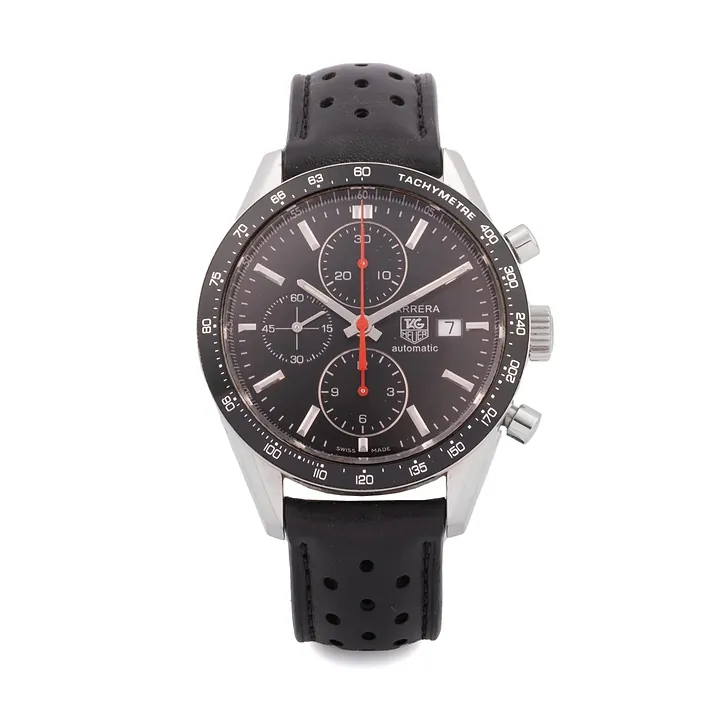
TAG Heuer wristwatch, ref. cv2014-2, c. 2000
Antiquorum auction archive, Geneva
Wristwatches · c. 2010s
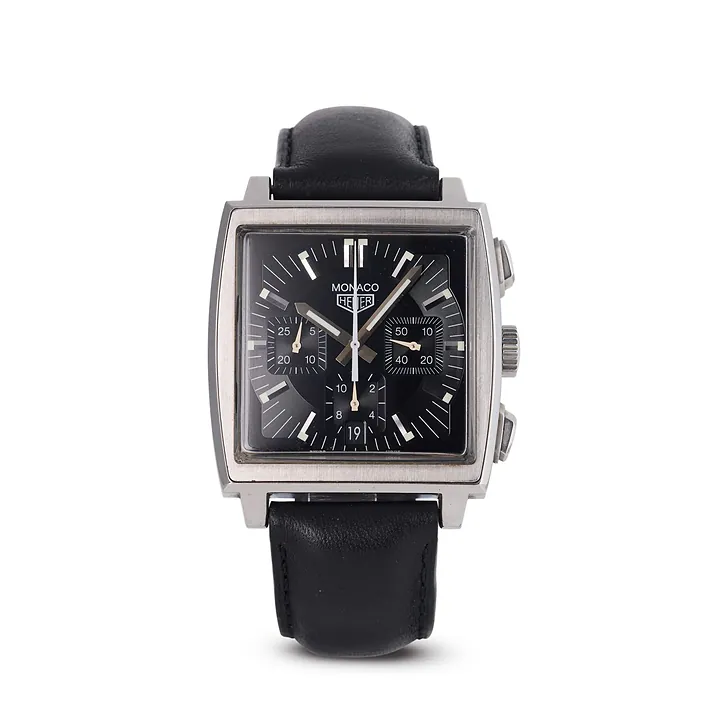
TAG Heuer Monaco, ref. CS2111, c. 2010s
Antiquorum auction archive, Geneva
Wristwatches · c. 2014
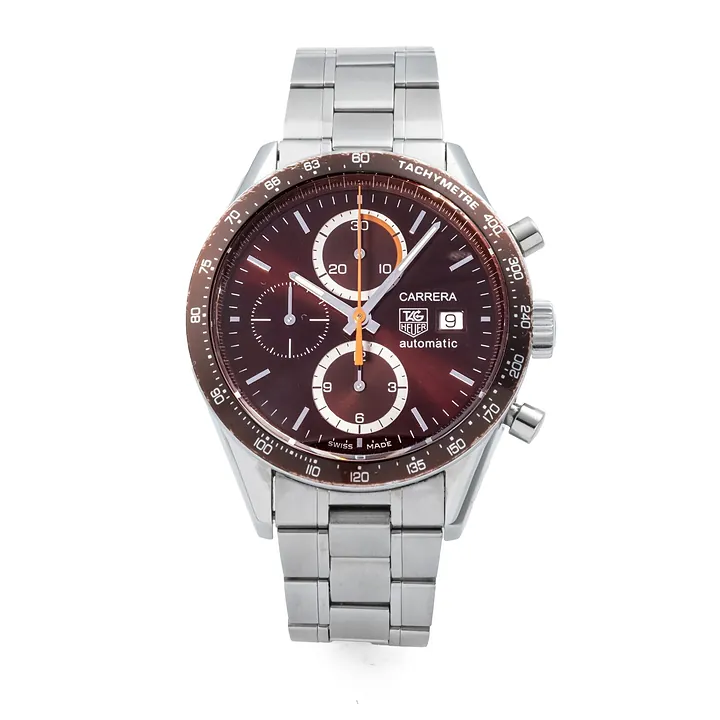
TAG Heuer Carrera 1860, ref. CV2013.BA0794, c. 2014
Antiquorum auction archive, Geneva

Wristwatches · Sold in March 2018
TAG Heuer Carrera, ref. CAR201V, Sold in March 2018
Antiquorum auction archive, Geneva

Wristwatches · c. 2010s
Breguet Type XXI, ref. 3810, c. 2010s (Antiquorum Lot 381-24)
Antiquorum auction archive, Geneva

Wristwatches · c. 2010s
Breguet Type XXI, ref. 3810, c. 2010s (Antiquorum Lot 386-229)
Antiquorum auction archive, Geneva

Wristwatches · Sold in September 2010
Breitling Cosmonaute, ref. A 22322, Sold in September 2010
Antiquorum auction archive, Geneva

Wristwatches · c. 2010
Corum Bubble Chrono, ref. 396.150.20, c. 2010
Antiquorum auction archive, Geneva