
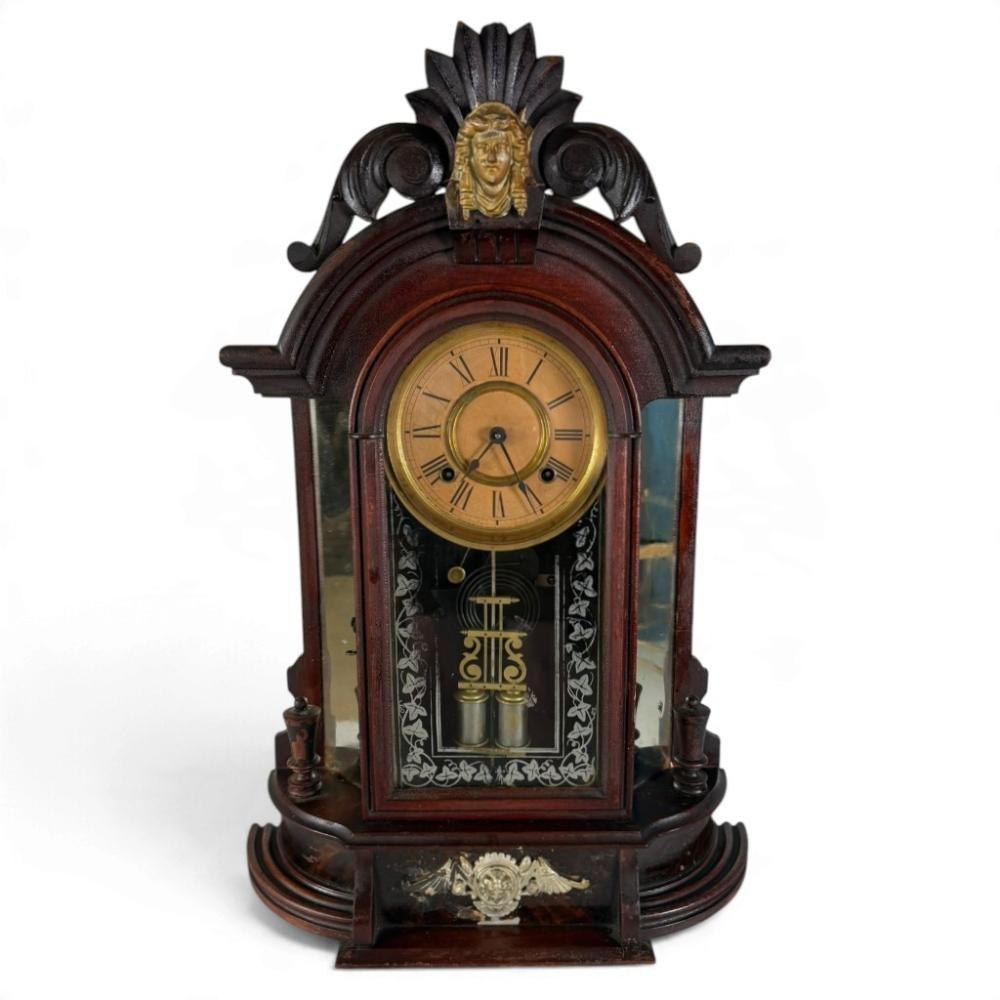
Clocks · Mirror-side mantel clock
Ansonia Triumph Mirror-Side Mantel Clock
- Maker / attribution
- Ansonia Clock Company (source attribution)
- Date
- c. 1880-1900
- Historical period
- Industrial Revolution (1850 – 1900)
- Country of origin
- United States
- Object type
- Mirror-side mantel clock
- Materials / technique
- Walnut, glass and mirrors, metal mounts, brass movement and pendulum fittings
- Dimensions
- 24 in. H, 16 in. W, 5.5 in. D
- Auction house
- Stevens Auction Company
- Lot
- 224
- Credit line
- Stevens Auction Company
- Catalogue title (original)
- At Auction: Ansonia Triumph Mirror-Side Mantel Clock (English)
View the source record (auction lot) ↗ (opens another website in a new tab)Suggest a correction
Record summary
Catalogued by Stevens Auction Company (lot 224), this is a mirror-side mantel clock attributed to Ansonia Clock Company, made in United States, dated c. 1880-1900. The Atlas places it in the Industrial Revolution period (1850 – 1900) of its Clocks collection. Materials and techniques recorded by the source: Walnut, glass and mirrors, metal mounts, brass movement and pendulum fittings. Recorded dimensions: 24 in. H, 16 in. W, 5.5 in. D. The record is illustrated with 1 photograph.
Assembled from the source record's structured fields. Dates and attributions are given as the source states them; where a field is missing the Atlas leaves it blank rather than estimating.
Catalogue description
Original object description
Dating to circa 1880–1900, this Victorian walnut mantel clock was produced by the Ansonia Clock Company as the 'Triumph' model. Standing 24 inches high, 16 inches wide, and 5.5 inches deep, the carved housing features a tiered, curved base detailed with gilt accents and rises to a molded arch crested by scrolling foliage, a fan, and a gilt female mask. Flanking the central glazed door—which is decorated with etched or stenciled scrolling foliate motifs—are slender mirrored side inserts. A brass bezel encircles a dual-winding-arbor paper dial marked with Roman numerals and the text 'MANUFACTURED BY ANSONIA CLOCK CO. NEW YORK U.S.A.' Inside, an ornate lyre-shaped pendulum with double cylindrical bobs swings before a coiled wire chime. Affixed to the reverse are an incomplete original manufacturer label bearing the model designation 'TRIUMPH' and a historical repair sticker from Govertsen Jewelry of Brooklyn.
Historical context
Industrial Revolution (1850 – 1900)
American interchangeable-parts manufacture; railroad time standards; Swiss and German factory systems.
Factory production transformed the clock into an everyday object. American makers (Seth Thomas, Ansonia, Waterbury) and German factories (Junghans, Gustav Becker, Lenzkirch) sold millions of shelf, wall and alarm clocks worldwide; France produced standardised Paris movements and carriage clocks; electric time distribution began.
Read the period in the timelineMore clocks from this periodEarlier: Precision & Scientific Horology
Atlas type guide
Mantel and French pendule clocks
The mantel clock — the French pendule de cheminée — is as much decorative art as timekeeper. From the late seventeenth century Parisian clockmakers worked with cabinet-makers, bronze founders and gilders (ciseleurs-doreurs) to create cases in Boulle marquetry, gilt bronze and marble, while the movements were often supplied by specialist makers. Clocks of the Louis XIV, Louis XV and Louis XVI periods, and Empire clocks with allegorical figures, set fashions copied across Europe.
The nineteenth century industrialised the type. The 'Paris movement', a standardised round movement with silk-thread or Brocot suspension and count-wheel striking, was made in huge numbers by firms such as Japy and Vincenti, and fitted into cases of every style and material.
What to look for
- Round 'Paris' movements with makers' stamps (e.g. Japy Frères, Vincenti, S. Marti) and medal marks from exhibitions.
- Suspension type: silk thread (earlier) or Brocot adjustable suspension (after c. 1840).
- Visible Brocot escapement on the dial in later clocks.
- Fire-gilt (mercury) gilding on bronzes versus later electro-gilding.
- Signed dials naming a retailer rather than the movement maker.
Dating clues
- Silk-suspension Paris movements: c. 1800–1850.
- Brocot suspension and visible escapements: after c. 1840.
- Exhibition medal stamps on movements give dates after the medal year.
General guidance written by the Atlas editors about this kind of object. It is not a statement about this particular piece; for that, rely on the source record above and on physical examination.
Read next:Anchor (recoil) escapement
Related records
Instruments · 1922–1939
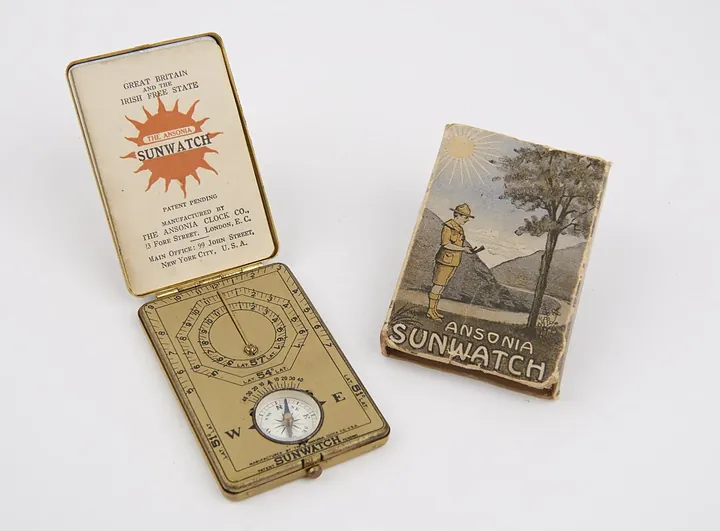
Ansonia Sun-watch in original card case, with instruction leaflet, c.1922
Science Museum Group, London
Instruments · 1922–1939
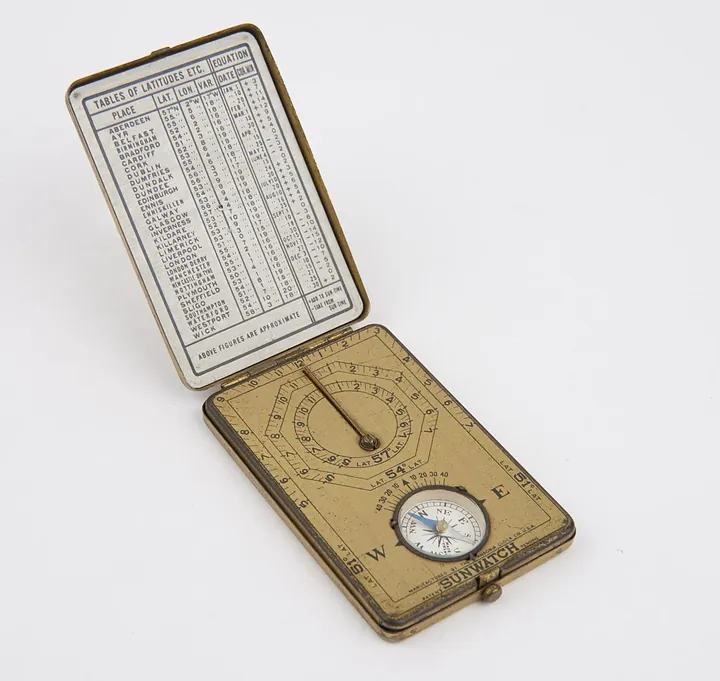
Ansonia Sunwatch (pocket compass dial)
Science Museum Group, London
Pocket Watches · c. 1890
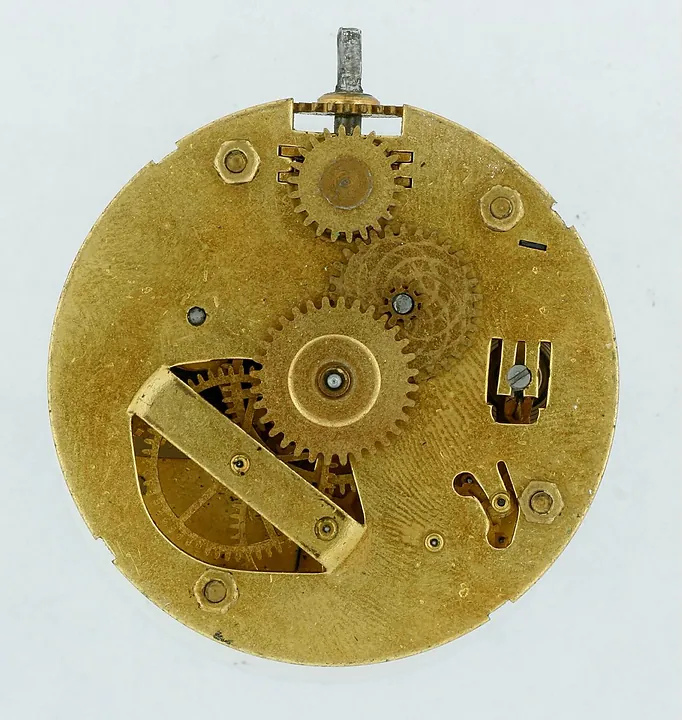
Pocket watch by Ansonia Clock Company, United States, c. 1890
German Clock Museum
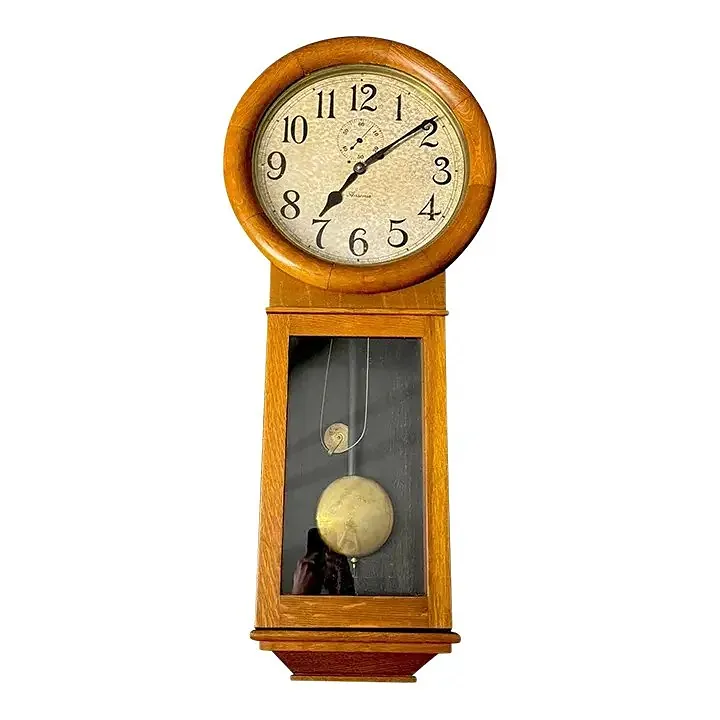
Clocks · 1900–1909
Ansonia “Regulator #2” Single Weight Wall Clock
Parc Villefranche / Chairish
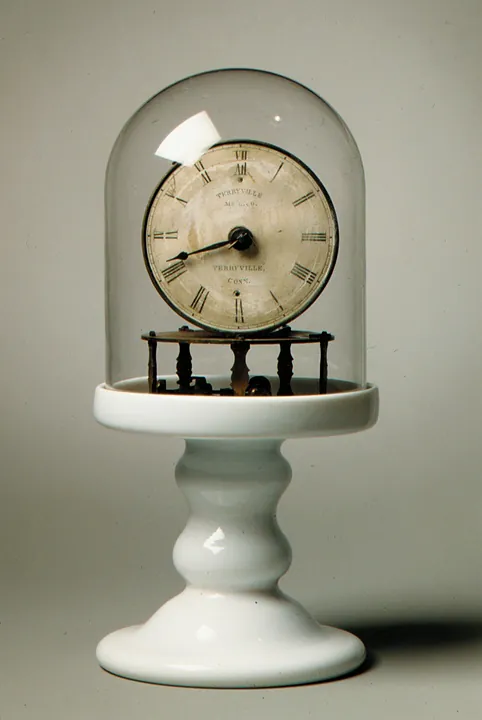
Clocks · c. 1852
Clock, United States, c. 1852
The Metropolitan Museum of Art, New York
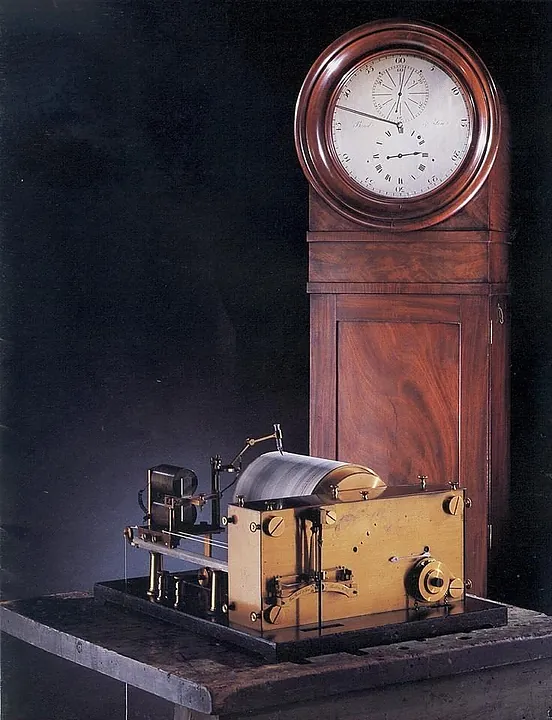
Clocks · c. 1850
Clock by William Bond & Son, United States, c. 1850
National Museum of American History, Smithsonian Institution, Washington DC
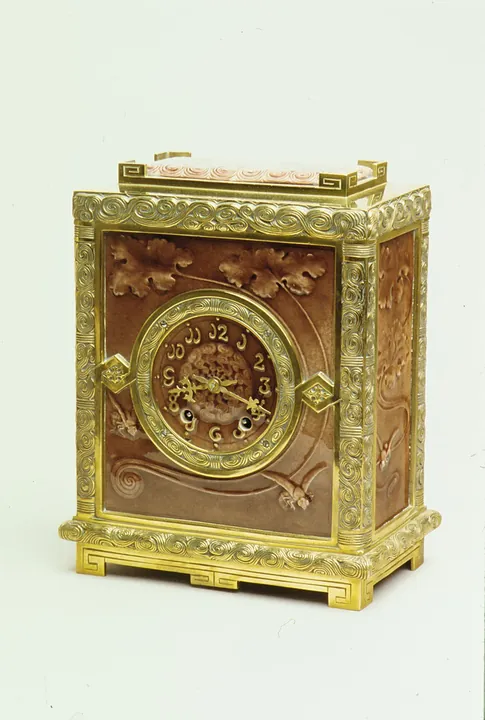
Clocks · c. 1882–85
Clock by J. and J. G. Low Art Tile Works, United States, c. 1882–85
The Metropolitan Museum of Art, New York
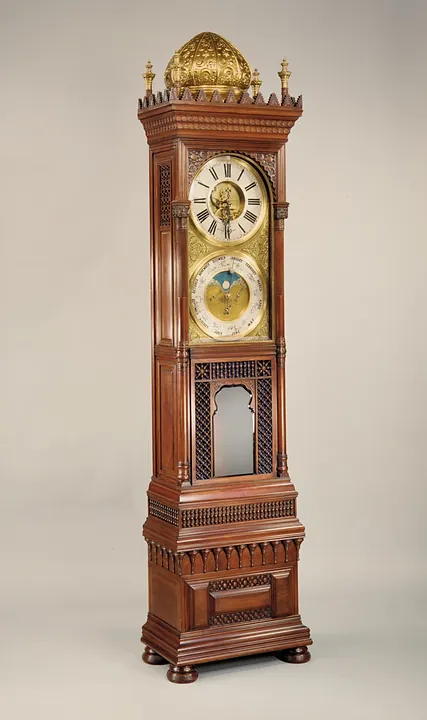
Clocks · c. 1882–85
Tall clock by Tiffany & Co., United States, c. 1882–85
The Metropolitan Museum of Art, New York