
Clocks · Regulator wall clock
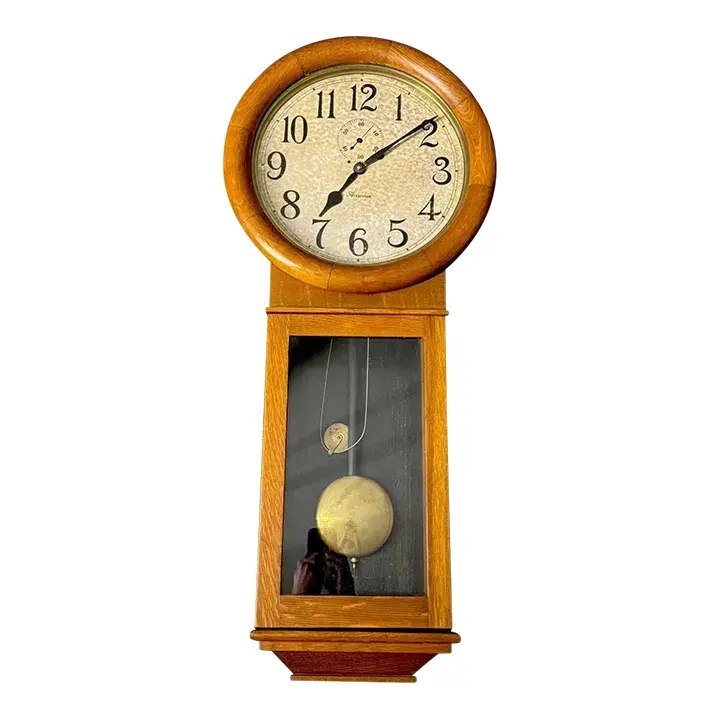
Ansonia “Regulator #2” Single Weight Wall Clock
- Maker / attribution
- Ansonia Clock Company (source attribution)
- Date
- 1900–1909
- Historical period
- Golden Age of Mechanical Watchmaking (1900 – 1945)
- Country of origin
- United States
- Object type
- Regulator wall clock
- Dimensions
- 16ʺW × 5.75ʺD × 36.25ʺH
- Holding institution
- Parc Villefranche / Chairish
- Accession / object no.
- 21210585
- Credit line
- Parc Villefranche / Chairish
- Catalogue title (original)
- Antique Ansonia “Regulator #2” Single Weight Regulator Wall Clock | Chairish (English)
View the source record ↗ (opens another website in a new tab)Suggest a correction
Record summary
Held and catalogued by Parc Villefranche / Chairish (object number 21210585), this is a regulator wall clock attributed to Ansonia Clock Company, made in United States, dated 1900–1909. The Atlas places it in the Golden Age of Mechanical Watchmaking period (1900 – 1945) of its Clocks collection. Recorded dimensions: 16ʺW × 5.75ʺD × 36.25ʺH. The record is illustrated with 1 photograph.
Assembled from the source record's structured fields. Dates and attributions are given as the source states them; where a field is missing the Atlas leaves it blank rather than estimating.
Catalogue description
Original object description
Attributed to the Ansonia Clock Company as their 'Regulator #2' model, this American wall regulator dates between 1900 and 1909 according to the seller. Measuring 36.25 inches in height, 16 inches in width, and 5.75 inches in depth, the wood and metal structure features a rounded upper hood and an elongated rectangular lower case. The patterned upper dial is marked with black Arabic numerals, the name 'Ansonia', and a sub-seconds indicator positioned beneath 12 o'clock. Below, a glazed front door reveals the weight cable, pulley, and suspended pendulum assembly with bob. Motive power is delivered by a solitary heavy weight. Serviced in 2022, the timepiece was operating during recent inspection, though it lacks accompanying factory documentation or model-confirming hallmarks, and future timekeeping precision cannot be assured.
Historical context
Golden Age of Mechanical Watchmaking (1900 – 1945)
The wristwatch displaces the pocket watch; waterproof cases, self-winding and grand complications.
Between 1900 and 1945 clocks were electrified: master-clock systems ran factories and offices, synchronous mains clocks entered homes, and the Shortt free-pendulum clock set new standards of accuracy before the first quartz clocks (1927). Art Deco design reshaped mantel and table clocks.
Read the period in the timelineMore clocks from this periodEarlier: Industrial Revolution
Atlas type guide
Regulators, wall and Vienna clocks
A regulator is a precision pendulum clock used as a time standard in observatories, workshops and railway offices. Typical features are a deadbeat or Graham escapement, a temperature-compensated pendulum (mercury jar, gridiron or later invar), maintaining power and a regulator dial that separates hours, minutes and seconds. George Graham's deadbeat escapement (c. 1715) and his mercury pendulum, together with Harrison's gridiron, set the pattern for two centuries.
Wall clocks span a much wider range: the elegant Viennese Laterndluhr and Dachluhr of the Biedermeier period, the Dutch stoelklok and staartklok, English 'dial' clocks used in schools, offices and railway stations, and mass-produced spring and weight wall clocks from Germany (Gustav Becker, Junghans, Kienzle) and America.
What to look for
- Deadbeat escapement and compensated pendulum (gridiron rods, mercury jar or wood rod).
- A regulator dial with a large central minute hand and separate hour and seconds dials.
- Vienna regulators: glazed cases, slender pendulum, small weights, enamel two-piece dials.
- German factory trademarks stamped on the backplate (e.g. Gustav Becker anchor and crown, Junghans star).
Dating clues
- Graham-type deadbeat regulators: from c. 1720.
- Viennese Laterndluhr: c. 1800–1850.
- German factory 'Vienna-style' regulators: c. 1870–1930; Gustav Becker serial numbers allow close dating.
General guidance written by the Atlas editors about this kind of object. It is not a statement about this particular piece; for that, rely on the source record above and on physical examination.
Read next:Deadbeat escapementAnchor (recoil) escapementGrasshopper escapement
Related records
Instruments · 1922–1939
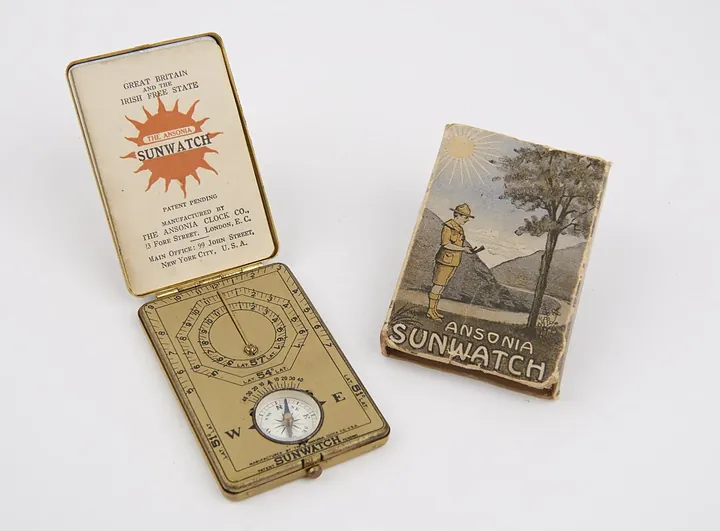
Ansonia Sun-watch in original card case, with instruction leaflet, c.1922
Science Museum Group, London
Instruments · 1922–1939
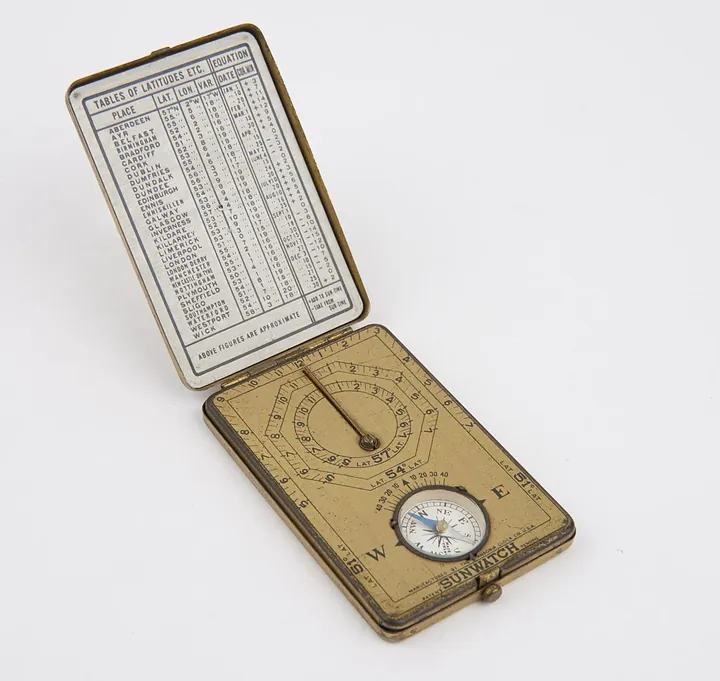
Ansonia Sunwatch (pocket compass dial)
Science Museum Group, London
Pocket Watches · c. 1890
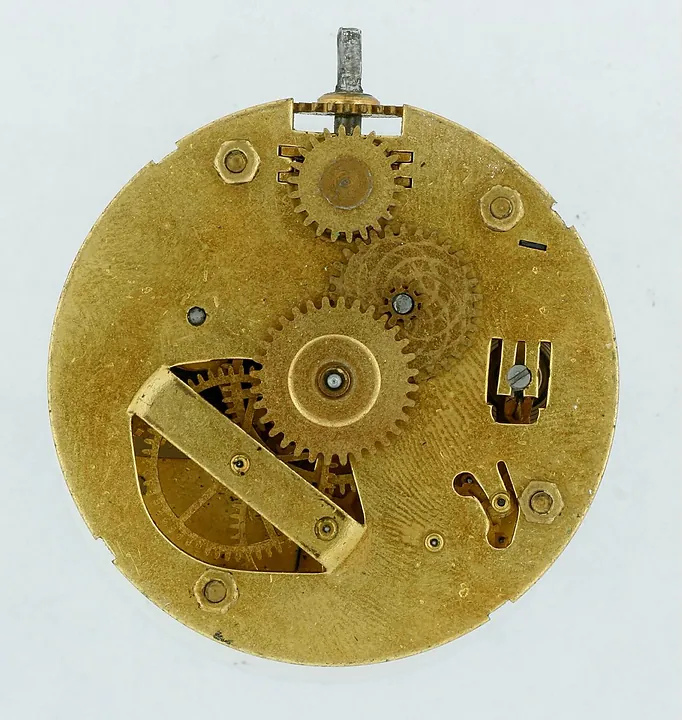
Pocket watch by Ansonia Clock Company, United States, c. 1890
German Clock Museum
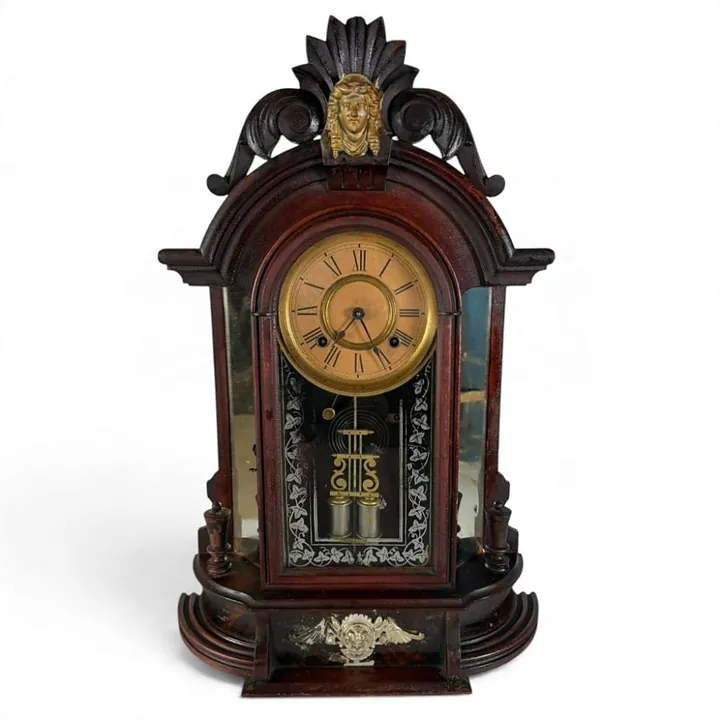
Clocks · c. 1880-1900
Ansonia Triumph Mirror-Side Mantel Clock
Stevens Auction Company
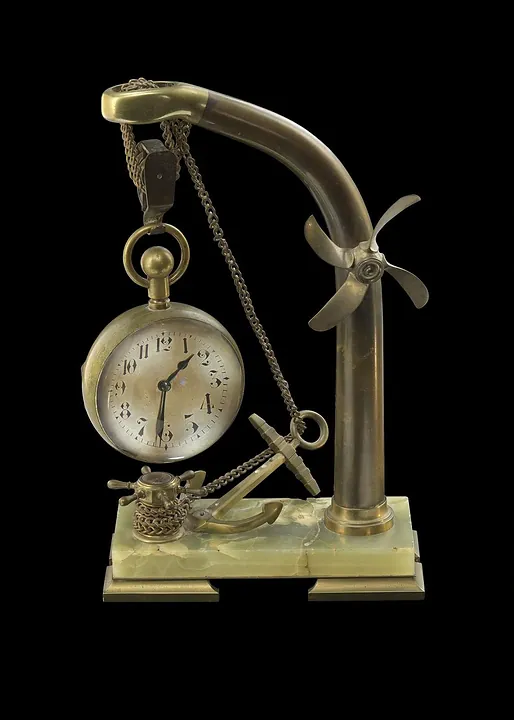
Clocks · 1905–1919
Mantel clock given by President Theodore Roosevelt to William L. Houston, United States, 1905–1919
National Museum of African American History and Culture, Smithsonian Institution, Washington DC
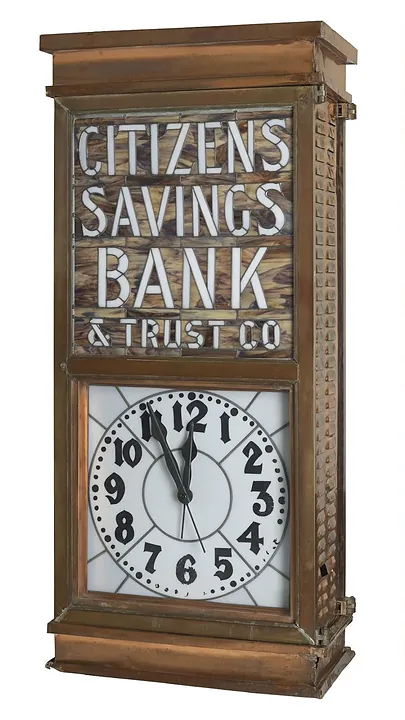
Clocks · 1920–2013
Bank clock and sign of the Citizens Savings Bank & Trust Co., Nashville, 1920–2013
National Museum of African American History and Culture, Smithsonian Institution, Washington DC
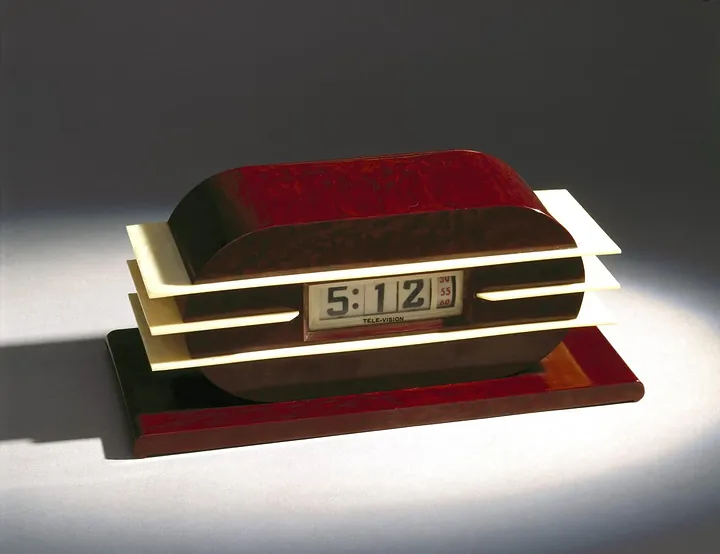
Clocks · 1925–1940
Brown phenolic electric digital clock with `TELE-VISION' on the face. Made by Penwood Numechron Co., U.S.A., c. 1930. Art Deco design.
Science Museum Group, London
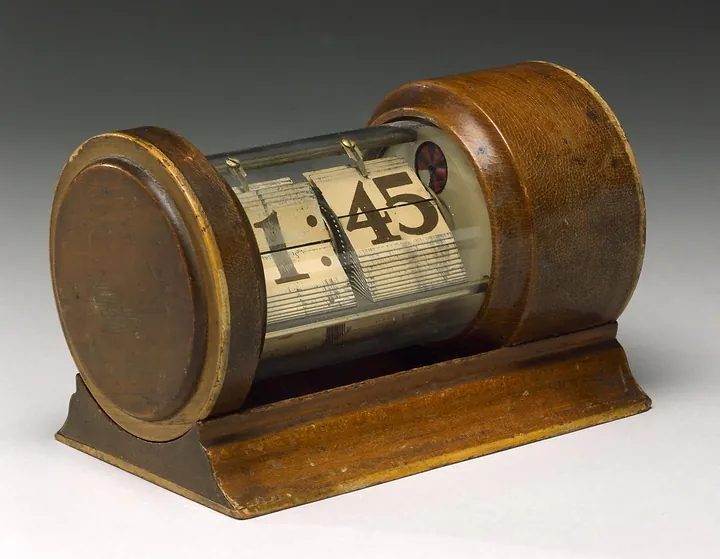
Clocks · 1934
Synchronous mains electric clock of the self-starting type, with digital display. Made by The Westinghouse Electric Supply Co. USA. Early c.1934's
Science Museum Group, London