
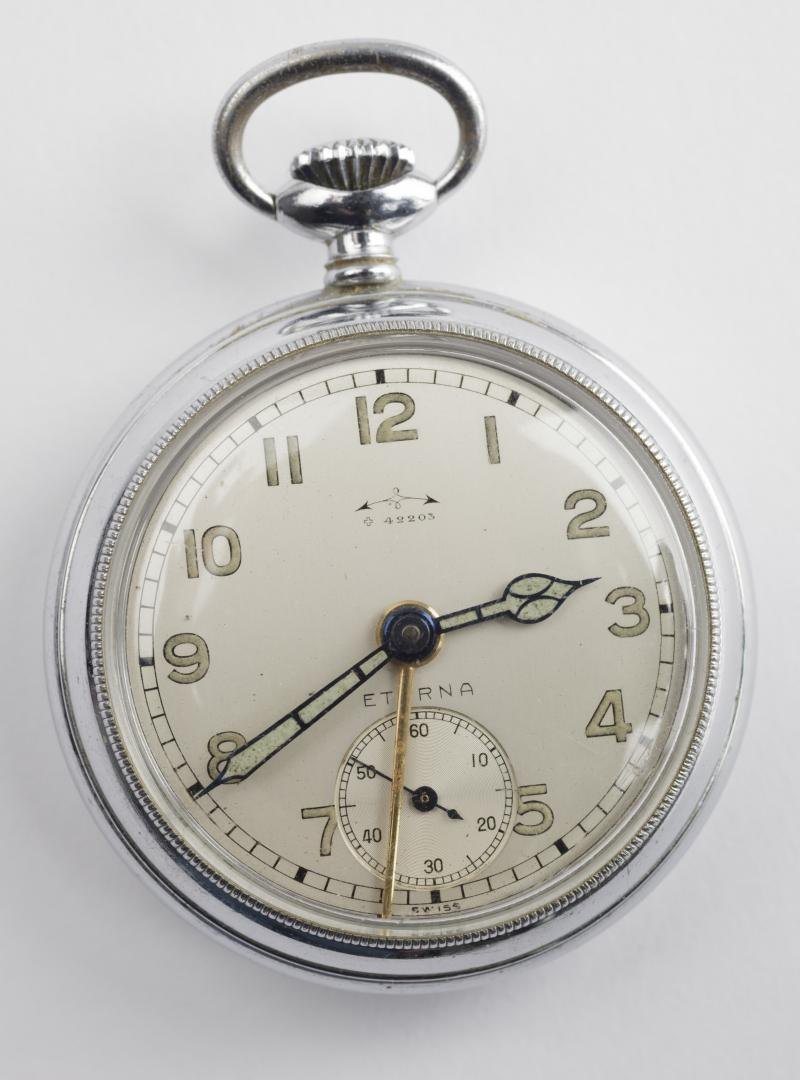
Clocks · Alarm clock
Alarm clock by Eterna, Switzerland, 1910–1940
- Maker / attribution
- Eterna (maker)
- Date
- 1910–1940
- Historical period
- Golden Age of Mechanical Watchmaking (1900 – 1945)
- Country of origin
- Switzerland
- Place
- Switzerland
- Object type
- Alarm clock
- Materials / technique
- metal, steel
- Dimensions
- height: 6,8 cm, diameter: 5,1 cm, thickness: 1,9 cm.
- Holding institution
- Lusto – Suomen Metsämuseo
- Accession / object no.
- E04026:3
- Credit line
- Lusto – Suomen Metsämuseo (via Finna)
- Catalogue title (original)
- Kello; Taskukello, Herätyskello; Eterna 42203 (Finnish)
View the source record ↗ (opens another website in a new tab)Suggest a correction
Record summary
Held and catalogued by Lusto – Suomen Metsämuseo (object number E04026:3), this is an alarm clock by Eterna, made in Switzerland, dated 1910–1940. The Atlas places it in the Golden Age of Mechanical Watchmaking period (1900 – 1945) of its Clocks collection. Materials and techniques recorded by the source: metal, steel. Recorded dimensions: height: 6,8 cm, diameter: 5,1 cm, thickness: 1,9 cm. The record is illustrated with 2 photographs.
Assembled from the source record's structured fields. Dates and attributions are given as the source states them; where a field is missing the Atlas leaves it blank rather than estimating.
Catalogue description
Description — Lusto – Suomen Metsämuseo
Pienikokoinen, teräskuorinen taskukello, jossa takana aukeava kansi ja reunassa korkean kannan päässä oleva urasivuinen vetonuppi. Nupin päällä kaartuu soikea, eteen ja taakse taivutettavissa oleva metallirengas. Pyöreässä, litteässä kellossa on vaalean beigen värinen kellotaulu, jonka reunoja kiertää pienten ruutujen muodostama minuuttiviivasto. Tunnit on merkitty numeroin 1 - 12. Kookkaat numerot ovat väriltään vaalean vihreät, fosforoidut. Kellotaulun alaosassa, numeron 6 paikalla on pienikokoinen pyöreä sekuntikellotaulu, jossa samanlainen ruutujen muodostama reunaviivasto ja ohuet numerot 10, 20 ...60. Keskellä ohut, musta viisari. Kellotaulun keskitappiin on kiinnitetty kolme viisaria: lyhyt ja päästään sipulimaiseksi muotoiltu tuntiviisari, pidempi ja suorempi minuuttiviisari sekä messingin värinen, kapea ja pitkä viisari herätysajan säätämiseksi. Minuutti ja tuntiviisarit ovat fosforoidut, ja niissä on ohuita mustia koristeviivoja. Avattavan takakannan alla on kellon takasivussa neljä pientä aukkoa. Kolme aukkoa on todennäköisesti tarkoitettu kellon säätämistä varten, neljännen vieressä on toisella puolella metalliin pakotettu soittokellon kuva, toisella taas sana STOP.
Shown in the original language of the source catalogue. An editor-reviewed English translation has not yet been published; we do not publish machine translations as authoritative text.
Inscriptions & marks
Takakannen sisäpuolelle pakotettu merkinnät: ETERNA 3193974. Kellotaulussa numerot 42203, teksti ETERNA sekä fosforoidut numerot 1 - 12. Erillisessä sekuntitaulussa numerot 10, 20...60. Kellon takasivussa on pieni aukko, jonka toisella puolella on metalliin pakotettu soittokellon kuva, toisella taas sana STOP. Toisen aukon alapuolella viivastomerkintä, jonka vasemmalla puolella kirjain R ja oikealla A, alapuolella ylöspäin osoittava nuoli.
Historical context
Golden Age of Mechanical Watchmaking (1900 – 1945)
The wristwatch displaces the pocket watch; waterproof cases, self-winding and grand complications.
Between 1900 and 1945 clocks were electrified: master-clock systems ran factories and offices, synchronous mains clocks entered homes, and the Shortt free-pendulum clock set new standards of accuracy before the first quartz clocks (1927). Art Deco design reshaped mantel and table clocks.
Read the period in the timelineMore clocks from this periodEarlier: Industrial Revolution
Atlas type guide
Alarm clocks
Alarm work is among the oldest clock functions: monastic clocks woke monks for night prayers, and Renaissance table clocks often carried an alarm disc set by a pin. A separate spring or weight is released at the set time and drives a hammer against a bell. Some early alarms also lit a candle by striking a flint — the 'tinder pistol' alarm.
The cheap, mass-produced alarm clock arrived in the second half of the nineteenth century. American firms such as Seth Thomas and Westclox (the 'Big Ben' of 1910) and German makers such as Junghans and Kienzle made millions of drum-shaped alarms with pin-pallet escapements. Electric, quartz and digital alarm clocks followed in the twentieth century.
What to look for
- A separate alarm-setting dial or disc and an extra winding key.
- Twin bells on top (common after c. 1920) or a bell enclosed in the base.
- Pin-pallet escapements in inexpensive factory alarms.
- Trademarks and patent dates on dial or back.
Dating clues
- Renaissance alarm table clocks: sixteenth to seventeenth centuries.
- Drum alarm clocks: from the 1870s.
- Luminous dials with radium paint: c. 1910–1960.
General guidance written by the Atlas editors about this kind of object. It is not a statement about this particular piece; for that, rely on the source record above and on physical examination.
Related records

Wristwatches · 1945
Wristwatch by Eterna, 1945
Museum Rotterdam
Wristwatches · 1900–1999
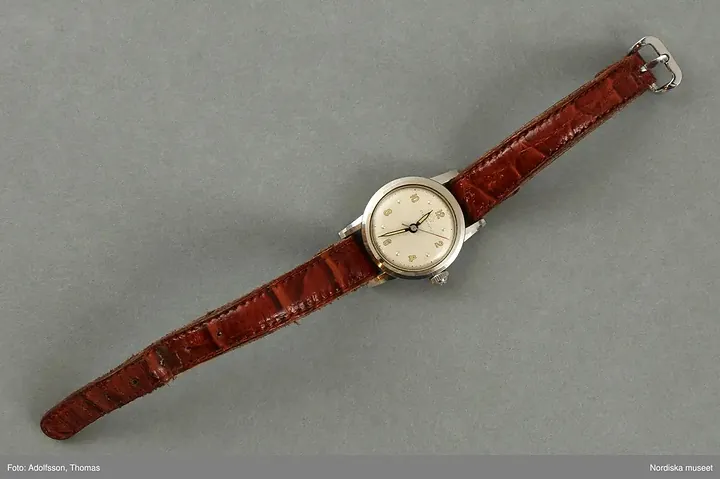
Wristwatch by Eterna, Sweden, 1900–1999
Nordic Museum Foundation
Wristwatches · c. 1930s
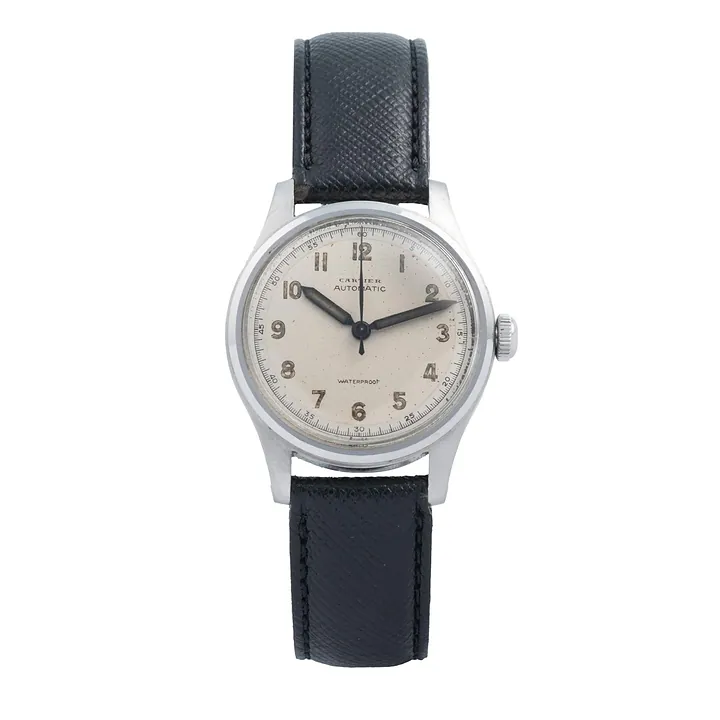
Eterna wristwatch, c. 1930s
Antiquorum auction archive, Geneva
Pocket Watches · 1934
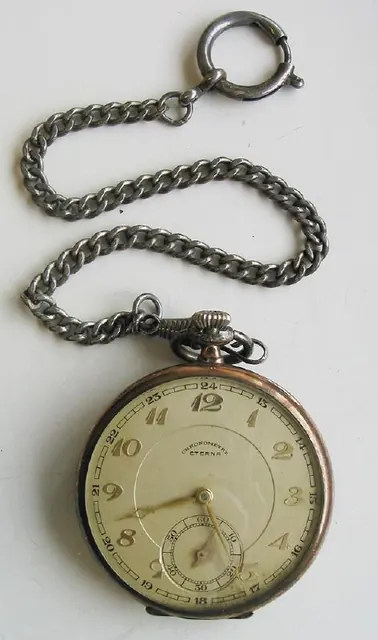
Pocket watch by Eterna, Switzerland, 1934
Turun kaupunginmuseo
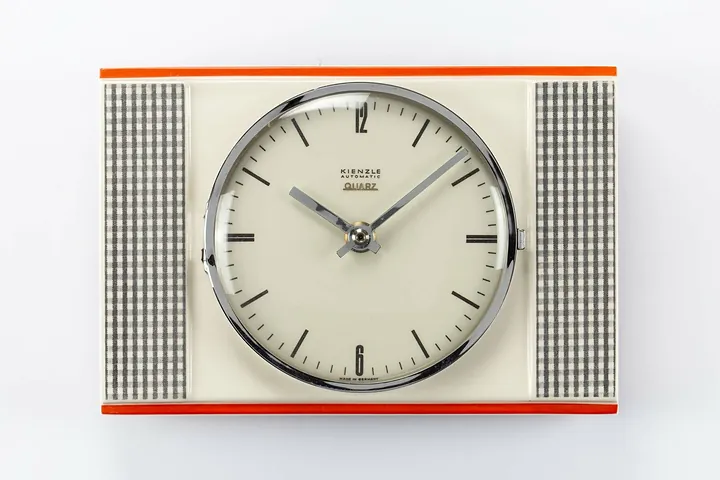
Clocks · 1900–1999
Clock by Kienzle - Uhrenfabrik, Switzerland, 1900–1999
German Clock Museum
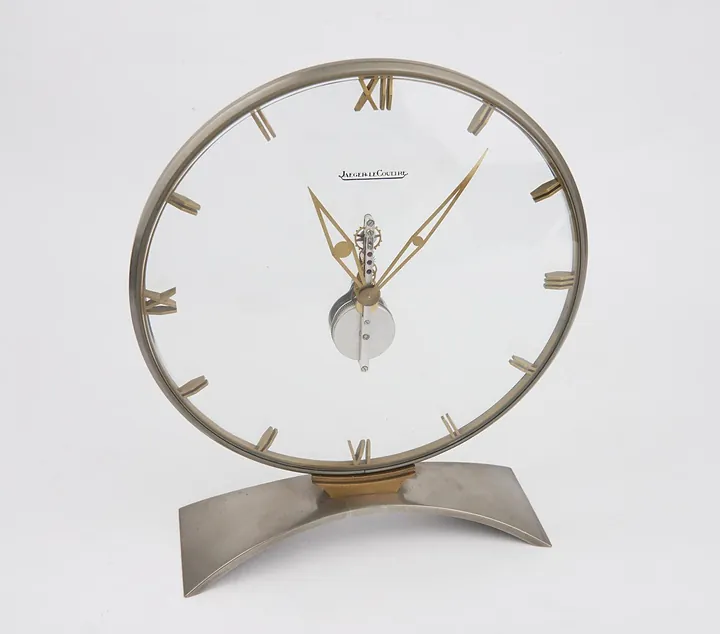
Clocks · 1937–1938
Skeleton clock by Jaeger-LeCoultre, Switzerland, 1937–1938
Science Museum Group, London
Clocks · c. 1930
Musical Clock - Didisheim-Goldschmidt Fils & Co, Switzerland, c. 1930
Museums Victoria, Melbourne
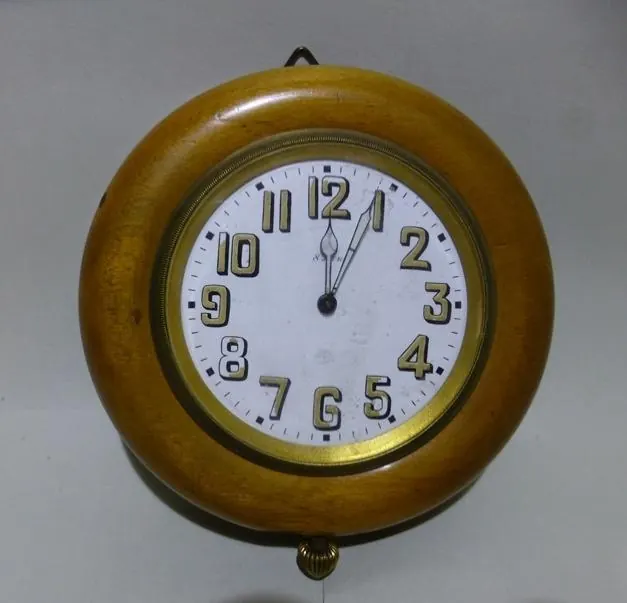
Clocks · 1900–1949
Wall clock, Switzerland, 1900–1949
Heinolan museot