
Wristwatches · Wristwatch
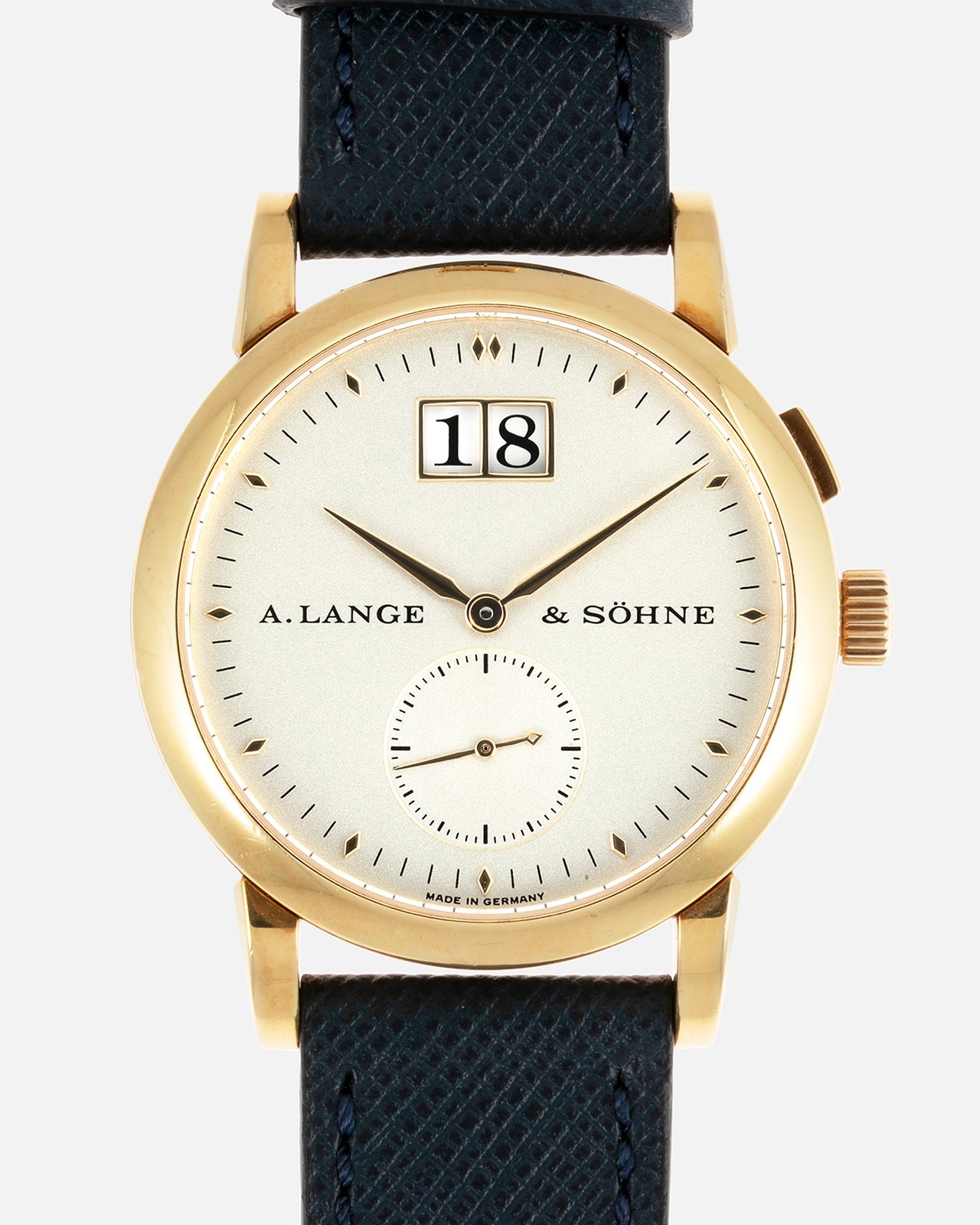
A. Lange & Sohne Saxonia 105.021, 1990s
- Maker / attribution
- A. Lange & Sohne (maker)
- Date
- 1990s
- Historical period
- Mechanical Renaissance (1990 – 2010)
- Country of origin
- Germany
- Object type
- Wristwatch
- Dimensions
- Case 33.9 mm
- Stock no.
- Product 6843691466839
- Credit line
- Dealer listing, S.Song Watches (product 6843691466839)
- Catalogue title (original)
- A. Lange & Sohne Saxonia 105.021 (English)
View the source record (dealer listing) ↗ (opens another website in a new tab)Suggest a correction
Record summary
Catalogued by S.Song Watches (dealer), Seattle (stock number Product 6843691466839), this is a wristwatch by A. Lange & Sohne, made in Germany, dated 1990s. The Atlas places it in the Mechanical Renaissance period (1990 – 2010) of its Wristwatches collection. Recorded dimensions: Case 33.9 mm. The record is illustrated with 6 photographs.
Assembled from the source record's structured fields. Dates and attributions are given as the source states them; where a field is missing the Atlas leaves it blank rather than estimating.
Catalogue description
Dealer description — S.Song Watches
First released in 1994 as A. Lange & Söhne's prototype dress watch, the Saxonia has had an undeniable air of elegance, sophistication, and stunning design baked into its aesthetic since it first made its way onto the wrists of watch collectors. Since then, the collection has evolved to include some of the most stunning dress watches around and the watch I have here - the Saxonia Ref. 105.021, produced between 1997 to 2007, is no exception. For historical context, when the Berlin wall fell in 1989, Ferdinand Adolph Lange’s grandson, Walter Lange, together with the successful entrepreneur, Günter Blümlein, set out to re-establish the pinnacle of German watchmaking. As a result of this partnership, the Saxonia collection was born. At the time, it was introduced as a part of the initial quartet of watches launched in 1994. In a way, the Saxonia represented one of the pillars of the brand’s renaissance, and the name “Saxonia” was specifically chosen to honour the German region of Saxony where Ferdinand Adolph Lange first erected the manufacture. The Saxonia Ref. 105.021 offered here was meant to replace its predecessor – the Ref. 102.001. It features a 33.9mm x 9.1mm case in 18-carat yellow gold which is finished with a satin-brushed case band with a contrasting, mirror-polished bezel. The watch also comes equipped with an external pusher at the 2 o ‘clock position which allows the user to conveniently set the date. On its gorgeous, silvery champagne dial, there are subtle diamond shape markers at its periphery that are interspersed with evenly-spaced minute markers. The gold sword-shaped hands on the Saxonia are slim and exude a sense of elegance and refinement. You will also find a date window at 12 o ‘clock and a small seconds at 6 o ‘clock. One element I find very amusing is the split “A. Lange & Sohne” logo at the center of the dial which ties in nicely to form a very well-balanced visual. As the pioneering modernist architect Ludwig Mies van Der Rohe once famously said, “Less is more”, but he also said, “I don’t want to be interesting. I want to be good”. I feel that this particular Saxonia reference embodies the exact spirit of these expressions. At the time of its inception, there was a very clear focus on ensuring the core elements of the Saxonia were executed to a very high level. However, these words only hold true up until the point you turn the watch to its case back. As with most A. Lange & Sohne timepieces, the movements used are a big highlight of what makes a Lange timepiece so special. Encased behind the Saxonia’s exhibition-style case back is a visually engaging Cal. L941.3 - a manually wound movement that is fundamentally based on the Cal. L941.1. It consists of 164 parts, beats at 3 Hz, features Lange’s signature three-quarter plate, gold chatons, and a hand-engraved balance cock. It also boasts a respectable 45-hour power reserve. During my time with this Saxonia, I constantly find myself gazing at the watch and unconsciously examining the finishing, details, and overall presentation. There is something about this reference that exudes a very understated, elusive, and almost puristic sense of elegance that is very absent in many other watches I’ve handled before from this time period. I feel the great need to emphasize that A. Lange & Söhne has done an outstanding job with this Saxonia reference and I am just utterly astonished by how such a small watch could provide such immense tactile satisfaction and an enjoyable on-wrist experience.
Historical context
Mechanical Renaissance (1990 – 2010)
Mechanical watches return as cultural objects; independent watchmaking flourishes.
Mechanical watches returned as cultural and luxury objects. Complications, tourbillons and new materials proliferated; independent watchmakers such as George Daniels, F.P. Journe and Philippe Dufour revived artisanal watchmaking; collecting vintage watches became a major field.
Read the period in the timelineMore wristwatches from this periodEarlier: Quartz Revolution
Atlas type guide
Wristwatches
Bracelet watches were worn by women from the early nineteenth century — Breguet made one for Caroline Murat, Queen of Naples, in 1810–12 — but the wristwatch only became a man's instrument with military use and aviation in the early twentieth century. Between the World Wars it overtook the pocket watch; the 1920s and 1930s brought rectangular Art Deco cases, water-resistant cases and the first automatic winding systems.
After 1945 the wristwatch became a carrier of identity — dress watches, sports and dive watches, chronographs, calendars — produced by Swiss, American, Japanese, German, Soviet and Chinese industries. The quartz revolution after 1969 and the mechanical renaissance since the 1990s, including the rise of independent watchmakers, complete the story.
What to look for
- The reference number (between the lugs or inside the case back) and serial number, the starting point for dating.
- The calibre: its maker and number are often stamped under the dial or on the bridge.
- Originality of dial, hands and crown — refinished ('redial') dials are common.
- Case material marks: 18K/750, 14K/585, stainless steel, gold-filled, plated.
Dating clues
- Wire-lug cases: before c. 1925.
- Water-resistant screw-down cases: from 1926.
- Quartz movements: from 1969; sapphire crystals widespread after c. 1980.
General guidance written by the Atlas editors about this kind of object. It is not a statement about this particular piece; for that, rely on the source record above and on physical examination.
Related records
Wristwatches · originally sold on 16 December 2001 (per the lot record)
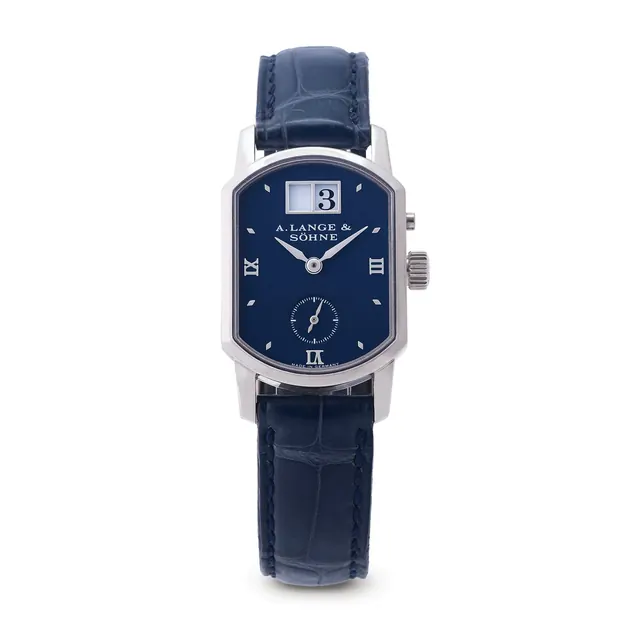
A. Lange & Sohne wristwatch, ref. 103.027, Arkade, originally sold on 16 December 2001
Antiquorum auction archive, Geneva
Instruments · c. 1942
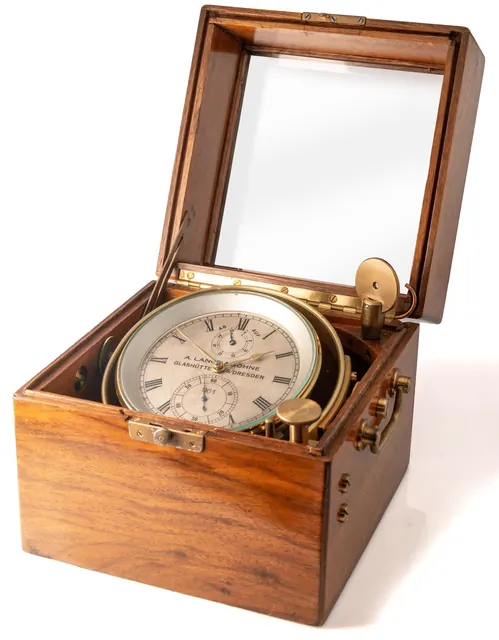
A. Lange & Sohne marine chronometer, Germany Wood, circa 1942
Antiquorum auction archive, Geneva
Wristwatches · 2004
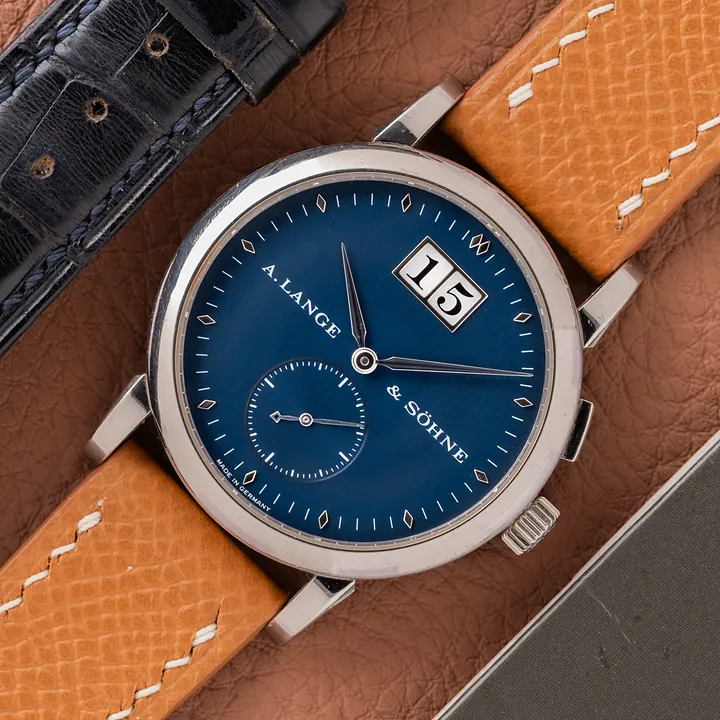
A. Lange & Söhne Saxonia Oversized Date Blue (Ref. 105.027), 2004
Huntington Company (dealer)
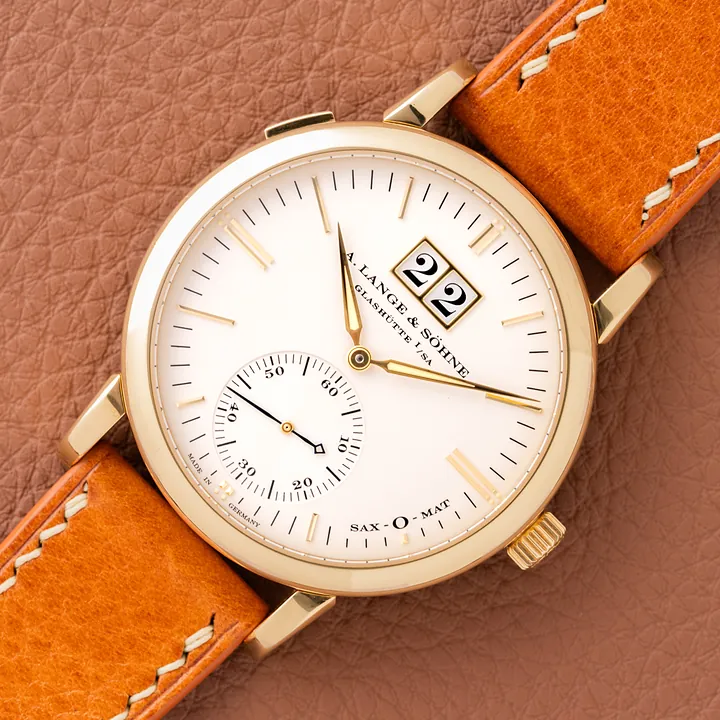
Wristwatches · 2000s
A. Lange & Söhne Langematik Oversized Date (Ref. 308.021), 2000s
Huntington Company (dealer)
Wristwatches · c. 1990
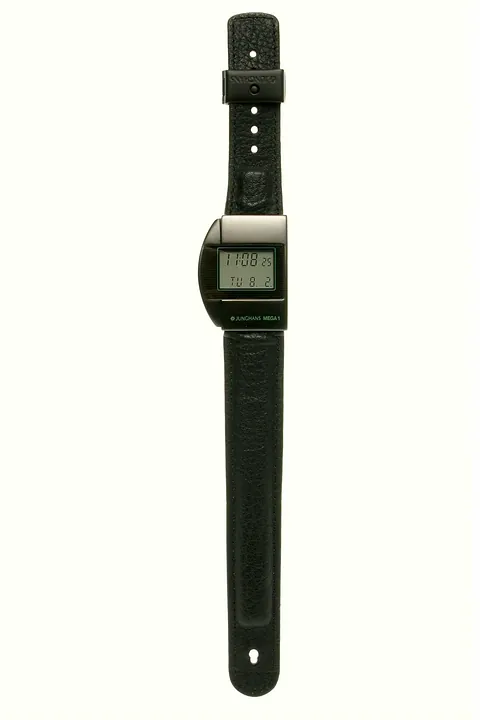
Wristwatch, Germany, c. 1990 (no. 29875)
German Clock Museum
Wristwatches · 1990
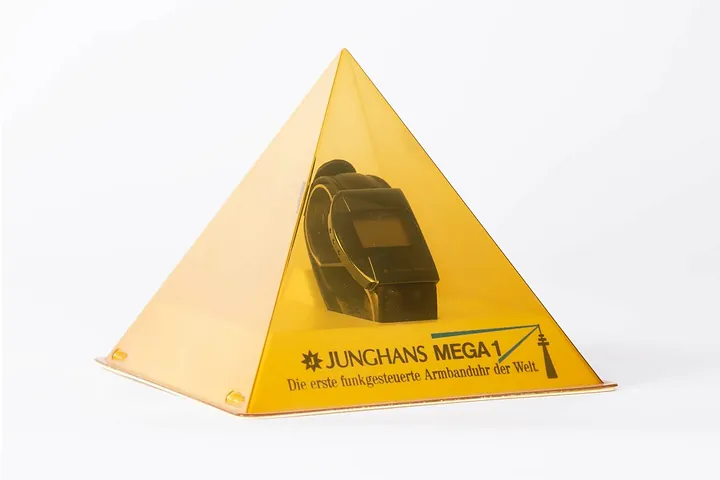
Wristwatch, Germany, 1990 (no. 59620)
German Clock Museum
Wristwatches · c. 1991
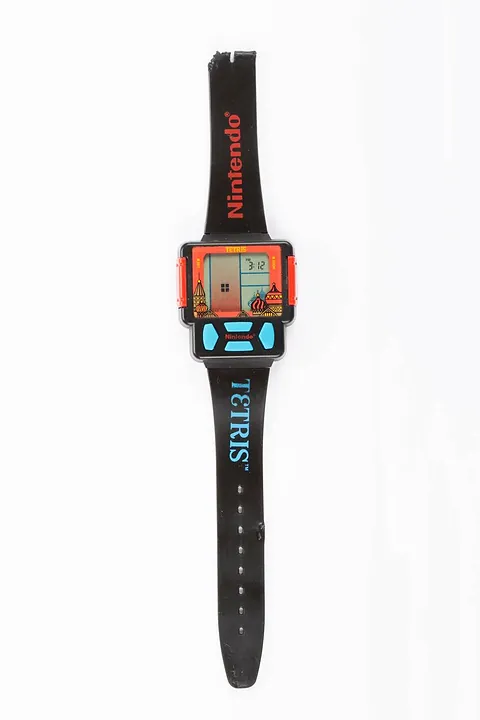
Wristwatch by EM-Entertainment München, Merchandising, Film und Fernseh GmbH, Germany, c. 1991
German Clock Museum
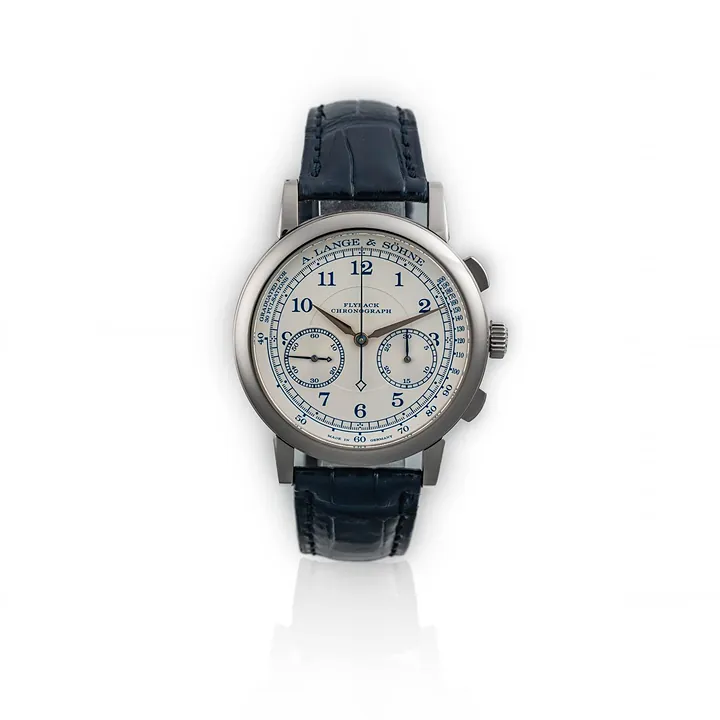
Wristwatches · c. 2000
A.Lange & Söhne 1815 Chronograph, ref. 414.026, c. 2000
Antiquorum auction archive, Geneva