
Pocket Watches · Pocket watch
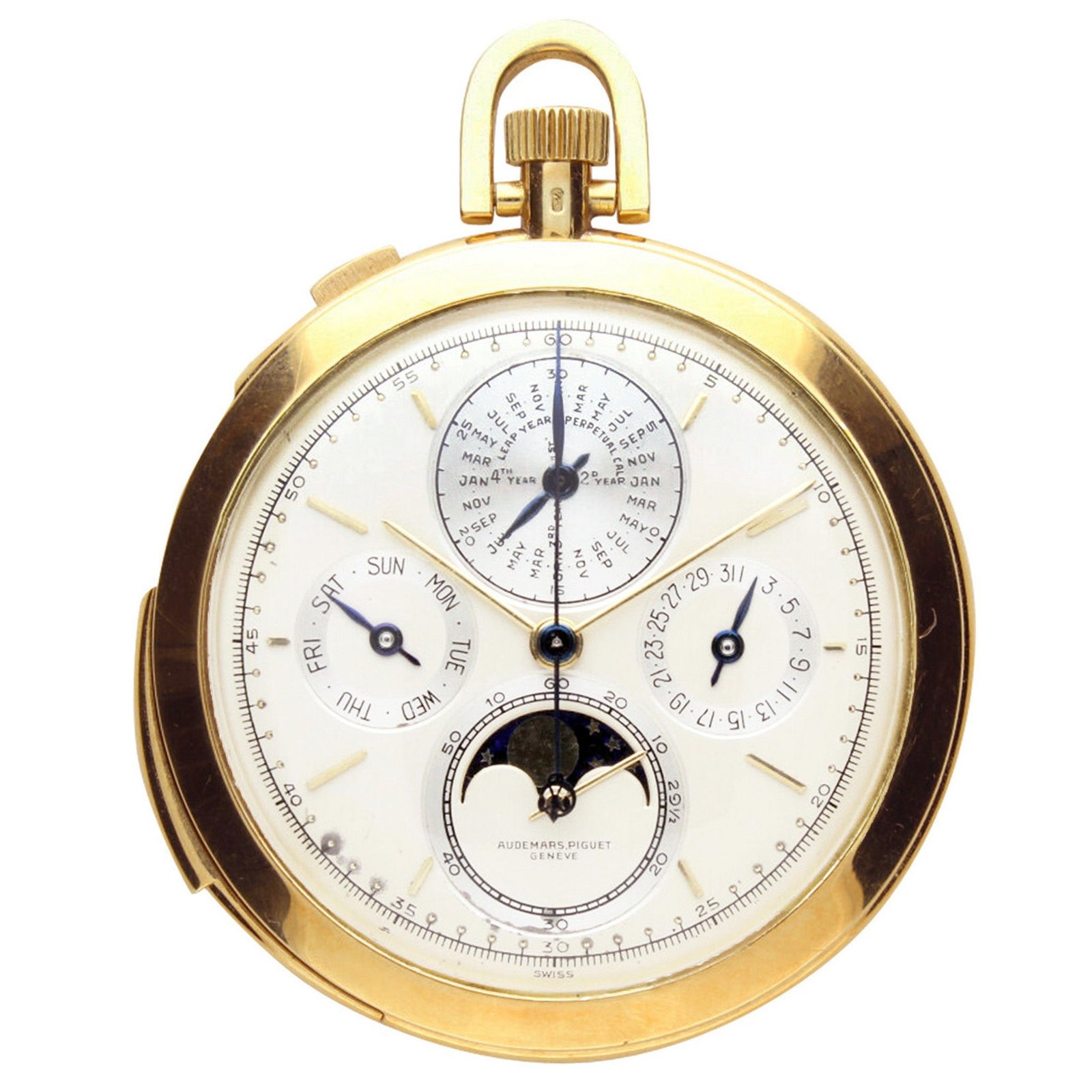
18ct yellow gold Audemar Piguet ref. 5526 minute repeating perpetual calendar, astronomic 'Grande complication' pocket watch, 1964
- Maker / attribution
- Audemars Piguet (maker)
- Date
- 1964
- Historical period
- Modern Mechanical Horology (1945 – 1969)
- Country of origin
- Switzerland
- Object type
- Pocket watch
- Materials / technique
- yellow gold
- Dimensions
- Case 48 mm
- Stock no.
- G3027
- Credit line
- Dealer listing, Somlo Antiques (G3027)
- Catalogue title (original)
- 18ct yellow gold Audemar Piguet ref. 5526 minute repeating perpetual calendar, astronomic 'Grande complication' pocket watch. Made 1964 (English)
View the source record (dealer listing) ↗ (opens another website in a new tab)Suggest a correction
Record summary
Catalogued by Somlo Antiques (dealer), London (stock number G3027), this is a pocket watch by Audemars Piguet, made in Switzerland, dated 1964. The Atlas places it in the Modern Mechanical Horology period (1945 – 1969) of its Pocket Watches collection. Materials and techniques recorded by the source: yellow gold. Recorded dimensions: Case 48 mm. The record is illustrated with 2 photographs.
Assembled from the source record's structured fields. Dates and attributions are given as the source states them; where a field is missing the Atlas leaves it blank rather than estimating.
Catalogue description
Dealer description — Somlo Antiques
This pocket watch showcases the pinnacle of watchmaking craftsmanship and ingenuity, encompassing the three essential components that collectors and experts identify as a "Grande Complication": a minute repeater, a perpetual calendar with a moonphase, and a split-seconds complication. In the realm of technical expertise, Audemars Piguet has demonstrated itself as one of the leaders of the watchmaking industry since 1875. The company has not only crafted astonishingly intricate watches under its own brand but has also supplied movements to other companies. Brand: Audemars Piguet Made: 1964 Model: 'Grande complication' Reference: 5526 Calibre: 17''' Movement: Manual Material: 18ct yellow gold Features/complications: Perpetual calendar, moon phases. Dial: Silvered dial with black printed outer minute track featuring applied 18ct gold yellow gold mirror polished baton markers with subsidiary dials for the day of the month at 3 o'clock, Moon phase and continuous seconds at 6 o'clock, day of the week at 9 o'clock and month at 12 o'clock Case dimensions: 48mm Bracelet/strap: N/A Accessories: Associated box SKU: 3027
Historical context
Modern Mechanical Horology (1945 – 1969)
Tool watches for divers, pilots and astronauts; electric watches anticipate the electronic age.
After 1945 the pocket watch became a niche product — presentation and railway watches, inexpensive pin-lever watches, and commemorative pieces — while most innovation moved to the wrist.
Read the period in the timelineMore pocket watches from this periodEarlier: Golden Age of Mechanical Watchmaking
Atlas type guide
Repeating watches
Before electric light, telling the time in the dark was a real problem. Repeating watches strike the time on demand when a slide or push-piece is operated: quarter repeaters sound hours and quarters, minute repeaters hours, quarters and minutes. Edward Barlow and Daniel Quare disputed the invention in London in the 1680s. Early repeaters struck on a bell inside the case; Abraham-Louis Breguet introduced the gong (a coiled steel wire) around 1780, allowing thinner watches.
Repeaters require a separate train with racks, snails and a governor to control the striking speed, and are among the most demanding complications to make and adjust. Swiss makers of the Vallée de Joux specialised in repeating ébauches in the nineteenth century.
What to look for
- A slide on the case band or a push-piece through the pendant.
- Gongs encircling the movement (after c. 1780) or a bell in the case (earlier); pierced case for sound.
- The racks, snails and governor visible under the dial or on the movement.
- Terms such as 'Minutes', 'Quarts' or 'Répétition' on the dial or cuvette.
Dating clues
- Bell-striking quarter repeaters: c. 1690–1800.
- Gong repeaters and dumb repeaters (striking on the case): after c. 1780.
- Minute repeaters became more common after c. 1830 with Vallée de Joux ébauches.
General guidance written by the Atlas editors about this kind of object. It is not a statement about this particular piece; for that, rely on the source record above and on physical examination.
Read next:Minute repeater
Related records

Clocks · c. 1990s
Audemars Piguet Royal Oak, c. 1990s
Antiquorum auction archive, Geneva

Pocket Watches · c. 1960
Audemars Piguet ''couteau'', c. 1960
Antiquorum auction archive, Geneva
Pocket Watches · originally sold in November 1961 (per the lot record)
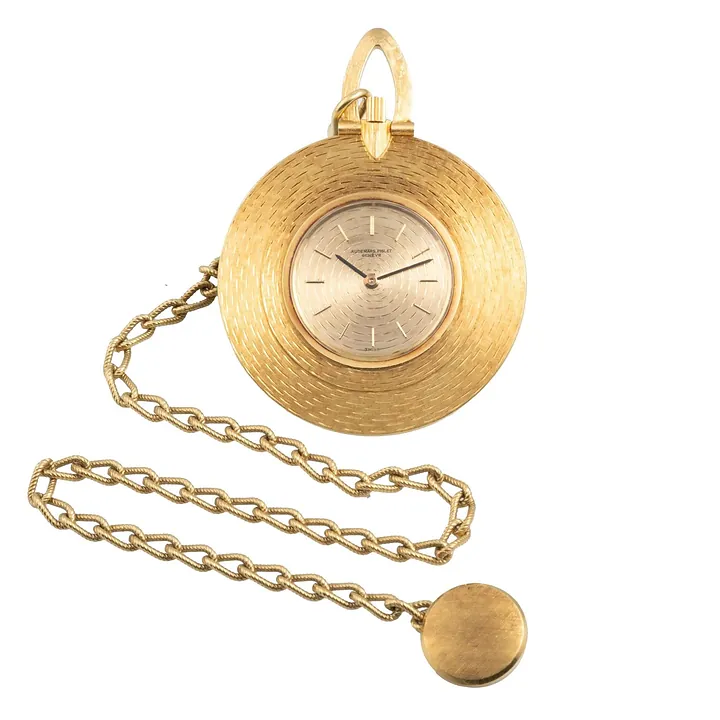
Audemars Piguet "extra Plate", ref. 5633 BA, originally sold in November 1961
Antiquorum auction archive, Geneva

Pocket Watches · c. 1980
Audemars Piguet pocket watch, c. 1980
Antiquorum auction archive, Geneva
Pocket Watches · c. 1945
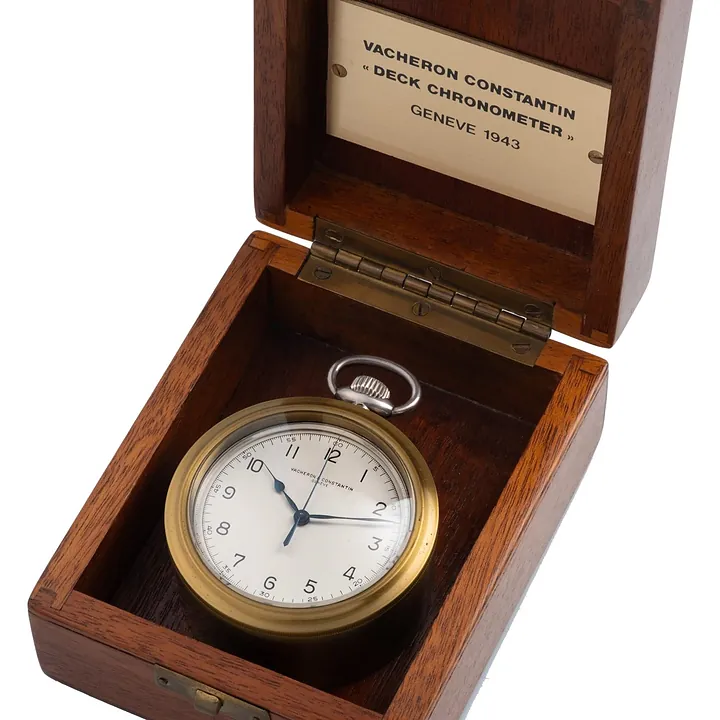
Vacheron Constantin pocket chronometer, c. 1945
Antiquorum auction archive, Geneva
Pocket Watches · c. 1945
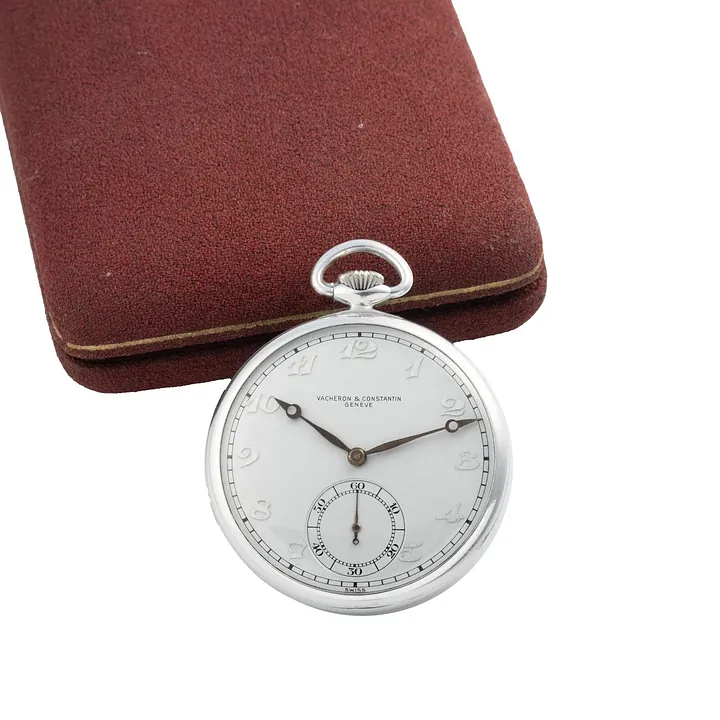
Vacheron Constantin watch, c. 1945
Antiquorum auction archive, Geneva
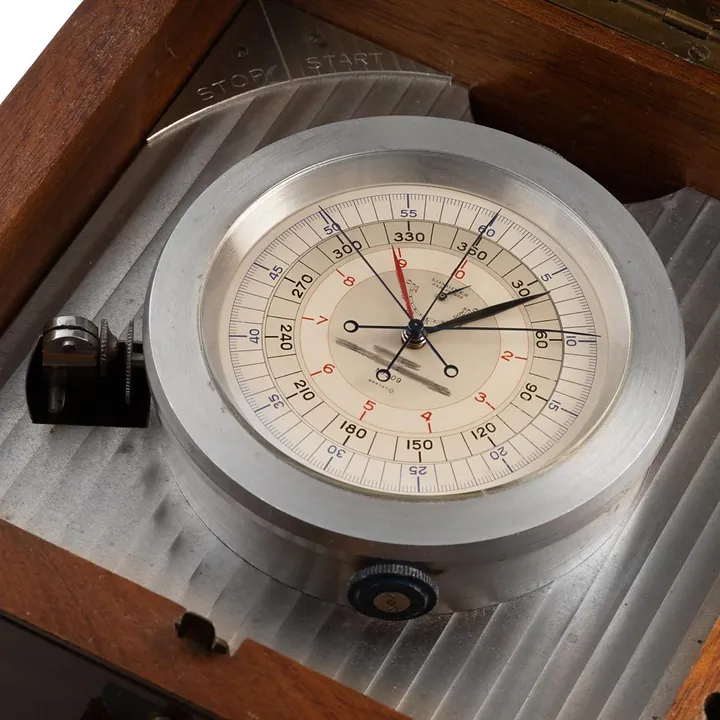
Pocket Watches · Sold to Longines France in January 1946
Longines Siderograph, ref. 5397, Sold to Longines France in January 1946
Antiquorum auction archive, Geneva
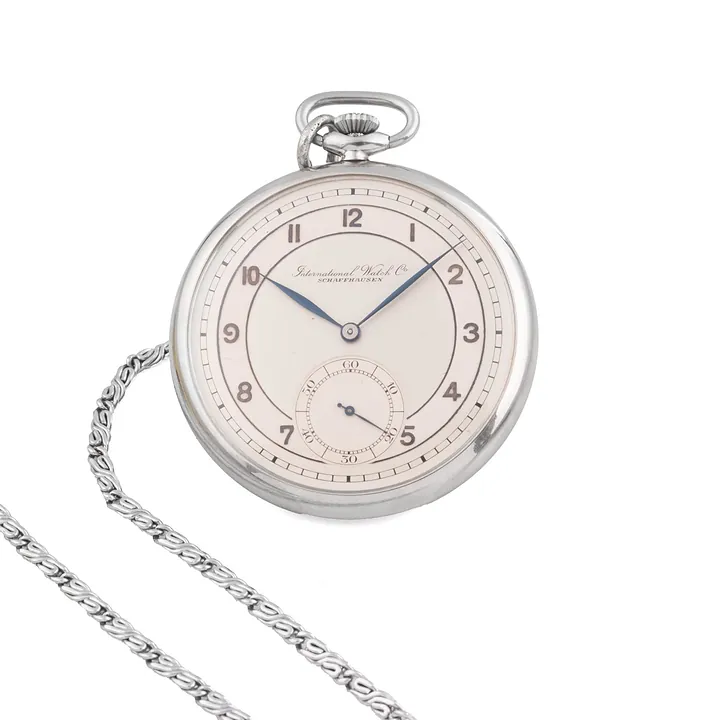
Pocket Watches · c. 1950
IWC Pocket Watch, c. 1950
Antiquorum auction archive, Geneva