
Horological History · Maker history
Seiko and Grand Seiko: A History in Watches, from Kintaro Hattori to Spring Drive
How a repair shop opened in Tokyo in 1881 became the company that challenged Switzerland in the observatory trials, launched the first quartz wristwatch and built the Grand Seiko. The story told through watches in the Atlas catalogue — divers, chronographs, Grand Seikos and King Seikos — with a guide to reading a vintage Seiko.
Atlas Editorial · · 14 min read
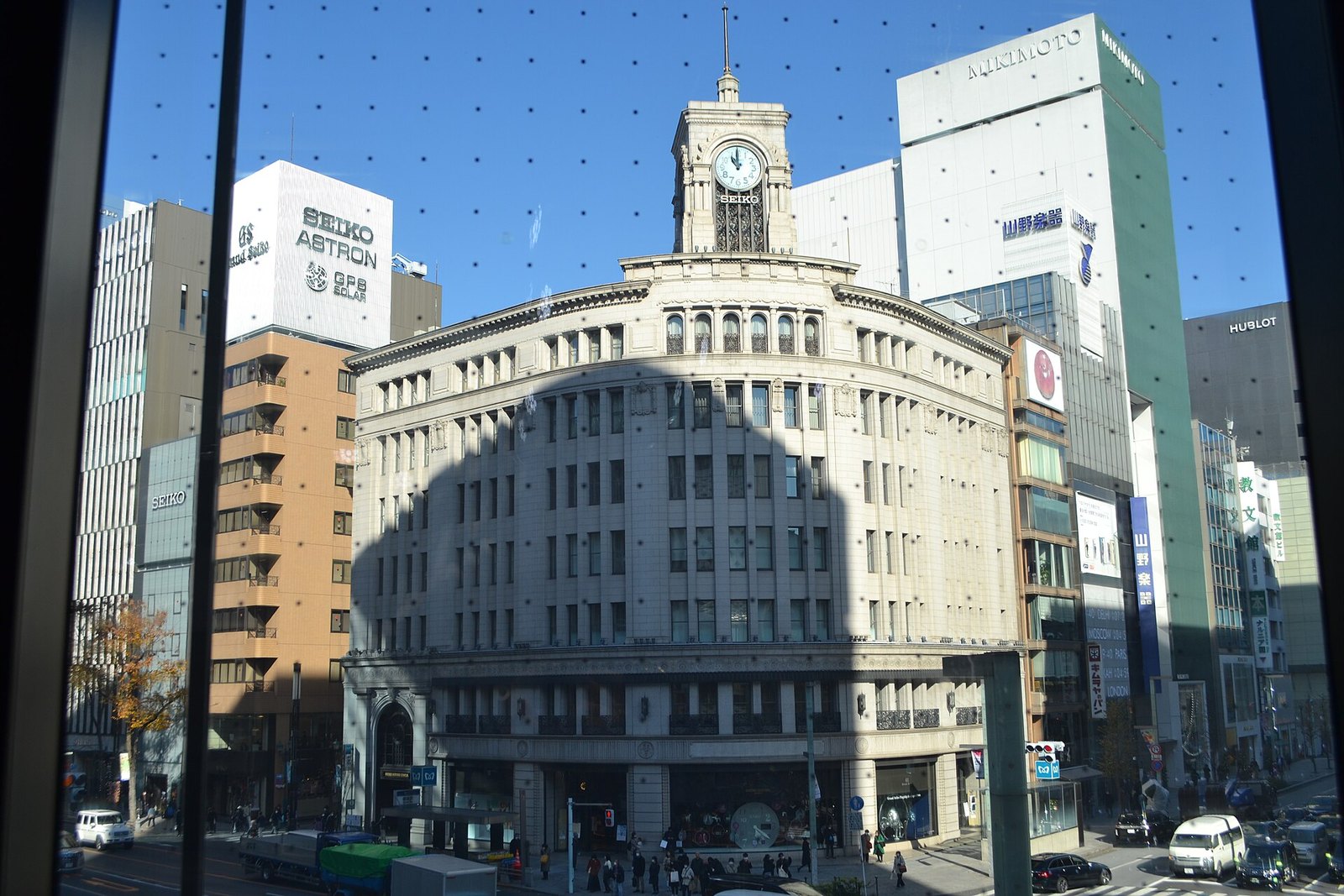
先従隗始 · CC0 · source (opens another website in a new tab)
Seiko is Japan's best-known watch company and one of the few in the world that makes almost every part of its watches itself, from the hairspring to the quartz crystal. Its history is the history of the modern Japanese watch industry: a Meiji-era shop selling imported clocks, a factory making wall clocks and pocket watches for a country that had only just adopted Western hours, recovery after an earthquake and a war, and then, in the 1960s, a sudden rise to the top of the world in both mechanical and electronic watchmaking. In December 1969 Seiko launched the first quartz wristwatch on sale, and within two decades quartz had transformed the whole watch industry.
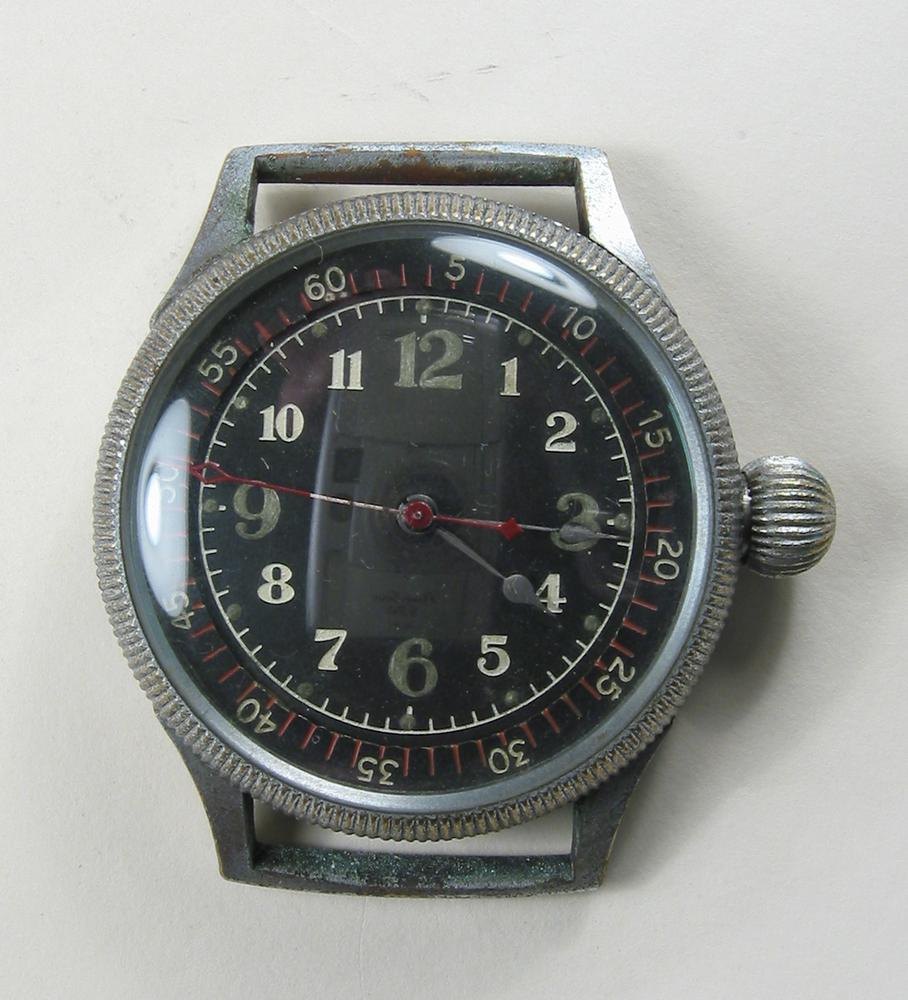
This feature follows that story from Kintaro Hattori's shop to today's Grand Seiko, illustrated with watches in the Atlas catalogue: an early Seikosha wristwatch in the British Museum, the first Seiko chronograph and diver's watch, Grand Seiko and King Seiko models of the 1960s and 1970s, the 'Pogue' chronograph and the 'Tuna' diver, and the quartz and Kinetic watches that followed. Company dates come from Seiko's own museum and group histories; where a statement is Seiko's claim, or a dealer's, it is described as such. The guide ends with practical notes on reading the codes on a vintage Seiko.
Kintaro Hattori and the Meiji clock trade
Before the 1870s Japan used its own system of temporal hours, which divided day and night into six hours each and changed their length with the seasons; the ingenious wadokei clocks made for that system are the subject of a separate Atlas feature. In 1872, as part of the calendar reform that adopted the Western solar calendar, Japan switched to fixed, equal hours. The Seiko Museum describes this as a turning point: traditional clocks became obsolete overnight, and demand for Western clocks and watches, almost all imported, grew rapidly.
Kintaro Hattori was born in Ginza, Tokyo, in 1860. At 13 he was apprenticed to a clock shop, at 17 he hung up a sign as a clock repairer at his family's house, and in 1881, at 21, he founded K. Hattori & Co. to sell and repair clocks and watches. From 1885 he traded with the foreign firms of the Yokohama settlement, wholesaling and retailing imported timepieces, and by 1901 his company was, in Seiko's account, the largest watch and clock dealer in Japan. In 1894 the business moved to the corner of Ginza 4-chome, where a store with a clock tower became a Tokyo landmark; the present clock tower, now Seiko House Ginza, was completed in 1932.
Hattori wanted to make clocks as well as sell them. In 1892 he founded the Seikosha factory at Ishiwara-cho in Tokyo with about a dozen workers under a chief engineer named Yoshikawa, and began making wall clocks. The name is usually explained from seikō (精工), 'exquisite' or 'precise workmanship'. Seikosha made its first pocket watches, the Timekeeper, in 1895 and nickel-plated alarm clocks from 1899. Hattori visited Western watch factories in 1899–1900 and again in 1906 to study their machine tools, installed ever larger steam engines, and chose to make every part in-house rather than buy components; an automatic pinion-cutting lathe developed in the factory in 1909 removed one of the bottlenecks of mass production. By 1911, according to the Seiko Museum, Seikosha made about 60 per cent of the clocks produced in Japan.
The Laurel, the earthquake and the birth of the SEIKO brand
In 1909 Seikosha launched the Empire pocket watch, and in 1913 it introduced the Laurel, Japan's first wristwatch, anticipating, as the company puts it, a shift away from pocket watches. Then disaster struck. On 1 September 1923 the Great Kanto Earthquake and the fires that followed destroyed the Seikosha factory and the company's offices. Rebuilding began within months, and Hattori replaced, free of charge, about 1,500 customers' watches that had been in the shop for repair and were lost in the fire — a gesture the company still cites as the foundation of its reputation for trust.
In 1924 the first watches carrying the SEIKO name appeared. In 1929 a Seikosha pocket watch was adopted as Japan's first railway watch, a mark of accuracy comparable to the American railroad grades. In 1937 the watch division was separated as Daini Seikosha ('second Seikosha'), the company that is today Seiko Instruments, and in 1947, after the war, the retail business in Ginza became the separate company Wako.
From Marvel to Grand Seiko: the push for precision
After the Second World War, Japan's watch industry had to be rebuilt almost from scratch. The economic boom that began with the Korean War in 1950 revived demand, and Seiko advertised aggressively: the Seiko Museum notes that Japan's first radio commercial, in 1951, and its first television commercial, in 1953, were both for Seiko. Just as important was a change of approach. Instead of following foreign models, Seiko's engineers began to design their own movements and machinery.
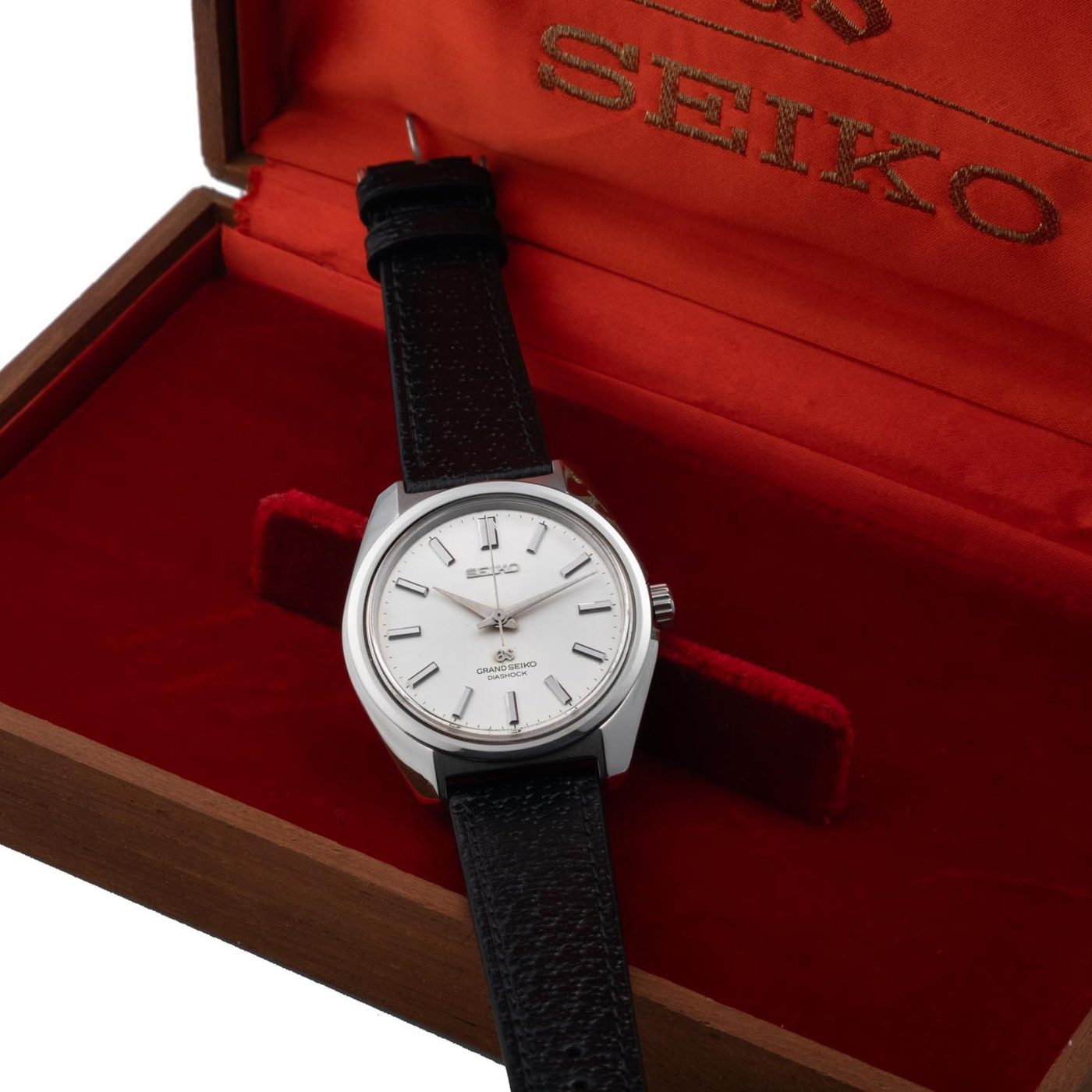
The first result was the Marvel of 1956, a men's mechanical watch designed in-house for beauty, durability and accuracy, which won Japan's national quality competition. The Crown of 1959 was a more precise development of it, and in 1960 Seiko applied all its techniques of part-making, assembly and adjustment to an even better version of the Crown: the first Grand Seiko. Seiko presents it as a watch built to a standard stricter than the chronometer standards of the day. Grand Seiko was meant to show that a Japanese watch could match the best Swiss watches, and for most of its history it was sold almost only in Japan.
Seiko's two watch factories developed their own lines and competed with each other. The Suwa factory in Nagano, which became independent as Suwa Seikosha in 1959 and is today Seiko Epson, made the first Grand Seiko; Daini Seikosha in Tokyo made the King Seiko from the early 1960s and also made Grand Seikos, including the 44GS of 1967. That model, designed by Taro Tanaka, set out the flat, highly polished surfaces and sharp facets — finished by a technique called zaratsu polishing — that Grand Seiko later codified as its 'Grammar of Design'.
1964: the Olympics and the observatory trials
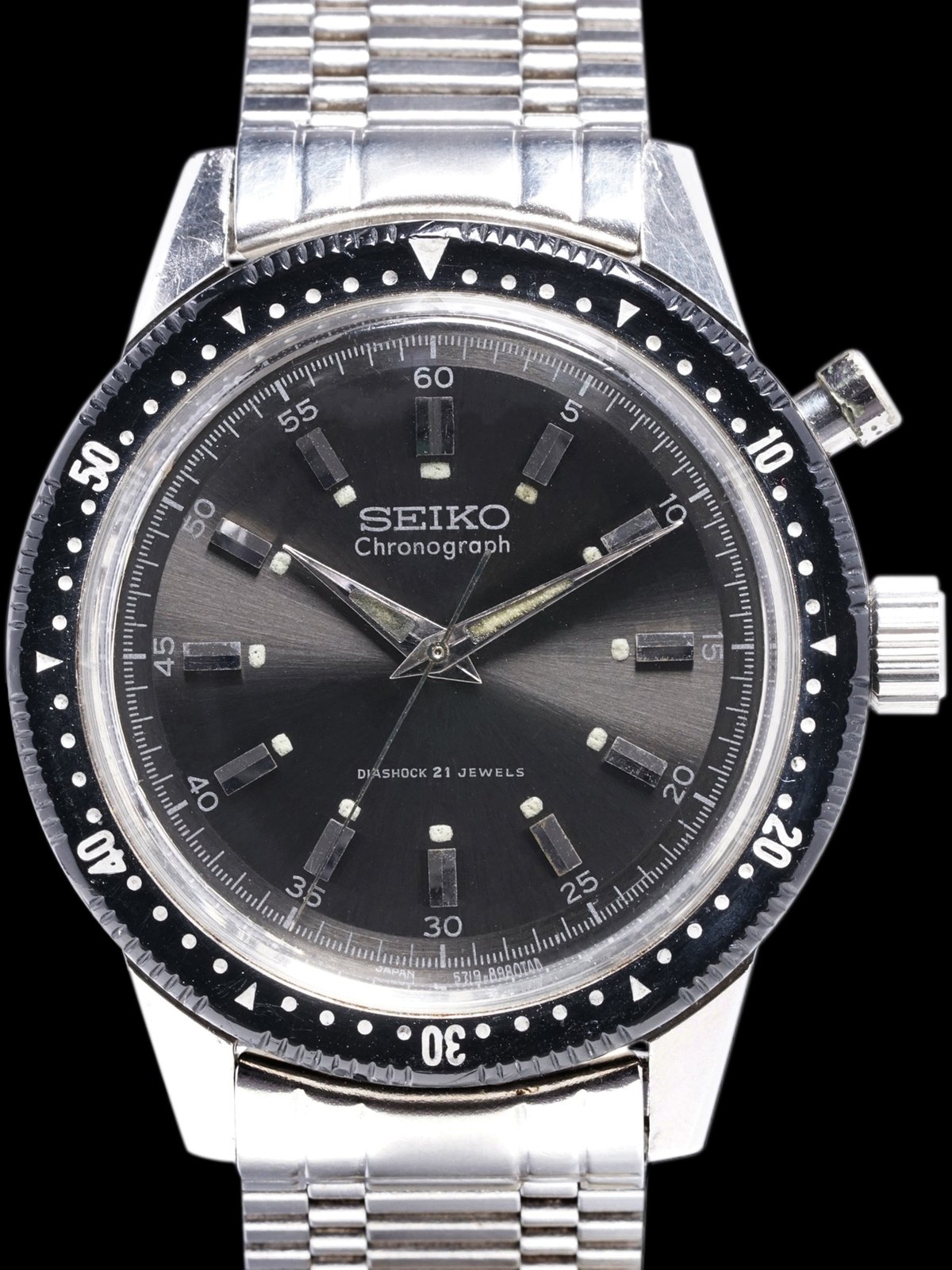
In 1960 Seiko set out to become the official timer of the 1964 Summer Olympics in Tokyo, the first Games held in Asia. According to the company, it developed 36 types of timing instrument and supplied 1,278 devices, with 172 staff, including a tabletop quartz 'crystal chronometer' that served as master clock. The Games made the Seiko name known around the world. For the occasion Seiko also made what is described as Japan's first chronograph wristwatch, a single-button model with a centre seconds hand and a rotating 60-minute bezel.
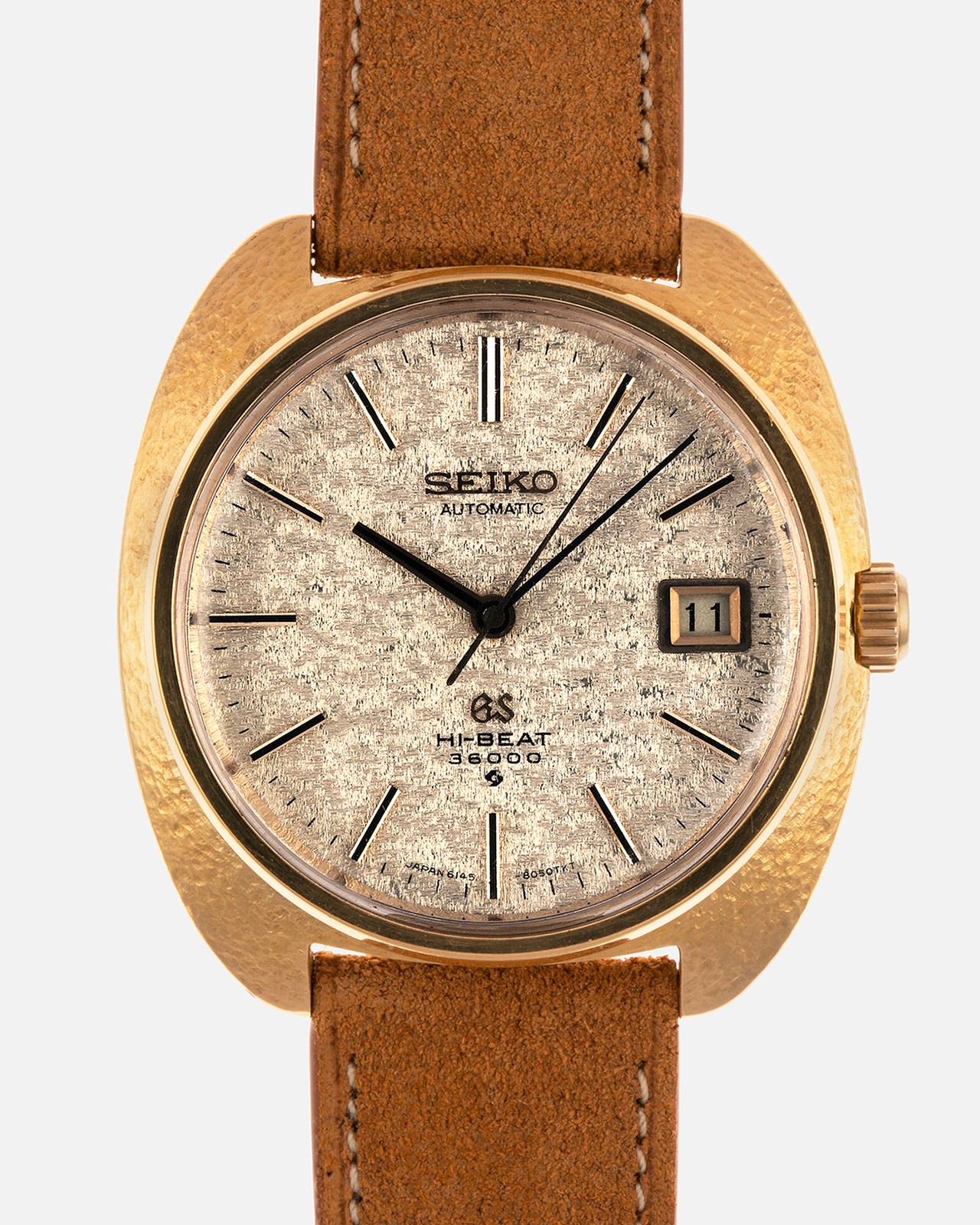
The same year Seiko entered the chronometry competitions held by the Neuchâtel Observatory in Switzerland, in which manufacturers submitted specially adjusted movements to be timed over many weeks. The first results were, in the company's words, 'a great disappointment'. After repeated improvements to materials, part shapes, machining and adjustment, Seiko's movements took second and third places in the company ranking at Neuchâtel in 1967, and in 1968 they took the top places for mechanical watches in the Geneva Observatory competition. The competitions ended soon afterwards, and the experience fed directly into production watches: the high-beat Grand Seikos of the late 1960s ran at 36,000 vibrations per hour (ten beats a second), and in 1969 the Grand Seiko V.F.A. ('Very Fine Adjusted') was launched with a guaranteed accuracy far beyond ordinary chronometers.
Tool watches: Seiko 5, divers and chronographs
Alongside the luxury lines, Seiko built a huge business in robust, affordable automatic watches. The Seiko Sportsmatic 5 of 1963 combined five features the company considered essential: automatic winding with Seiko's own 'magic lever' system, a day and date display, water resistance, a shock-resistant balance and a durable mainspring. It became the basis of the Seiko 5 range, which sold in enormous numbers abroad and made Seiko a leader in automatic watches.
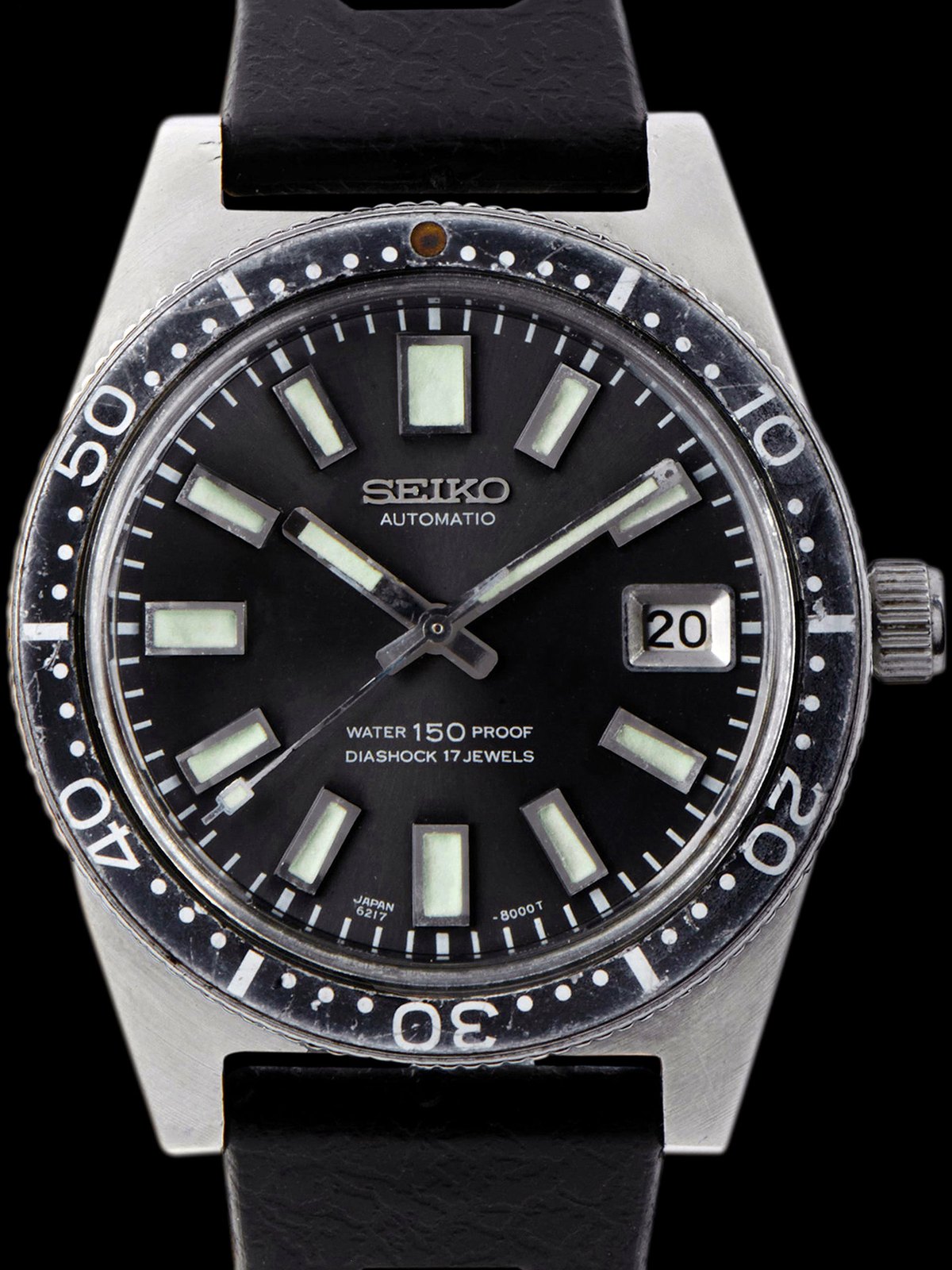
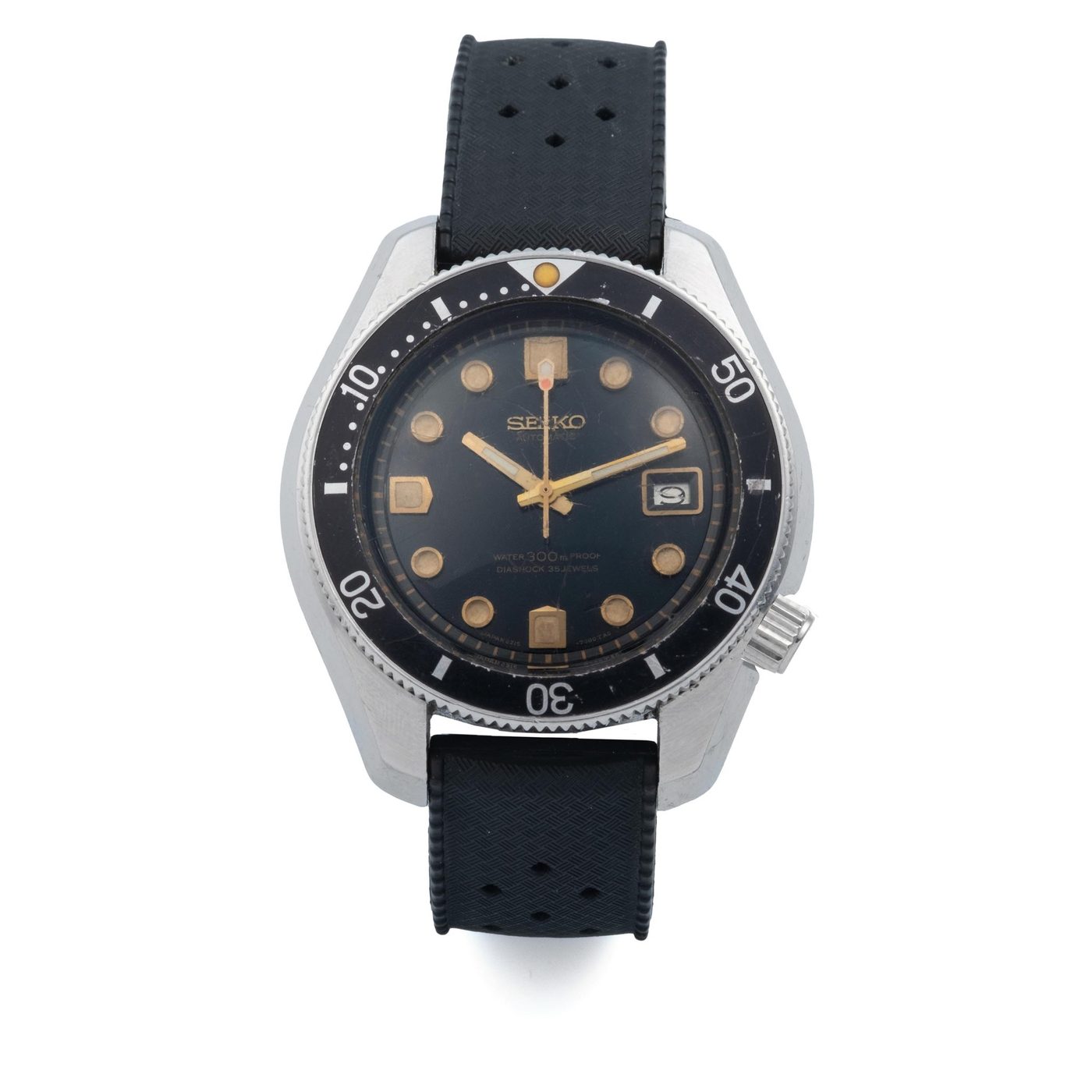
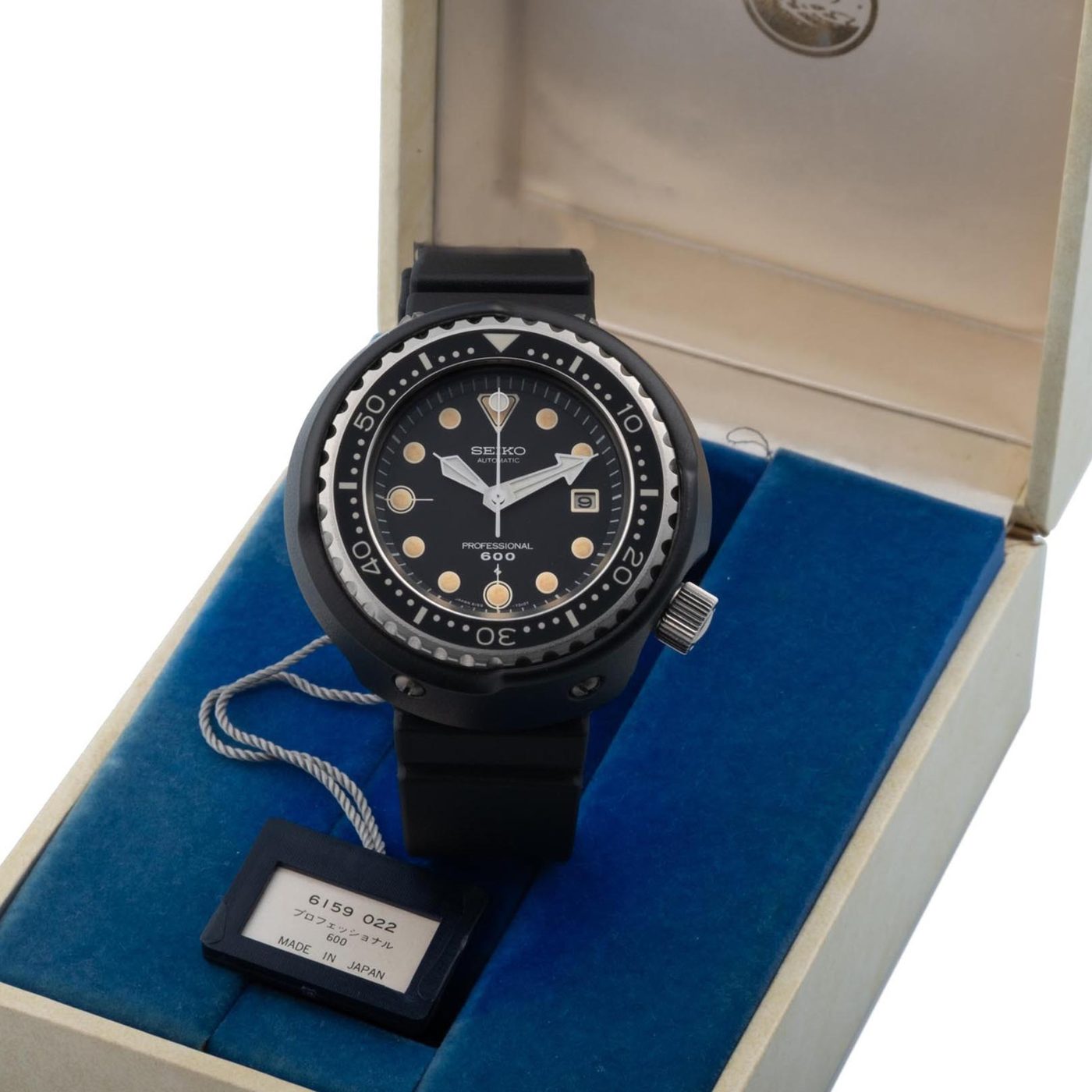
In 1965 Seiko made Japan's first diver's watch, an automatic model water-resistant to 150 metres with a double-sealed crown, now nicknamed the '62MAS' by collectors. In 1966 it was issued to the 8th Japanese Antarctic Research Expedition. A 300-metre diver followed in 1967 and a high-beat version soon after, and in 1975 the Professional 600m — with a titanium case and a protective outer shroud — answered a letter from a professional diver who complained that ordinary watches failed in saturation diving. Its shape earned it the nickname 'Tuna can'. Seiko says that several of its innovations, such as the accordion-style rubber strap and titanium cases, helped to define what is now expected of a diver's watch.
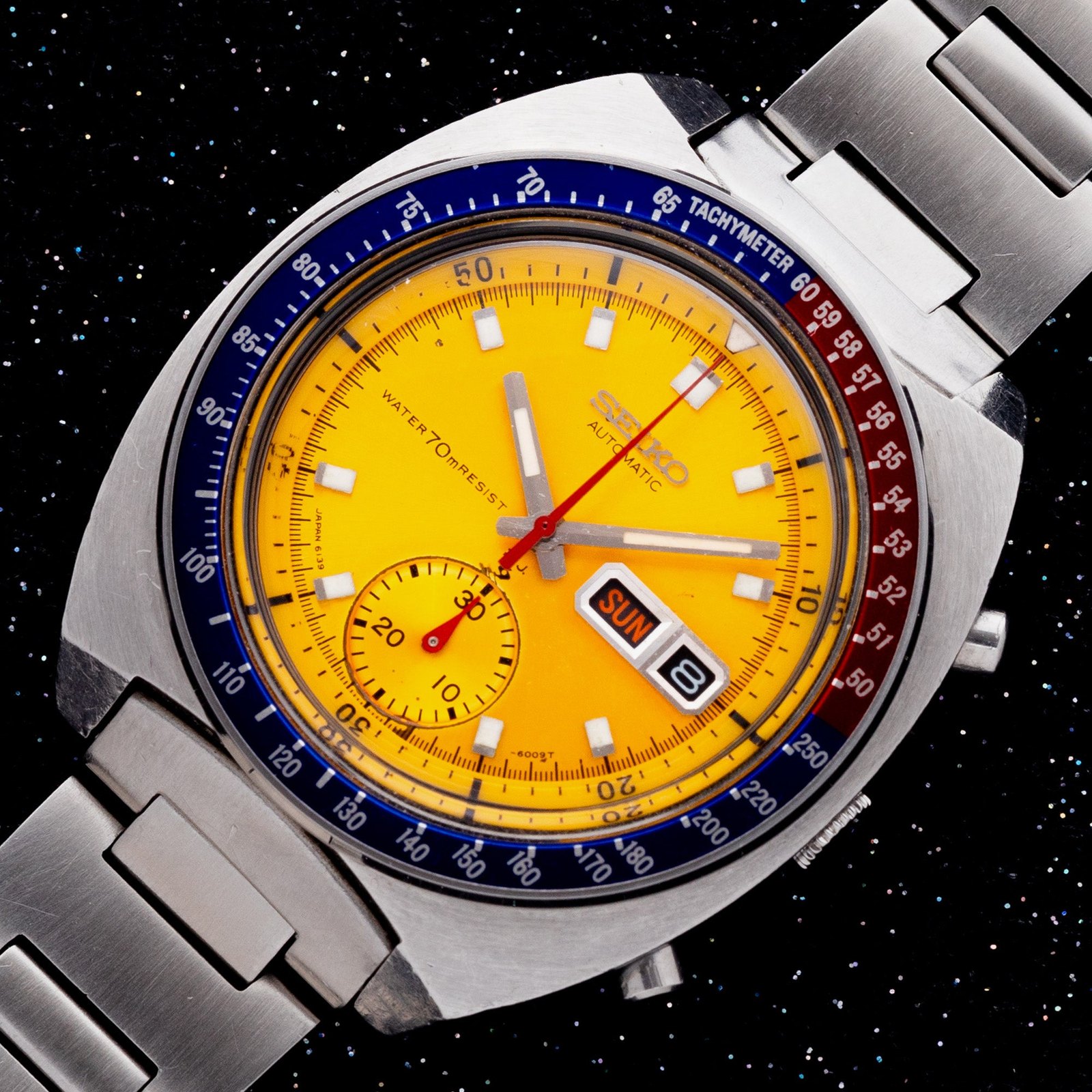
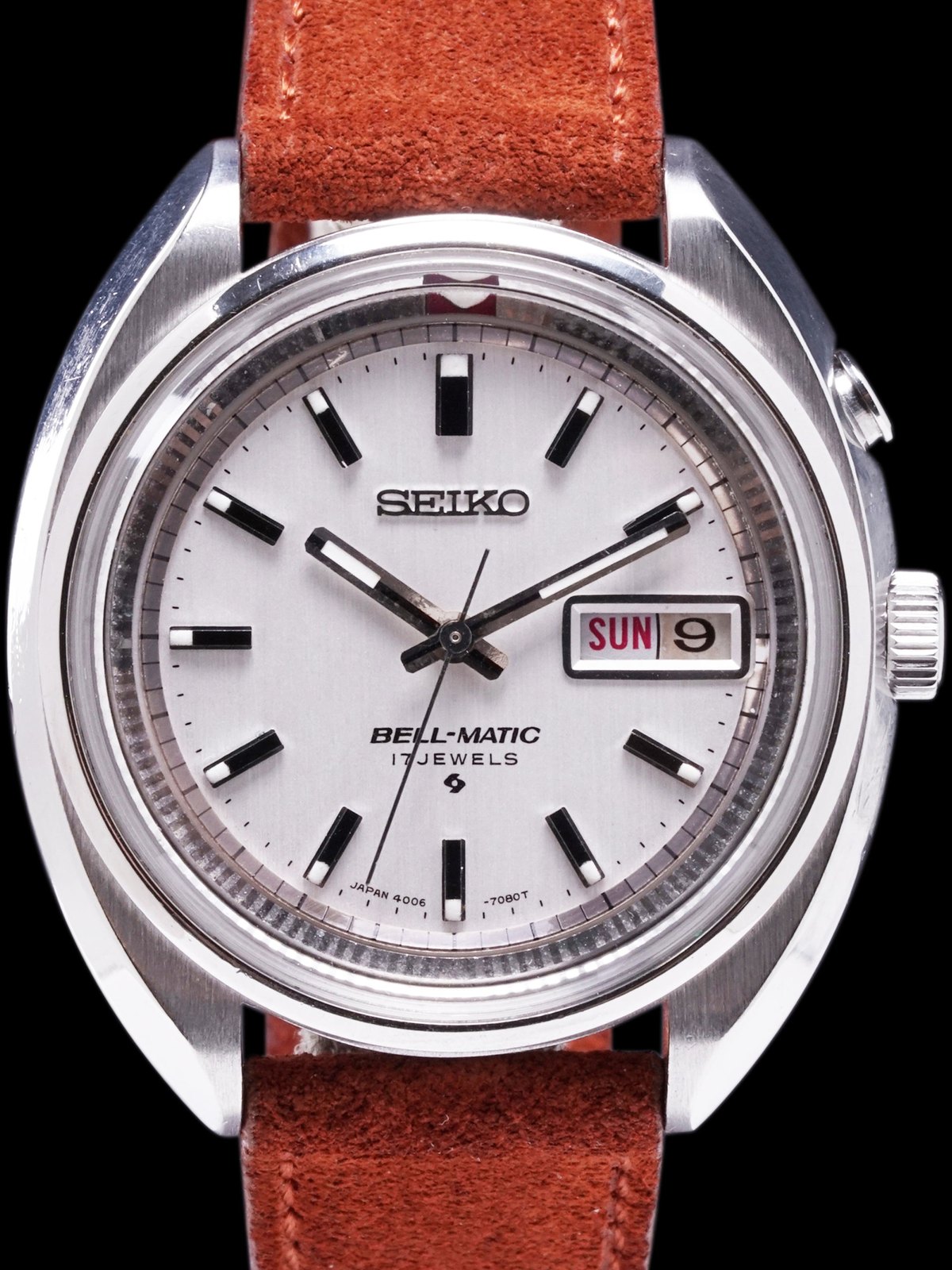
In 1969 Seiko launched the 5 Sports Speedtimer with calibre 6139, one of the first automatic chronographs — the same year as the Zenith El Primero and the 'Calibre 11' of Heuer, Breitling and Hamilton-Buren. Seiko emphasises that the 6139 was the first automatic chronograph to combine a column wheel with a vertical clutch, which lets the chronograph start without a jump of the hand. A yellow-dialled version was worn by the astronaut William Pogue on NASA's Skylab 4 mission, launched in November 1973, and collectors call it the 'Pogue'. Seiko also made alarm wristwatches: the Bell-Matic, which the dealer of the example below dates to 1966, rang a small bell inside the case.
The Quartz Astron and the quartz revolution
Electronic watches arrived at the end of the 1950s: Hamilton's battery-powered balance-wheel watch of 1957 and Bulova's tuning-fork Accutron of 1960. Seiko had built a quartz clock for a broadcasting station in 1958, a machine the size of a large locker, and began studying electronic watches in 1959. The 1964 Olympic quartz chronometers were a step on the way, prototypes of a quartz pocket watch and wristwatch followed in 1966 and 1967, and on 25 December 1969 Seiko launched the Quartz Astron 35SQ, the first quartz wristwatch to be sold. It cost 450,000 yen — according to Seiko, about the price of a popular car.
The Astron's key technologies — a small tuning-fork-shaped quartz crystal, a step motor that moves the seconds hand once a second, and a low-power CMOS integrated circuit — remain the basis of analogue quartz watches today. Seiko chose to make many of its quartz patents available to other manufacturers, and in its account this is why the 'Seiko method' became the industry standard. Quartz watches quickly became smaller, thinner and cheaper: Seiko lists the first six-digit LCD digital watch (1973), a 0.9 mm quartz movement in a case 2.5 mm thick (1978), 'twin quartz' temperature compensation with an error of about five seconds a year (1978) and a television watch (1982). The flood of inexpensive quartz watches from Japan and Hong Kong contributed to the deep crisis in the Swiss industry in the 1970s and early 1980s, a story examined in the business histories cited below.
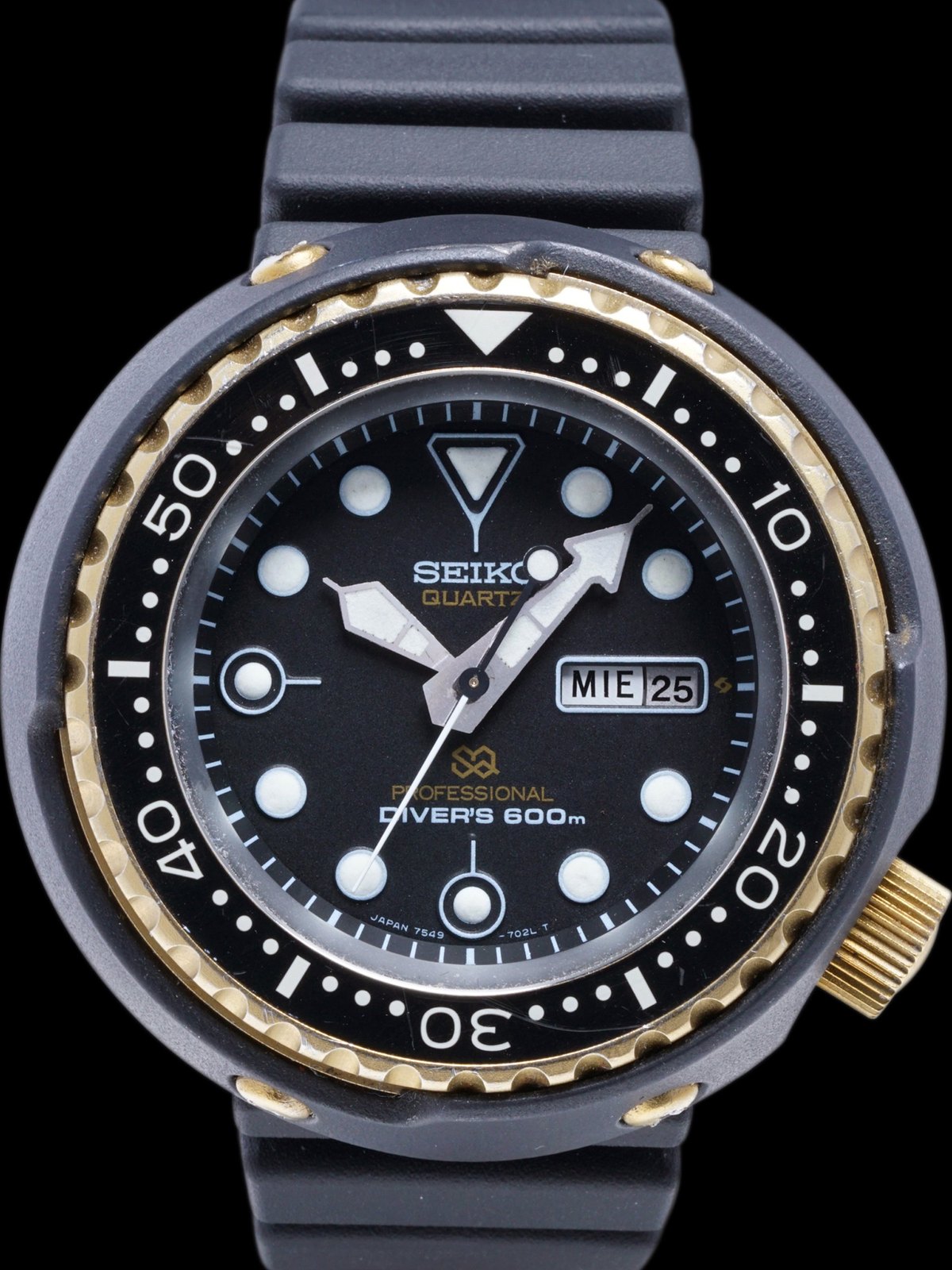
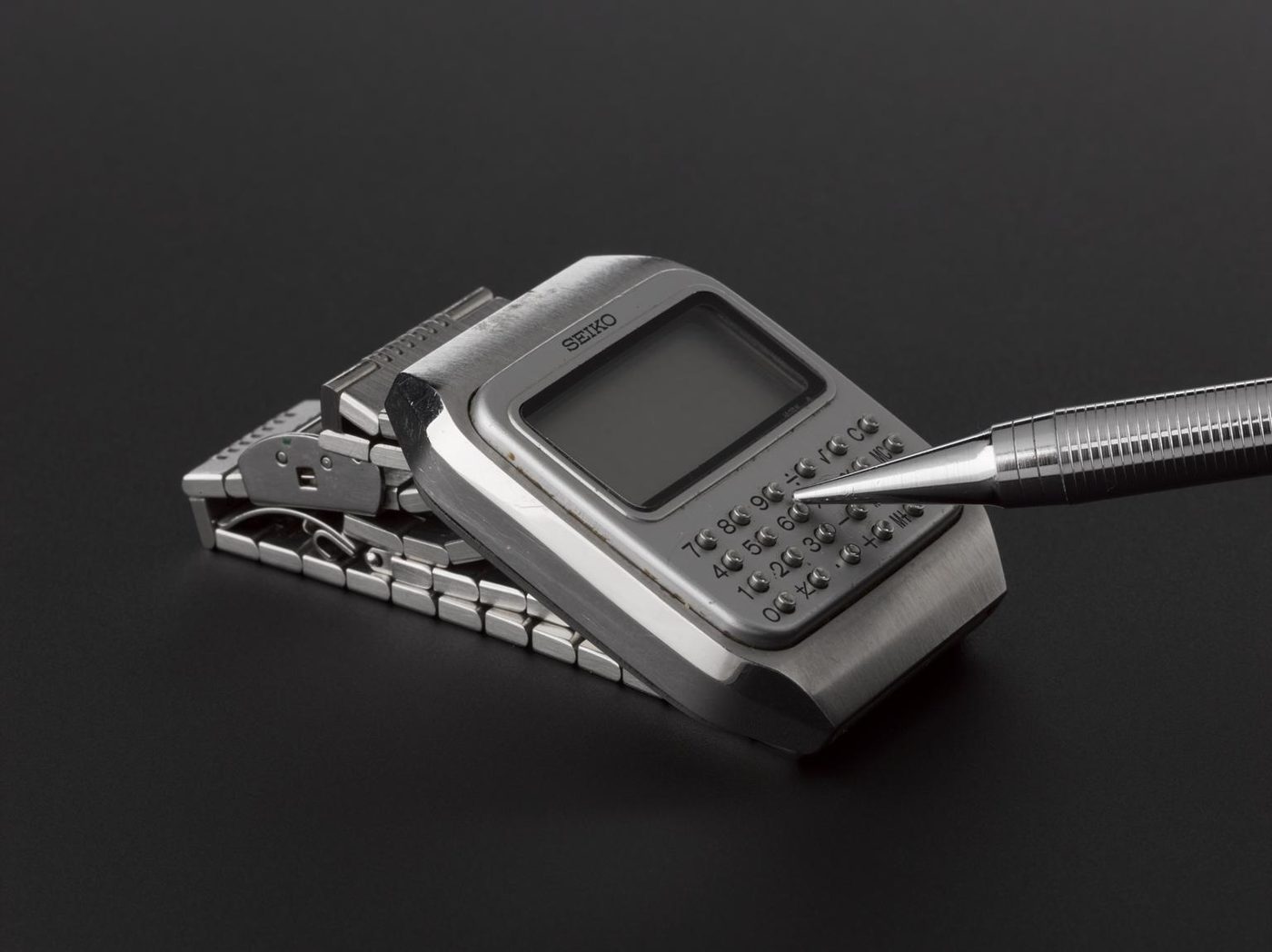
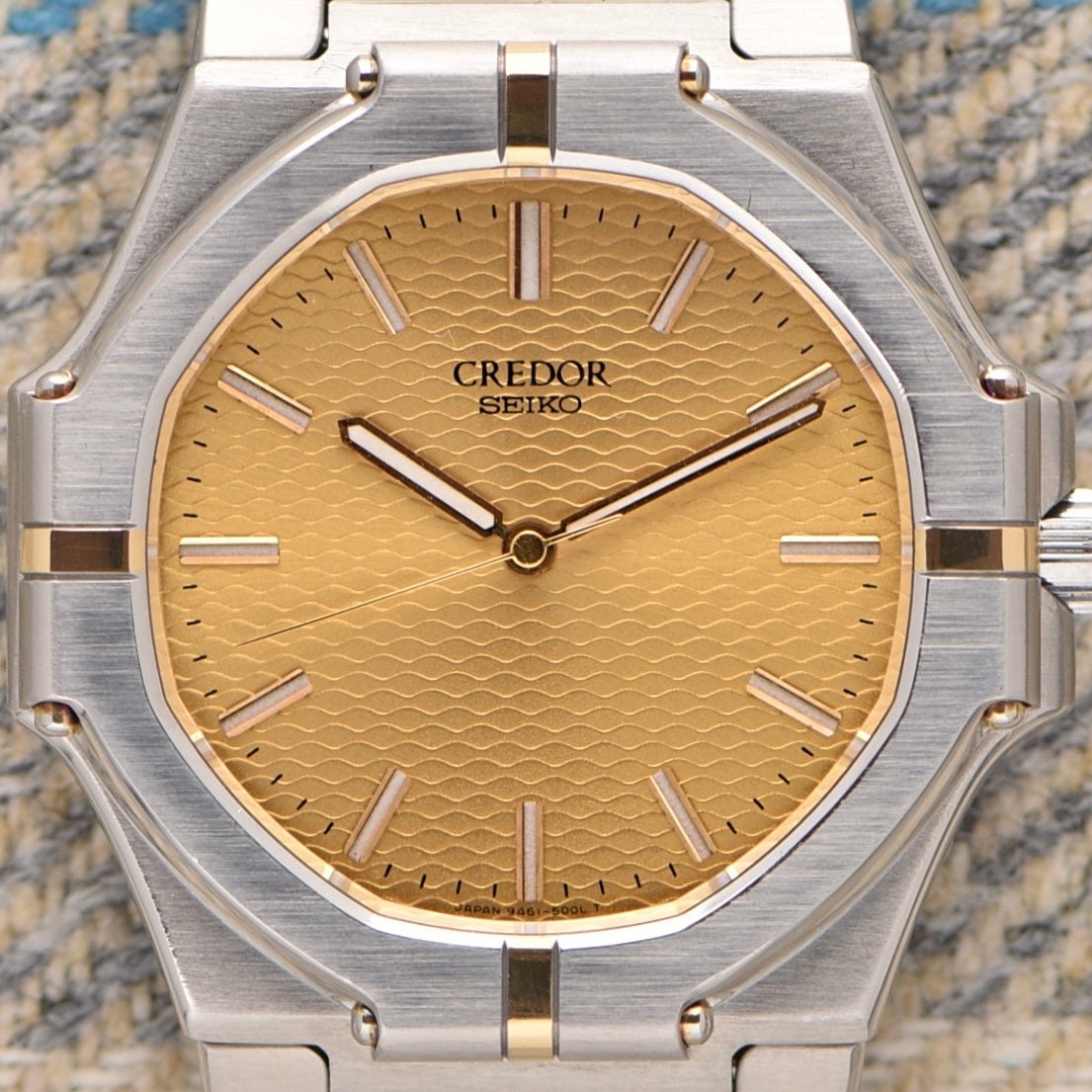
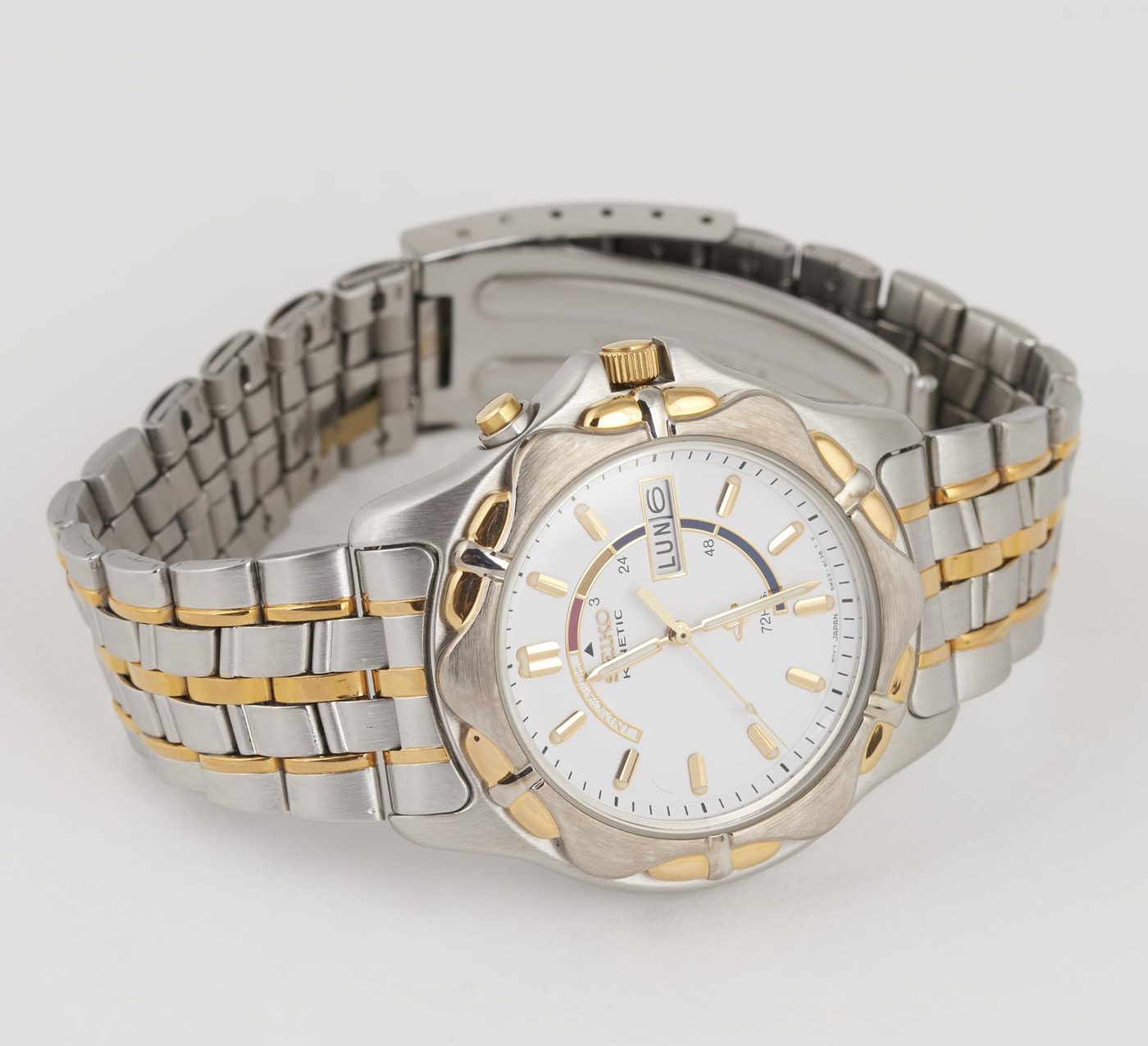
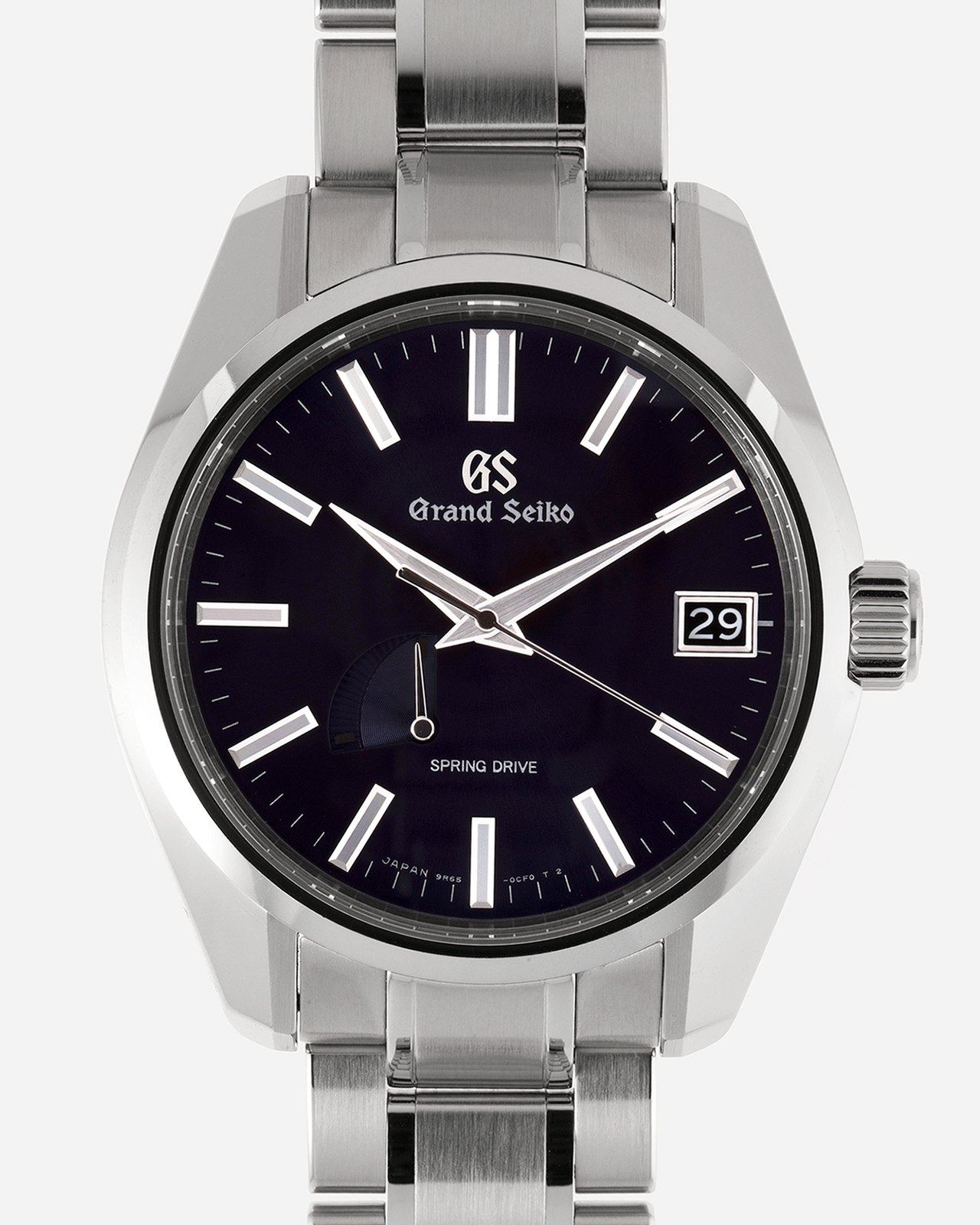
Seiko also launched the luxury brand Credor in 1974, and in 1988 the A.G.S. (Automatic Generating System), a quartz watch charged by a rotor and a tiny generator, later renamed Kinetic. In 1999 it introduced Spring Drive, a movement driven by a mainspring like a mechanical watch but regulated by a quartz crystal and an electromagnetic brake, with the smooth, gliding seconds hand that is its signature.
Grand Seiko reborn
In the quartz years, Seiko's mechanical luxury watches faded from view. In 1993 Grand Seiko gained a high-precision quartz calibre, the 9F, and in 1998 Seiko reintroduced mechanical Grand Seikos with the new calibre 9S, tested to its own 'New GS Standard', which it describes as stricter than the Swiss chronometer standard (COSC). A 72-hour power reserve followed in 2006 and a new high-beat 36,000-vibration movement, the 9S85, in 2009; Spring Drive entered the Grand Seiko range as well. In 2014 a high-beat GMT model won the 'Petite Aiguille' prize at the Grand Prix d'Horlogerie de Genève.
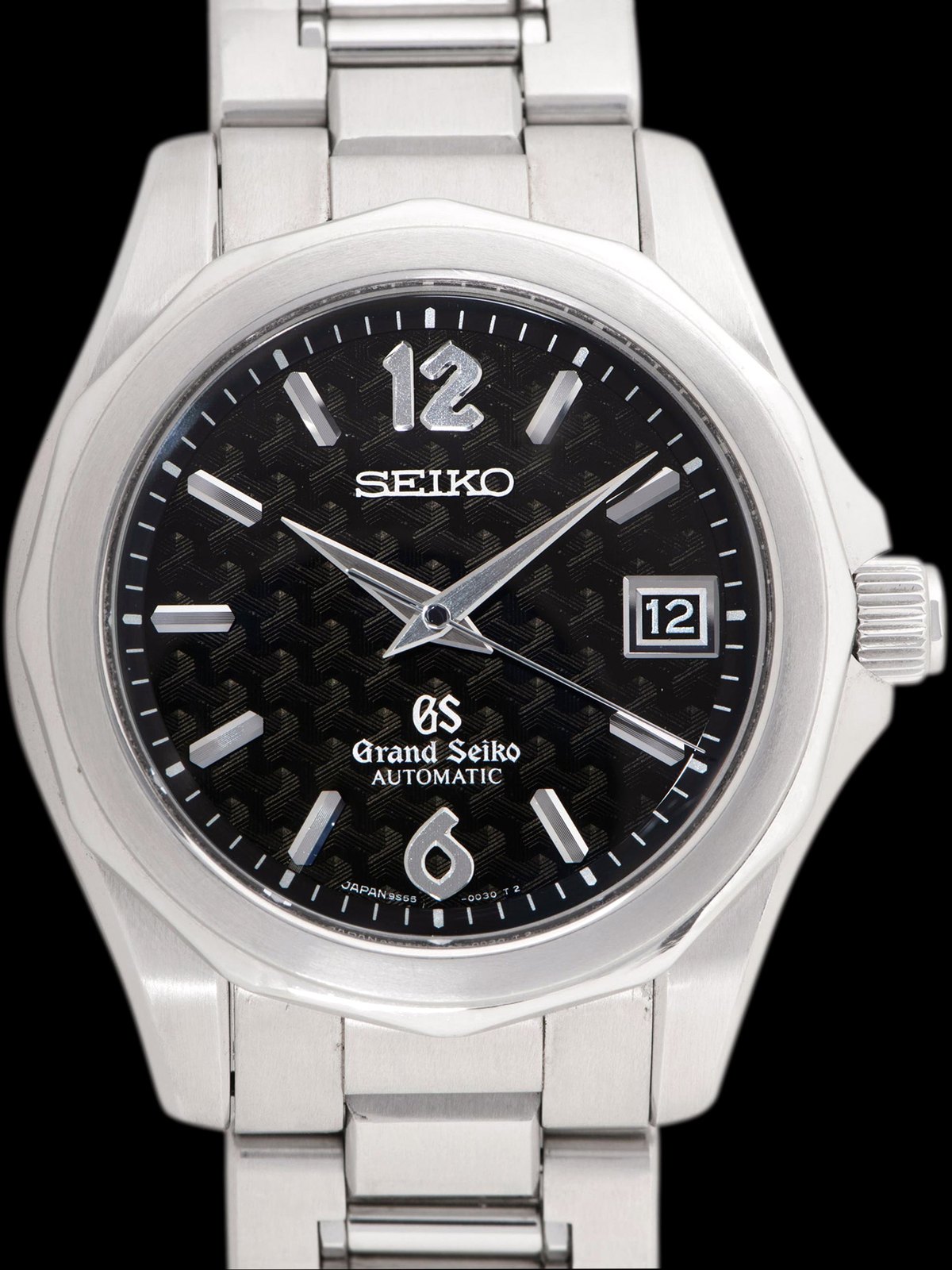
For decades Grand Seiko was hard to buy outside Japan; it was launched internationally in 2010, and in 2017 Grand Seiko became an independent brand, with its own name alone on the dial. In 2022 it presented its first complicated mechanical watch, the Kodo constant-force tourbillon, and in 2024 a Grand Seiko museum opened. Modern Grand Seikos are known for their dials inspired by Japanese landscapes and seasons, their zaratsu-polished cases and their Spring Drive and high-beat movements.
A Seiko timeline
| Year | Event |
|---|---|
| 1881 | Kintaro Hattori founds K. Hattori & Co. in Tokyo |
| 1892 | Seikosha factory founded; wall clocks |
| 1895 | Timekeeper pocket watch |
| 1913 | Laurel, Japan's first wristwatch |
| 1923 | Great Kanto Earthquake destroys the factory |
| 1924 | First watches with the SEIKO name |
| 1929 | Seikosha pocket watch adopted as Japan's first railway watch |
| 1937 | Daini Seikosha founded (now Seiko Instruments) |
| 1956 | Marvel, an in-house designed men's watch |
| 1959 | Suwa Seikosha becomes independent (now Seiko Epson) |
| 1960 | First Grand Seiko |
| 1963 | Seiko Sportsmatic 5 |
| 1964 | Official timer of the Tokyo Olympics; first Seiko chronograph |
| 1965 | Japan's first diver's watch (150 m) |
| 1967–68 | Top places in the Neuchâtel and Geneva observatory competitions |
| 1969 | Calibre 6139 automatic chronograph; Quartz Astron, the first quartz wristwatch (25 December) |
| 1973 | First six-digit LCD digital watch |
| 1974 | Credor luxury brand |
| 1975 | Professional 600m diver with titanium case |
| 1988 | A.G.S., later called Kinetic |
| 1998 | Mechanical Grand Seiko relaunched with calibre 9S |
| 1999 | Spring Drive |
| 2012 | Astron GPS solar watch |
| 2017 | Grand Seiko becomes an independent brand |
Reading a vintage Seiko
Vintage Seikos are popular, affordable and made in vast numbers, which also makes them a favourite field for refinished dials, replacement parts and 'franken' watches assembled from several donors. A few conventions make them easier to check.
- The reference on the case back has two parts: the first four digits are the calibre (for example 6139 or 6309) and the second four the case design (6139-6002, 6309-7040). The calibre stamped on the movement should match.
- The serial number usually begins with the last digit of the year and the month of manufacture: a case numbered 538801, like the Professional 600m above, would be from March of a year ending in 5. The decade has to be worked out from the calibre and model, which were made for limited periods.
- The dial is usually printed near six o'clock with the calibre and case code, such as '6119-8160T' on a watch in the British Museum. A dial code that does not match the case back suggests a replacement.
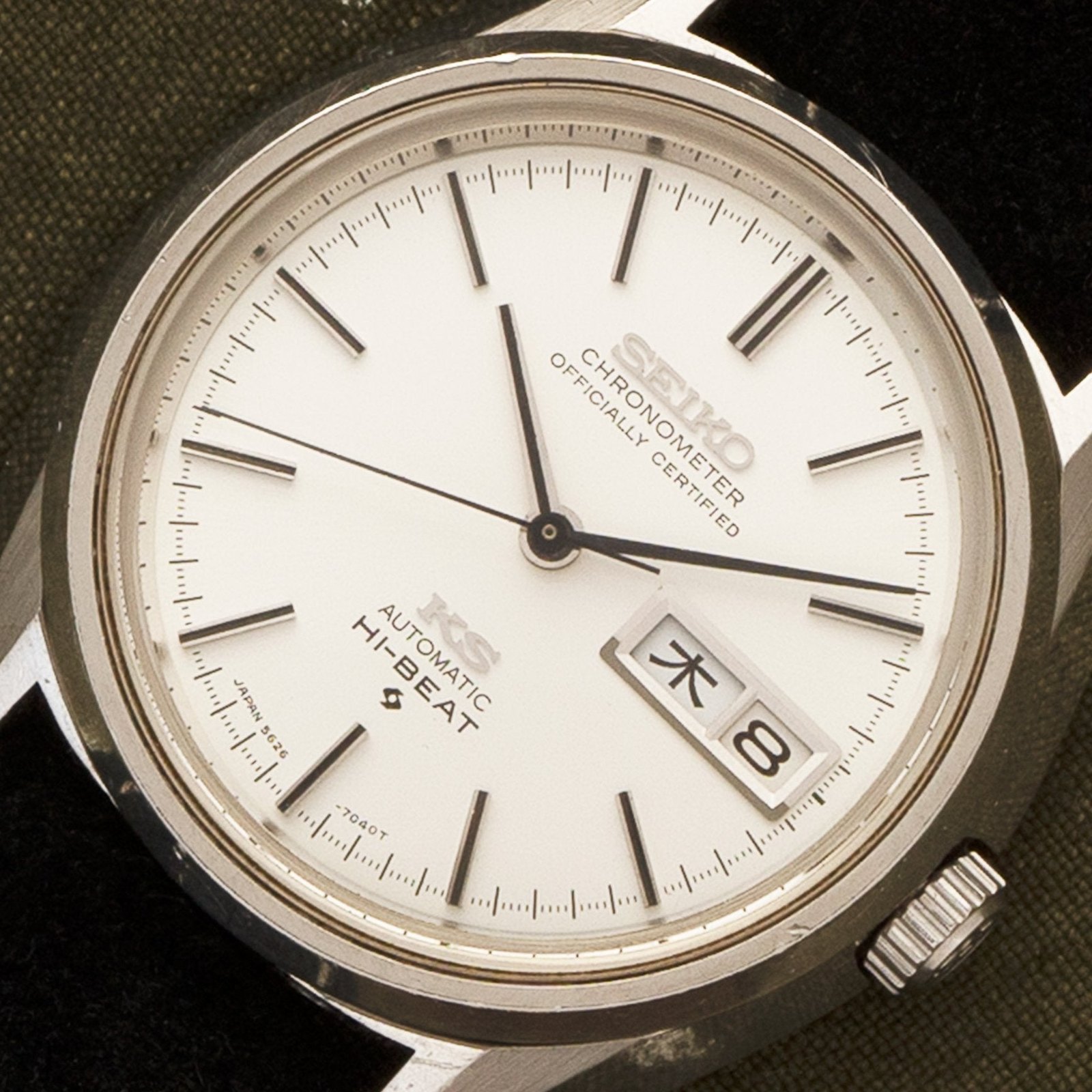
- Grand Seiko and King Seiko watches of the 1960s and 1970s carry medallions on the case back and are often marked 'Chronometer' or 'Hi-Beat'; check the movement number and finish, because cheaper Seikos are sometimes dressed up with their dials.
- Japanese domestic-market versions may have kanji day wheels, as on the King Seiko above, or different dial printing from export models. Both are genuine.
- Original bracelets, crowns and bezel inserts matter to collectors. Divers and chronographs were often fitted with replacement bezels and crystals during service, which is normal but should be described.
As with any vintage watch, have a Seiko serviced by a watchmaker who knows the calibre. Most automatic Seikos are robust, but old gaskets will not keep water out, so treat any vintage diver's watch as not water-resistant until it has been pressure-tested.
Why Seiko matters
Seiko's history overturns two familiar stories about watchmaking. One is that fine watchmaking belongs to Switzerland: in the 1960s a Japanese company beat the Swiss at their own observatory trials and built mechanical watches of the highest accuracy. The other is that the quartz revolution simply happened to the industry: it was led, in large part, by the same company, which developed the technology, shared it and changed the economics of timekeeping worldwide. Along the way Seiko made some of the most loved tool watches of the twentieth century, from the first Japanese diver's watch to the 'Pogue' and the 'Tuna'.
In the Atlas catalogue you can follow the story through more than a hundred Seiko and Grand Seiko watches, from museum pieces to dealers' stock. The maker profiles of Seiko, Citizen and Casio set Seiko alongside its Japanese rivals, and the encyclopedia entries on the lever escapement and the quartz oscillator explain the two technologies at the heart of its history.
Sources & further reading
- History of Seiko and Its Products; Kintaro Hattori: Chronological List — The Seiko Museum Ginza, Seiko Group Corporation (Tokyo), online, current edition.
- History (About Our Group) — Seiko Group Corporation, Seiko Group Corporation (Tokyo), online, current edition.
- Manufacturing Time: Global Competition in the Watch Industry, 1795–2000 — Amy K. Glasmeier, Guilford Press (New York), 2000.
- Revolution in Time: Clocks and the Making of the Modern World — David S. Landes, Harvard University Press, 1983.
- The Evolution of the Quartz Crystal Clock — Warren A. Marrison, Bell System Technical Journal 27 (3): 510–588, 1948.