
Wristwatches · Wristwatch
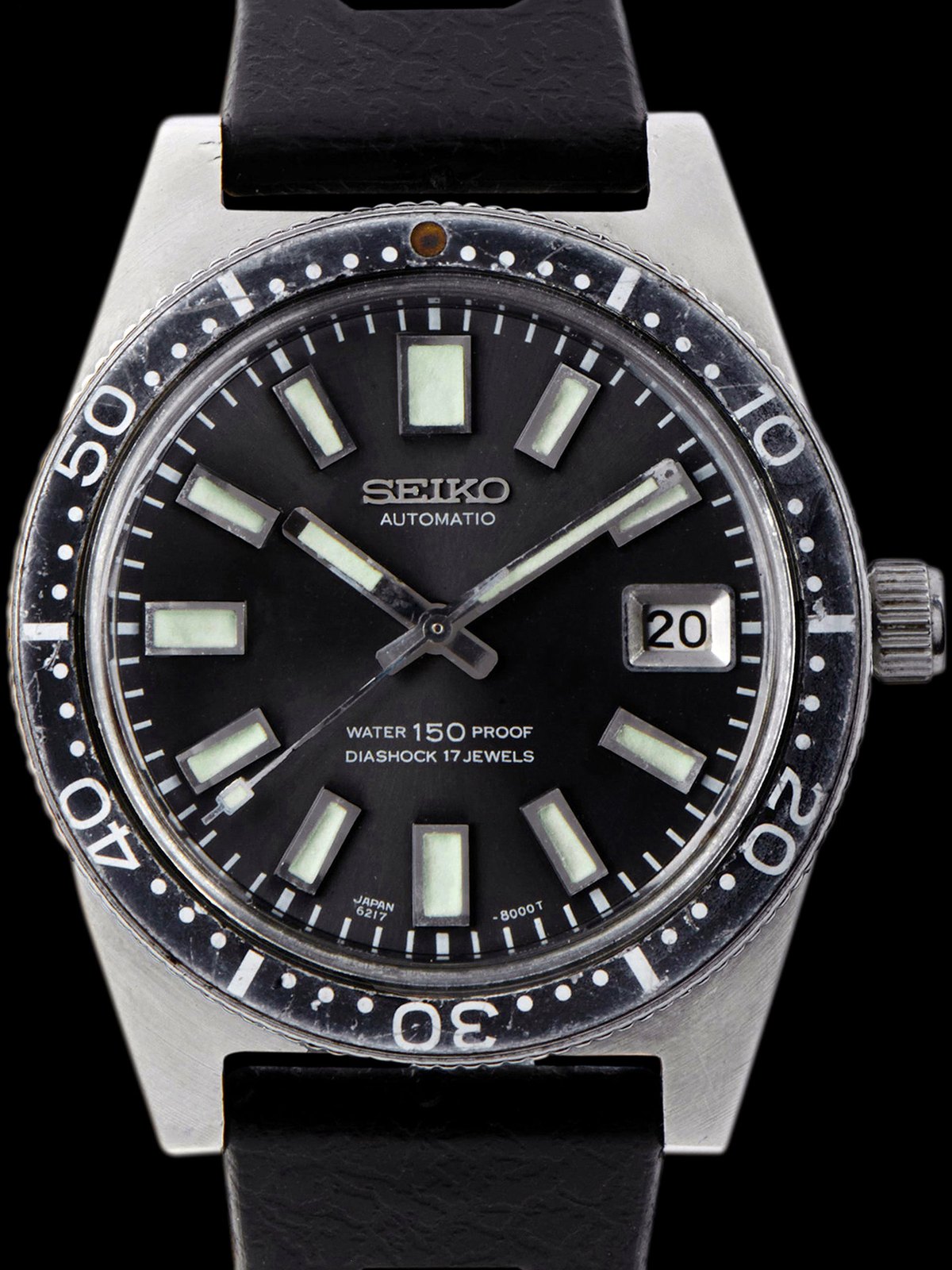
Seiko Diver 62MAS (Ref. 6217-8000) "Small Crown", 1965
- Maker / attribution
- Seiko (maker)
- Date
- 1965
- Historical period
- Modern Mechanical Horology (1945 – 1969)
- Country of origin
- Japan
- Object type
- Wristwatch
- Stock no.
- SKO62MAS-5
- Credit line
- Dealer listing, Craft & Tailored (SKO62MAS-5)
- Catalogue title (original)
- 1965 Seiko Diver 62MAS (Ref. 6217-8000) "Small Crown" (English)
View the source record (dealer listing) ↗ (opens another website in a new tab)Suggest a correction
Record summary
Catalogued by Craft & Tailored (dealer), Los Angeles (stock number SKO62MAS-5), this is a wristwatch by Seiko, made in Japan, dated 1965. The Atlas places it in the Modern Mechanical Horology period (1945 – 1969) of its Wristwatches collection. The record is illustrated with 6 photographs.
Assembled from the source record's structured fields. Dates and attributions are given as the source states them; where a field is missing the Atlas leaves it blank rather than estimating.
Catalogue description
Dealer description — Craft & Tailored
Founded in 1881, Seiko has established itself as one of Japan’s most influential watchmakers, with a rich history of innovation and an extensive catalog spanning everything from rugged mechanical tool watches to groundbreaking quartz technology. Throughout its history, the brand has consistently pushed the boundaries of watchmaking, producing some of the industry's most recognizable and historically significant timepieces. Introduced in 1965, the Seiko 62MAS marked a pivotal moment in the brand’s history as both Seiko’s and Japan’s first purpose-built dive watch. Featuring an automatic movement and 150 meters of water resistance, the 62MAS established the foundation for a lineage of Seiko dive watches that continues to this day. Its straightforward, utilitarian design, characterized by a broad, angular case without crown guards, oversized luminous hour markers, and a rotating timing bezel, embodies everything we love about early dive watches. The 62MAS remains one of the most important models in Seiko’s history, representing the brand’s first venture into the world of professional diving instruments. The example offered here is the original ref. 6217-8000, affectionately known among collectors as the “Small Crown,” representing the earliest and most elusive iteration of the 62MAS. Produced for only a brief period in the spring of 1965, this initial execution was quickly superseded by the ref. 6217-8001, which introduced the larger crown that would earn it the “Big Crown” nickname. With its remarkably short production run and historical significance as the very first execution of Seiko’s inaugural dive watch, the 6217-8000 occupies a particularly special place in the brand’s history, making it an exceptionally compelling example for collectors of early Japanese tool watches. SPECS Stock # SKO62MAS-5 Brand Seiko Style Diver 62MAS Model 6217-8000 Serial 54XXXXX Size Men's Material Stainless Steel Dial Grey Millimeters 37 Bracelet 2pc Rubber Tropic Strap CASE & BRACELET The stainless steel case remains in excellent vintage condition, retaining strong, squared-off geometry and crisp, well-defined edges throughout, with honest signs of use and only nominal evidence of prior polishing. The original bezel insert exhibits gentle wear and subtle fading consistent with its age, while the luminous pearl remains fully intact and no significant damage is present. Importantly, the case retains its distinctive “Small Crown,” a defining characteristic of the earliest 6217-8000 examples, produced for only a few months before Seiko transitioned to the more commonly encountered “Big Crown” variation. The caseback retains its original factory engravings and distinctive dolphin motif, which, although softened by age and wear, remain discernible, a notable detail given how frequently these markings are heavily worn or completely absent on surviving examples. Completing the watch is a black Tropic-style rubber strap fitted with a stainless steel pin buckle. DIAL & HANDS The original metallic grey dial remains in exceptionally well-preserved, virtually flawless vintage condition, exhibiting no notable damage or signs of age throughout. The original luminous hour markers and matching handset have retained a beautiful, pale green coloration characteristic of early Seiko dive watches, creating an attractively cohesive overall aesthetic. Under UV light inspection, the luminous material on both the dial and hands exhibits no evidence of degradation or prior repairs. ACCESSORIES None. The watch is functioning and keeping time perfectly, previous service history is unknown. A movement service can be purchased upon request.
Historical context
Modern Mechanical Horology (1945 – 1969)
Tool watches for divers, pilots and astronauts; electric watches anticipate the electronic age.
The classic era of the mechanical wristwatch: dive watches, chronographs for motor racing and space flight, GMT watches for jet travel, slim dress watches, automatic calendars, and the rise of Japanese manufacturers alongside Swiss, American, German and Soviet industries.
Read the period in the timelineMore wristwatches from this periodEarlier: Golden Age of Mechanical Watchmaking
Atlas type guide
Dive and water-resistant watches
Keeping water and dust out of a wristwatch was a long-standing challenge. Rolex's screw-down Oyster case (1926) and Omega's Marine (1932) were landmarks; in the early 1950s Blancpain's Fifty Fathoms and Rolex's Submariner defined the professional dive watch with rotating bezels for timing dives, luminous dials and high water resistance. The ISO 6425 standard (1982) later codified what a 'diver's watch' must do.
Dive watches became icons of post-war design and exploration, and their evolution — helium escape valves, ceramic bezels, saturation-diving depth ratings — records the history of underwater work.
What to look for
- Unidirectional or bidirectional rotating bezel with minute markings.
- Screw-down crown and case back; depth rating printed on the dial.
- Luminous hands and markers (radium before c. 1960, tritium c. 1960–1998, then Super-LumiNova).
- Reference numbers on the case between the lugs or inside the back.
Dating clues
- Screw-down Oyster cases: from 1926.
- Professional dive watches: from 1953.
- Tritium 'T' marks on dials: c. 1960–1998.
General guidance written by the Atlas editors about this kind of object. It is not a statement about this particular piece; for that, rely on the source record above and on physical examination.
Related records
Wristwatches · 1967
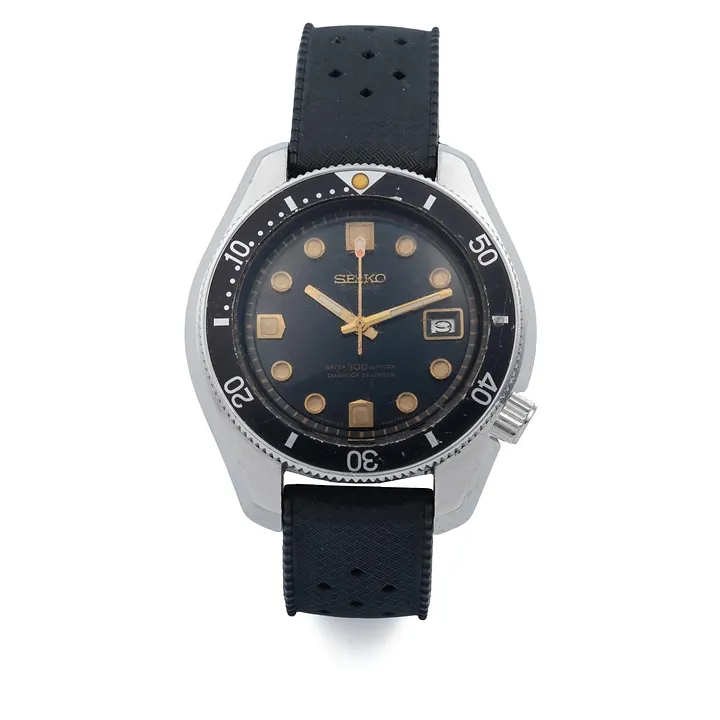
Seiko 300 M, ref. 6215-7000, 1967
Antiquorum auction archive, Geneva
Wristwatches · 1967
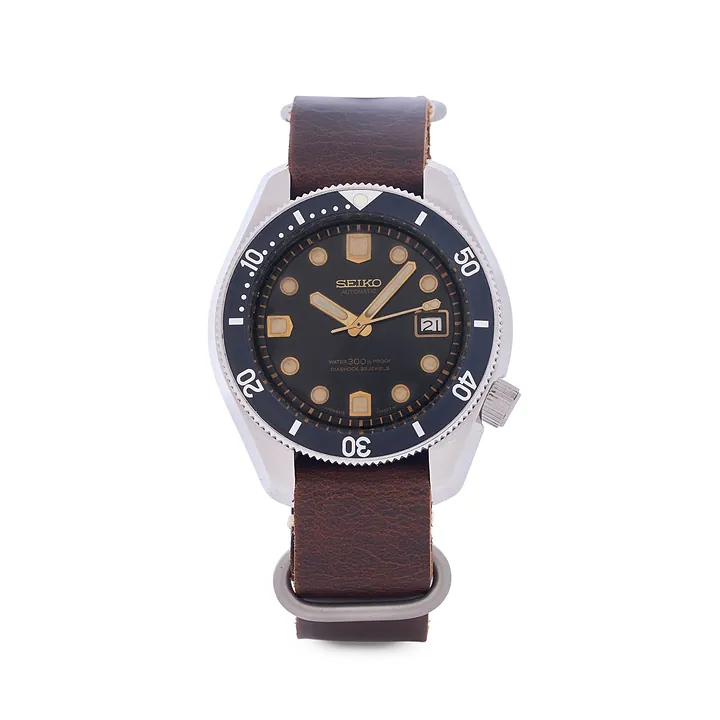
Seiko 300 Meter Diver, ref. 6215-7000, 1967
Antiquorum auction archive, Geneva
Wristwatches · c. 1968
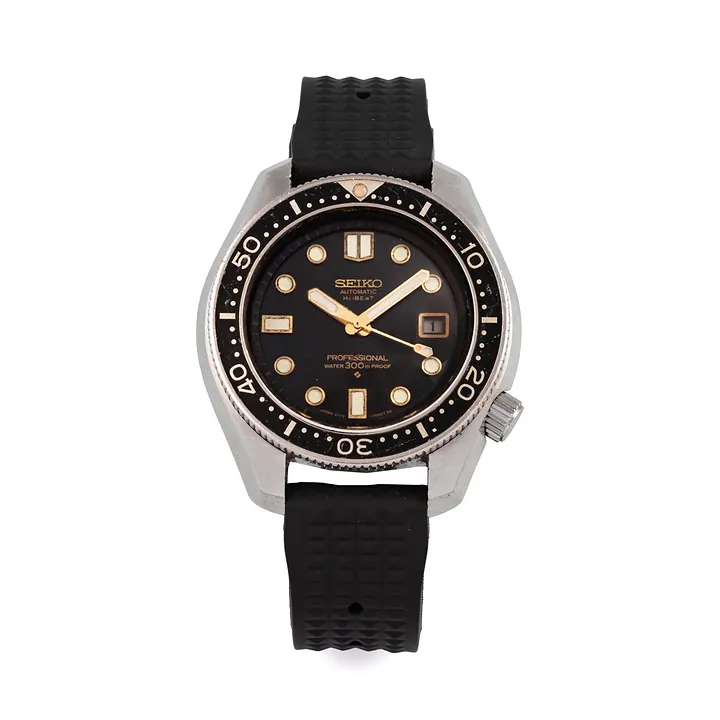
Seiko Hi-Beat, ref. 6159-7000, c. 1968
Antiquorum auction archive, Geneva
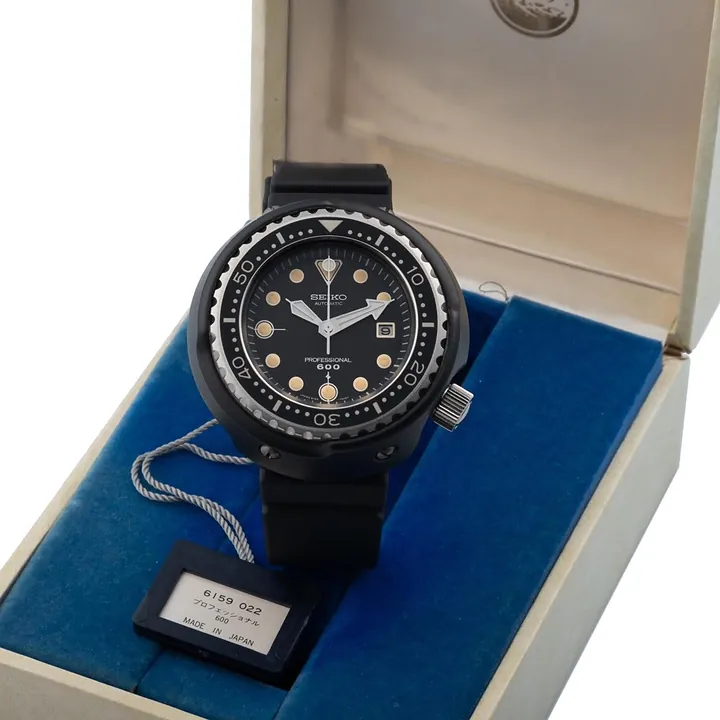
Wristwatches · 1975
Seiko Tuna Professional 600, ref. 6159-7010, 1975
Antiquorum auction archive, Geneva
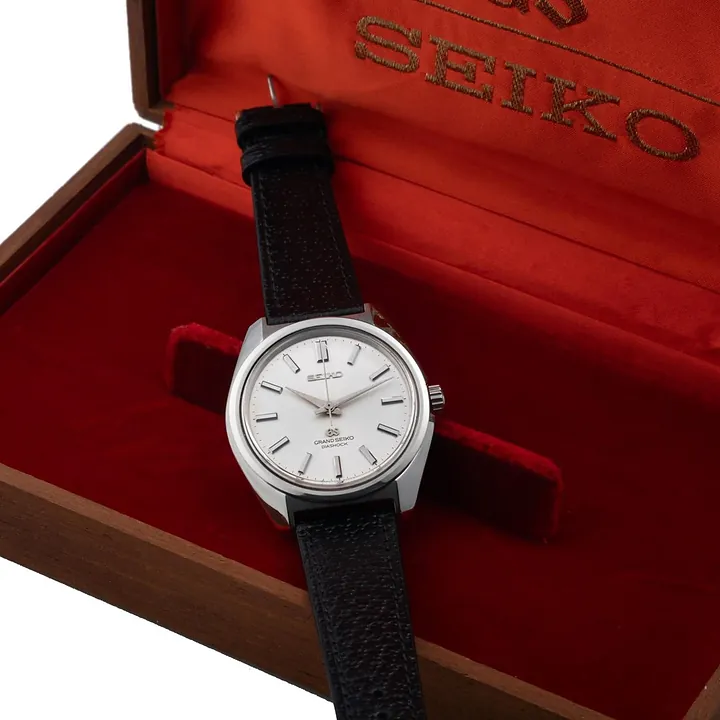
Wristwatches · 1967
Grand Seiko 44 GS, ref. 4420-9000, 1967
Antiquorum auction archive, Geneva
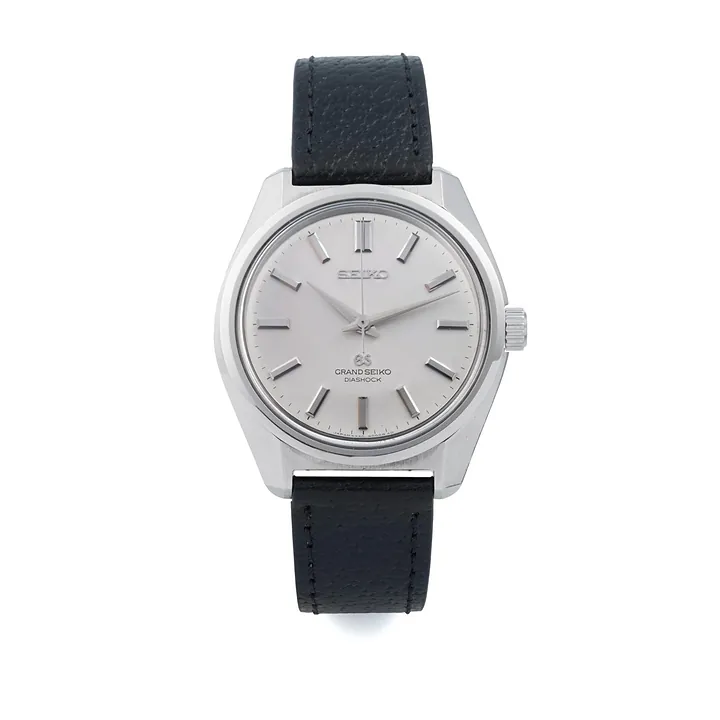
Wristwatches · c. 1967
Grand Seiko 44 GS, ref. 4420-9000, c. 1967
Antiquorum auction archive, Geneva
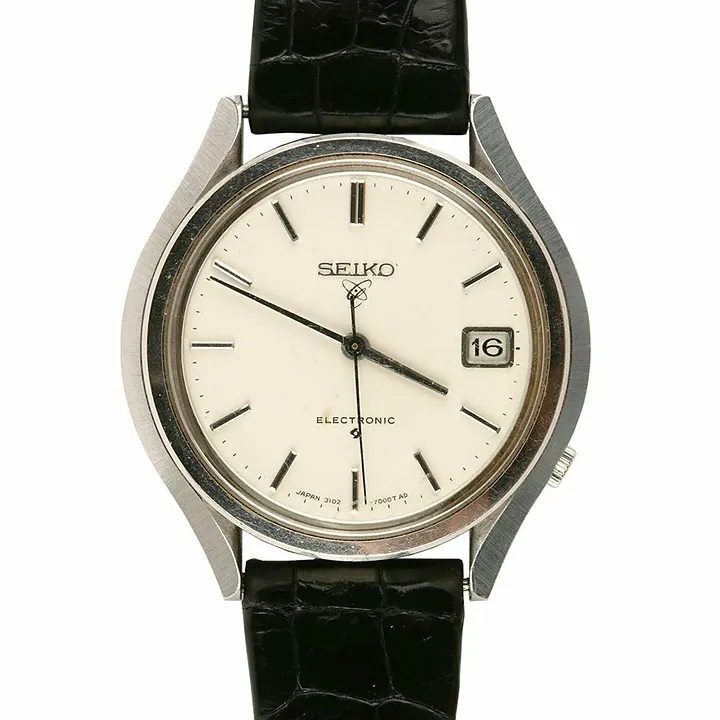
Wristwatches · 1968
Wristwatch, Japan, 1968
German Clock Museum
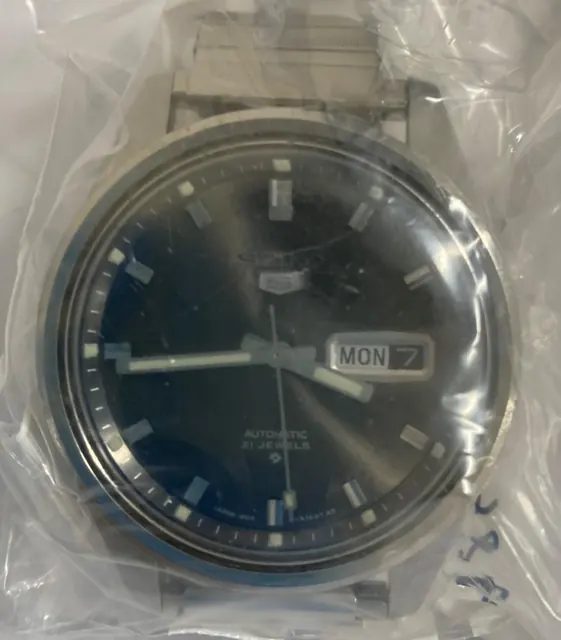
Wristwatches · 1957–1963
Stainless-steel cased self-winding lever wrist-watch with stainless-steel expanding bracelet
British Museum