
Wristwatches · Wristwatch
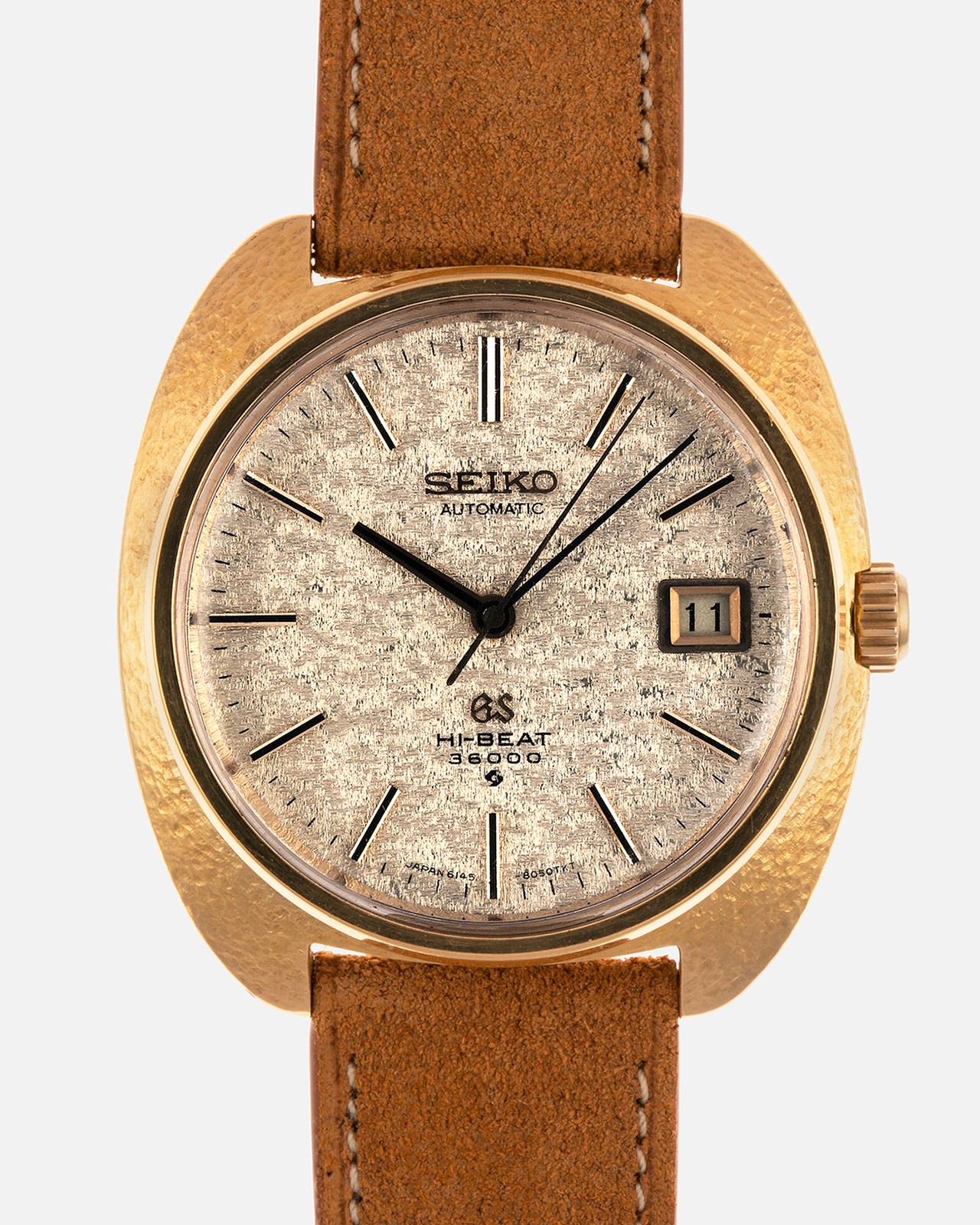
Grand Seiko 61GS 6145-8030 Kirazuri, 1970s
- Maker / attribution
- Grand Seiko (maker)
- Date
- 1970s
- Historical period
- Quartz Revolution (1969 – 1990)
- Country of origin
- Japan
- Object type
- Wristwatch
- Dimensions
- Case 37 mm
- Stock no.
- Product 7717307711575
- Credit line
- Dealer listing, S.Song Watches (product 7717307711575)
- Catalogue title (original)
- Grand Seiko 61GS 6145-8030 Kirazuri (English)
View the source record (dealer listing) ↗ (opens another website in a new tab)Suggest a correction
Record summary
Catalogued by S.Song Watches (dealer), Seattle (stock number Product 7717307711575), this is a wristwatch by Grand Seiko, made in Japan, dated 1970s. The Atlas places it in the Quartz Revolution period (1969 – 1990) of its Wristwatches collection. Recorded dimensions: Case 37 mm. The record is illustrated with 6 photographs.
Assembled from the source record's structured fields. Dates and attributions are given as the source states them; where a field is missing the Atlas leaves it blank rather than estimating.
Catalogue description
Dealer description — S.Song Watches
By the late 1960s, Grand Seiko had firmly established itself as Japan's answer to the very best Swiss chronometers. Having demonstrated that it could compete on precision alone, the brand turned its attention towards something equally ambitious: combining exceptional mechanical performance with distinctly Japanese craftsmanship. The result was the 61GS, introduced in 1968 as Japan's first automatic high-beat Grand Seiko, powered by the remarkable Calibre 6145 beating at 36,000 vibrations per hour. It remains one of the defining movements of vintage Japanese watchmaking and a milestone in Grand Seiko's pursuit of precision. Produced only for a short period, the Ref. 6145-8030 represents one of the rarest and most fascinating interpretations of the 61GS platform. Crafted entirely in solid 18-carat yellow gold, it departed from the sharply faceted cases associated with the Grammar of Design and instead embraced a far more artisanal approach. Today, it has become one of the most sought-after vintage Grand Seiko references, not simply because of its rarity, but because it combines traditional Japanese decorative techniques with one of the finest high-beat movements ever produced by the brand. Here we have the Grand Seiko 61GS Ref. 6145-8030 in 18-carat yellow gold. At first glance, the case appears understated, but closer inspection reveals the extraordinary amount of hand craftsmanship involved. Rather than being uniformly polished or brushed, the broad surfaces have been painstakingly hand-hammered, creating an irregular texture that scatters light in constantly changing ways. Every surface feels organic, giving the watch a warmth and character that is impossible to reproduce through conventional finishing techniques. It is a remarkable expression of Japanese craftsmanship and one of the most distinctive case designs ever produced by Grand Seiko. The dial is equally captivating. Known amongst collectors as the Kirazuri dial, its textured surface draws inspiration from a traditional Japanese printing technique in which mica powder is applied to create a delicate shimmering finish. The effect is exceptionally subtle, revealing itself only as the watch moves through the light. Depending on the viewing angle, the dial can appear almost matte before suddenly coming alive with a soft, almost bark-like texture. Paired with razor-sharp faceted indices, beautifully executed dauphine hands and restrained printing, the dial perfectly balances elegance with remarkable visual depth. It is widely regarded as one of the finest dial executions ever produced by Grand Seiko. Powering the watch is the automatic Calibre 6145A, one of the finest movements to emerge from the golden era of Japanese watchmaking. Beating at 36,000 vibrations per hour, it represented the cutting edge of mechanical precision when introduced, allowing for improved stability and chronometric performance over lower-beat movements of the period. Built to Grand Seiko's exacting standards, it also incorporates Seiko's highly regarded Magic Lever winding system, renowned for its simplicity, durability and efficiency. More than fifty years later, the Calibre 6145 remains one of the most respected high-beat automatic movements ever produced by the brand and a testament to the engineering ambition that defined Grand Seiko during this period. As far as wearability goes, the 37mm yellow gold case strikes a wonderful balance between vintage proportions and modern presence. The broad cushion-shaped silhouette gives the watch far greater wrist presence than its diameter suggests, while the slim profile allows it to sit comfortably beneath a cuff. Combined with the constantly shifting textures of both the case and dial, it is a watch that continually rewards closer inspection, revealing details that are easily overlooked at first glance. Vintage Grand Seiko has deservedly become one of the most exciting areas of collecting, yet even within that landscape the Ref. 6145-8030 occupies a very special place. Produced in extremely limited numbers, powered by one of the brand's finest high-beat movements and distinguished by its beautifully hand-finished case and mesmerising Kirazuri dial, it represents a remarkable blend of technical excellence and traditional Japanese craftsmanship. It remains one of the most collectable vintage Grand Seiko references ever produced, and a watch that perfectly embodies the artistry and engineering that established Grand Seiko as one of the great names in horology today.
Historical context
Quartz Revolution (1969 – 1990)
Seiko's Astron begins mass quartz timekeeping; traditional industries contract sharply.
Quartz and digital watches transformed the market after 1969. Swiss employment collapsed, Japanese and Hong Kong production soared, and the Swatch (1983) helped the Swiss industry recover; mechanical watches survived as luxury goods.
Read the period in the timelineMore wristwatches from this periodEarlier: Modern Mechanical Horology
Atlas type guide
Wristwatches
Bracelet watches were worn by women from the early nineteenth century — Breguet made one for Caroline Murat, Queen of Naples, in 1810–12 — but the wristwatch only became a man's instrument with military use and aviation in the early twentieth century. Between the World Wars it overtook the pocket watch; the 1920s and 1930s brought rectangular Art Deco cases, water-resistant cases and the first automatic winding systems.
After 1945 the wristwatch became a carrier of identity — dress watches, sports and dive watches, chronographs, calendars — produced by Swiss, American, Japanese, German, Soviet and Chinese industries. The quartz revolution after 1969 and the mechanical renaissance since the 1990s, including the rise of independent watchmakers, complete the story.
What to look for
- The reference number (between the lugs or inside the case back) and serial number, the starting point for dating.
- The calibre: its maker and number are often stamped under the dial or on the bridge.
- Originality of dial, hands and crown — refinished ('redial') dials are common.
- Case material marks: 18K/750, 14K/585, stainless steel, gold-filled, plated.
Dating clues
- Wire-lug cases: before c. 1925.
- Water-resistant screw-down cases: from 1926.
- Quartz movements: from 1969; sapphire crystals widespread after c. 1980.
General guidance written by the Atlas editors about this kind of object. It is not a statement about this particular piece; for that, rely on the source record above and on physical examination.
Related records
Wristwatches · 1967
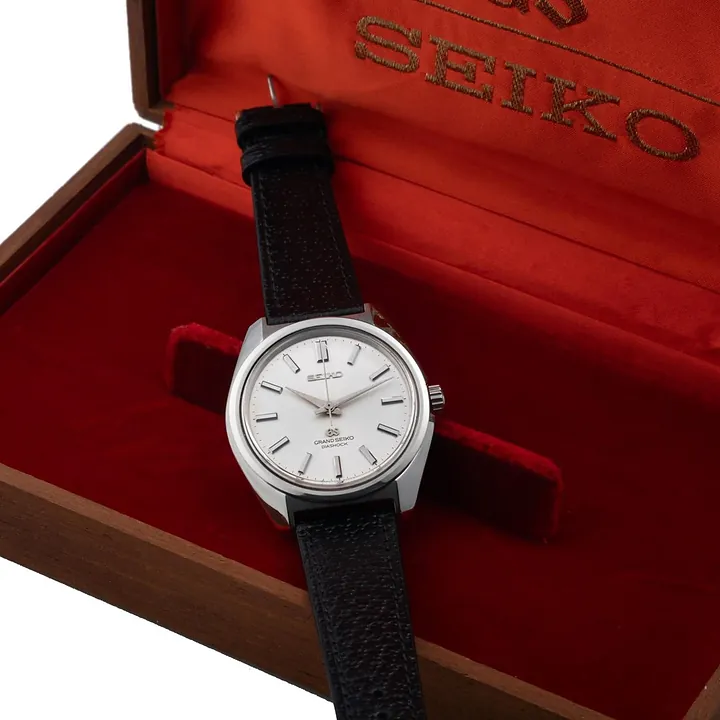
Grand Seiko 44 GS, ref. 4420-9000, 1967
Antiquorum auction archive, Geneva
Wristwatches · c. 1967
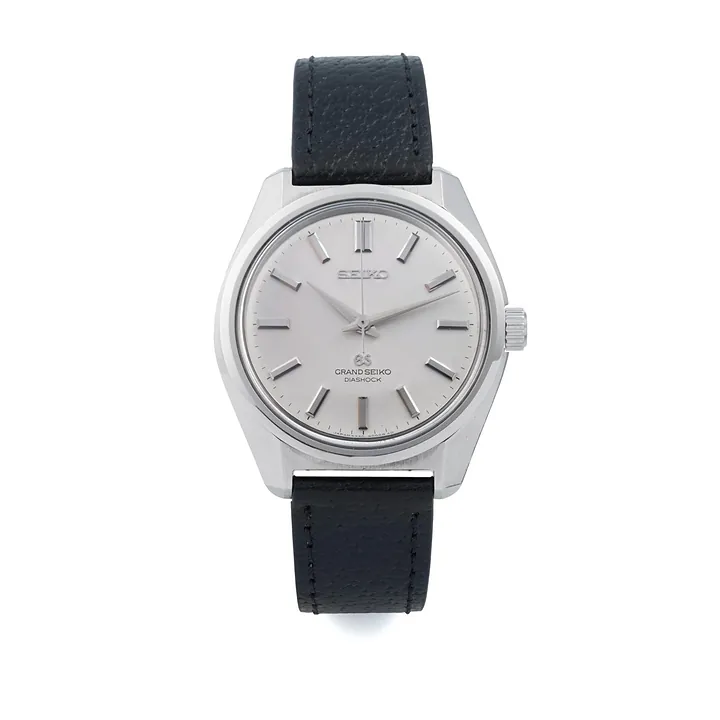
Grand Seiko 44 GS, ref. 4420-9000, c. 1967
Antiquorum auction archive, Geneva
Wristwatches · c. 2020s
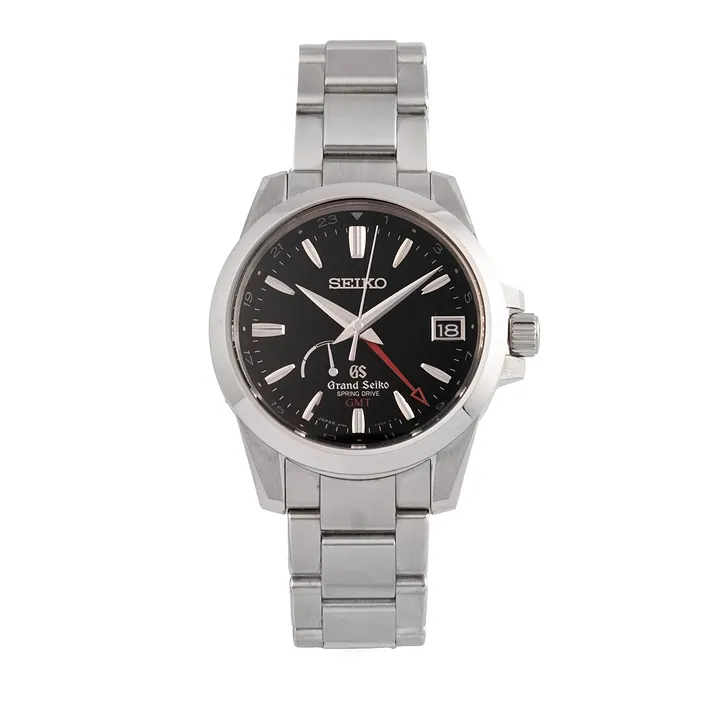
Grand Seiko Spring Drive GMT, ref. 9R66-0AE0, c. 2020s
Antiquorum auction archive, Geneva
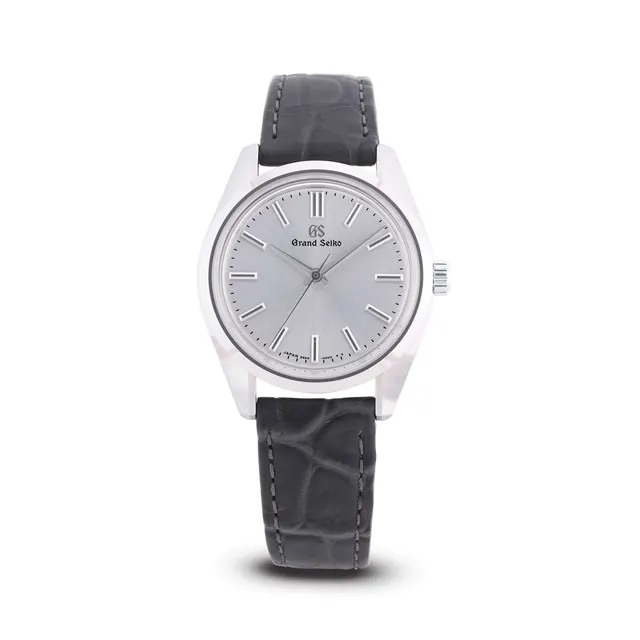
Wristwatches · originally sold in September 2022 (per the lot record)
Grand Seiko wristwatch, ref. SBGW291, Heritage Collection, originally sold in September 2022
Antiquorum auction archive, Geneva
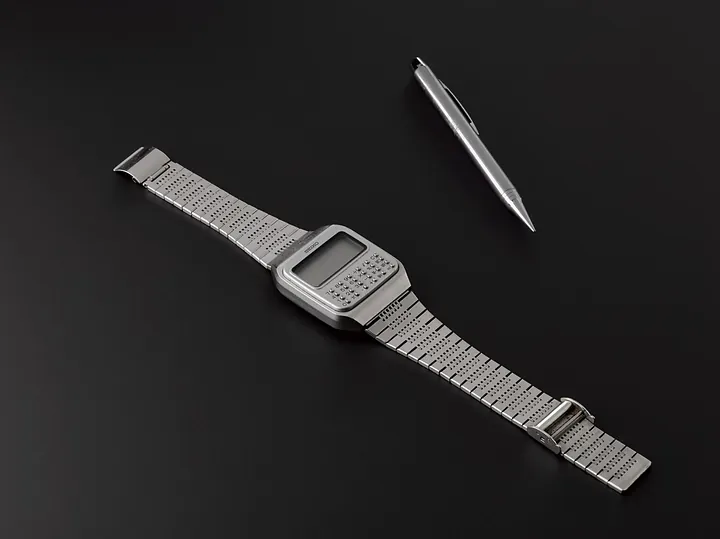
Wristwatches · 1978
Calculator wristwatch by Suwa Seikosha Co. Limited, Japan, 1978
Science Museum Group, London
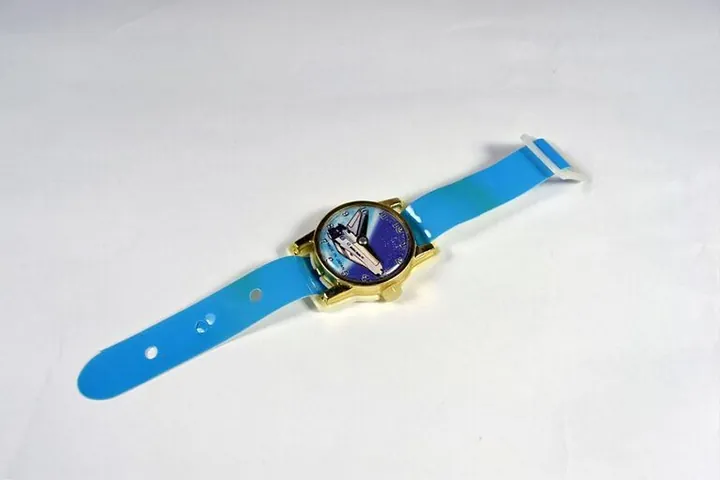
Wristwatches · 1980–1982
Wristwatch, Space Shuttle; plastic, Japan, 1970-1979?
Victoria and Albert Museum, London
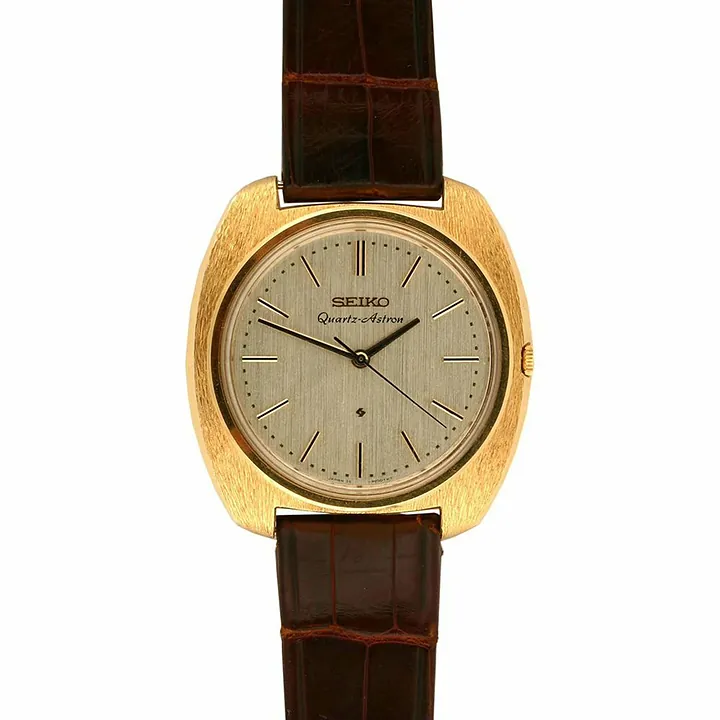
Wristwatches · 1969
Wristwatch, Japan, 1969 (no. 29912)
German Clock Museum
Wristwatches · c. 1972
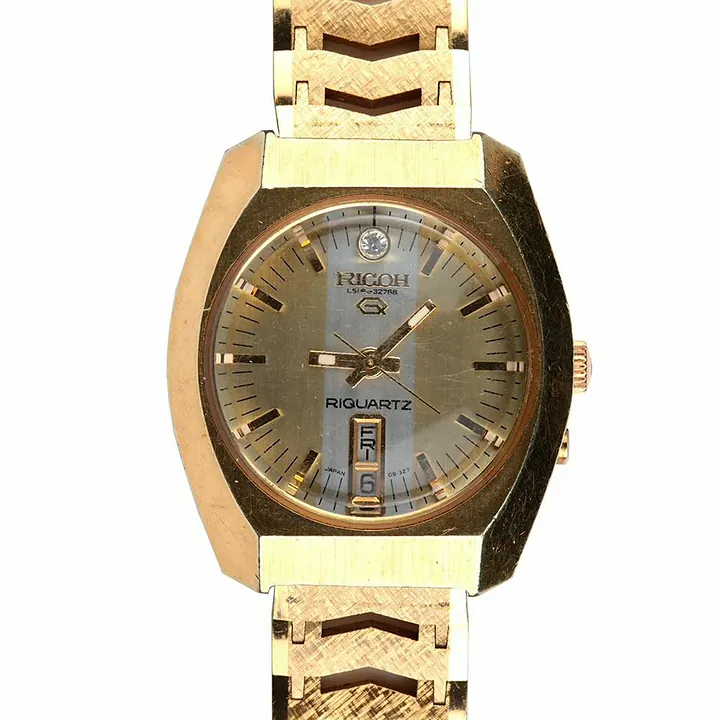
Wristwatch, Japan, c. 1972
German Clock Museum