
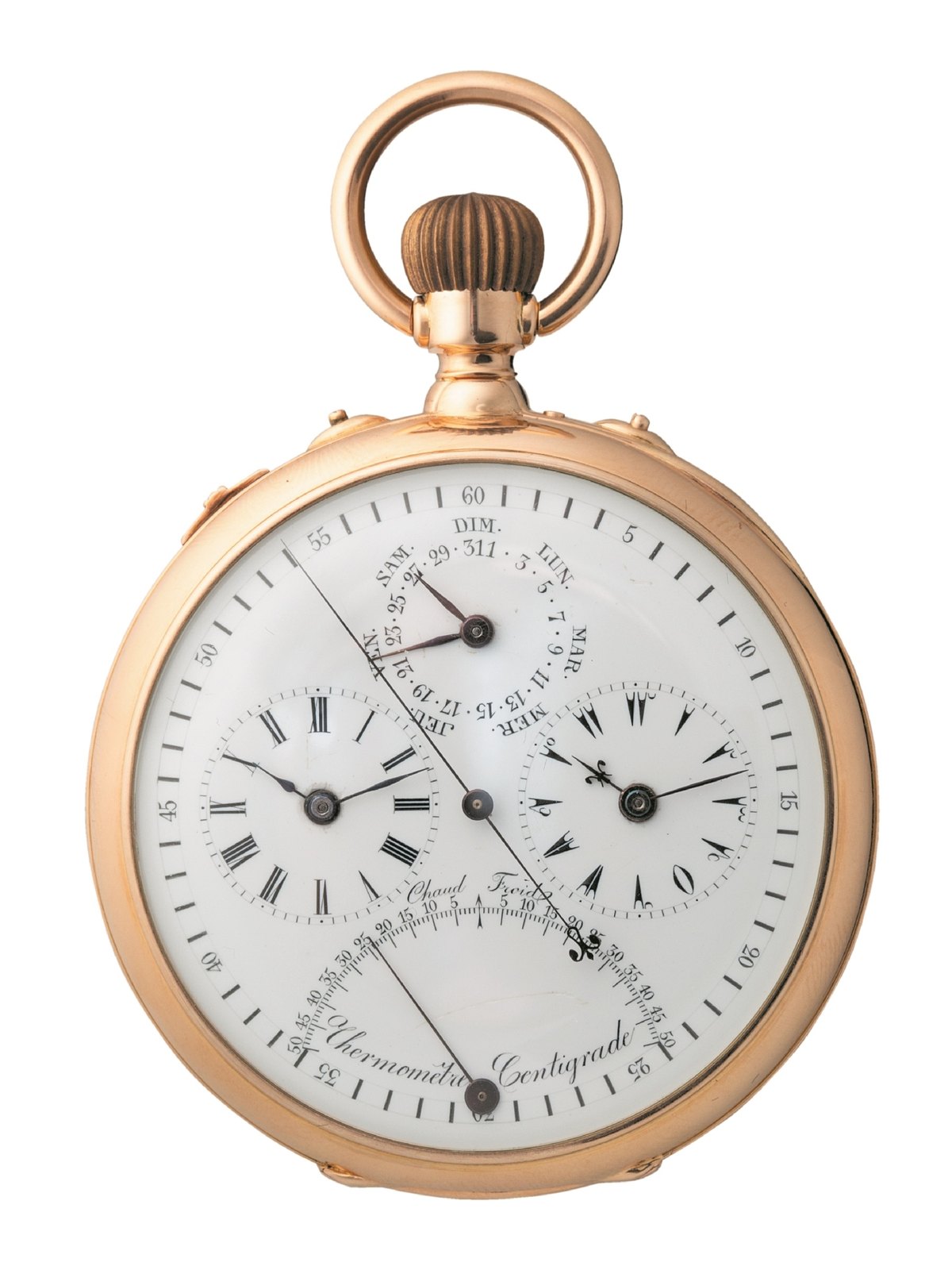
Complication
Deadbeat (independent) seconds
Also known as: Seconde morte · Seconde foudroyante (related) · Springende Sekunde
How it works
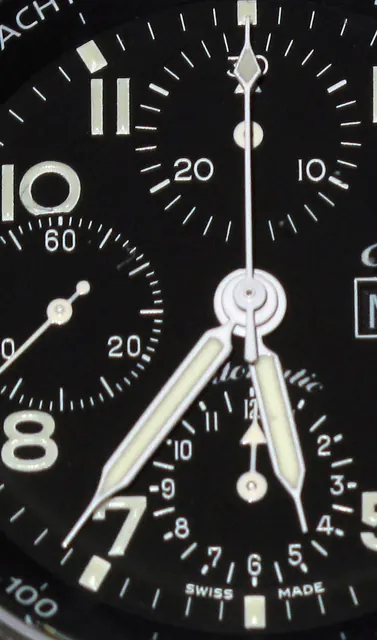
The seconds hand advances in whole one-second jumps rather than sweeping. In 'independent' seconds it is driven by its own train and released once per second by a star or flirt controlled from the going train.
Why it was invented
Precise timing of seconds for doctors, astronomers and engineers — the second can be read exactly, as with a pendulum regulator.
- Invented
- 1776
- Credited to
- Jean-Moïse Pouzait (independent seconds)
- Historical period
- Precision & Scientific Horology
History and development
Geneva watchmaker Jean-Moïse Pouzait made independent-seconds watches in 1776. 'Seconde foudroyante' (a hand turning once per second in fractions) and deadbeat seconds were popular in 19th-century Swiss pocket watches for timing.
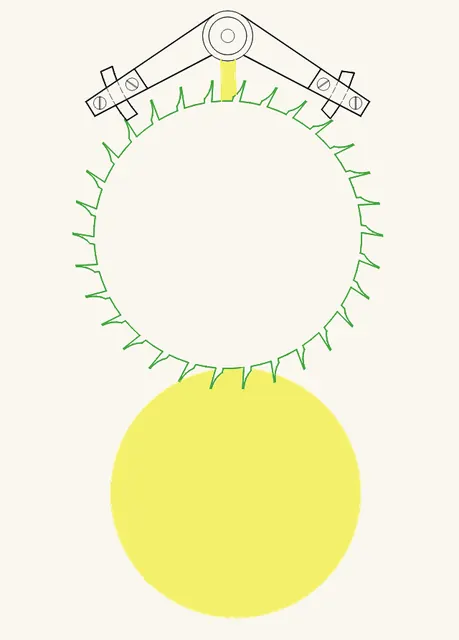
A balance-wheel watch normally beats five or six times a second, so its seconds hand advances in small steps that look like a sweep. A seconds hand that jumps once a second therefore needs extra mechanism. In the classic 'independent seconds' watch a separate barrel and train drive the seconds hand, and a pin or flirt on the going train releases it once a second; in other designs a spring-loaded star on the seconds wheel stores a little energy and releases it in one jump. Pendulum regulators show 'dead' seconds naturally, because a seconds pendulum releases the escape wheel once a second.
Jumping seconds were valued in the nineteenth century by doctors taking a pulse and by anyone needing to read whole seconds at a glance, and some watches combined independent seconds with a stop slide, as an early form of timer. Quartz watches later made a once-a-second jump commonplace, but in mechanical watches it remains a rare, demanding complication; Jaeger-LeCoultre's Geophysic True Second of 2015 is one modern example.
How to recognise it
- A seconds hand that jumps once a second, sometimes with a slide to stop it; independent-seconds watches have a second barrel and train.
- Dials may be marked 'seconde morte' or 'independent seconds'.
Names in other languages
| English | Français | Deutsch | Italiano | Español |
|---|---|---|---|---|
| Deadbeat seconds | Seconde morte | Springende Sekunde | Secondi morti | Segundero muerto |
From the Atlas glossary; French and German follow trade usage, Italian and Spanish await specialist review.
Related mechanisms
In the catalogue
All 20 records →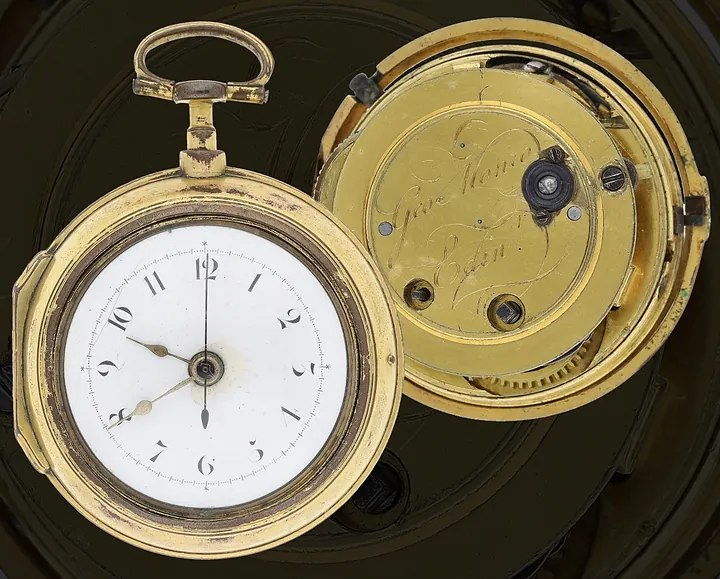
Pocket Watches · 18th century
18th century 'upside down cylinder' gilt metal pair cased pocket watch by George Monro, Edinburgh
Gardiner Houlgate (auction house), Corsham
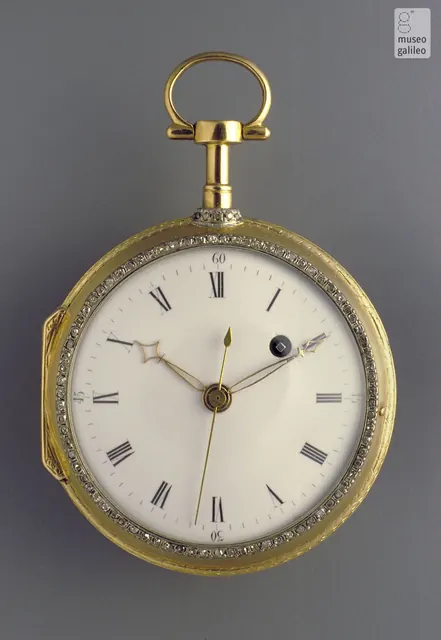
Pocket Watches · c. 1800
Watch, Switzerland, c. 1800
Museo Galileo, Florence
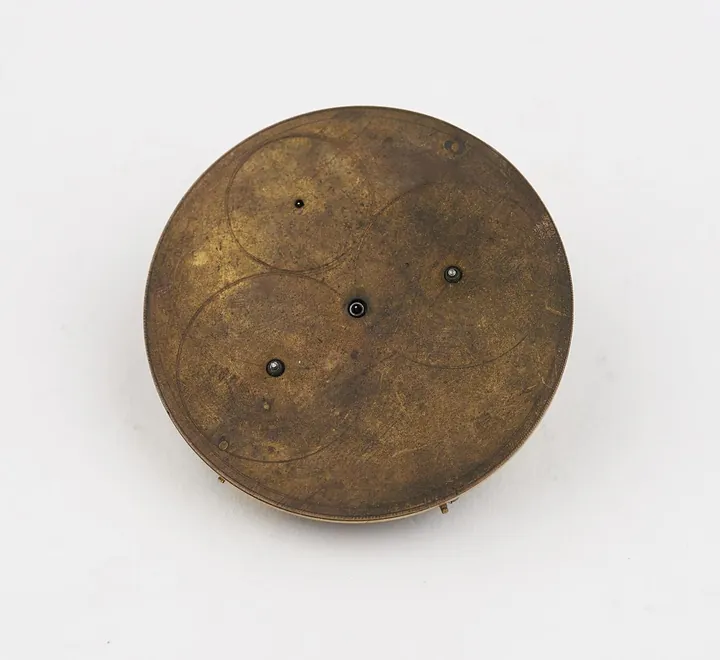
Pocket Watches · 1801–1900
Pocket watch, Switzerland, 1801–1900
Science Museum Group, London
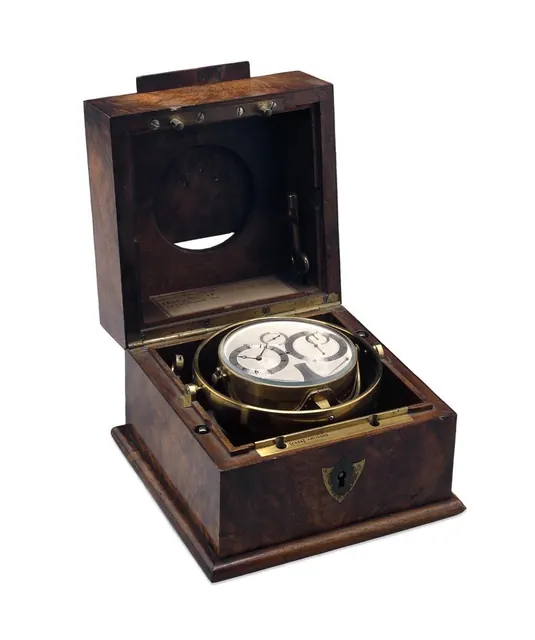
Instruments · 1813
Marine chronometer by Breguet & Fils
British Museum
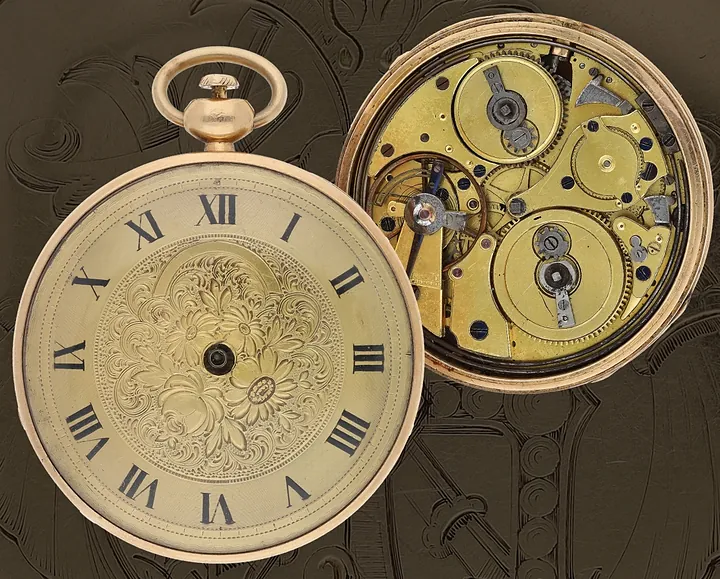
Pocket Watches · c. 1830
18ct quarter repeating ruby cylinder pocket watch with independent centre seconds by Gounouilhou & Francois A Geneva, circa 1830
Gardiner Houlgate (auction house), Corsham
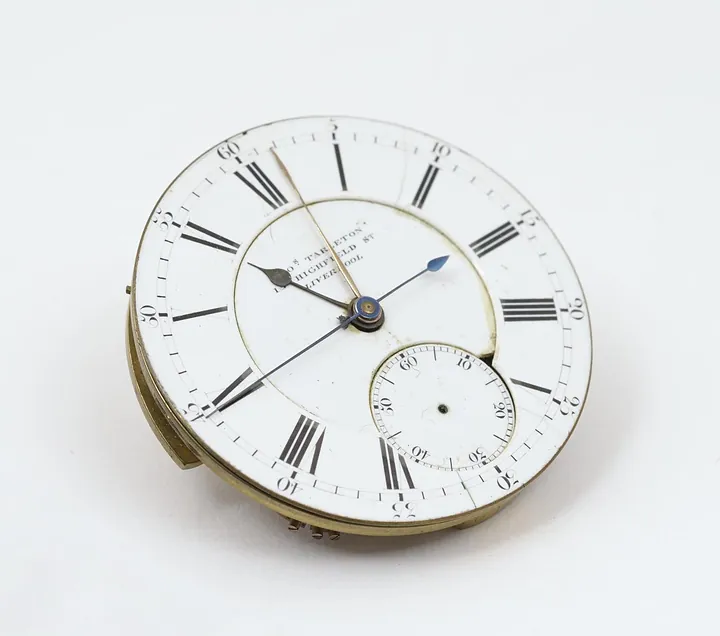
Movements & Components · 1835–1845
Independent centre seconds, by T. Tarleton, about 1840, with lever escapement, 1835–1845
Science Museum Group, London
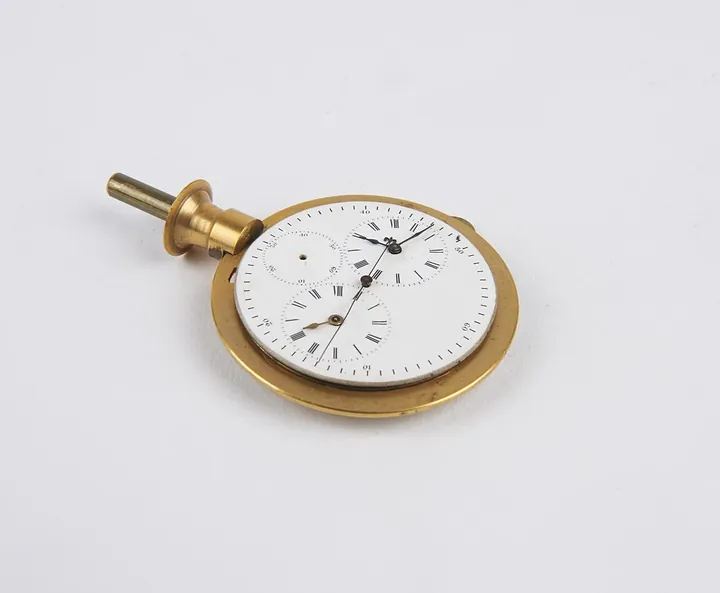
Pocket Watches · 1860–1880
Swiss independent centre seconds chronograph movement, 1860–1880
Science Museum Group, London
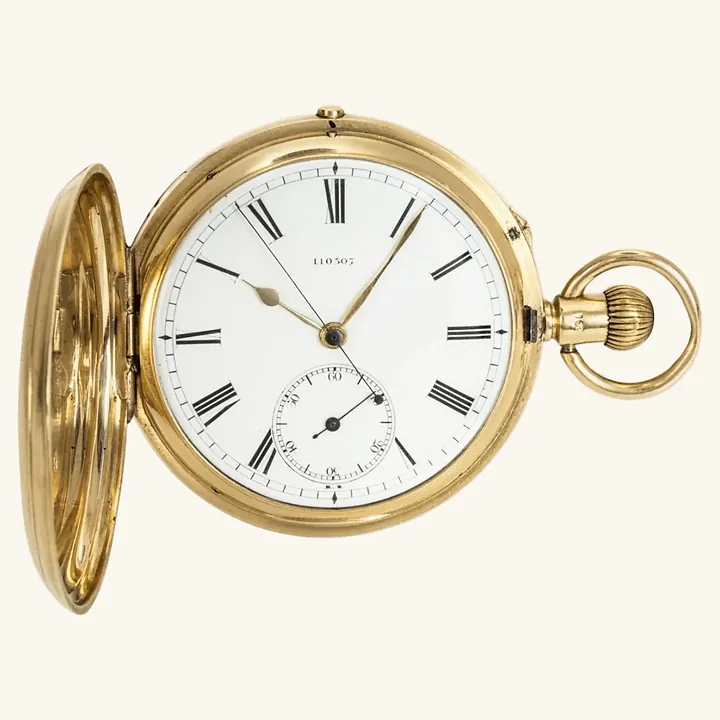
Pocket Watches · 1884
18CT Gold Independent Second Pocket Watch, 1884
WatchMuseum.org shop
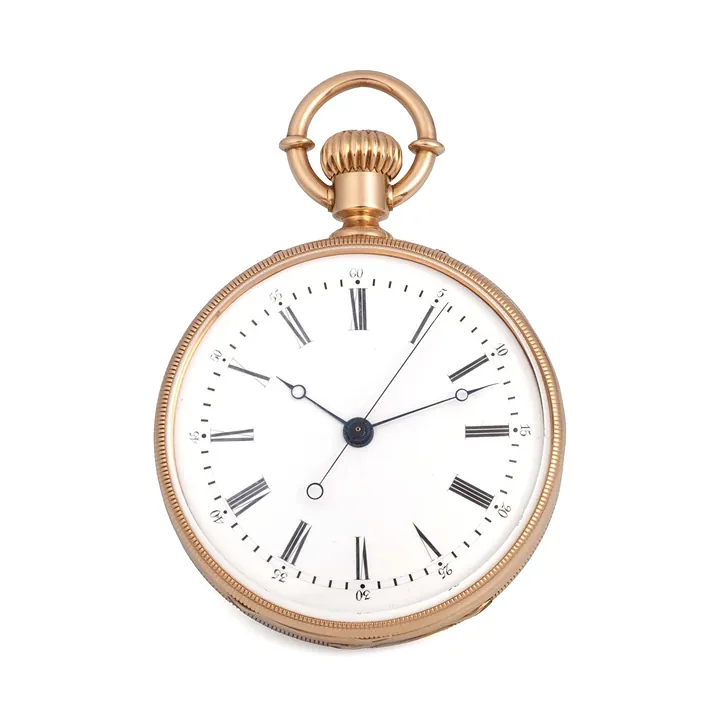
Pocket Watches · c. 1890
Breting Frères pocket watch, c. 1890
Antiquorum auction archive, Geneva
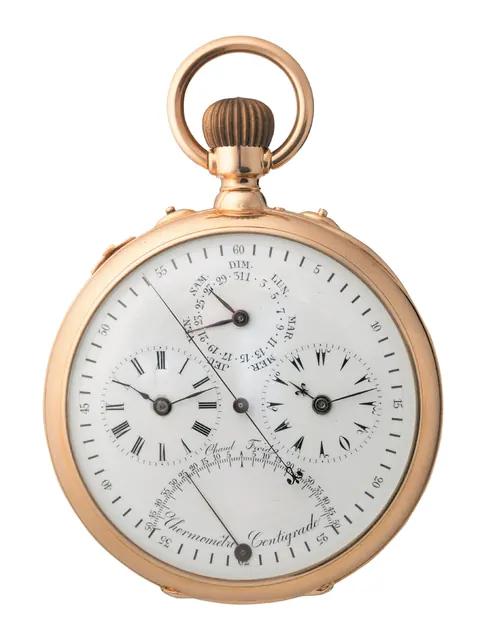
Pocket Watches · c. 1890
Unsigned pocket watch, dead independent seconds date, circa 1890
Antiquorum auction archive, Geneva
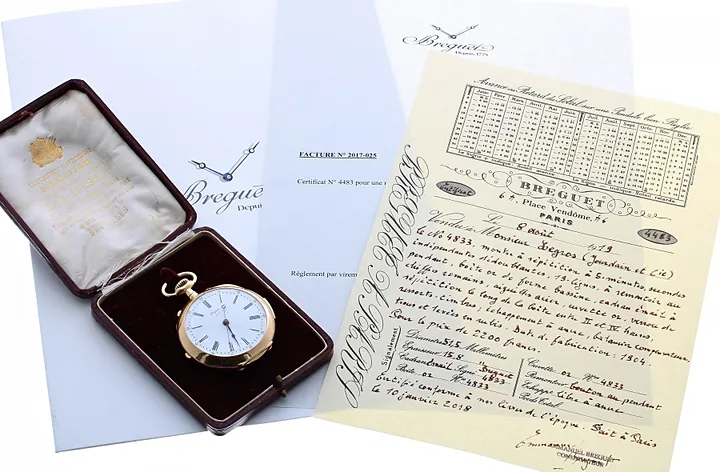
Pocket Watches · c. 1904
Breguet 18ct pocket watch, circa 1904
Gardiner Houlgate (auction house), Corsham
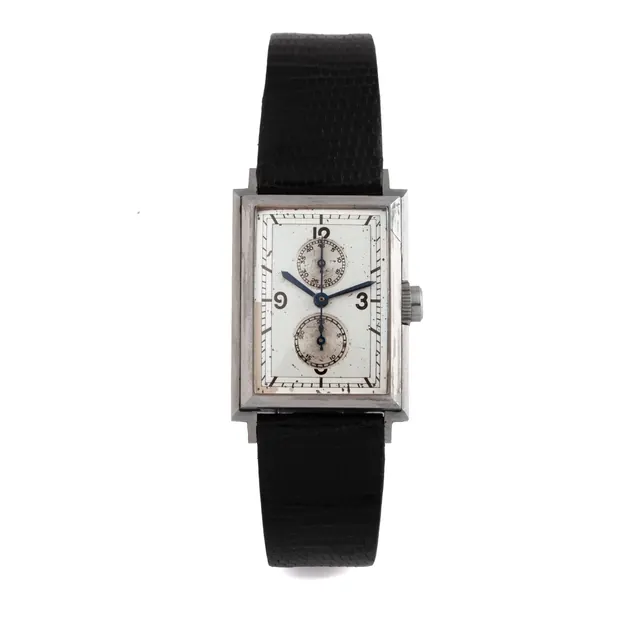
Wristwatches · c. 1930s
Anonymous wristwatch, Single Button Chronograph with Foudroyante, circa 1930's
Antiquorum auction archive, Geneva
Records are linked when the holding institution's description names this mechanism; check each source record for confirmation.