
Advanced · Lesson 4 of 7 · 20 min read
How to date a pocket watch: serial numbers, hallmarks and railroad grades
A practical guide to dating a pocket watch by its separate parts: winding and setting, the movement's serial number, British hallmarks and other case marks, railroad standards, engravings and repairers' papers.
By the end of this lesson you will be able to:
- Date the movement, case and dial separately
- Read a British hallmark and tell native marks from import marks
- Use serial numbers and railroad standards without over-claiming
- Wind and set a pocket watch safely
People ask 'how old is my pocket watch?' as if the watch had one date. It rarely does. A pocket watch is an assembly: a movement from one workshop or factory, a case from a specialist case maker, a dial from a dial maker, hands, a crystal and sometimes a bow and pendant that were replaced later. Each part can be dated, and each date means something different. This lesson complements 'Dating a timepiece from the evidence' with the clues that matter most for pocket watches made between about 1700 and 1950.
Step 1: how does it wind and set?
Before opening anything, look at how the watch is wound. A watch with no crown, or with a plain pendant and a keyhole in the dial or inner case, is key-wound. Keyless winding through the crown was developed in the mid-nineteenth century and became normal for good watches over the following decades, but key-wound watches were still made for cheaper and export markets into the twentieth century. Key winding is therefore evidence of an earlier tradition, not proof of an early date.
| System | How you set the hands | Typical context | Caution |
|---|---|---|---|
| Key wind, key set | Key on the square of the hand arbor, usually after opening the front bezel or from the back | Eighteenth and nineteenth centuries | Continued for cheap and export watches |
| Pin set | Press a small pin beside the pendant while turning the crown | Many Swiss and English keyless watches of the later nineteenth century | Pins wear or are lost; check for a hole |
| Pendant set | Pull the crown out and turn it | Common from the late nineteenth century onwards | Easy to set by accident, so many railways rejected it |
| Lever set | Open the bezel, pull out a small lever at the edge of the dial, turn the crown, push the lever back | American railroad-grade watches and their imitations | Some watches were converted between systems |
How to wind a pocket watch safely
- Hold the watch in one hand and turn the crown clockwise (away from you) between finger and thumb, using short, even turns.
- Stop at the first firm resistance. Never force a crown or key past it.
- Wind once a day, at about the same time, so the mainspring works in its most even range.
- For a key-wound watch, use a key that fits the square closely; a loose key rounds the square and damages the case.
- If the crown turns freely without resistance, or the watch stops soon after winding, stop and have it examined: a broken mainspring or a worn click needs a watchmaker, not more winding.
Step 2: open the case and read the movement
Most of the evidence is inside. Many back covers are hinged and open with a fingernail at a small lip; others screw off anticlockwise. Some watches have an inner dust cover (a 'cuvette') with its own engraving. If a case resists, stop: forcing a screw back or a stiff hinge is how cases are damaged.
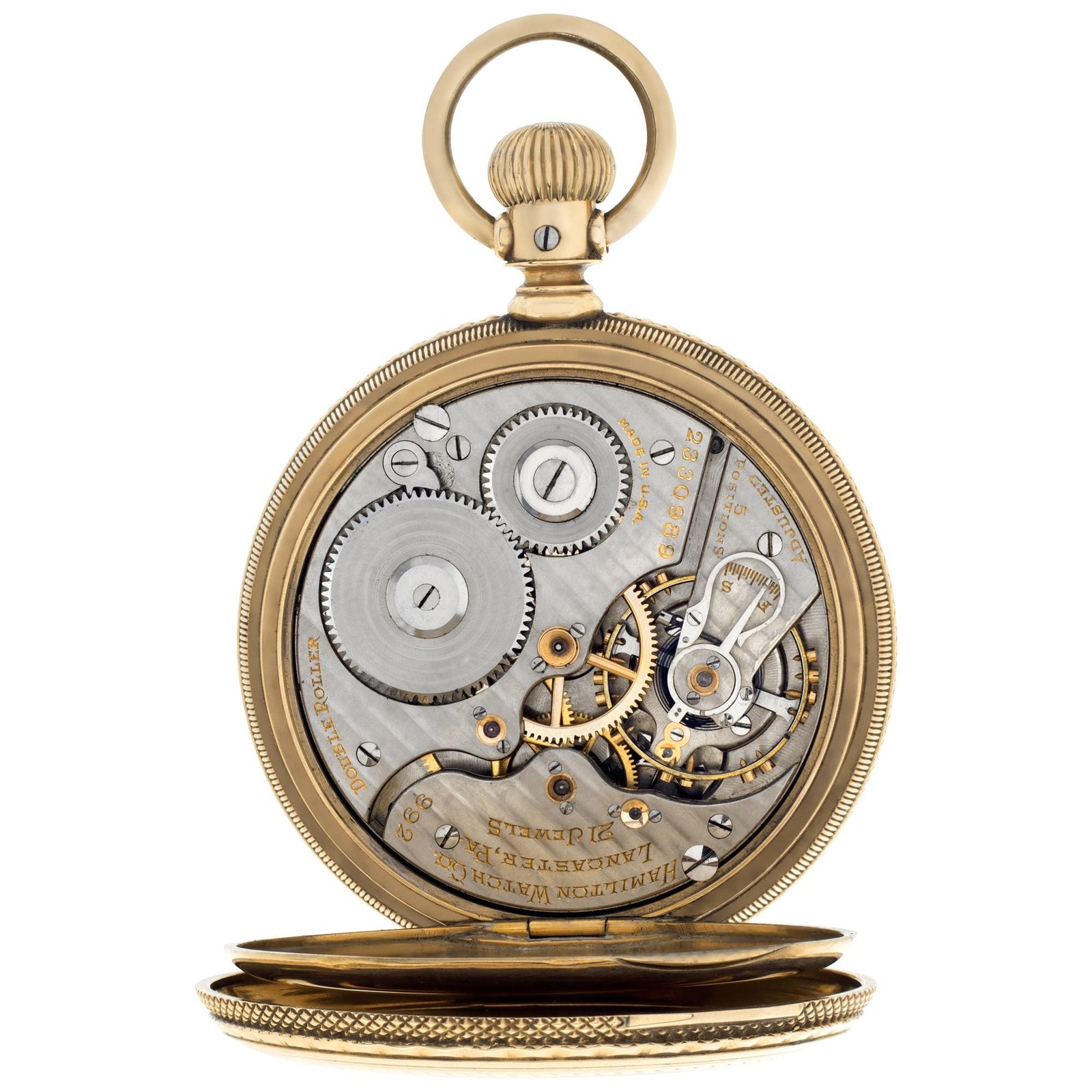
On the movement, look for the maker's or factory name, a serial number, the number of jewels, words such as 'Adjusted', 'Adjusted 5 positions' or 'Temperature', and patent dates. A patent date gives an earliest possible date for that part and nothing more; firms kept stamping old patents for years. Note where the name is: a retailer's name on the dial or movement does not mean the retailer made the watch.
Check that the movement belongs in its case. In a hunter (closed-cover) watch the crown sits at three o'clock and the small seconds at six, at right angles; in an open-face watch the crown is at twelve, opposite the seconds. An open-face case whose crown sits at the three o'clock position of the dial usually holds a hunter movement that has been re-cased — collectors call it a 'sidewinder'. Mismatched screw holes, a dial that sits crookedly, or a movement held in place with spacers are other signs of a marriage.
Step 3: reading British hallmarks
British gold and silver watch cases are unusually easy to date because the hallmarking system includes a date letter. A full British hallmark on a case normally contains four marks:
- Sponsor's mark: the initials of the firm that submitted the case for testing — usually the case maker, not the movement maker.
- Standard mark: the fineness of the metal. Before 1975 this is a lion passant for sterling silver in England, or a crown with a carat number (such as 18) for gold; lower gold standards of 15, 12 and 9 carat were introduced in 1854, and 14 carat replaced 15 and 12 in 1932.
- Assay office mark: the town where the case was tested, such as the leopard's head for London or the anchor for Birmingham.
- Date letter: a letter in a distinctive shield and typeface that changes every year in cycles of twenty or more letters.
| Office | Office mark | Notes |
|---|---|---|
| London | Leopard's head | Date letters since 1478 |
| Birmingham | Anchor | A major centre for watch cases in the nineteenth and twentieth centuries |
| Chester | City arms: three wheatsheaves and a sword | Closed in 1962; assayed many cases for the Liverpool watch trade |
| Sheffield | Crown, replaced by a rose from 1975 | Better known for silver than for watch cases |
| Glasgow | Tree, bird, bell and fish | Closed in 1964 |
| Edinburgh | Castle | Scottish standard marks differ from English ones |
A date letter does not correspond to a calendar year. Until 1975 each office changed its letter on its own day: London's letter changed in May, so a London case is correctly dated '1912–13', not '1912'. From 1975 all British offices change their letter on 1 January. Look the letter up in a reliable table for the correct office, matching the shape of the shield and the typeface as well as the letter itself; the same letter recurs in different cycles.
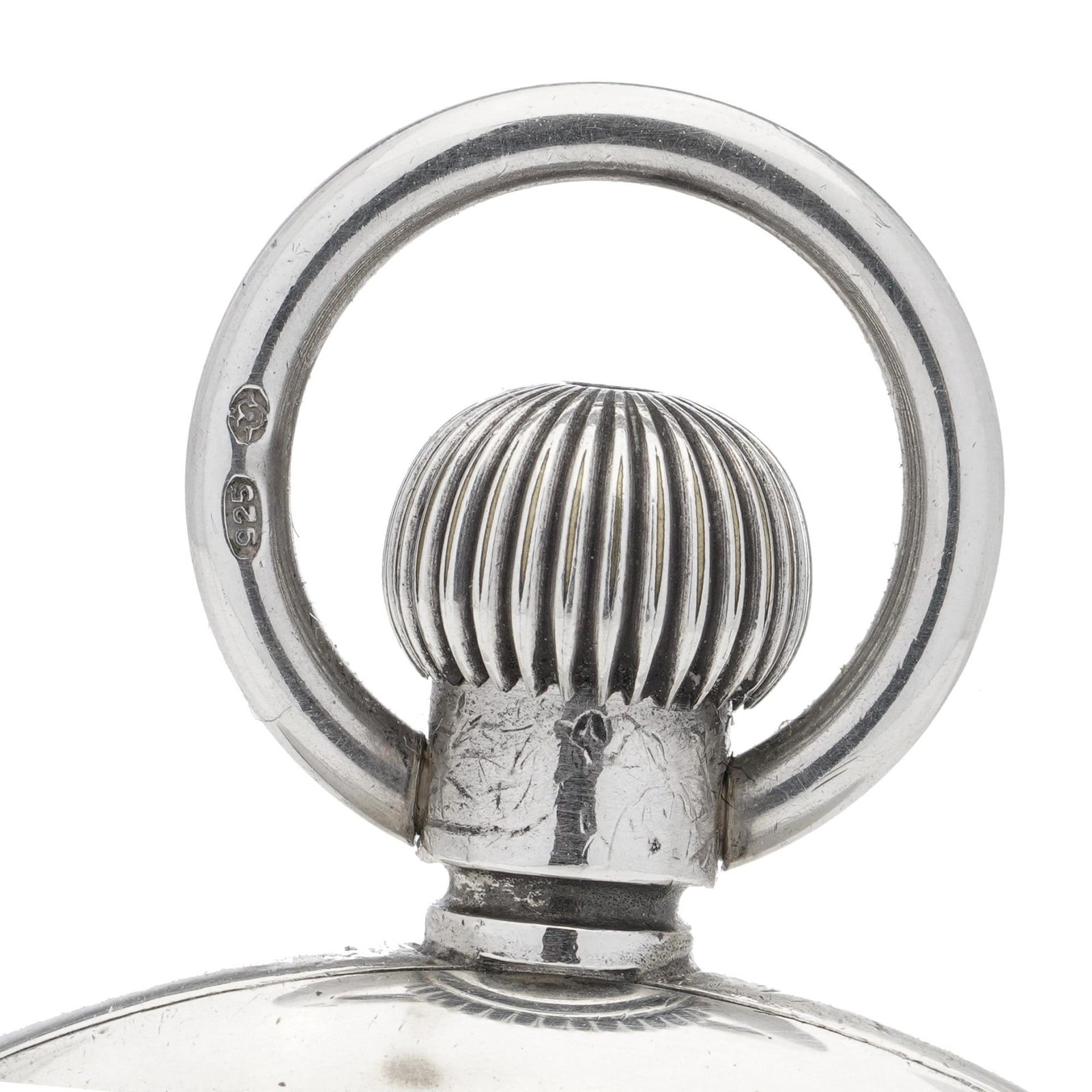
Between 1784 and 1890 a duty mark — the sovereign's head in profile — was also struck to show that tax had been paid, which helps place older cases. From 1907, watch cases imported into Britain were assayed under special rules and struck with import marks: the fineness as a decimal number (such as .925 or .375) and an office symbol different from the native one — the astrological sign of Leo for London, an equilateral triangle for Birmingham and an acorn for Chester. An import mark tells you the case came from abroad, often from Switzerland. Gold-filled, rolled-gold and plated cases are not solid precious metal and cannot carry a British hallmark at all.
Swiss, French and American case marks
Swiss official marks, introduced by federal law in 1880, certify that a gold or silver case was tested at a Swiss control office and state its fineness; they contain no date letter. The first series includes the head of Helvetia for 18-carat gold, a squirrel for 14-carat gold and a bear for silver. The designs were changed later in the twentieth century, so the style of mark narrows the range a little. French gold has carried an eagle's head guarantee mark since 1838. Neither system dates a case to a year.
American cases carry trade stamps rather than hallmarks: the case maker's name or trade mark, the metal ('14K', 'Coin', 'Sterling', 'Gold Filled') and on many gold-filled cases a guarantee in years ('Warranted 20 years'), which refers to the thickness of gold bonded over a base-metal core. Case serial numbers belong to the case maker's own sequence. In the American trade, movements and cases were usually sold separately and put together by the jeweller, so the case number tells you nothing about the movement.
Step 4: serial numbers and how to look one up
American factories numbered their movements in a single running sequence, and the published tables for Waltham, Elgin, Hamilton, Illinois and others are the best-known way to date a movement. Several Swiss firms, including Longines, Omega and Patek Philippe, will issue an extract from their archives for a fee, which is stronger evidence than a table. Use serial numbers carefully:
- Read the number from the movement plate, not the case or the dial.
- Identify the maker for certain first; many firms' numbers overlap.
- Use a table that names its source, and record the source with the result.
- Treat the result as an approximate year of manufacture — tables are often reconstructed from batch records, and a movement could sit in stock for years before sale.
- Then compare the result with the case, dial and engraving: if they disagree badly, something has been changed.
Railroad grades: what the standards actually said
After a collision at Kipton, Ohio, in 1891 — commonly blamed on a watch that had stopped, though accounts differ in detail — railroads in the United States adopted written standards for the watches their crews carried. The 1893 General Railroad Timepiece Standards associated with Webb C. Ball typically asked for an open-face watch of size 18 or 16 with at least 17 jewels, adjusted to temperature and to five positions, regulated to within about 30 seconds a week, set by a lever and with a clear dial with bold Arabic numerals. Each railroad wrote its own rules, raised the requirements over time and kept lists of approved grades, and watches had to pass regular inspection.
So 'railroad grade' is not a single specification. A watch is better described as meeting a particular railroad's standard at a particular date, or as a grade that appeared on approved lists. Hunter-case versions of railroad-grade movements were made, but were not accepted by lines that required open faces. Outside the United States, railways set their own rules and often issued watches as company property.
Worked example: an engraving older than its maker
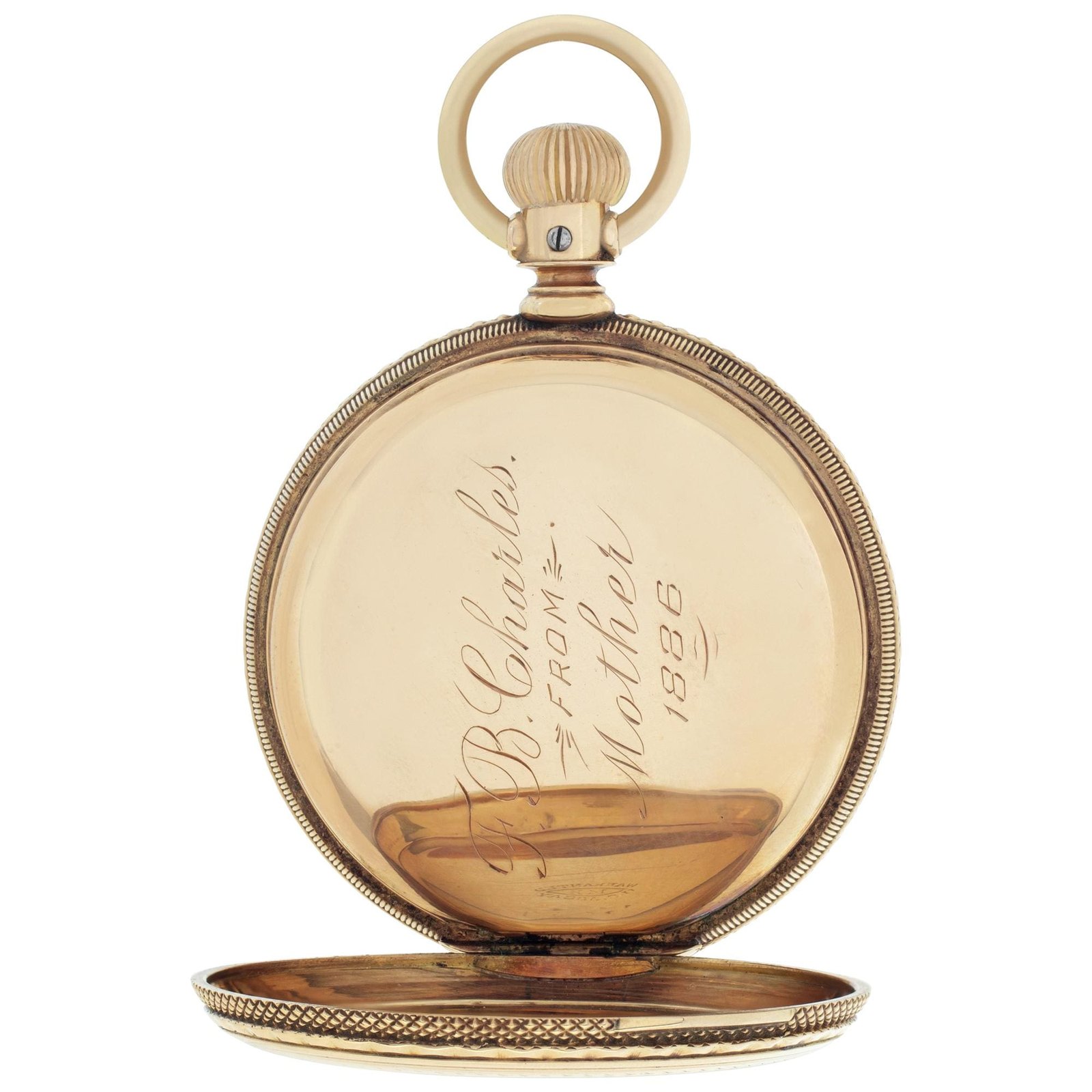
A gold Hamilton hunter in the Atlas catalogue was listed for sale as '1886' because of a presentation engraving inside the case. The Hamilton Watch Company was founded at Lancaster, Pennsylvania, in 1892, and its first watches were finished in 1893, so the movement — a 16-size, 21-jewel, lever-set railroad grade — cannot date from 1886. Either the engraving commemorates an earlier event, or the case is older than the movement it now holds — the case maker's name and number would be the next thing to check. The catalogue now dates the watch 'after 1892' and explains why.
Eighteenth-century clues: pair cases and watch papers
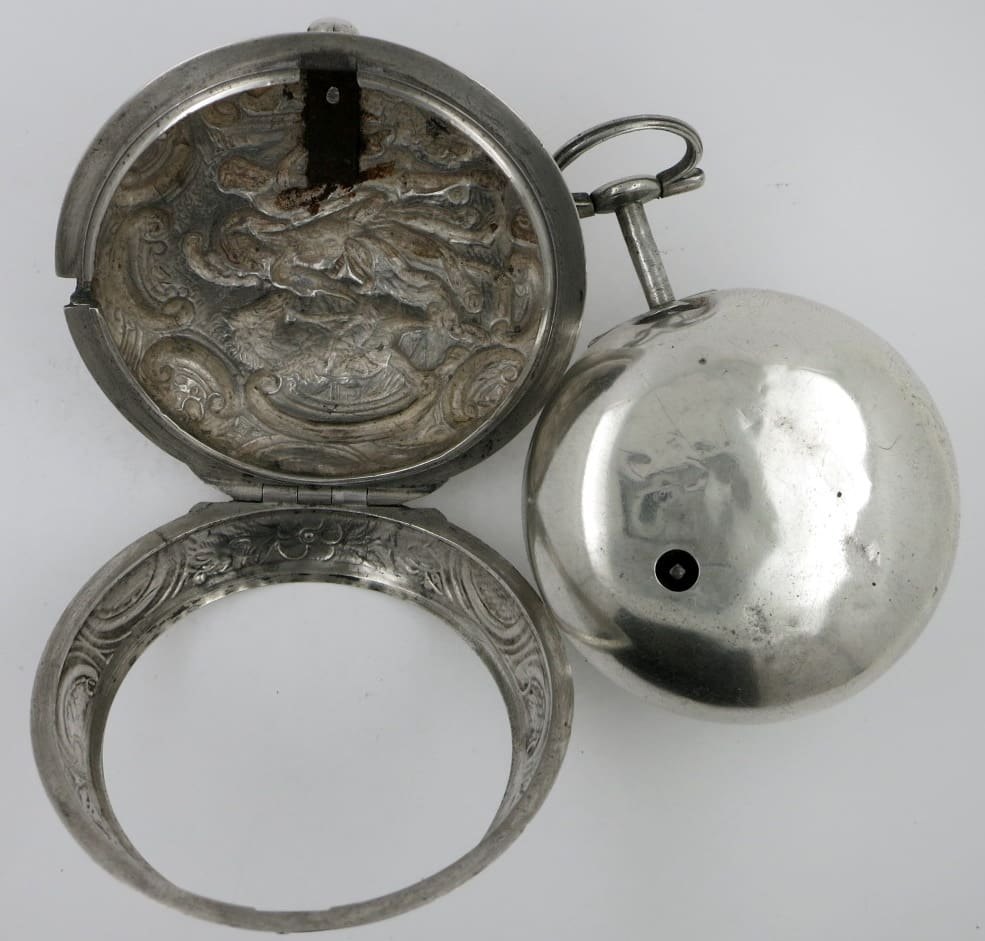
English watches of the eighteenth century were usually made with two cases: a plain inner case holding the movement and an outer case that could be plain, shagreen-covered, or decorated in repoussé. Both cases may be hallmarked, sometimes in different years, and their sponsor's marks may differ. Repairers often left a printed or handwritten paper inside the outer case with their name, town and sometimes a date of service. A watch paper is excellent evidence of where a watch was serviced and when, but it dates the repair, not the watch.
Putting it together
| Clue | Where to find it | What it dates | Strength |
|---|---|---|---|
| Movement serial number | Movement plate | The movement's manufacture | Good with a sourced table or archive extract |
| British date letter | Inside the case or on the band | The year of assay of that case | Strong for the case only |
| Swiss, French or American marks | Inside the case | Fineness and origin, sometimes a period | Weak for dating |
| Patent dates | Movement or case | An earliest possible date | Weak on its own |
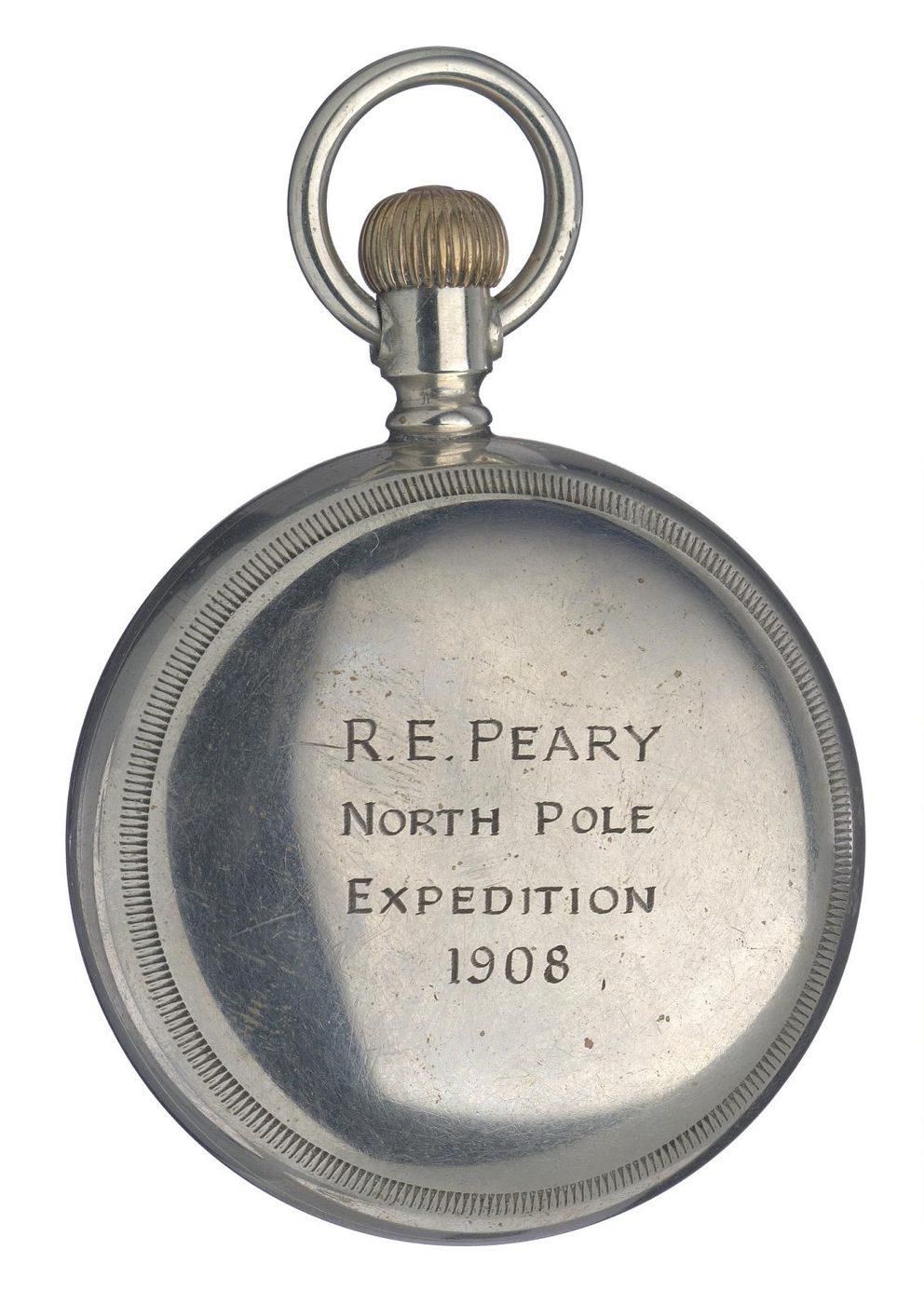
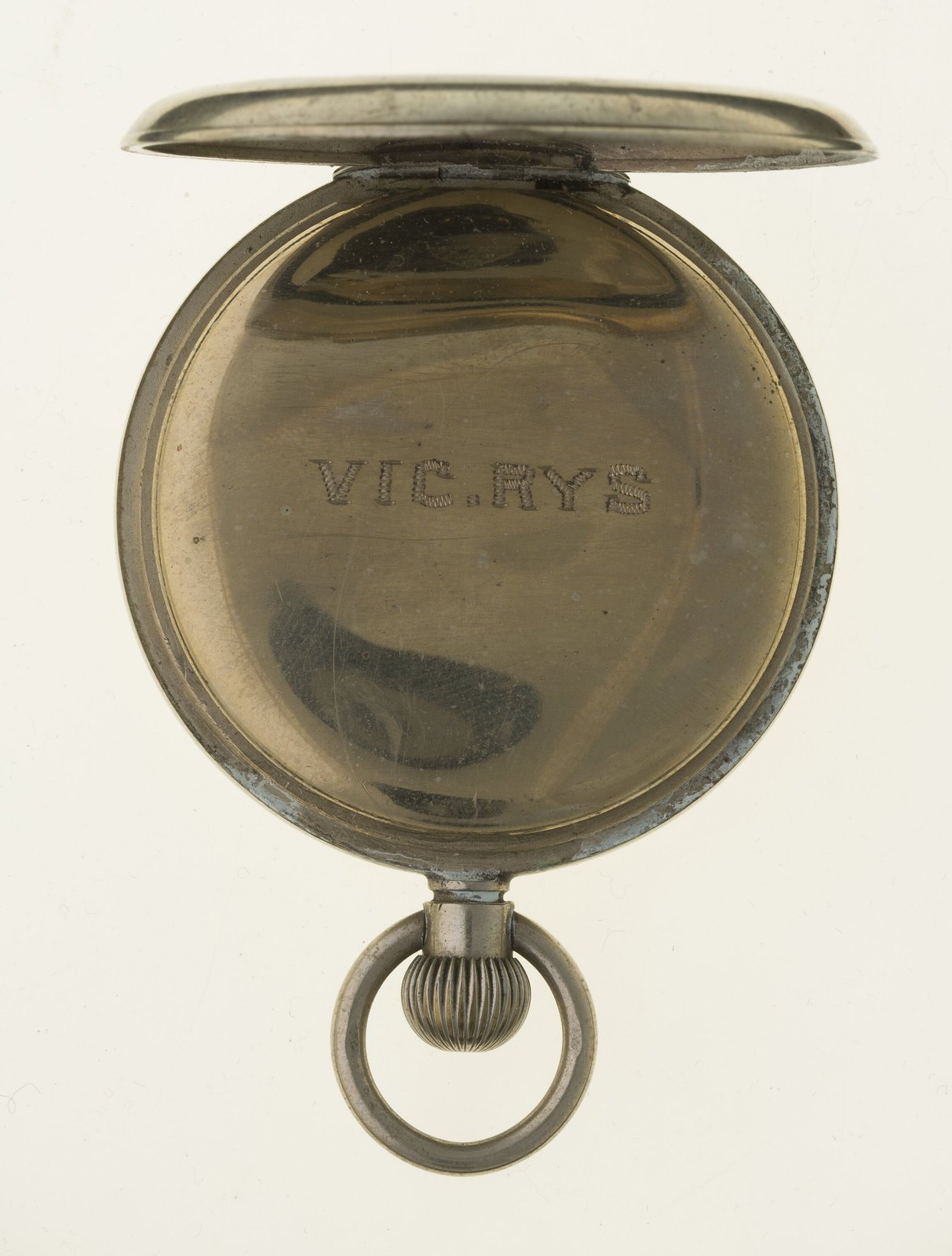
| Engravings and issue marks | Covers and dust cover | An event or period of use | Good for history, not manufacture |
| Watch papers | Inside the outer case | A repair | Good for provenance |
| Winding and setting | Crown, pendant, dial edge | A tradition or period | Indicative only |
Practise
Try the precious-metal and case-mark calculator →
See it in the collection
Practise on pocket watches in the catalogue →
Check your understanding
Lesson quiz
0 of 5 answered