
Wristwatches · Wristwatch
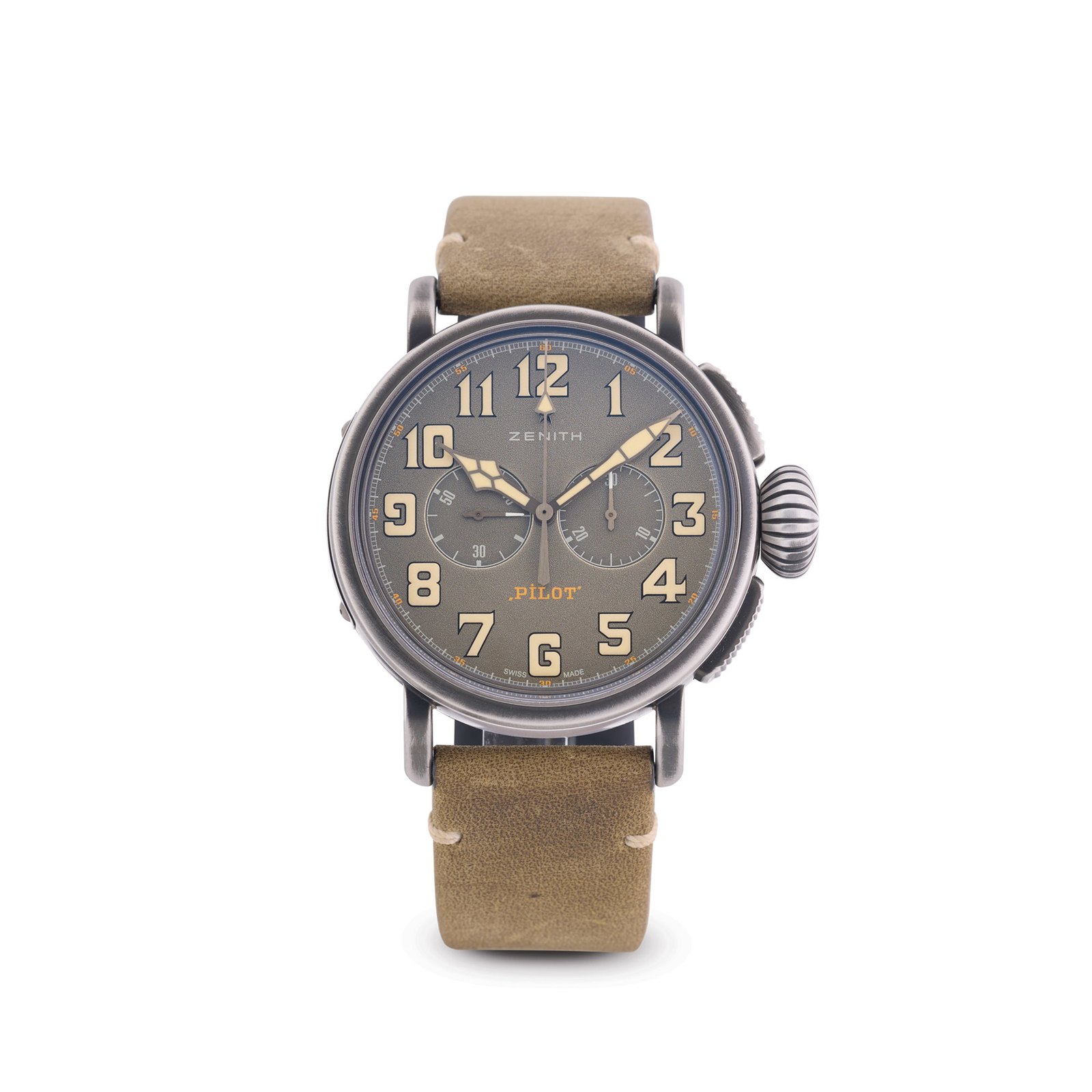
Zenith wristwatch, ref. 11.2430.4069/21.C773, Heritage Pilot Type 20 Ton-Up, originally sold in 2024
- Maker / attribution
- Zenith (brand / maker)
- Date
- originally sold in 2024 (per the lot record)
- Historical period
- Contemporary Horology (2010 – Present)
- Country of origin
- Switzerland
- Object type
- Wristwatch
- Materials / technique
- steel
- Dimensions
- diameter 45 mm
- Auction house
- Antiquorum auction archive, Geneva
- Lot
- Lot 378-7
- Credit line
- Auction lot record: LOT 7, Hong Kong May 31st, 2025
- Catalogue title (original)
- ZENITH, REF. 11.2430.4069/21.C773, HERITAGE PILOT TYPE 20 TON-UP, STEEL (English)
View the source record (auction lot) ↗ (opens another website in a new tab)Suggest a correction
Record summary
Catalogued by Antiquorum auction archive, Geneva (lot Lot 378-7), this is a wristwatch by Zenith, made in Switzerland, dated originally sold in 2024 (per the lot record). The Atlas places it in the Contemporary Horology period (2010 – Present) of its Wristwatches collection. Materials and techniques recorded by the source: steel. Recorded dimensions: diameter 45 mm. The record is illustrated with 3 photographs.
Assembled from the source record's structured fields. Dates and attributions are given as the source states them; where a field is missing the Atlas leaves it blank rather than estimating.
Catalogue description
Antiquorum catalogue description
A fine, special, self-winding pilot’s chronograph wristwatch framed in a steel case, with a matte khaki dial featuring oversized Arabic numerals made entirely of Super-Luminova, and an engraved screwed caseback emphasizing the sky spirit of this model.
Lot specifications (Antiquorum)
Model: Heritage Pilot Type 20 Ton-Up; Reference: 11.2430.4069/21.C773; Bracelet: Zenith steel pin buckle; Caliber: El Primero 4069; Diameter: 45mm; Signature: dial, case and movement; Accessories: Zenith fitted box, tag, warranty card dated 2024, card holder
Inscriptions & marks
dial, case and movement
Historical context
Contemporary Horology (2010 – Present)
Silicon components, connected watches, optical-lattice research clocks and a thriving independent scene.
Smartwatches became the world's best-selling watches, while mechanical watchmaking focuses on craft, innovation (silicon components, new escapements) and independent makers.
Read the period in the timelineMore wristwatches from this periodEarlier: Mechanical Renaissance
Atlas type guide
Military, pilot and travel watches
The wristwatch owes much of its adoption by men to warfare and aviation. Wristlets — small pocket watches soldered with lugs and worn on a strap — were used in colonial campaigns and became standard equipment in the First World War, with protective grilles over the crystal ('shrapnel guards'). Louis Cartier's Santos (1904), designed for the aviator Alberto Santos-Dumont, is often cited as an early purpose-made pilot's watch.
In the Second World War governments specified watches in detail: the German B-Uhr observation watches, the American A-11, and the British 'W.W.W.' (the 'Dirty Dozen' set of 1945). After the war, jet travel brought GMT and world-time watches, which show two or more time zones at once — Louis Cottier's world-time mechanism and the Rolex GMT-Master (1955) are examples.
What to look for
- Military markings on the case back: broad arrow, issue numbers, 'W.W.W.', 'A.T.P.'
- High-legibility black dials with luminous Arabic numerals; oversized crowns for gloved hands.
- 24-hour hands and rotating 24-hour bezels or city rings on GMT/world-time watches.
- Wire lugs on early wristlets converted from pocket watches.
Dating clues
- Wire-lug wristlets: c. 1900–1925.
- Military specifications of the Second World War: 1939–1945.
- GMT and world-time wristwatches: mainly after 1950.
General guidance written by the Atlas editors about this kind of object. It is not a statement about this particular piece; for that, rely on the source record above and on physical examination.
Related records
Pocket Watches · 1900
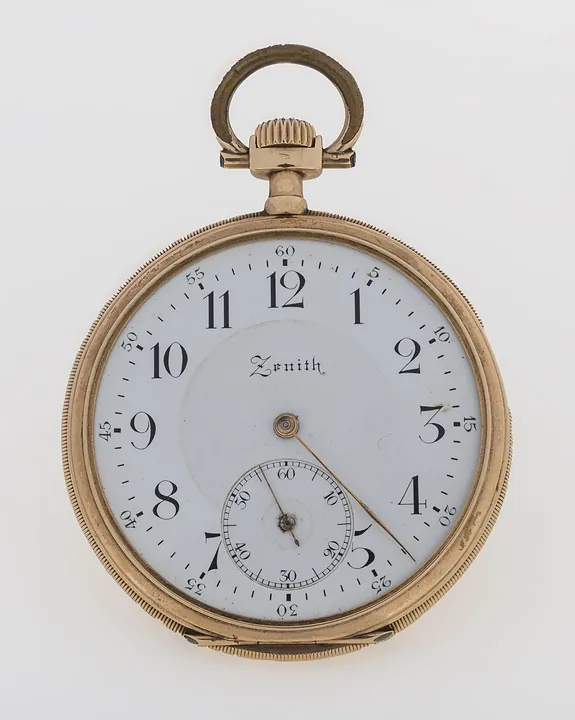
Pocket watch by Zenith, Switzerland, 1900
Museum Rotterdam
Pocket Watches · c. 1900s
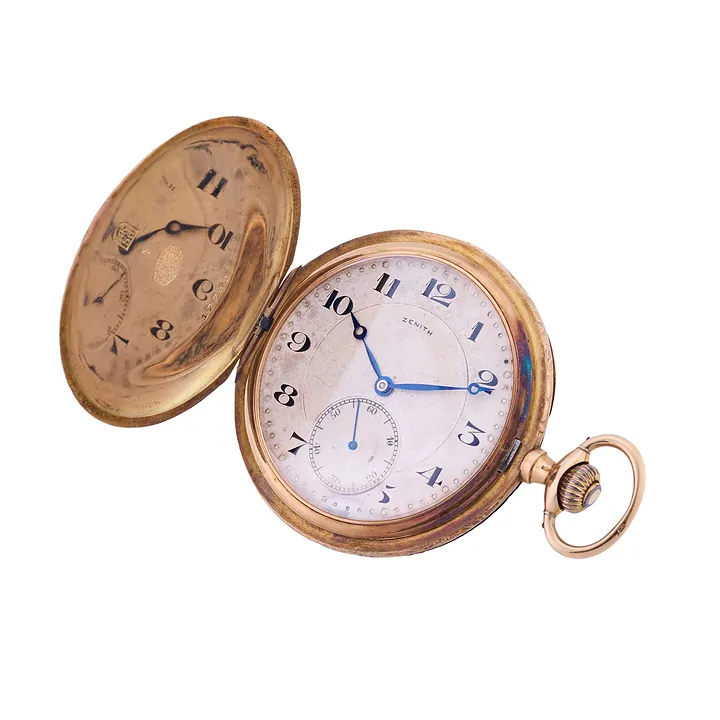
Zenith pocket watch, c. 1900s
Antiquorum auction archive, Geneva
Wristwatches · c. 1980s
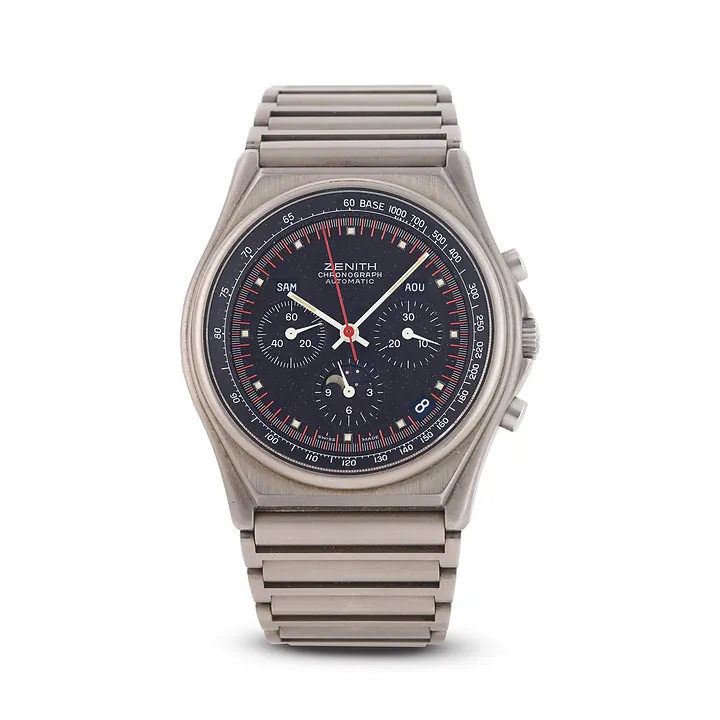
Zenith El Primero Triple Calendar Chronograph, ref. 95.0100.418, c. 1980s
Antiquorum auction archive, Geneva
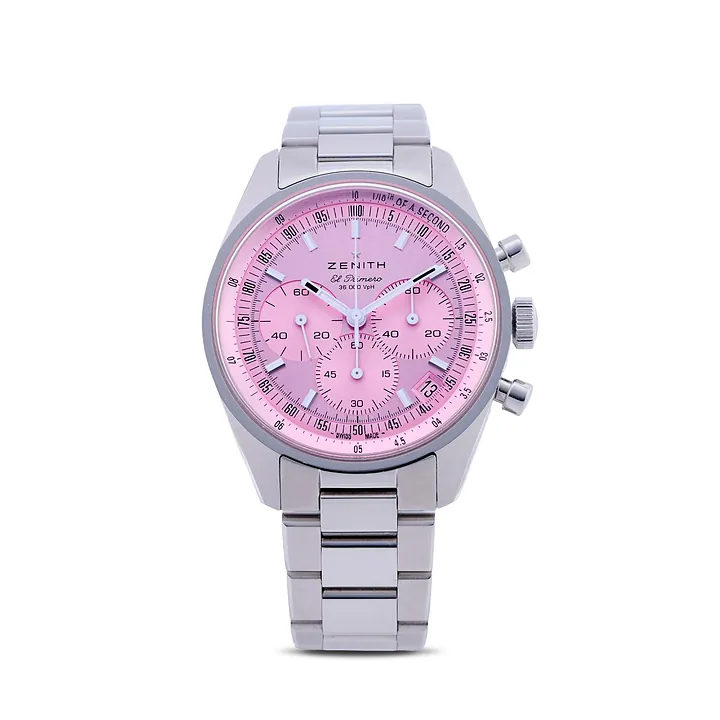
Wristwatches · originally sold in 2022 (per the lot record)
Zenith Chronomaster Original, ref. 03.3202.3600/33.M3200, originally sold in 2022
Antiquorum auction archive, Geneva

Wristwatches · c. 2010s
Breguet Type XXI, ref. 3810, c. 2010s (Antiquorum Lot 381-24)
Antiquorum auction archive, Geneva

Wristwatches · c. 2010s
Breguet Type XXI, ref. 3810, c. 2010s (Antiquorum Lot 386-229)
Antiquorum auction archive, Geneva

Wristwatches · Sold in September 2010
Breitling Cosmonaute, ref. A 22322, Sold in September 2010
Antiquorum auction archive, Geneva

Wristwatches · c. 2010
Corum Bubble Chrono, ref. 396.150.20, c. 2010
Antiquorum auction archive, Geneva