
Wristwatches · Wristwatch
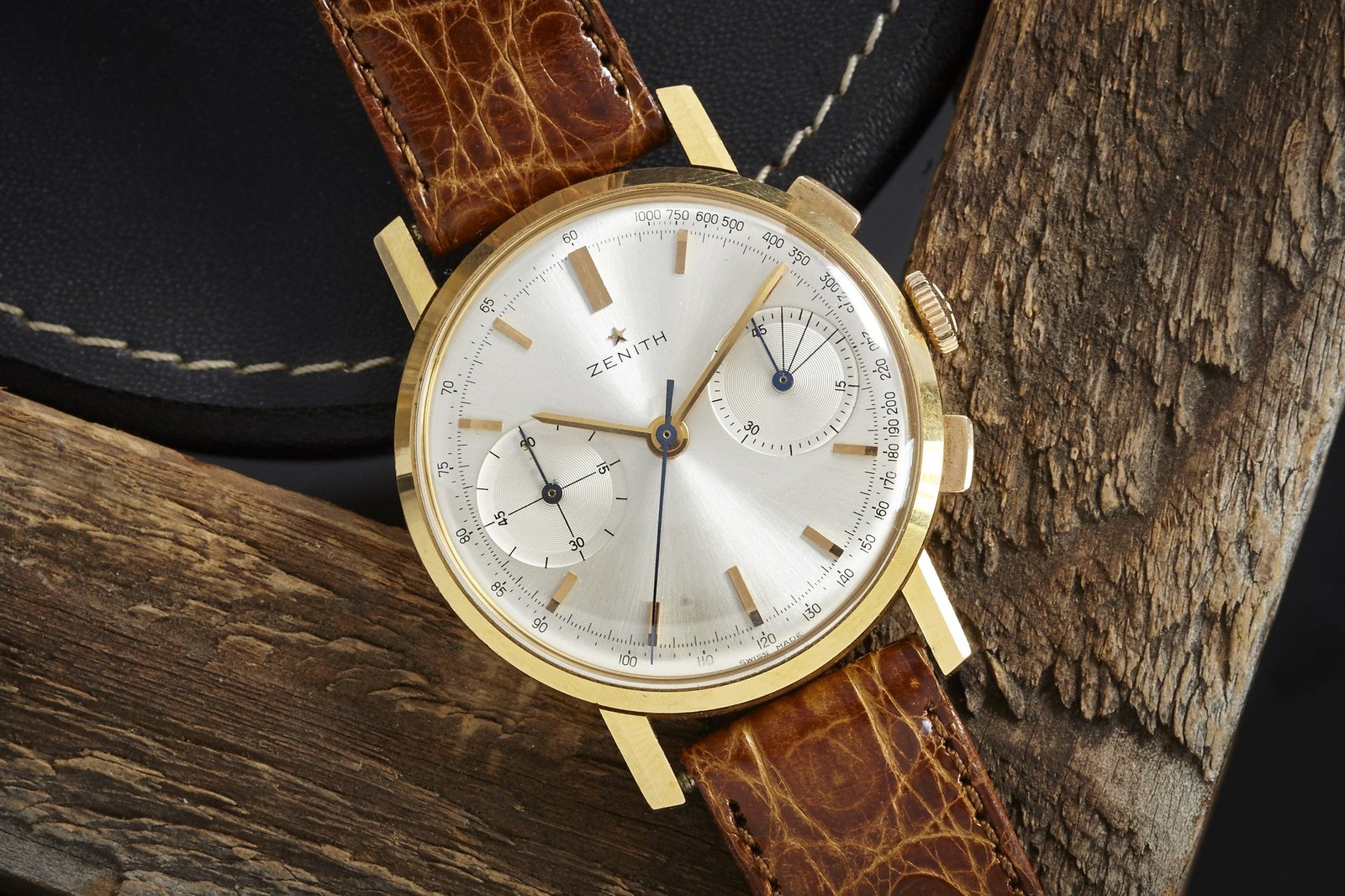
Zenith Pink Gold Chrono, late 1960s
- Maker / attribution
- Zenith (maker)
- Date
- late 1960s
- Historical period
- Modern Mechanical Horology (1945 – 1969)
- Country of origin
- Switzerland
- Object type
- Wristwatch
- Materials / technique
- gold
- Stock no.
- Product 982054081
- Credit line
- Dealer listing, Analog/Shift (product 982054081)
- Catalogue title (original)
- Zenith Pink Gold Chrono (English)
View the source record (dealer listing) ↗ (opens another website in a new tab)Suggest a correction
Record summary
Catalogued by Analog/Shift (dealer), New York (stock number Product 982054081), this is a wristwatch by Zenith, made in Switzerland, dated late 1960s. The Atlas places it in the Modern Mechanical Horology period (1945 – 1969) of its Wristwatches collection. Materials and techniques recorded by the source: gold. The record is illustrated with 6 photographs.
Assembled from the source record's structured fields. Dates and attributions are given as the source states them; where a field is missing the Atlas leaves it blank rather than estimating.
Catalogue description
Dealer description — Analog/Shift
We never planned on this happening, but it did. Somehow, we’ve become gold watch guys. Not the gangster style, blinged-out Rollie kind of guy, but the classic, understated, precious metal cased, fine timepiece aficionado of yesteryear. Gold may have gone out of fashion for a time, but all signs point to it coming back with a vengeance. We’re not complaining, and it only seems fitting that a finely crafted Swiss movement be housed in a case worthy of the heart beating away inside. This lovely Zenith chronograph dates to the late 1960s, and is an excellent example of the genre of sport-influenced dress pieces that became quite popular in the post-war years. This can be attributed, in part, to the hundreds of thousands of GIs returning home with issued timepieces, as World War II was the first war during which most troops had wristwatches instead of pocket watches. The idea of the wristwatch as a fashion item took hold with a tremendous surge in the post-war years, and manufactures in both Switzerland and the United States were back in business. The no-nonsense tool watches of the war years heavily influenced post-war design trends on both the manufacturer and consumer sides. This resulted in designs such as this Zenith, with clean, uncluttered dials, angular lugs and robust mechanical movements. This example features the Zenith Calibre 146D movement, a high-grade unit provided by Martel, the movement house also responsible for supplying many of the Universal Genève Compaxes of the era with their guts. While Zenith may be best known for creating the first fully integrated automatic chronograph, the El Primero, they have a long history of partnering with the best Swiss movement manufacturers, as did many of their contemporaries. Everyone needs a little gold in their life, and this Zenith makes an excellent first foray into that segment of the watch world. It’s the perfect dress watch for a guy who’s not into dress watches, or a great casual watch for a guy who wants to turn things up a notch. Just channel your best Belgian super-villain voice and repeat after me, “I love gooooooooold”.
Historical context
Modern Mechanical Horology (1945 – 1969)
Tool watches for divers, pilots and astronauts; electric watches anticipate the electronic age.
The classic era of the mechanical wristwatch: dive watches, chronographs for motor racing and space flight, GMT watches for jet travel, slim dress watches, automatic calendars, and the rise of Japanese manufacturers alongside Swiss, American, German and Soviet industries.
Read the period in the timelineMore wristwatches from this periodEarlier: Golden Age of Mechanical Watchmaking
Atlas type guide
Wristwatches
Bracelet watches were worn by women from the early nineteenth century — Breguet made one for Caroline Murat, Queen of Naples, in 1810–12 — but the wristwatch only became a man's instrument with military use and aviation in the early twentieth century. Between the World Wars it overtook the pocket watch; the 1920s and 1930s brought rectangular Art Deco cases, water-resistant cases and the first automatic winding systems.
After 1945 the wristwatch became a carrier of identity — dress watches, sports and dive watches, chronographs, calendars — produced by Swiss, American, Japanese, German, Soviet and Chinese industries. The quartz revolution after 1969 and the mechanical renaissance since the 1990s, including the rise of independent watchmakers, complete the story.
What to look for
- The reference number (between the lugs or inside the case back) and serial number, the starting point for dating.
- The calibre: its maker and number are often stamped under the dial or on the bridge.
- Originality of dial, hands and crown — refinished ('redial') dials are common.
- Case material marks: 18K/750, 14K/585, stainless steel, gold-filled, plated.
Dating clues
- Wire-lug cases: before c. 1925.
- Water-resistant screw-down cases: from 1926.
- Quartz movements: from 1969; sapphire crystals widespread after c. 1980.
General guidance written by the Atlas editors about this kind of object. It is not a statement about this particular piece; for that, rely on the source record above and on physical examination.
Related records
Pocket Watches · 1900
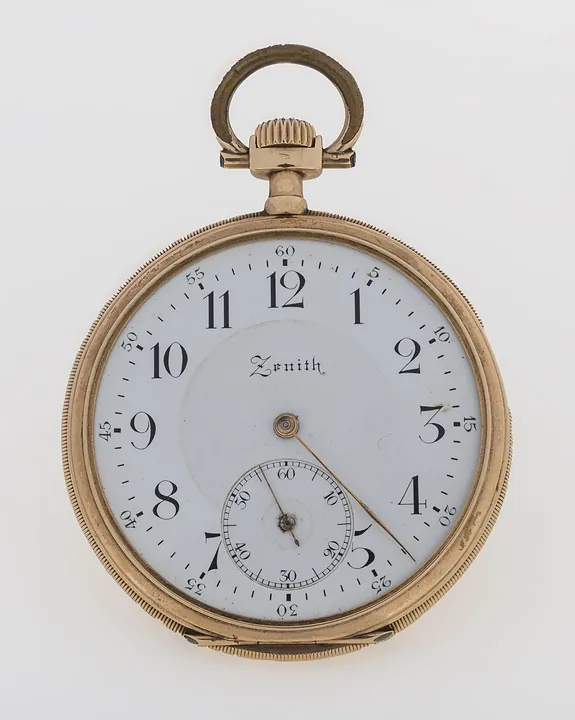
Pocket watch by Zenith, Switzerland, 1900
Museum Rotterdam
Pocket Watches · c. 1900s
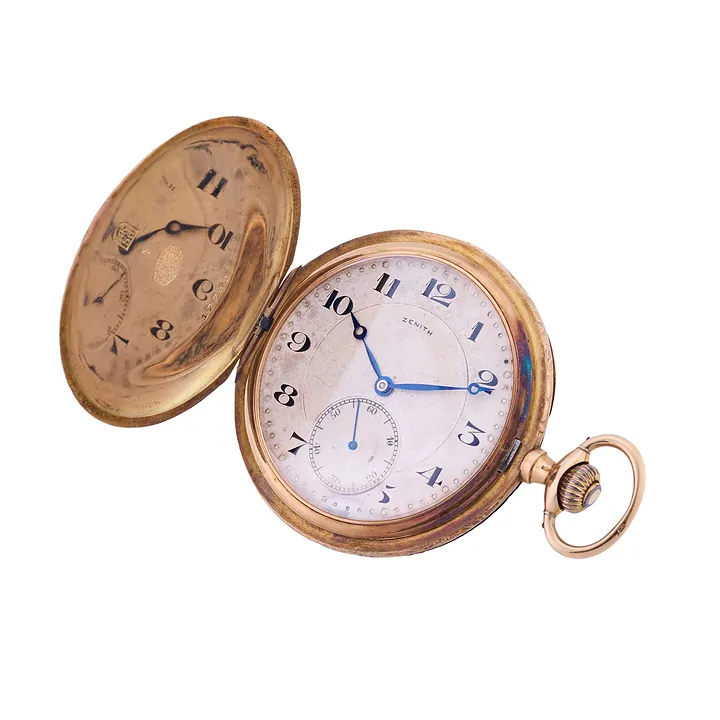
Zenith pocket watch, c. 1900s
Antiquorum auction archive, Geneva
Wristwatches · c. 1980s
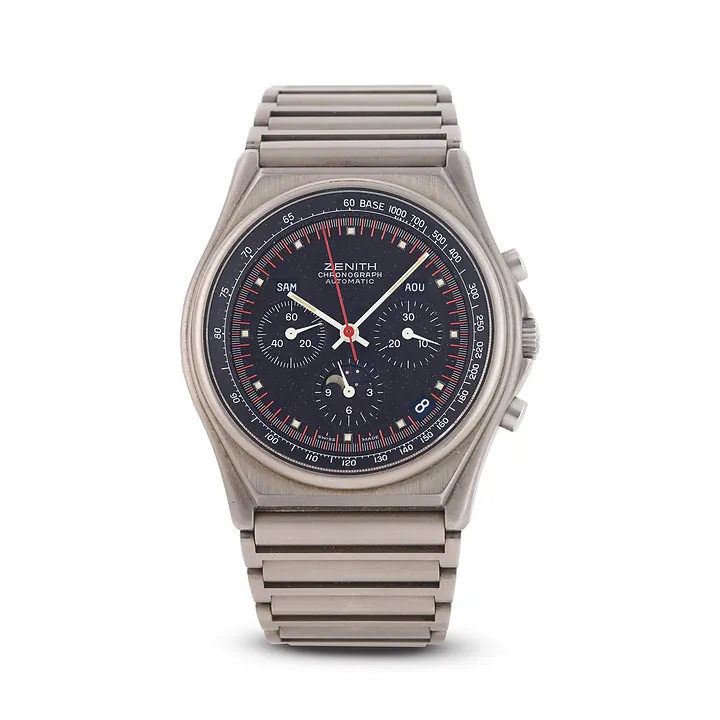
Zenith El Primero Triple Calendar Chronograph, ref. 95.0100.418, c. 1980s
Antiquorum auction archive, Geneva
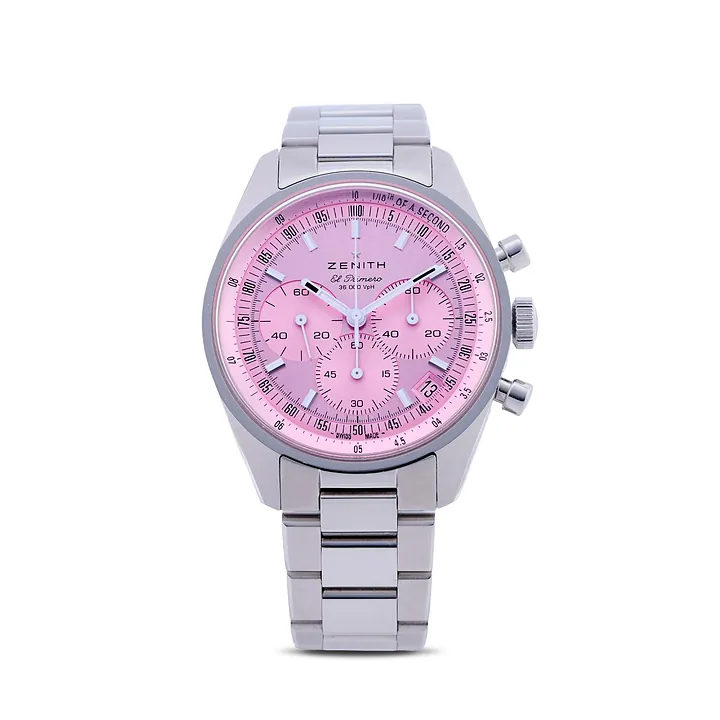
Wristwatches · originally sold in 2022 (per the lot record)
Zenith Chronomaster Original, ref. 03.3202.3600/33.M3200, originally sold in 2022
Antiquorum auction archive, Geneva

Wristwatches · 1945
Wristwatch by Eterna, 1945
Museum Rotterdam

Wristwatches · c. 1945
Breitling Premier, ref. 790, c. 1945
Antiquorum auction archive, Geneva

Wristwatches · c. 1945
Universal Genève Uni-Compax, ref. 22492, c. 1945
Antiquorum auction archive, Geneva

Wristwatches · c. 1950s
Baume & Mercier wristwatch, c. 1950s
Antiquorum auction archive, Geneva