
Wristwatches · Wristwatch
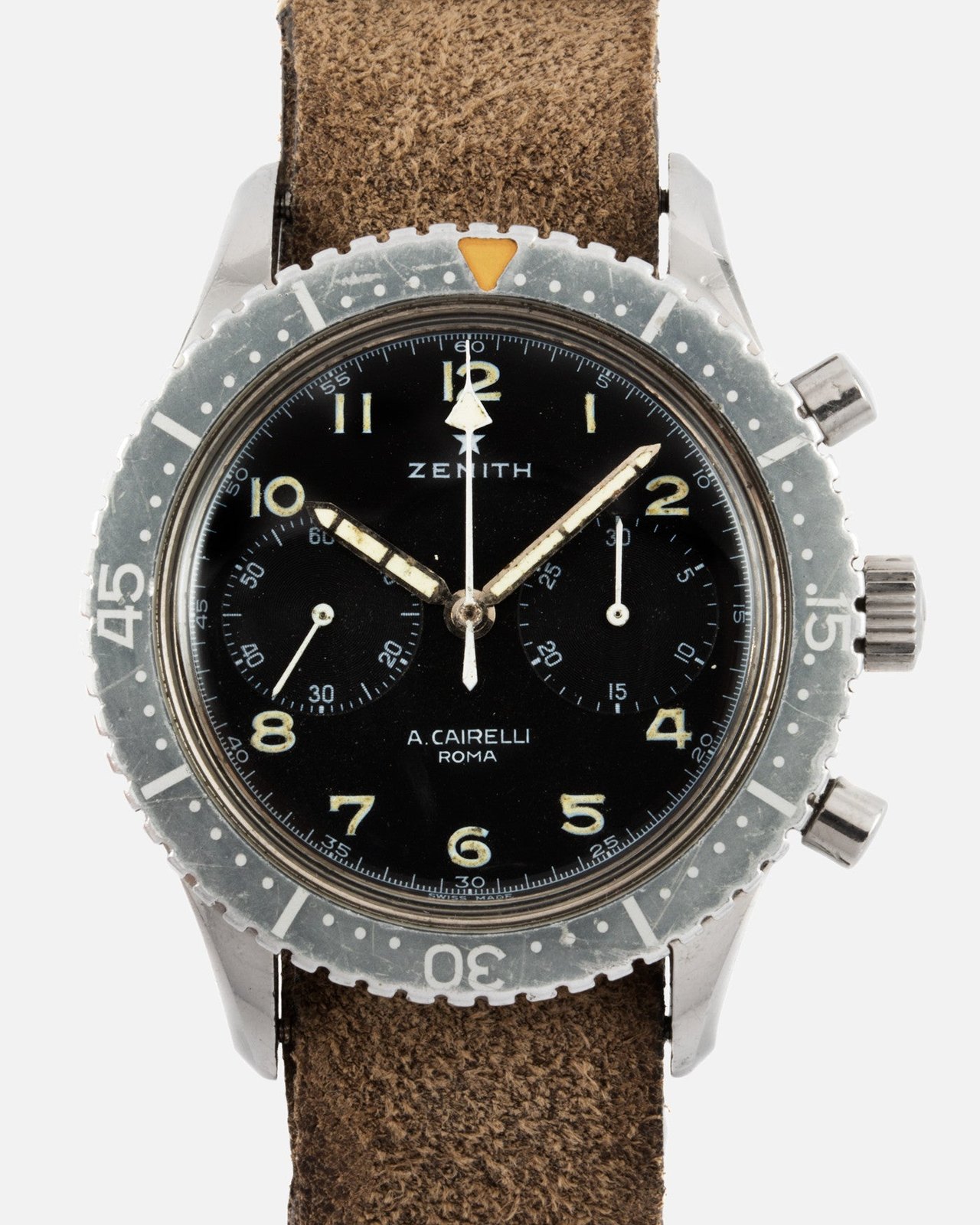
Zenith Cairelli A.M.I. Italian Air Force, late 1960s
- Maker / attribution
- Zenith (maker)
- Date
- late 1960s
- Historical period
- Modern Mechanical Horology (1945 – 1969)
- Country of origin
- Italy
- Object type
- Wristwatch
- Dimensions
- Case 43 mm
- Stock no.
- Product 11087093580
- Credit line
- Dealer listing, S.Song Watches (product 11087093580)
- Catalogue title (original)
- Zenith Cairelli A.M.I. Italian Air Force (English)
View the source record (dealer listing) ↗ (opens another website in a new tab)Suggest a correction
Record summary
Catalogued by S.Song Watches (dealer), Seattle (stock number Product 11087093580), this is a wristwatch by Zenith, made in Italy, dated late 1960s. The Atlas places it in the Modern Mechanical Horology period (1945 – 1969) of its Wristwatches collection. Recorded dimensions: Case 43 mm. The record is illustrated with 6 photographs.
Assembled from the source record's structured fields. Dates and attributions are given as the source states them; where a field is missing the Atlas leaves it blank rather than estimating.
Catalogue description
Dealer description — S.Song Watches
While military watches, and in particular military chronographs, have been in hot demand of late, there is no denying that even then, the Zenith CP-2 A.M.I. retailed by famed Roman supplier A. Cairelli is at the top of the heap. A rare and important timepiece, these were made according to military specifications in the late 60’s and early 70’s for the Italian Air Force, or A.M.I. ( Aeronautica Militaire Italiana ). Sized at a hefty 43mm, the Zenith CP-2 certainly has a muscular, utilitarian presence on the wrist. Featuring a handsome black dial and aggressive bezel, the design remains very relevant and modern even today. Furthermore, with the added charm of a double-signed dial by A.Cairelli, it is no wonder this watch has become one of the hottest military chronographs to collect. ‘CP-2’ was the A.M.I’s designation for the wristwatches they issued, with ‘CP’ standing for ‘cronometro da polso’ , or ‘wrist chronometer’ in English. The Zenith CP-2 follows a lineage of previous issued wrist chronometers for the Italian Air Force with the -2 indicating that it was part of the second generation of timepieces. Other manufactures such as Leonidas, Breitling and Universal Geneve also made watches under the ‘CP’ designation for the A.M.I. Interestingly, while it is estimated that only 2,500 examples were produced- the A.M.I. cancelled the majority of the orders before they were delivered and therefore many were not issued. A. Cairelli subsequently sold the remaining stock privately to civilians as unissued CP-2s. This example though, is of the more desirable variant- as evidenced by the military numbers on it’s caseback. The engraved text ‘M.M’ ( Matricola Militaire ) translates to ‘military registration number’ which were not featured on the examples that were sold to civilians. Beating inside this Zenith Cairelli is the column wheel, manually wound Cal. 146DP made by movement makers Martel ,who at the time was owned by Zenith. It is a very attractive movement that later on served as the base to the revolutionary El Primero movement. With this Zenith CP-2 Cairelli, what you get is the perfect combination of historical importance, good looks and high quality.
Historical context
Modern Mechanical Horology (1945 – 1969)
Tool watches for divers, pilots and astronauts; electric watches anticipate the electronic age.
The classic era of the mechanical wristwatch: dive watches, chronographs for motor racing and space flight, GMT watches for jet travel, slim dress watches, automatic calendars, and the rise of Japanese manufacturers alongside Swiss, American, German and Soviet industries.
Read the period in the timelineMore wristwatches from this periodEarlier: Golden Age of Mechanical Watchmaking
Atlas type guide
Military, pilot and travel watches
The wristwatch owes much of its adoption by men to warfare and aviation. Wristlets — small pocket watches soldered with lugs and worn on a strap — were used in colonial campaigns and became standard equipment in the First World War, with protective grilles over the crystal ('shrapnel guards'). Louis Cartier's Santos (1904), designed for the aviator Alberto Santos-Dumont, is often cited as an early purpose-made pilot's watch.
In the Second World War governments specified watches in detail: the German B-Uhr observation watches, the American A-11, and the British 'W.W.W.' (the 'Dirty Dozen' set of 1945). After the war, jet travel brought GMT and world-time watches, which show two or more time zones at once — Louis Cottier's world-time mechanism and the Rolex GMT-Master (1955) are examples.
What to look for
- Military markings on the case back: broad arrow, issue numbers, 'W.W.W.', 'A.T.P.'
- High-legibility black dials with luminous Arabic numerals; oversized crowns for gloved hands.
- 24-hour hands and rotating 24-hour bezels or city rings on GMT/world-time watches.
- Wire lugs on early wristlets converted from pocket watches.
Dating clues
- Wire-lug wristlets: c. 1900–1925.
- Military specifications of the Second World War: 1939–1945.
- GMT and world-time wristwatches: mainly after 1950.
General guidance written by the Atlas editors about this kind of object. It is not a statement about this particular piece; for that, rely on the source record above and on physical examination.
Related records
Pocket Watches · 1900
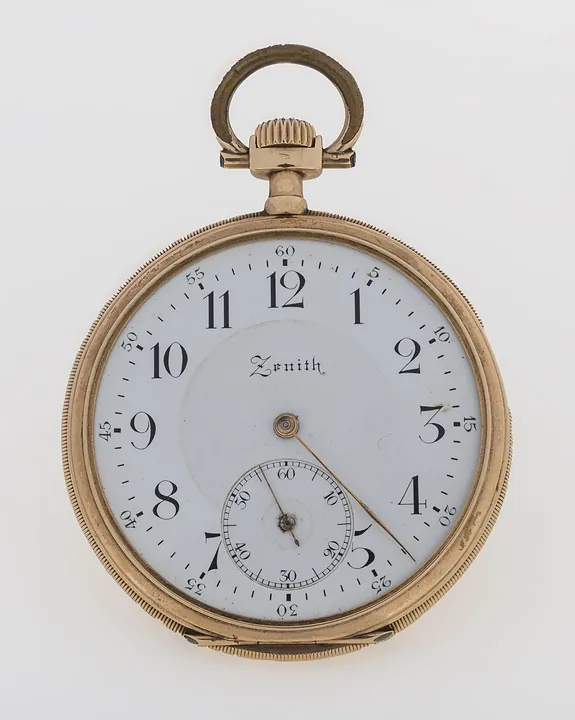
Pocket watch by Zenith, Switzerland, 1900
Museum Rotterdam
Pocket Watches · c. 1900s
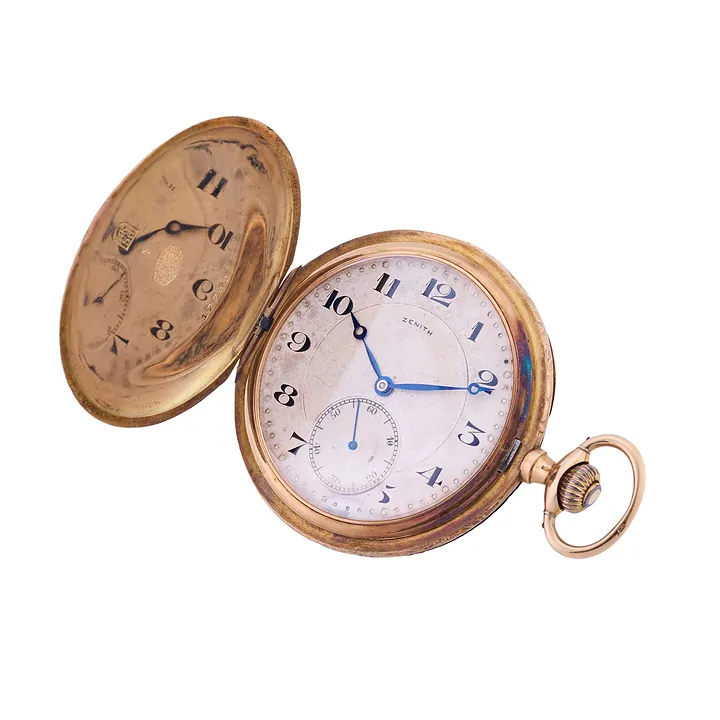
Zenith pocket watch, c. 1900s
Antiquorum auction archive, Geneva
Wristwatches · c. 1980s
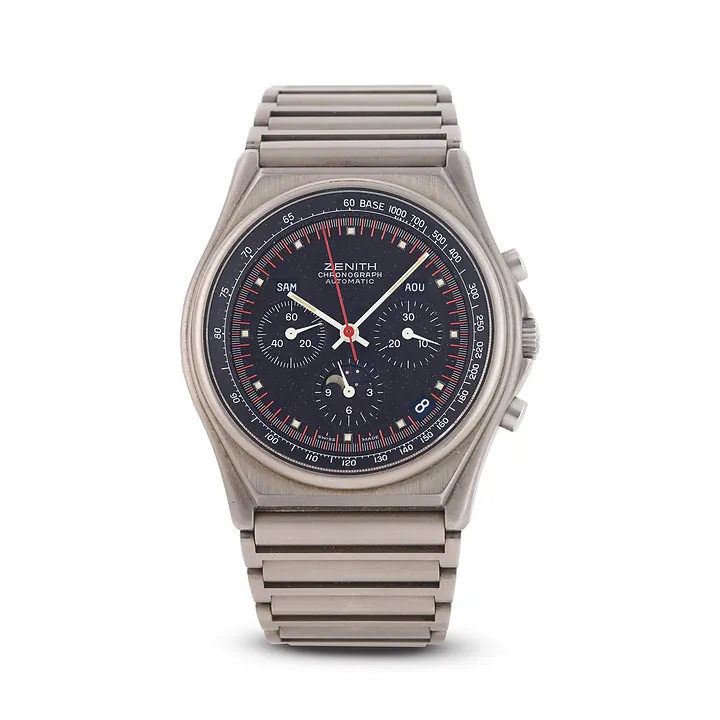
Zenith El Primero Triple Calendar Chronograph, ref. 95.0100.418, c. 1980s
Antiquorum auction archive, Geneva
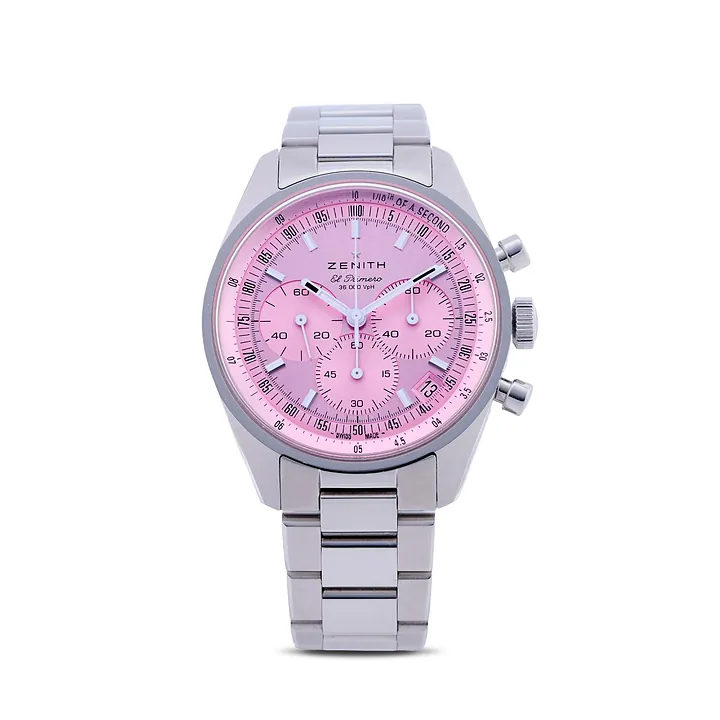
Wristwatches · originally sold in 2022 (per the lot record)
Zenith Chronomaster Original, ref. 03.3202.3600/33.M3200, originally sold in 2022
Antiquorum auction archive, Geneva
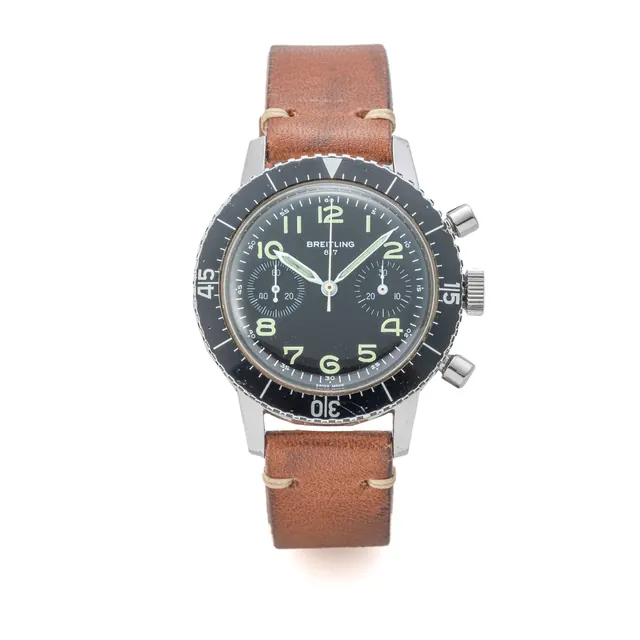
Wristwatches · c. 1955
Breitling wristwatch, ref. 817, Italian Military Chronograph, circa 1955
Antiquorum auction archive, Geneva
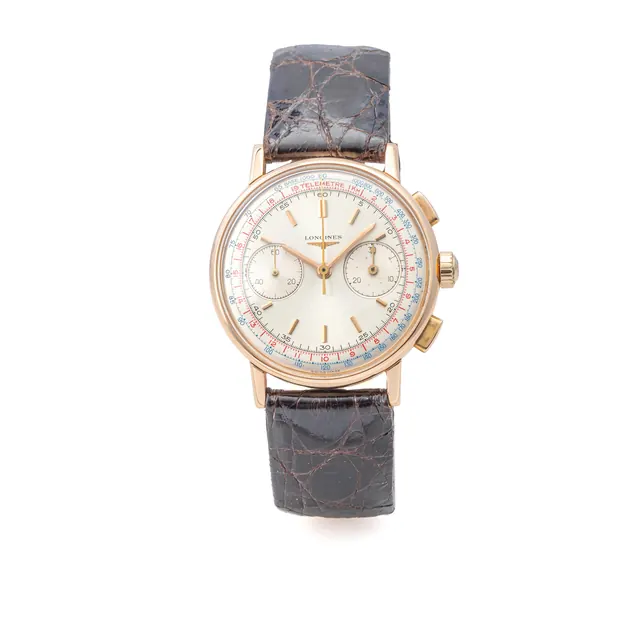
Wristwatches · Sold in August 1966 to Binda, agent for Italy
Longines wristwatch, ref. 7414, Flyback Chronograph 30Ch, Sold in August 1966 to Binda, agent for Italy
Antiquorum auction archive, Geneva
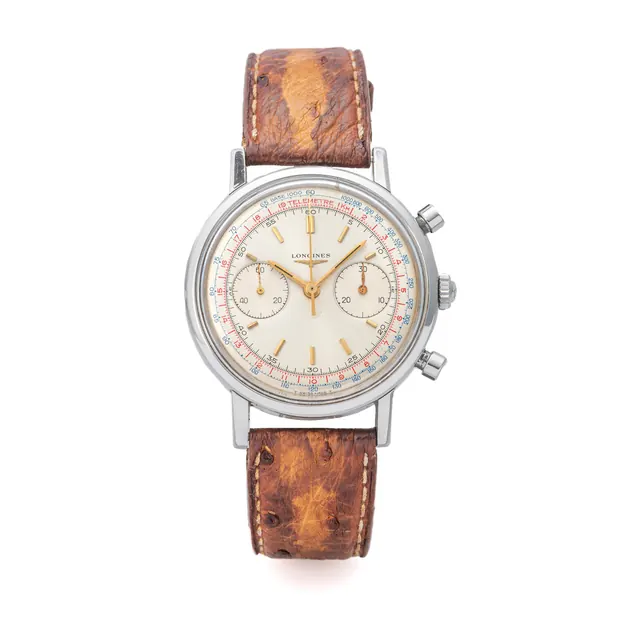
Wristwatches · Sold in January 1966 to Binda, agent for Italy
Longines wristwatch, ref. 7413, 30Ch Flyback Chronograph, Sold in January 1966 to Binda, agent for Italy
Antiquorum auction archive, Geneva
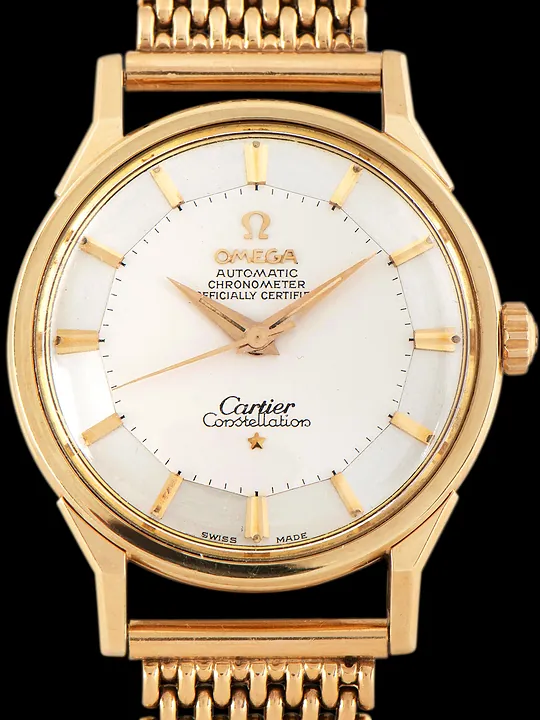
Wristwatches · 1962
Omega Constellation 14K YG (Ref. 14900SC) Silver "Cartier Cosigned" Pie-Pan Dial W/ Cartier Milanese Bracelet, 1962
Craft & Tailored (dealer), Los Angeles