
Wristwatches · Wristwatch
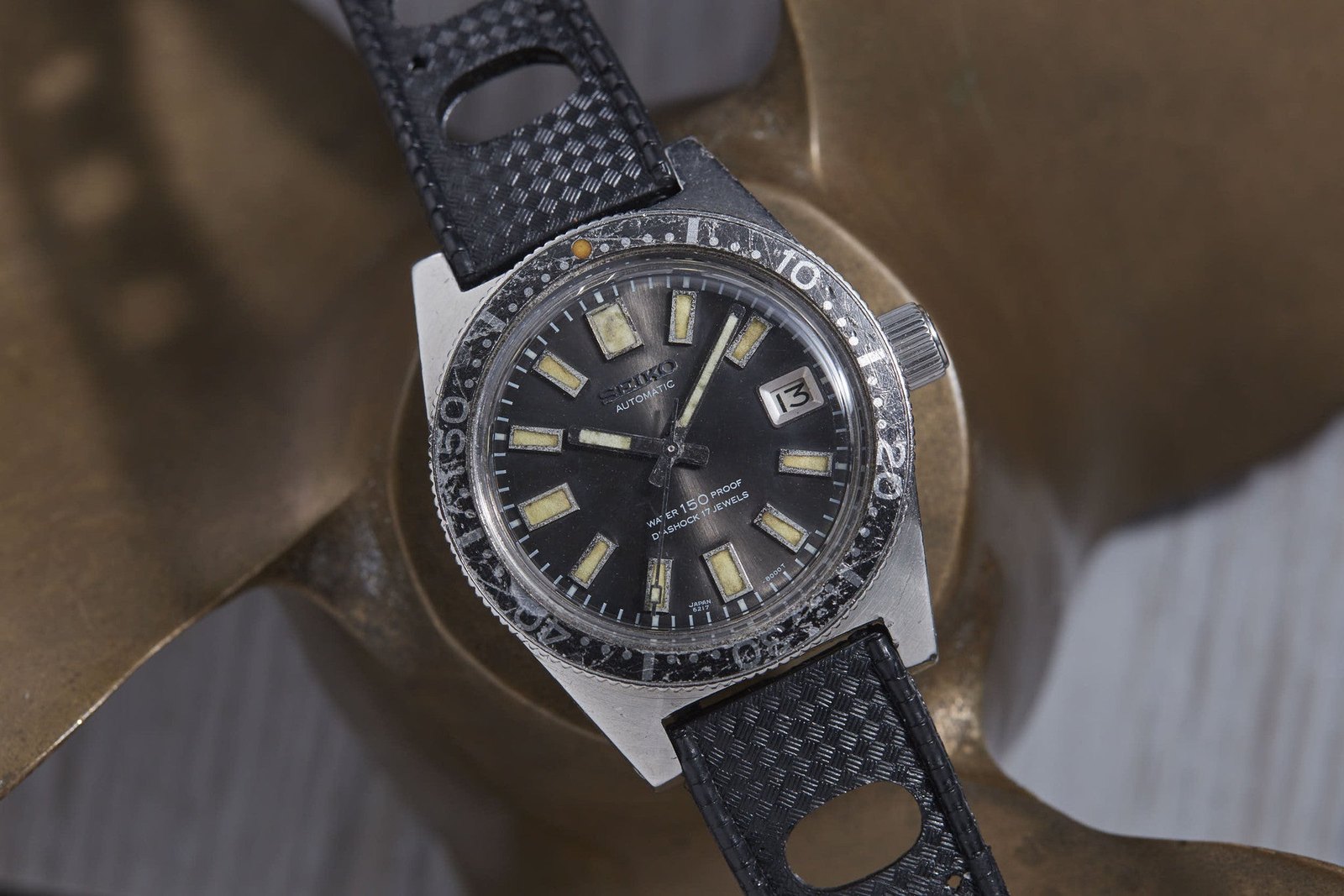
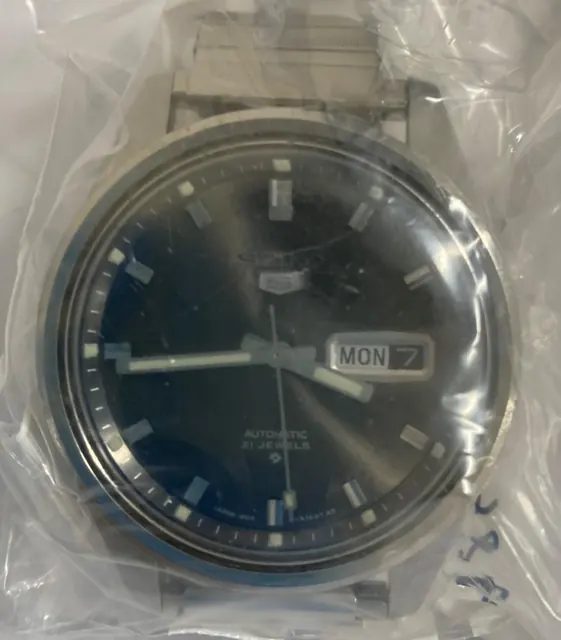
Wristwatch by Seiko, 1967
- Maker / attribution
- Seiko (maker)
- Date
- 1967
- Historical period
- Modern Mechanical Horology (1945 – 1969)
- Country of origin
- Japan
- Object type
- Wristwatch
- Dimensions
- Case 37 mm
- Stock no.
- Product 9147465473
- Credit line
- Dealer listing, Analog/Shift (product 9147465473)
- Catalogue title (original)
- Seiko 62MAS (English)
View the source record (dealer listing) ↗ (opens another website in a new tab)Suggest a correction
Record summary
Catalogued by Analog/Shift (dealer), New York (stock number Product 9147465473), this is a wristwatch by Seiko, made in Japan, dated 1967. The Atlas places it in the Modern Mechanical Horology period (1945 – 1969) of its Wristwatches collection. Recorded dimensions: Case 37 mm. The record is illustrated with 6 photographs.
Assembled from the source record's structured fields. Dates and attributions are given as the source states them; where a field is missing the Atlas leaves it blank rather than estimating.
Catalogue description
Dealer description — Analog/Shift
1965 marked the maiden voyage of a submersible that in its five decades of loyal service would be witness to some of the greatest breakthroughs in deep sea exploration, like the discovery of deep sea vents in the 1970s and the wreck of the RMS Titanic in 1986. The DSV Alvin was conceived as a replacement for the bathyscaphes used by Jacques Piccard and others. Use of a new material, syntactic foam, resulted in a more maneuverable Deep Sea Vehicle that could respond to the changing needs of underwater explorers. Syntactic foam—comprised mainly of a metal, ceramic or polymer that was then filled with hollow glass bubbles called microballoons—gave this new DSV more buoyancy than the metal bathyscaphes, while sacrificing nothing in terms of safety and tensile strength. At 17 tons and 23 feet in length, Alvin might have been smaller than the bathyscaphe Trieste that ferried Jacques Piccard to the bottom of the Marianas Trench, but Alvin’s compact size meant that it could withstand dives at a depth of 8,010 feet. Alvin’ ’s first manned dive took place on July 20, 1965, off Andros Island in the Bahamas, where it descended to an impressive 6000 feet or 1800 meters. In the Deep Sea Vessel’s first dives, Alvin was used to locate a hydrogen bomb lost during the collision of a B-52G bomber and a KC-135 tanker during mid-air refueling; later, Alvin located the wreckage of an F6F Hellcat aircraft that was lost during the Second World War. Though the Alvin would go on to discover the wreckage of the RMS Titanic in the 1980s, the 1960s represented a pivotal time in the history of deep sea exploration, in which the use of new technologies enabled humans to dive deeper and to remain submerged longer than had ever been achieved before. Faced with the popularity of recreational diving, as well as the needs of professional deep sea divers or underwater welders, the watch industry adapted to release watches that could withstand the rigors of deep sea use. The success of Swiss dive watches such as the Rolex Submariner and the Blancpain Fifty Fathoms in the 1950s and 60s prompted another brand on an entirely different continent to follow suit. Since the 1880s, Seiko had been producing timepieces to rival their Swiss counterparts, but were relatively unknown to Western consumers. But the 1960s saw increased exposure to the Seiko name on a worldwide scale, in part due to the 1964 Summer Olympics, which were held in Tokyo. As official timekeeper for those Olympics, Seiko had produced its first chronograph, The Crown. Their participation in the Olympics inspired a sense of heightened pride in Japanese engineering and manufacturing. So when Seiko sought another category to prove its competitiveness with the Swiss, it was naturally a diver. Seiko released its first dive watch in 1965, the Reference 6217, which was water-resistant to 150 meters and, like the Submariner and Fifty Fathoms, had a rotating bezel, luminous hour markers, and a 17-jewel movement (Calibre 6217) with a beat rate of 18,000. The 6217—also know as 62MAS (for autoMAtic Self-dater)—was designed to be a workhorse. At 37mm, the case, with its sloping lugs that cling to the wrist, was intended to eliminate any potential weak points. However, the fickle nature of the 62MAS’s gaskets—as well as the lack of a screw-down crown—often led to a build-up of helium which in turn could cause the crystal to pop off. Additionally, the lume of the hour markers and hands was prone to discoloration due to age, or wabi, a quality that is particularly desirable in Seiko collectors’ terms. Seiko, inspired by a letter from a disgruntled 6217-owner, would go on to revolutionize dive watches with the Tuna line of dive watches in the mid-1970s. However, despite being discontinued, the 6217 continues to enjoy popularity with collectors of vintage Seikos. Also, the recent reissue of this model makes the original versions even more desirable. This particular 62MAS dates from 1967, toward the end of its production run (it would be discontinued in 1968). The case—especially the rotating bezel and the dial—show quite a lot of wabi. With its robust movement recently serviced, this dive watch is ready for many more years of faithful service.
Historical context
Modern Mechanical Horology (1945 – 1969)
Tool watches for divers, pilots and astronauts; electric watches anticipate the electronic age.
The classic era of the mechanical wristwatch: dive watches, chronographs for motor racing and space flight, GMT watches for jet travel, slim dress watches, automatic calendars, and the rise of Japanese manufacturers alongside Swiss, American, German and Soviet industries.
Read the period in the timelineMore wristwatches from this periodEarlier: Golden Age of Mechanical Watchmaking
Atlas type guide
Wristwatches
Bracelet watches were worn by women from the early nineteenth century — Breguet made one for Caroline Murat, Queen of Naples, in 1810–12 — but the wristwatch only became a man's instrument with military use and aviation in the early twentieth century. Between the World Wars it overtook the pocket watch; the 1920s and 1930s brought rectangular Art Deco cases, water-resistant cases and the first automatic winding systems.
After 1945 the wristwatch became a carrier of identity — dress watches, sports and dive watches, chronographs, calendars — produced by Swiss, American, Japanese, German, Soviet and Chinese industries. The quartz revolution after 1969 and the mechanical renaissance since the 1990s, including the rise of independent watchmakers, complete the story.
What to look for
- The reference number (between the lugs or inside the case back) and serial number, the starting point for dating.
- The calibre: its maker and number are often stamped under the dial or on the bridge.
- Originality of dial, hands and crown — refinished ('redial') dials are common.
- Case material marks: 18K/750, 14K/585, stainless steel, gold-filled, plated.
Dating clues
- Wire-lug cases: before c. 1925.
- Water-resistant screw-down cases: from 1926.
- Quartz movements: from 1969; sapphire crystals widespread after c. 1980.
General guidance written by the Atlas editors about this kind of object. It is not a statement about this particular piece; for that, rely on the source record above and on physical examination.
Related records
Wristwatches · 1967
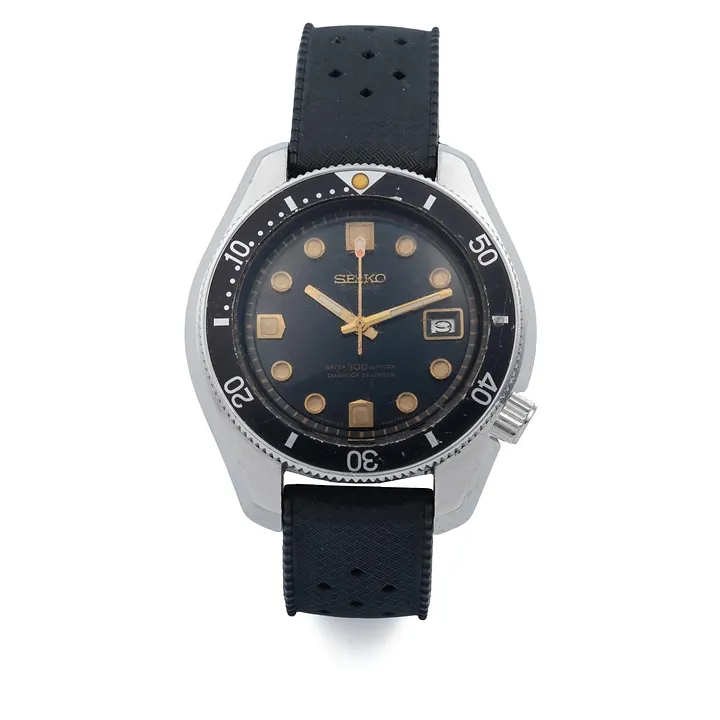
Seiko 300 M, ref. 6215-7000, 1967
Antiquorum auction archive, Geneva
Wristwatches · 1967
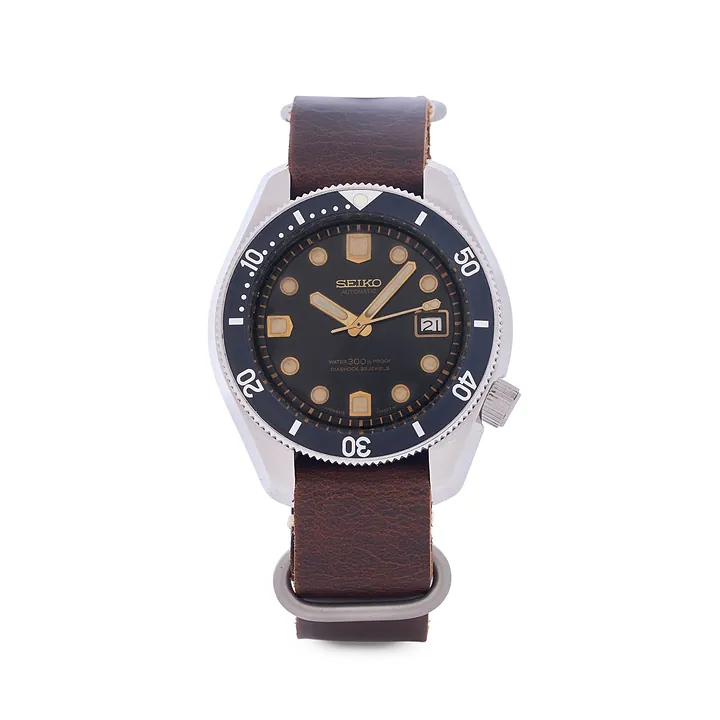
Seiko 300 Meter Diver, ref. 6215-7000, 1967
Antiquorum auction archive, Geneva
Wristwatches · c. 1968
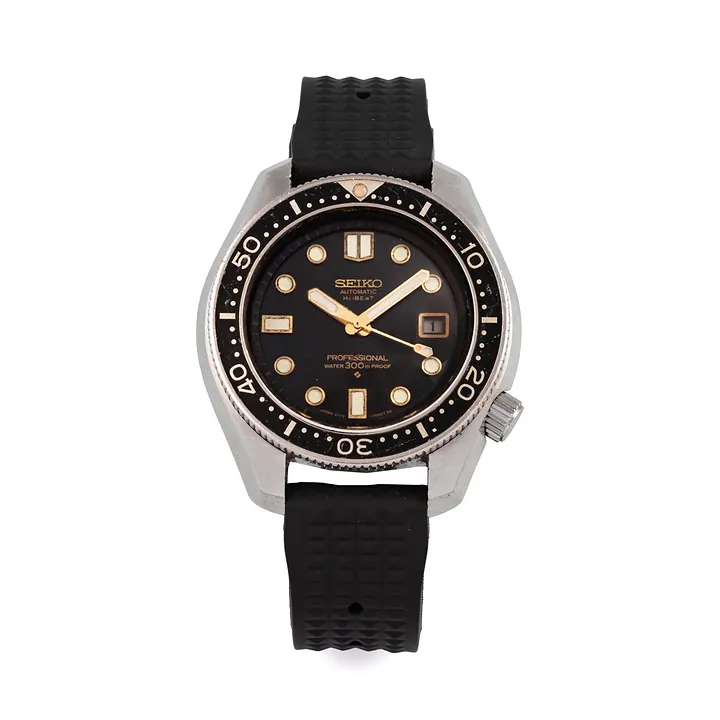
Seiko Hi-Beat, ref. 6159-7000, c. 1968
Antiquorum auction archive, Geneva
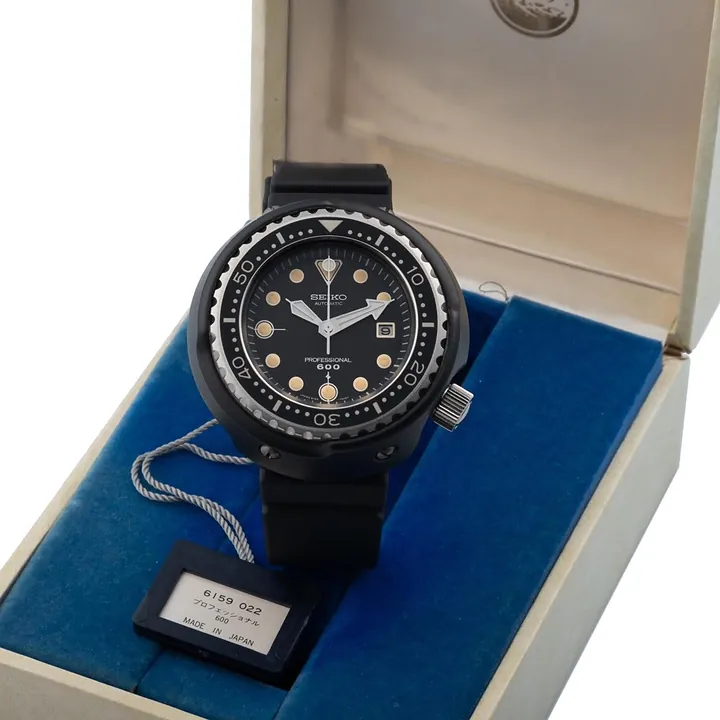
Wristwatches · 1975
Seiko Tuna Professional 600, ref. 6159-7010, 1975
Antiquorum auction archive, Geneva
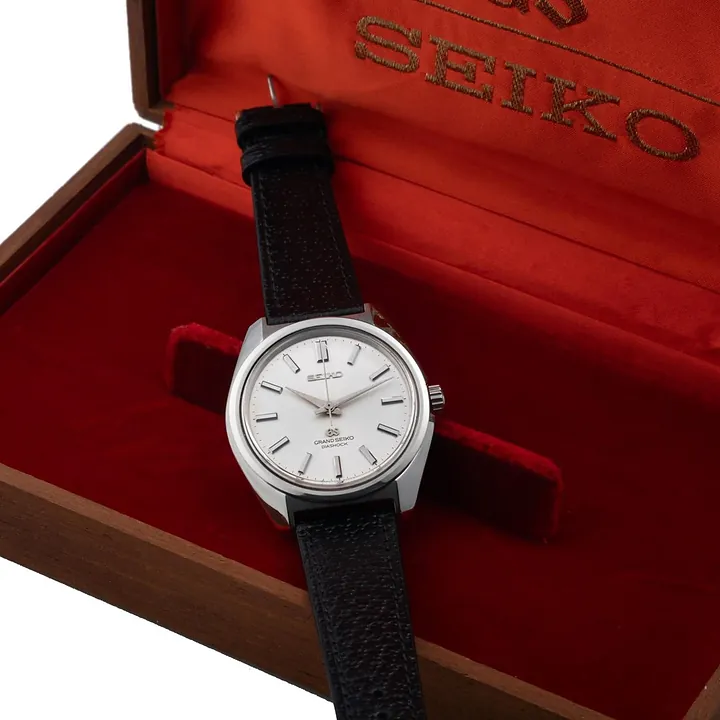
Wristwatches · 1967
Grand Seiko 44 GS, ref. 4420-9000, 1967
Antiquorum auction archive, Geneva
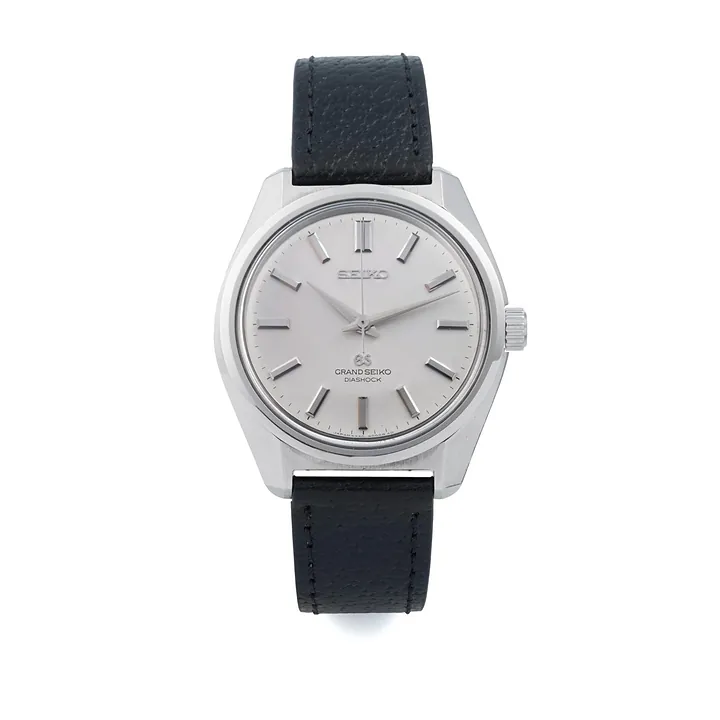
Wristwatches · c. 1967
Grand Seiko 44 GS, ref. 4420-9000, c. 1967
Antiquorum auction archive, Geneva
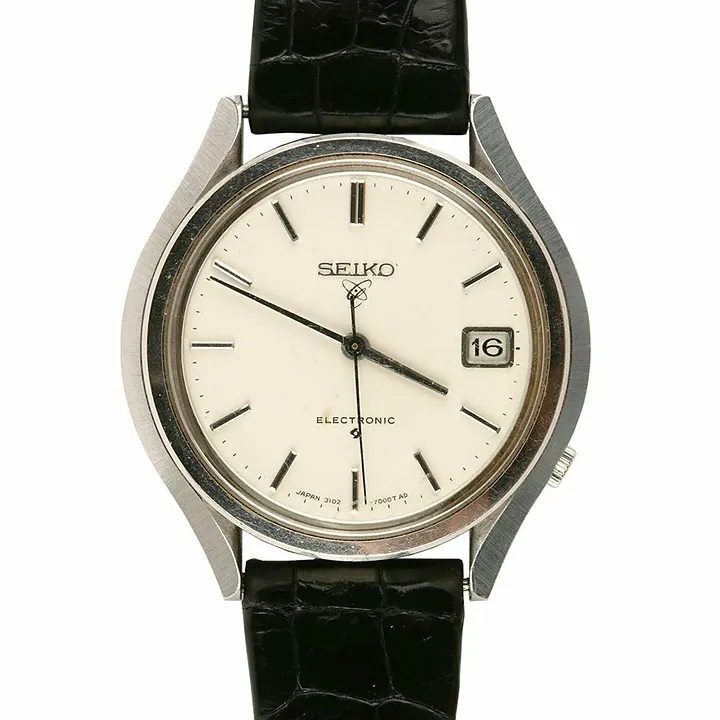
Wristwatches · 1968
Wristwatch, Japan, 1968
German Clock Museum
Wristwatches · 1957–1963
Stainless-steel cased self-winding lever wrist-watch with stainless-steel expanding bracelet
British Museum