
Pocket Watches · Watch
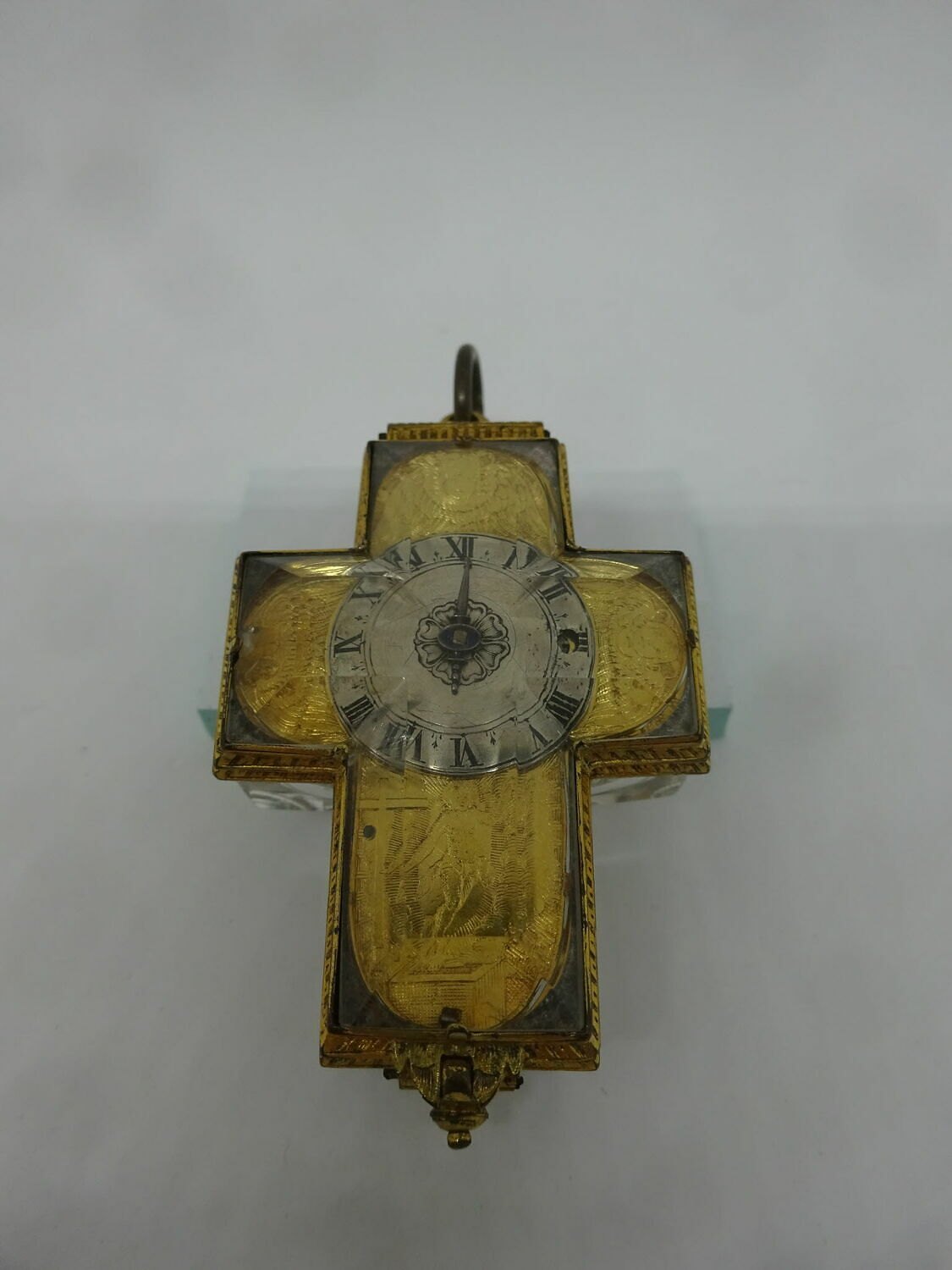
Watch by Abel II Senebier, France, 1650–1675
- Maker / attribution
- Abel II Senebier (Horloger)
- Date
- 1650–1675
- Historical period
- Early Modern Horology (1600 – 1750)
- Country of origin
- France
- Place
- Lyon
- Object type
- Watch
- Materials / technique
- silver, rock crystal, brass
- Dimensions
- height 6,2 cm; width 4 cm; thickness 2,2 cm
- Holding institution
- Musée du Louvre, Paris
- Accession / object no.
- OA 678
- Credit line
- Musée du Louvre, Département des Objets d'art du Moyen Age, de la Renaissance et des temps modernes
- Catalogue title (original)
- Montre en forme de croix (French)
View the source record ↗ (opens another website in a new tab)Suggest a correction
Record summary
Held and catalogued by Musée du Louvre, Paris (object number OA 678), this is a watch by Abel II Senebier, made in Lyon, France, dated 1650–1675. The Atlas places it in the Early Modern Horology period (1600 – 1750) of its Pocket Watches collection. Materials and techniques recorded by the source: silver, rock crystal, brass. Recorded dimensions: height 6,2 cm; width 4 cm; thickness 2,2 cm. The record is illustrated with 6 photographs.
Assembled from the source record's structured fields. Dates and attributions are given as the source states them; where a field is missing the Atlas leaves it blank rather than estimating.
Catalogue description
Catalogue description — Musée du Louvre (French)
Montre en forme de croix latine. La boîte et le couvercle sont en cristal de roche taillé à facettes, maintenus par deux armatures de cuivre montées à charnières, dorées, gravées de fleurs de fraisier. Le cadran horaire rond en argent est fixé sur une plaque mobile, montée à charnière, en forme de croix à bouts arrondis. Sur ces extrémités sont gravées trois têtes d'angelots, et dans la partie inférieure la Résurrection. Le revers de la plaque porte le mouvement à corde de boyau et à coq de cuivre ajouré, signé : Senebier (Abel II Senebier, horloger à Lyon). Bélière dorée. Argent, laiton, cristal de roche. Lyon, troisième quart du XVIIème siècle.
Shown in the original language of the source catalogue. An editor-reviewed English translation has not yet been published; we do not publish machine translations as authoritative text.
Dating and period as catalogued (French)
Epoque / période : Louis XIV (1643-1715) (Occident->époque moderne = Ancien Régime->dynastie des Bourbons) · · Date de création/fabrication : 1650 - 1675
Shown in the original language of the source catalogue. An editor-reviewed English translation has not yet been published; we do not publish machine translations as authoritative text.
Materials and techniques as catalogued (French)
Matériau : argent · Matériau : cristal de roche · Matériau : laiton
Shown in the original language of the source catalogue. An editor-reviewed English translation has not yet been published; we do not publish machine translations as authoritative text.
Inscriptions & marks
Signature : ; Senebier (sur le mouvement)
Provenance
collection Alexandre-Charles Sauvageot (1781-1860) ; acquise par Sauvageot en 1830, cf. le Livre d'achat n° 1016 : "Petite montre d'abbesse en cristal de roche / 125 francs" ; minute de la donation Sauvageot 1DD139 série K n° 17 p. 177 ; donation acceptée en 1856, acte notarié le 6 mars 1857, n° 1372 : "Montre d’abbesse en cristal de roche, forme de croix pastorale cadran en argent et cuivre doré et gravé signé : Senebier, estimée quatre-cents francs".
Historical context
Early Modern Horology (1600 – 1750)
Huygens' pendulum and balance spring transform accuracy; English makers develop the anchor and deadbeat escapements.
The balance spring (c. 1675) improved watches dramatically and introduced the minute hand. English pair-cased verge watches with pierced balance cocks and French oignons were typical; enamel painting at Blois and Geneva, and the repeating watch (1680s), made watches objects of great refinement.
Read the period in the timelineMore pocket watches from this periodEarlier: Renaissance Horology
Atlas type guide
Pocket watches
The pocket watch was the dominant personal timekeeper from the late seventeenth century until the First World War. Its development tracks the history of the escapement: verge watches with fusees until the late eighteenth century; Thomas Mudge's lever escapement (c. 1755) and the cylinder escapement popularised by George Graham and later by Swiss makers; and the Swiss and English lever watches of the nineteenth century. Lépine's bar-bridge calibre and keyless winding made watches thinner and easier to use.
Industrialisation transformed the trade: American factories such as Waltham (from 1850) and Elgin produced interchangeable parts by machine, and Swiss makers responded with their own mechanisation after the 1876 Philadelphia Exhibition. By 1900 a reliable watch was affordable to millions; the finest makers continued to produce complications and precision watches.
What to look for
- The escapement: verge (crown wheel), cylinder, duplex, English or Swiss lever.
- Key winding (a square arbor in dial or back) or keyless crown winding.
- Signatures and serial numbers on the movement, dial and inside case back.
- Hallmarks, case maker's marks and gold or silver standards stamped in the case.
- Dial material: enamel, silver, gold, later printed metal.
Dating clues
- Verge watches dominate before c. 1800; cylinder watches c. 1770–1900; lever watches after c. 1820.
- Keyless winding: increasingly common after c. 1860.
- Manufacturer serial number lists exist for Waltham, Elgin, Longines, Omega, Patek Philippe and others.
General guidance written by the Atlas editors about this kind of object. It is not a statement about this particular piece; for that, rely on the source record above and on physical examination.
Read next:Verge escapementDetached lever escapementFuseeIdentification Centre
Related records
Pocket Watches · c. 1600
Pocket watch by Hans Reinboldt, France, c. 1600
German Clock Museum
Pocket Watches · 1600
Pocket watch, France, 1600
Rijksmuseum
Pocket Watches · first quarter of 17th century
Watch by Suzanne de Court, France, first quarter of 17th century
The Metropolitan Museum of Art, New York
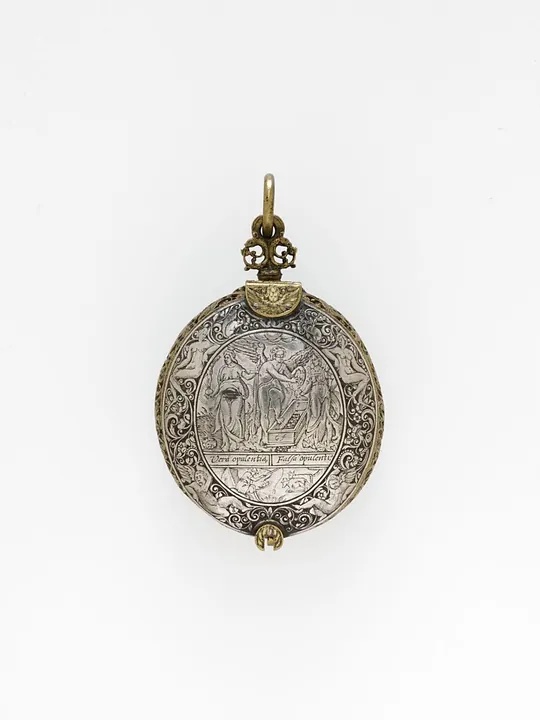
Pocket Watches · early 17th century
Watch of engraved and pierced silver and gilt brass, signed 'Noel Hubert A Rouen', France, early 17th century
Victoria and Albert Museum, London
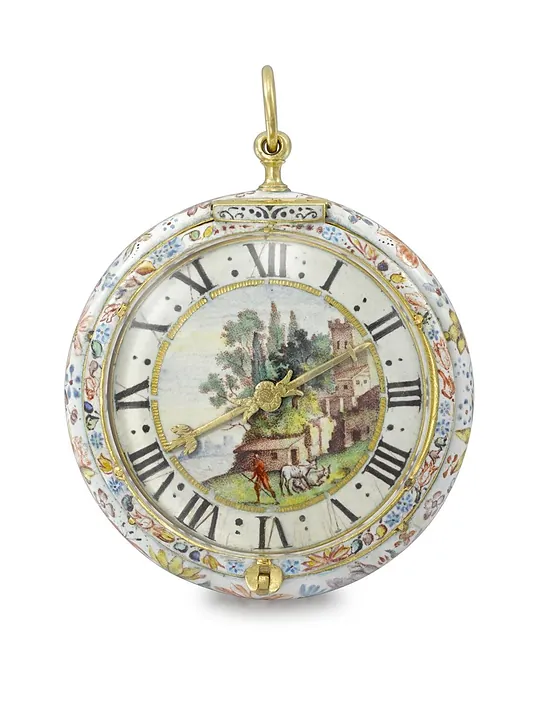
Pocket Watches · 1601–1700
Pocket watch by D Margotin, France, 1601–1700
Science Museum Group, London
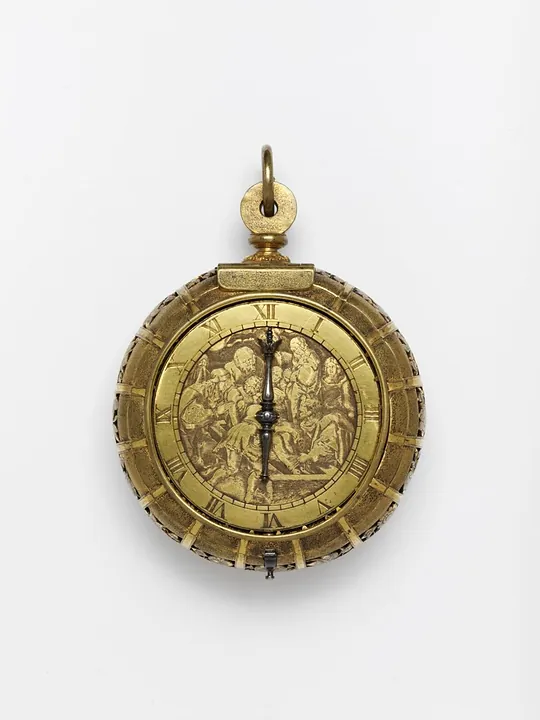
Pocket Watches · 1630
Carriage watch with gilt brass case and engraved dial by Nicolas Lemaindre, Blois, 1630
Victoria and Albert Museum, London
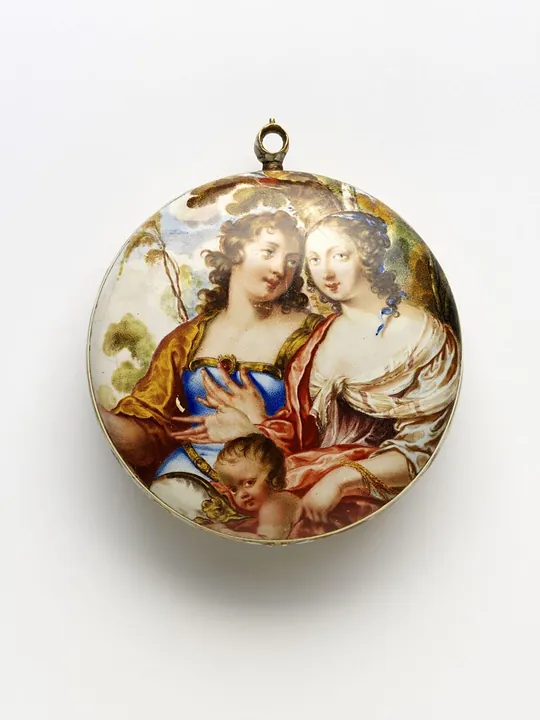
Pocket Watches · 1640–1660
Watch by Jan Bernardus Vrythoff, France, 1640–1660
Victoria and Albert Museum, London
Pocket Watches · 1640–1650
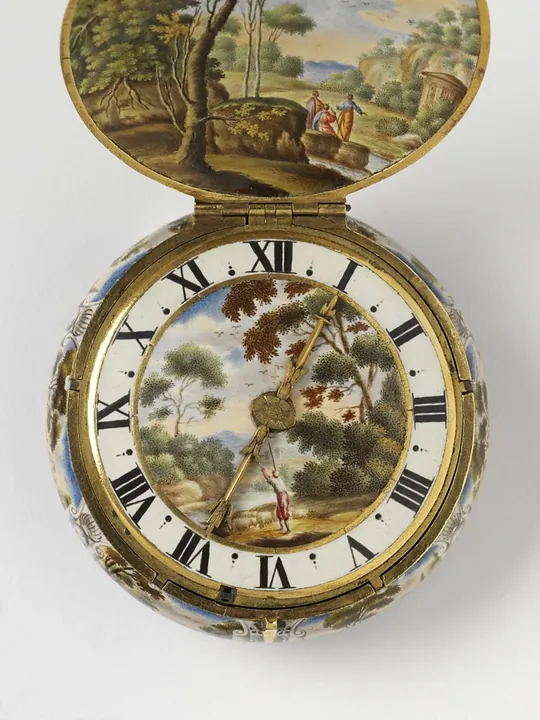
Watch with enamelled gold case depicting Faith, Hope and Charity, made by Nicolas Bernard, Paris, 1640–1650
Victoria and Albert Museum, London