
Wristwatches · Wristwatch
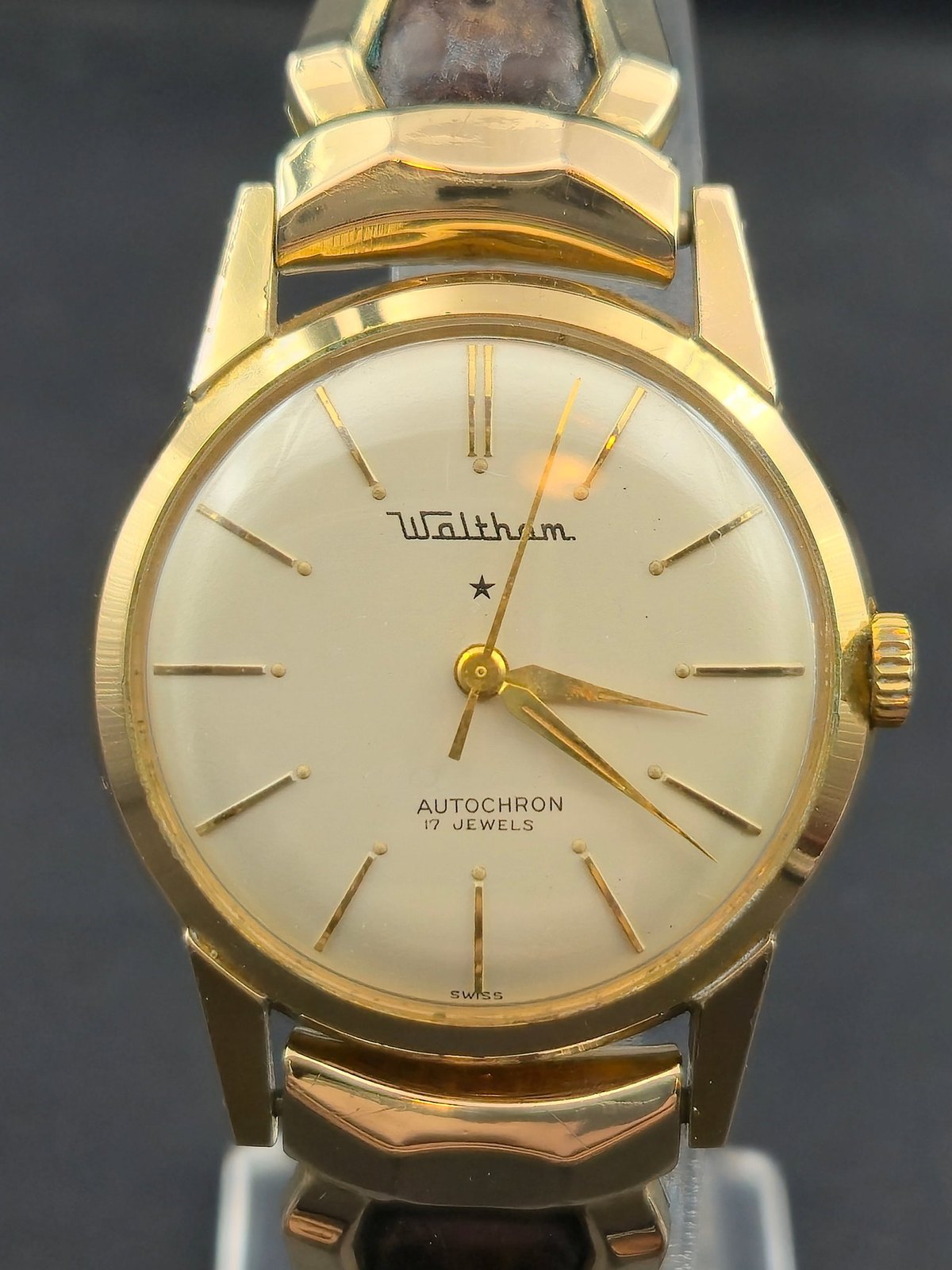
Waltham Autochron 17J Gold-Filled Automatic 34 mm (1960s, Baume & Mercier Movement, Boxed NOS)
- Maker / attribution
- Waltham (maker)
- Date
- 1960s
- Historical period
- Modern Mechanical Horology (1945 – 1969)
- Country of origin
- United States
- Object type
- Wristwatch
- Auction house
- LiveAuctioneers auction archive
- Lot
- Item 219146019
- Credit line
- Auction lot record: lot 459, EXCLUSIVE WATCHES AND POCKET WATCHES 3, Sphere Auctions LLC (2025), via LiveAuctioneers
- Catalogue title (original)
- Waltham Autochron 17J Gold-Filled Automatic 34 mm (1960s, Baume & Mercier Movement, Boxed NOS) (English)
View the source record (auction lot) ↗ (opens another website in a new tab)Suggest a correction
Record summary
Catalogued by LiveAuctioneers auction archive (lot Item 219146019), this is a wristwatch by Waltham, made in United States, dated 1960s. The Atlas places it in the Modern Mechanical Horology period (1945 – 1969) of its Wristwatches collection. The record is illustrated with 4 photographs.
Assembled from the source record's structured fields. Dates and attributions are given as the source states them; where a field is missing the Atlas leaves it blank rather than estimating.
Catalogue description
Lot description — Sphere Auctions LLC
An exceptional Waltham Autochron automatic wristwatch, circa 1960s, featuring a Baume & Mercier Genève 17-jewel Swiss automatic movement housed in a 20-micron gold-filled case with stainless-steel back. The elegant champagne dial displays minimalist baton markers, fine gold dauphine hands, and Waltham’s classic star logo.This particular example is a rare collaboration piece, cased in Switzerland by Swiss Watchmakers for Waltham, blending American brand heritage with Baume & Mercier’s refined Swiss engineering. It remains in near-mint, new-old-stock (NOS) condition, running smoothly and keeping accurate time. Comes complete with the original Waltham eagle-logo display box, adding strong collector appeal.Details:Brand: WalthamModel: AutochronMovement: Baume & Mercier Genève, automatic, 17 jewels, Swiss-madeEra: 1960sCase Size: 34 mmCase Material: 20-micron gold-filled with stainless-steel backDial: Champagne with gold baton markers and dauphine handsCrystal: Domed acrylicBracelet: 10K GF expansion band (Zenith-marked), vintage styleFunctions: Automatic time-onlyCondition: Near-mint NOS, minimal handling wear, running and keeping timeAccessories: Original Waltham presentation box with eagle logo
Historical context
Modern Mechanical Horology (1945 – 1969)
Tool watches for divers, pilots and astronauts; electric watches anticipate the electronic age.
The classic era of the mechanical wristwatch: dive watches, chronographs for motor racing and space flight, GMT watches for jet travel, slim dress watches, automatic calendars, and the rise of Japanese manufacturers alongside Swiss, American, German and Soviet industries.
Read the period in the timelineMore wristwatches from this periodEarlier: Golden Age of Mechanical Watchmaking
Atlas type guide
Automatic (self-winding) watches
Self-winding watches use the wearer's motion to wind the mainspring. Abraham-Louis Perrelet and Breguet made 'perpétuelle' pocket watches with oscillating weights in the late eighteenth century, but the principle only became practical in the wristwatch. John Harwood patented a bumper automatic in 1923; Rolex's Perpetual rotor (1931) winding in one direction, and later bidirectional rotors (Eterna, Felsa Bidynator), established the modern form. Micro-rotors (Universal Genève, Buren) and peripheral rotors made automatic watches thinner.
What to look for
- A semicircular rotor turning 360° over the movement, or a 'bumper' weight that rebounds between springs.
- 'Automatic', 'Perpetual' or 'Self-winding' on the dial.
- A sealed screw-back case, since automatic watches are wound less often by the crown.
Dating clues
- Bumper automatics: 1923–c. 1955.
- Full rotors: from 1931 (Rolex); widespread after c. 1950.
- Micro-rotors: from 1954–1958.
General guidance written by the Atlas editors about this kind of object. It is not a statement about this particular piece; for that, rely on the source record above and on physical examination.
Related records
Pocket Watches · 1910s
Pocket watch by Waltham, United States, 1910s
Suomen Urheilumuseo
Pocket Watches · 1902
Pocket watch by Waltham, United States, 1902
Turun kaupunginmuseo
Instruments · c.1938
Marine chronometer watch no. 30683313 by Waltham
Royal Museums Greenwich
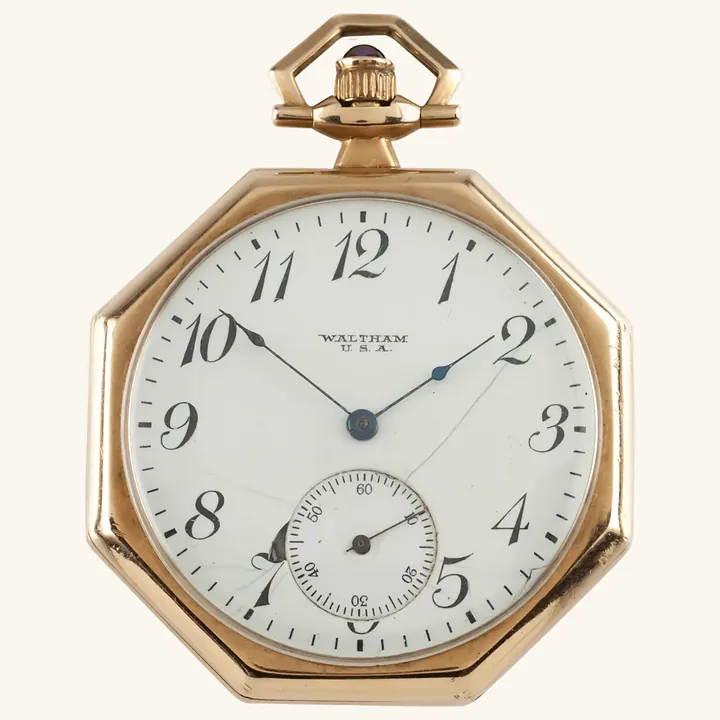
Pocket Watches · 1917
Waltham Octagon14 Karat Pocket Watch Jewel, 1917
WatchMuseum.org shop
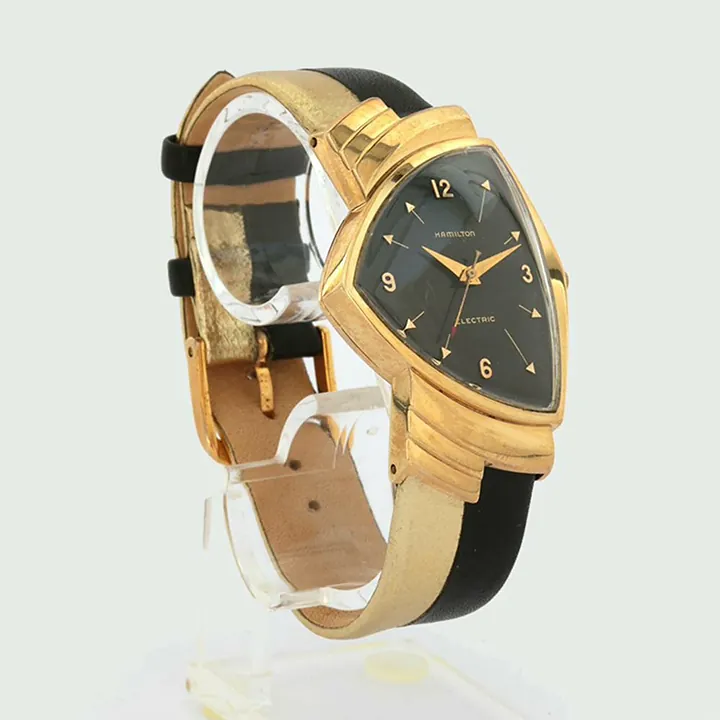
Wristwatches · c. 1957
Wristwatch by Richard H. Arbib, United States, c. 1957
German Clock Museum
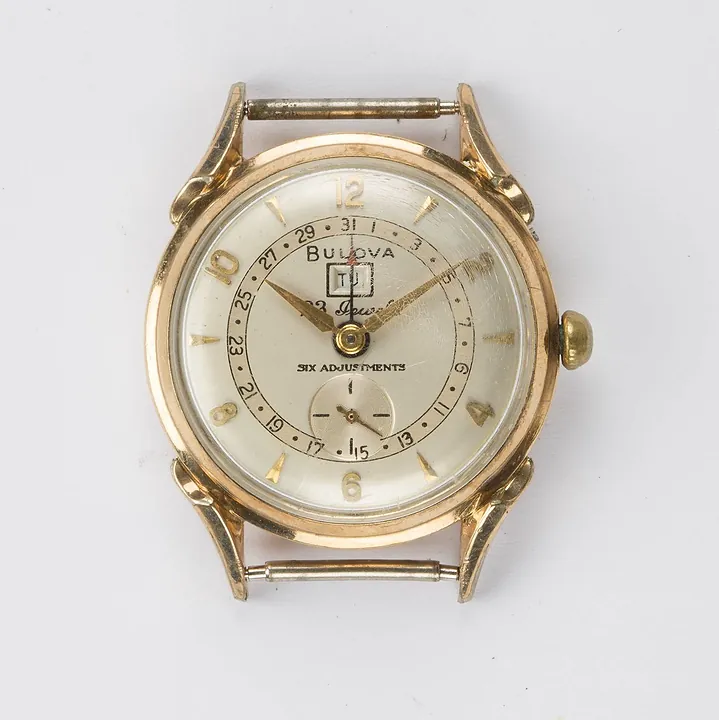
Wristwatches · 1959
Wristwatch by Josef Bulova, United States, 1959
German Clock Museum
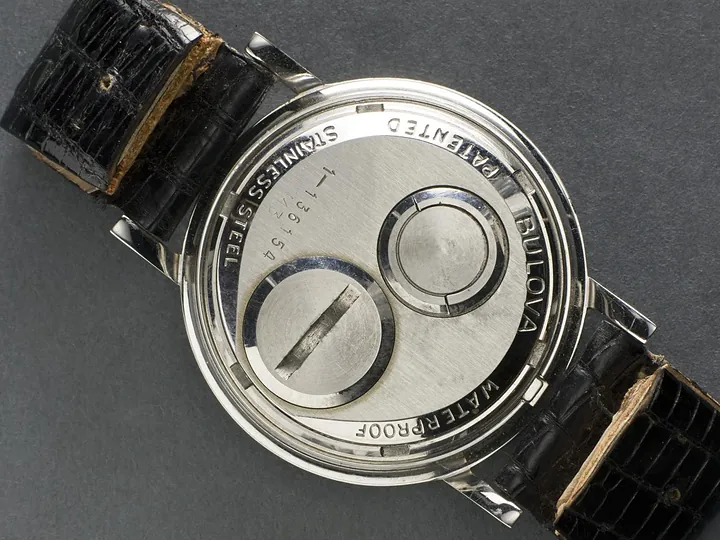
Wristwatches · 1960–1963
Bulova Accutron tuning-fork wristwatch on a demonstration stand, designed by Max Hetzel, United States, 1960–1963
Science Museum Group, London
Wristwatches · 1964
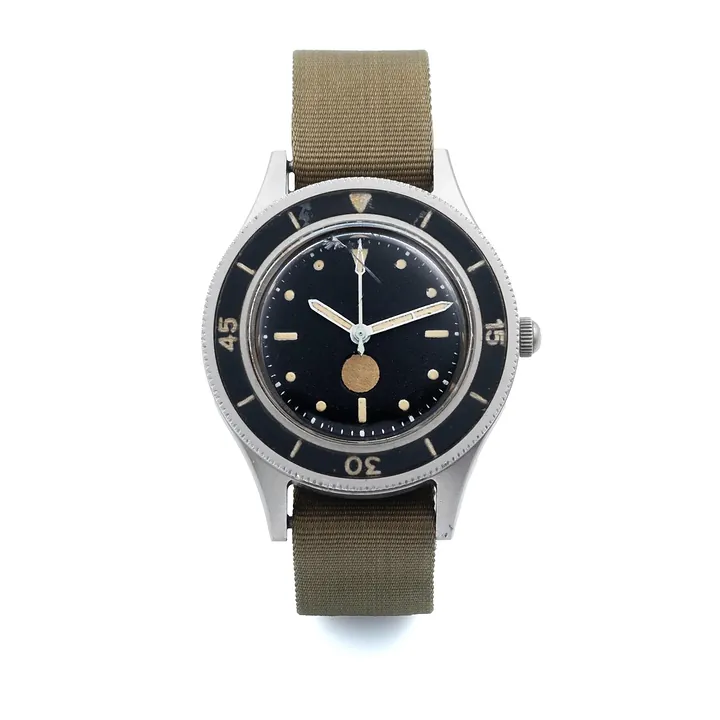
Tornek-Rayville wristwatch, ref. TR 900, 1964
Antiquorum auction archive, Geneva