
Clocks · Wall clock
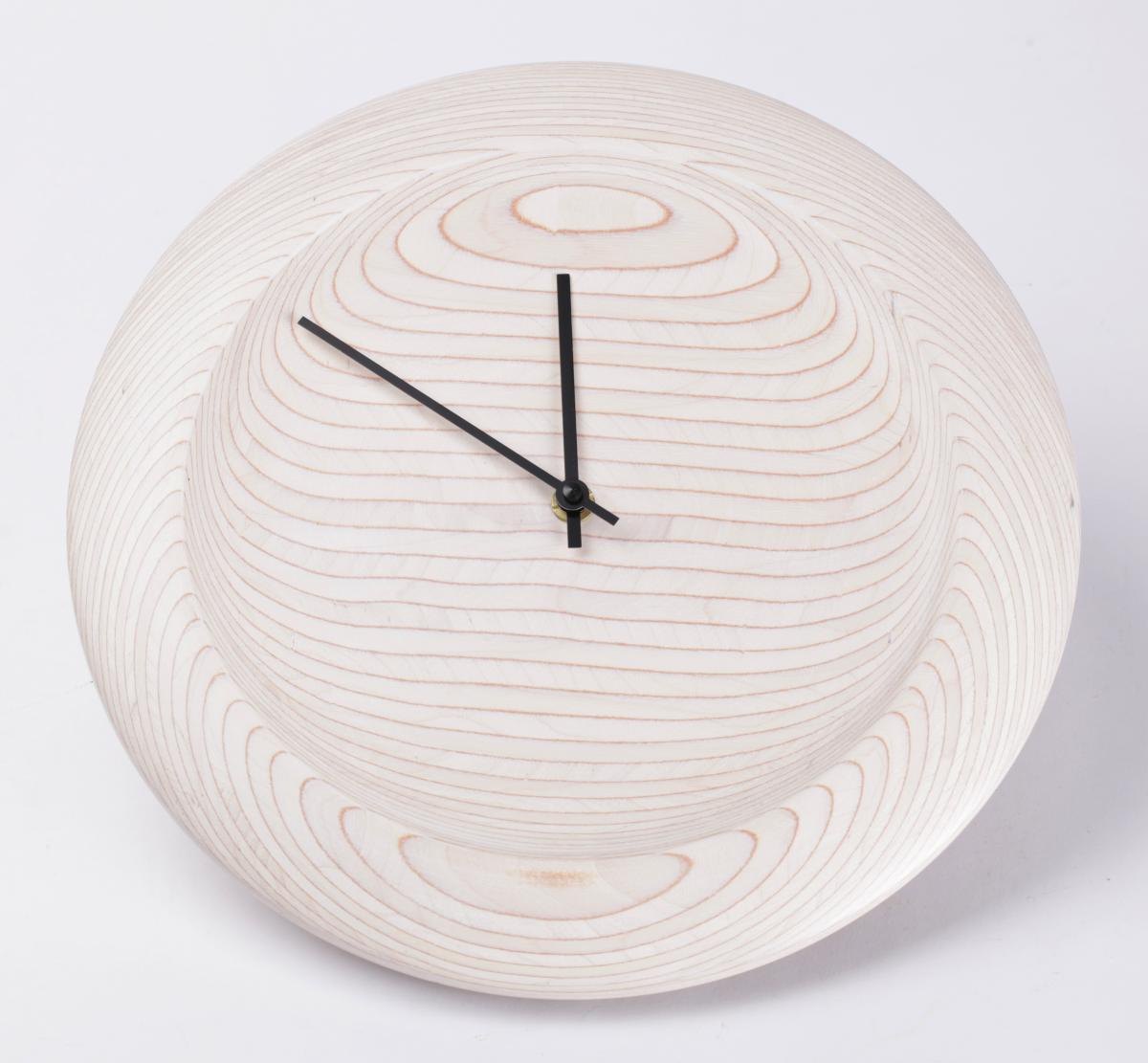
Wall clock by Martti Hyppänen, Finland, 2015
- Maker / attribution
- Martti Hyppänen (maker)
- Date
- 2015
- Historical period
- Contemporary Horology (2010 – Present)
- Country of origin
- Finland
- Place
- Päijät-Häme, Hartola
- Object type
- Wall clock
- Materials / technique
- wood, vaneri, plastic, metal
- Dimensions
- diameter: 30,5 cm, thickness: c.. 2,2 cm.
- Holding institution
- Lusto – Suomen Metsämuseo
- Accession / object no.
- E16002:7
- Credit line
- Lusto – Suomen Metsämuseo (via Finna)
- Catalogue title (original)
- Puukello; Seinäkello (Finnish)
View the source record ↗ (opens another website in a new tab)Suggest a correction
Record summary
Held and catalogued by Lusto – Suomen Metsämuseo (object number E16002:7), this is a wall clock by Martti Hyppänen, made in Päijät-Häme, Hartola, Finland, dated 2015. The Atlas places it in the Contemporary Horology period (2010 – Present) of its Clocks collection. Materials and techniques recorded by the source: wood, vaneri, plastic, metal. Recorded dimensions: diameter: 30,5 cm, thickness: c.. 2,2 cm. The record is illustrated with 2 photographs.
Assembled from the source record's structured fields. Dates and attributions are given as the source states them; where a field is missing the Atlas leaves it blank rather than estimating.
Catalogue description
Description — Lusto – Suomen Metsämuseo
Vanerista sorvattu pyöreä ja litteähkö seinäkello. Kellon keskellä on matala, suorapohjainen alue, josta hieman paksummat reunat kohoavat pyöreästi. Reunojen sivu on muotoiltu niin, että se laskee loivanpyöreästi kohti suoraa ja kapeaa ulkosivua. Takasivun puolella reunassa on hyvin loiva pyöristys, josta sivu jatkuu suorana. Takasivun keskelle on tehty pyöreä aukko, johon on painettu mustasta muovista tehty nelikulmainen kellokoneisto. Koneiston alapuolella on takasivuun upotettu pyöreä vanerinpala, jossa on polttopainettu merkintä MH. Kellon ohuesta metallista tehdyt viisarit ovat suorat ja mustat. Kellon pinta on hyvin sileä, etusivu on käsitelty läpikuultavan valkoiseksi, takasivu on pinnaltaan käsittelemätön.
Shown in the original language of the source catalogue. An editor-reviewed English translation has not yet been published; we do not publish machine translations as authoritative text.
Inscriptions & marks
Kellon takasivuun on upotettu pyöreä vanerinpala, jossa on polttopainettu merkintä MH. Kellokoneiston muovissa on kohoteksti: HERMLE / QUARTZ 2100 / MADE IN GERMANY / unadjusted.
Historical context
Contemporary Horology (2010 – Present)
Silicon components, connected watches, optical-lattice research clocks and a thriving independent scene.
Today time is distributed by satellite navigation and networks with nanosecond accuracy, while mechanical clocks are made as art, design and craft objects. Contemporary designers explore the clock as sculpture and kinetic art.
Read the period in the timelineMore clocks from this periodEarlier: Mechanical Renaissance
Atlas type guide
Regulators, wall and Vienna clocks
A regulator is a precision pendulum clock used as a time standard in observatories, workshops and railway offices. Typical features are a deadbeat or Graham escapement, a temperature-compensated pendulum (mercury jar, gridiron or later invar), maintaining power and a regulator dial that separates hours, minutes and seconds. George Graham's deadbeat escapement (c. 1715) and his mercury pendulum, together with Harrison's gridiron, set the pattern for two centuries.
Wall clocks span a much wider range: the elegant Viennese Laterndluhr and Dachluhr of the Biedermeier period, the Dutch stoelklok and staartklok, English 'dial' clocks used in schools, offices and railway stations, and mass-produced spring and weight wall clocks from Germany (Gustav Becker, Junghans, Kienzle) and America.
What to look for
- Deadbeat escapement and compensated pendulum (gridiron rods, mercury jar or wood rod).
- A regulator dial with a large central minute hand and separate hour and seconds dials.
- Vienna regulators: glazed cases, slender pendulum, small weights, enamel two-piece dials.
- German factory trademarks stamped on the backplate (e.g. Gustav Becker anchor and crown, Junghans star).
Dating clues
- Graham-type deadbeat regulators: from c. 1720.
- Viennese Laterndluhr: c. 1800–1850.
- German factory 'Vienna-style' regulators: c. 1870–1930; Gustav Becker serial numbers allow close dating.
General guidance written by the Atlas editors about this kind of object. It is not a statement about this particular piece; for that, rely on the source record above and on physical examination.
Read next:Deadbeat escapementAnchor (recoil) escapementGrasshopper escapement
Related records
Clocks · 1990s
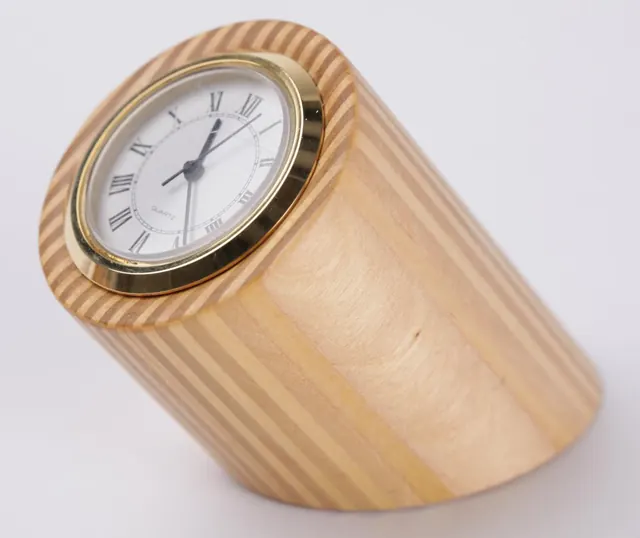
Table clock by Martti Hyppänen, Finland, 1990s
Lusto – Suomen Metsämuseo
Clocks · 1990s (estimated)
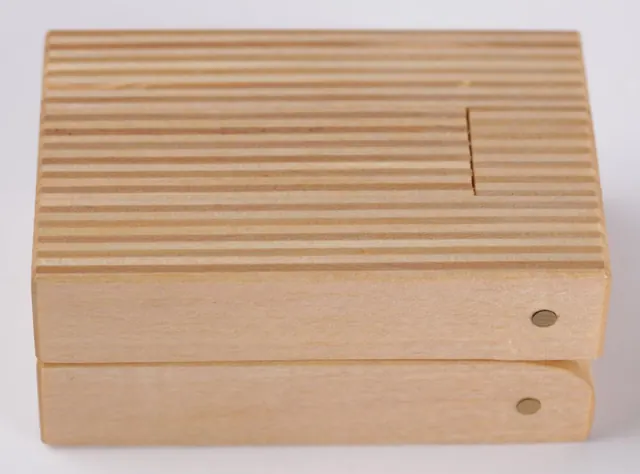
Travelling clock by Martti Hyppänen, Finland, 1990stimated
Lusto – Suomen Metsämuseo
Clocks · 2011–2012
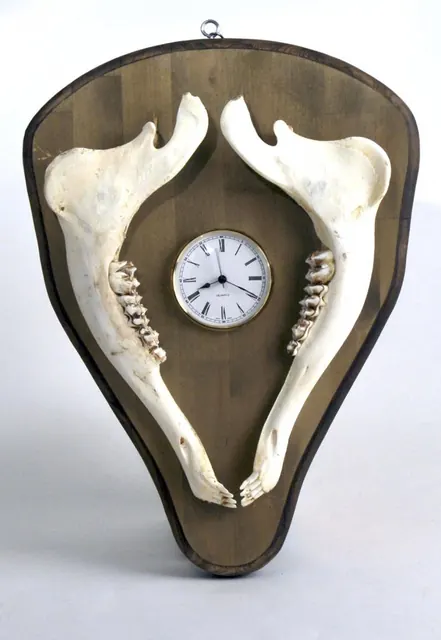
Wall clock, Finland, 2011–2012
Suomen Metsästysmuseo
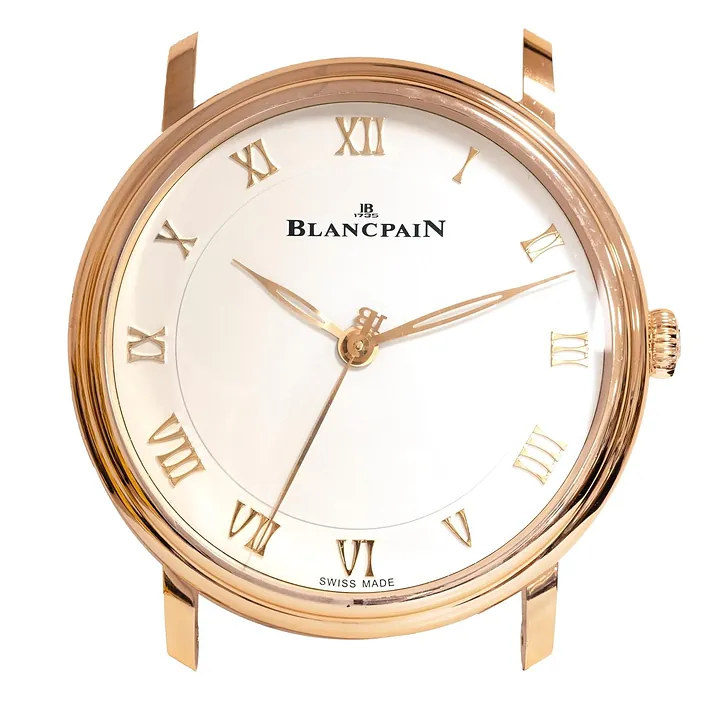
Clocks · c. 2010
Blancpain clock, c. 2010
Antiquorum auction archive, Geneva
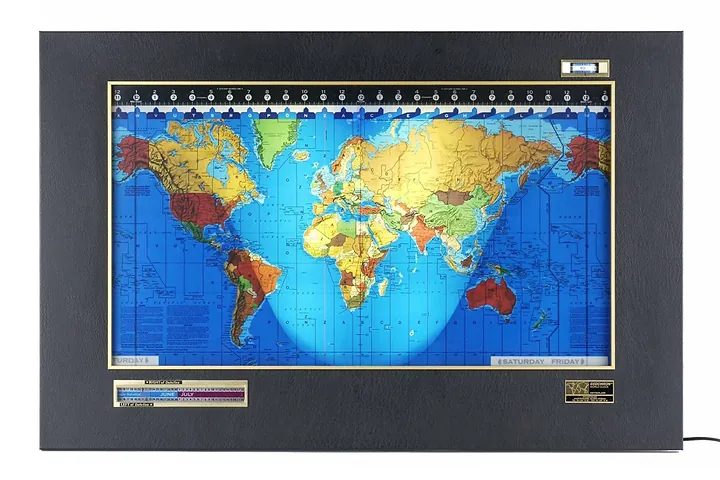
Clocks · 2013
Clock by Geochron, United States, 2013
German Clock Museum
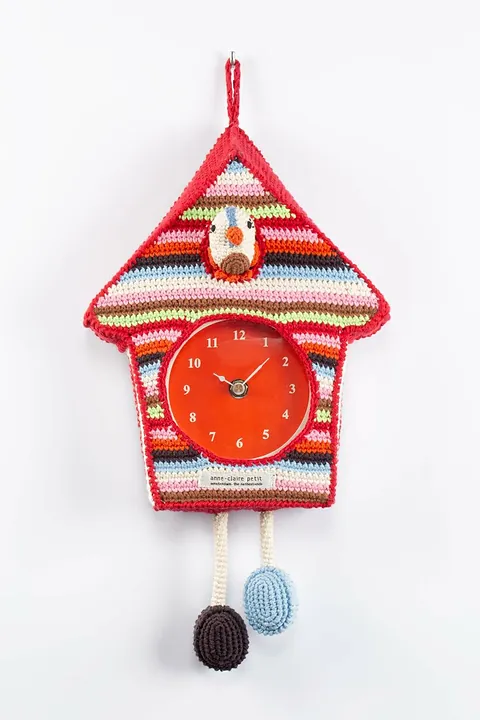
Clocks · 2013
Cuckoo / black forest clock by Anne-Claire Petit, Netherlands, 2013
German Clock Museum
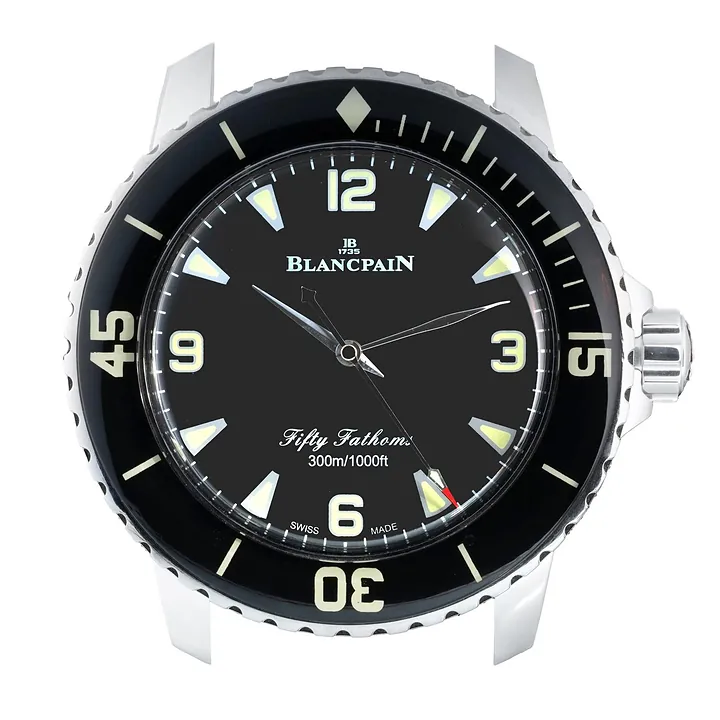
Clocks · c. 2015
Rueg Made for Blancpain Fifty Fathoms, c. 2015
Antiquorum auction archive, Geneva
Clocks · 2016
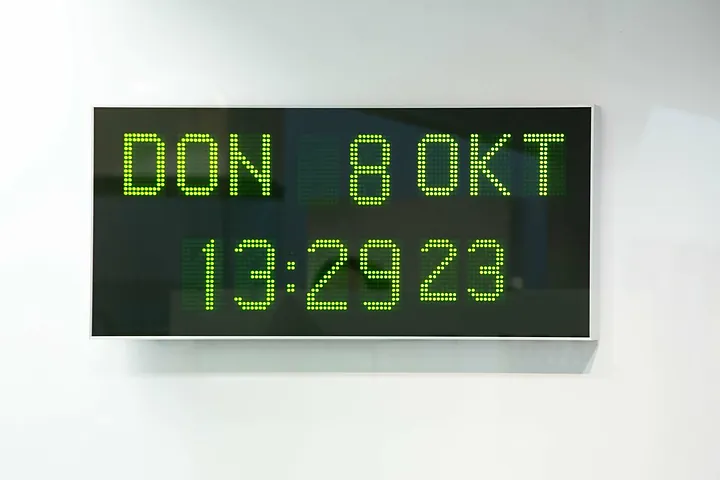
Wall clock by Bürk Mobatime, Germany, 2016
German Clock Museum