
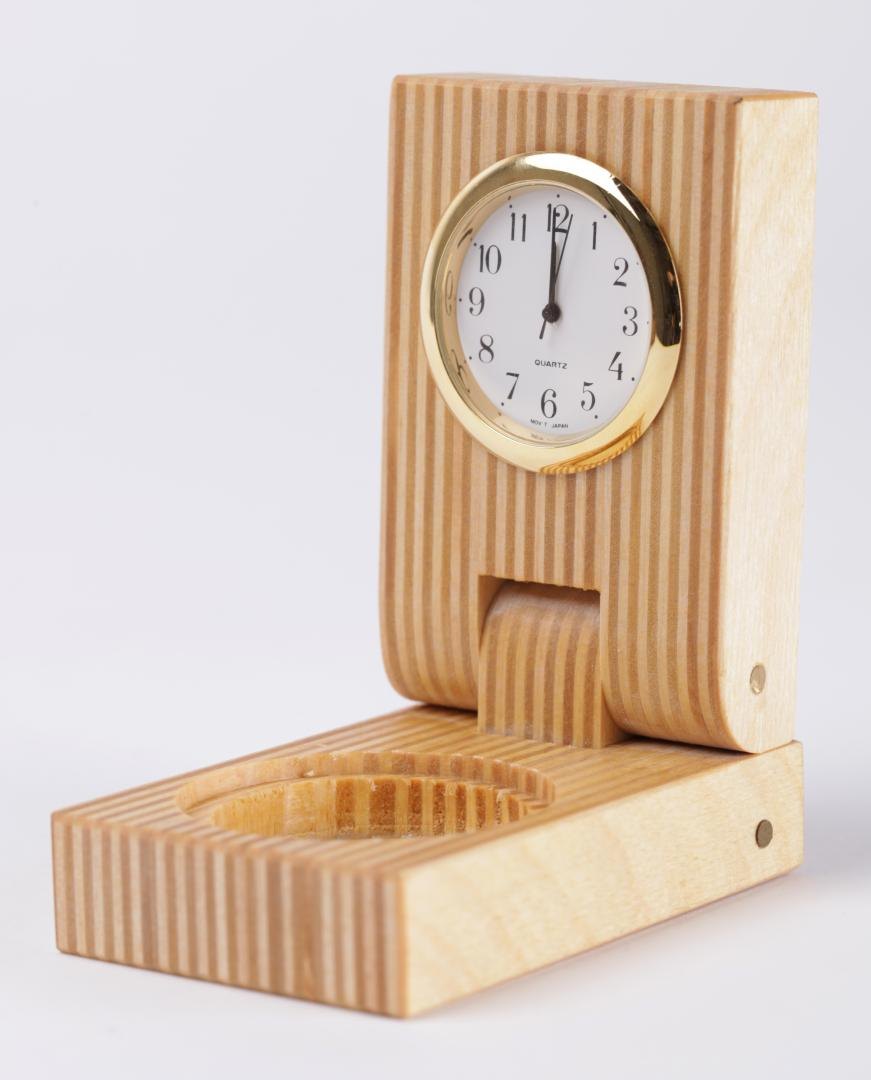
Clocks · Travelling clock
Travelling clock by Martti Hyppänen, Finland, 1990stimated
- Maker / attribution
- Martti Hyppänen (maker)
- Date
- 1990s (estimated)
- Historical period
- Mechanical Renaissance (1990 – 2010)
- Country of origin
- Finland
- Place
- Päijät-Häme, Hartola
- Object type
- Travelling clock
- Materials / technique
- wood, vaneri, plastic, metal
- Dimensions
- Koko suljettuna: 7,5 x 4,9 x 3,2 cm, height avattuna: 9 cm.
- Holding institution
- Lusto – Suomen Metsämuseo
- Accession / object no.
- E16002:19
- Credit line
- Lusto – Suomen Metsämuseo (via Finna)
- Catalogue title (original)
- Puukello; Pöytäkello, Matkakello (Finnish)
View the source record ↗ (opens another website in a new tab)Suggest a correction
Record summary
Held and catalogued by Lusto – Suomen Metsämuseo (object number E16002:19), this is a travelling clock by Martti Hyppänen, made in Päijät-Häme, Hartola, Finland, dated 1990s (estimated). The Atlas places it in the Mechanical Renaissance period (1990 – 2010) of its Clocks collection. Materials and techniques recorded by the source: wood, vaneri, plastic, metal. Recorded dimensions: Koko suljettuna: 7,5 x 4,9 x 3,2 cm, height avattuna: 9 cm. The record is illustrated with 5 photographs.
Assembled from the source record's structured fields. Dates and attributions are given as the source states them; where a field is missing the Atlas leaves it blank rather than estimating.
Catalogue description
Description — Lusto – Suomen Metsämuseo
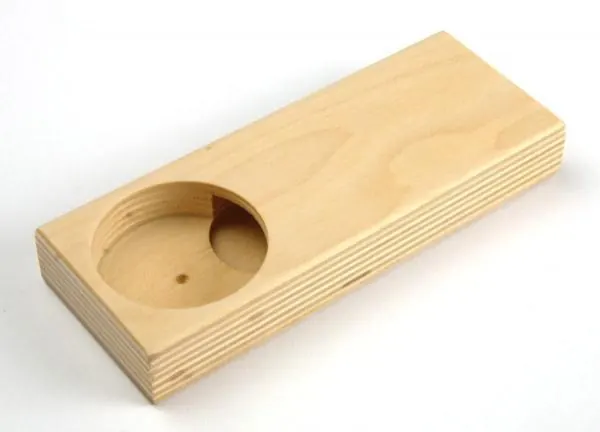
Vanerista tehty, saranan varassa kaksin kerron taittuva, suorakaiteen mallinen puukappale, jonka sisäpuolelle jäävällä pinnalla on valkopohjainen kellotaulu. Suorakulmaiset, litteät vanerilevyt on kiinnitetty toisiinsa kappaleiden toisen lyhyen sivun keskelle upotetulla kapealla vanerikappaleella. Toisen levyn puolella kappaleen pää on pyöristetty ja se on kiinnitetty levyyn liikkuvaksi koko sivun mittaisella messinkitapilla. Tähän avattuna kellon yläkappaleeseen on yläreunan lähelle upotettu pyöreä kellotaulu. Kellon avattuna olevaan alakappaleeseen on samalle kohdalle sorvattu porrasreunainen pyöreä aukko, johon hieman koholla oleva kellotaulu sujahtaa kun kellon puoliskot käännetään kiinni. Kellotaulun reunoja kiertävät arabialaiset numerot. Viisarit ovat ohuet ja väriltään mustat. Kellotaulun päällä on kirkas kuori (lasia tai muovia) ja taulua ympäröi kullanvärinen rengas.
Shown in the original language of the source catalogue. An editor-reviewed English translation has not yet been published; we do not publish machine translations as authoritative text.
Inscriptions & marks
Kellotaulussa on musta teksti QUARTZ / MOV´ T JAPAN.
Historical context
Mechanical Renaissance (1990 – 2010)
Mechanical watches return as cultural objects; independent watchmaking flourishes.
Mechanical clocks returned as luxury and craft objects, alongside radio-controlled and designer quartz clocks. Independent makers and restorers revived traditional techniques, and museums increasingly documented industrial and electric clocks as heritage.
Read the period in the timelineMore clocks from this periodEarlier: Quartz Revolution
Atlas type guide
Carriage and travel clocks
The carriage clock is a portable spring clock with a balance-wheel escapement and a brass case with glass panels and a carrying handle. Abraham-Louis Breguet made early examples around 1800, and from the 1830s Paul Garnier and other French makers industrialised production, with the small towns of Saint-Nicolas-d'Aliermont and the Franche-Comté supplying movements for retailers worldwide.
Typical features include a platform escapement mounted horizontally on top of the movement (usually a lever, sometimes cylinder or Garnier's chaff-cutter), striking or repeating work, and alarms. English carriage clocks, generally larger and with fusees, were made by firms such as Frodsham and Dent. Travel clocks in folding leather cases became popular in the twentieth century.
What to look for
- A platform escapement visible through the top glass.
- Case styles: corniche, gorge, anglaise, obis or engraved cases.
- Repeat buttons on top and strike/silent levers.
- Stamps of movement makers (e.g. Drocourt, Jacot, Margaine, Richard & Co.) on the backplate.
Dating clues
- Early carriage clocks with Breguet or Garnier features: c. 1800–1850.
- Mass-produced French carriage clocks: c. 1850–1914.
- Folding travel clocks and alarm travel clocks: mostly 1920–1970.
General guidance written by the Atlas editors about this kind of object. It is not a statement about this particular piece; for that, rely on the source record above and on physical examination.
Read next:Detached lever escapement
Related records
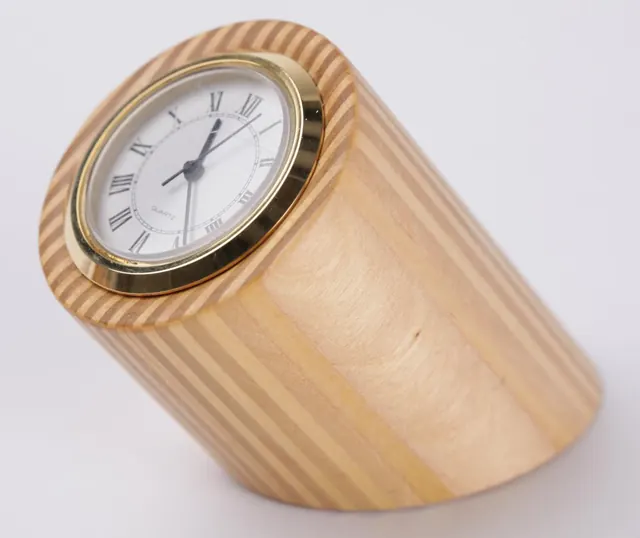
Clocks · 1990s
Table clock by Martti Hyppänen, Finland, 1990s
Lusto – Suomen Metsämuseo
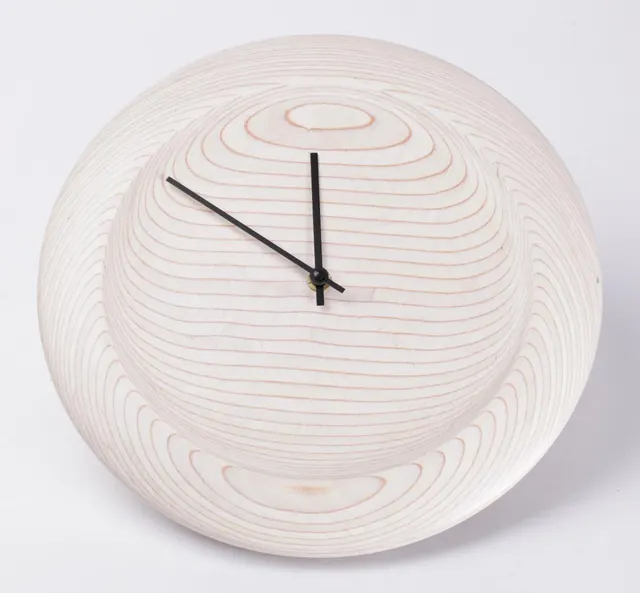
Clocks · 2015
Wall clock by Martti Hyppänen, Finland, 2015
Lusto – Suomen Metsämuseo
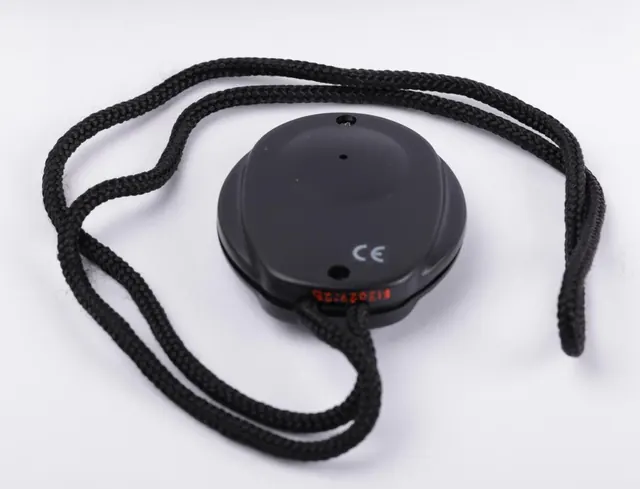
Clocks · 1990–2010
Timer clock commissioned by Stora Enso, Finland, 1990–2010
Lusto - The Finnish Forest Museum
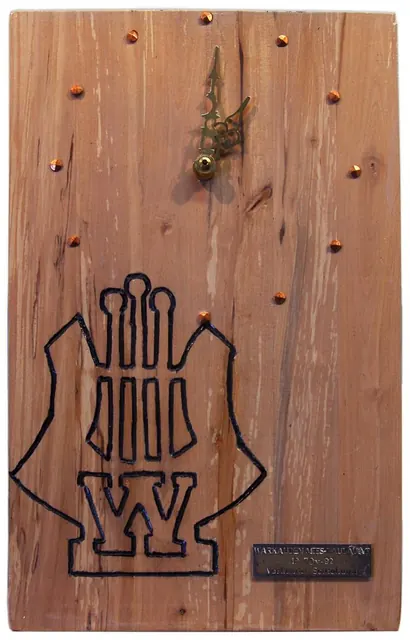
Clocks · 1992
Wall clock, Finland, 1992
Varkauden museokeskus Konsti
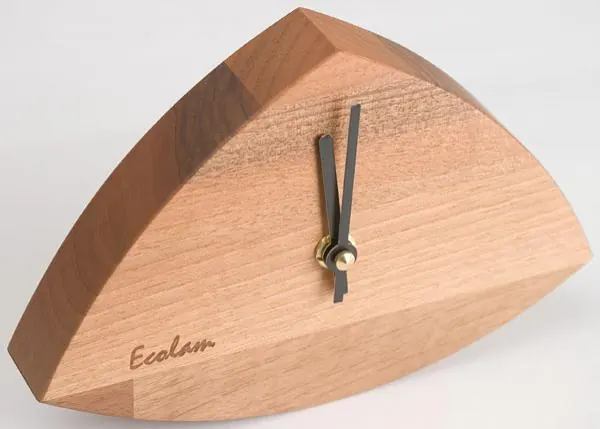
Clocks · 2005?
Table clock by Valmistaja / Suunnittelija: Martti Hyppänen, Finland, 2005?
Lusto – Suomen Metsämuseo
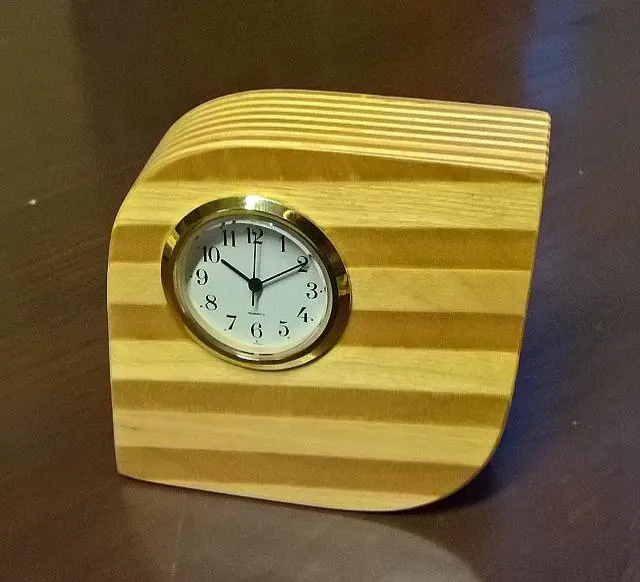
Clocks · 1990–2010
Table clock, Finland, 1990–2010
Heinolan museot
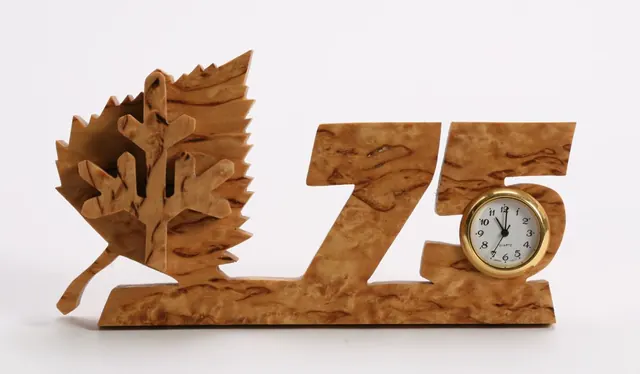
Clocks · 2002timated
Table clock by Finn-Lapponia Oy, Finland, 2002timated
Lusto – Suomen Metsämuseo
Clocks · (2000-l)
Clock by Valmistaja / Suunnittelija: Martti Hyppänen, Finland, (2000-l)
Lusto - The Finnish Forest Museum