
Clocks · Table clock
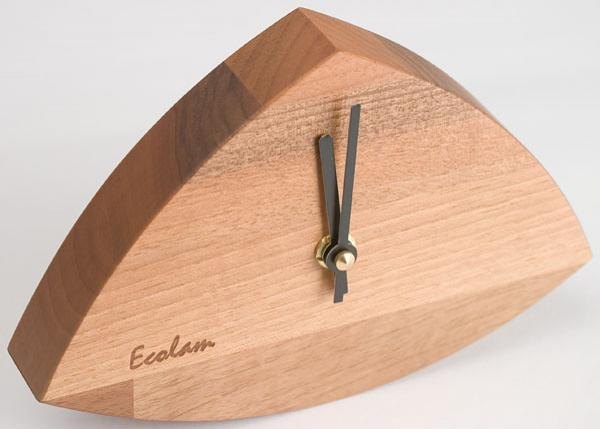
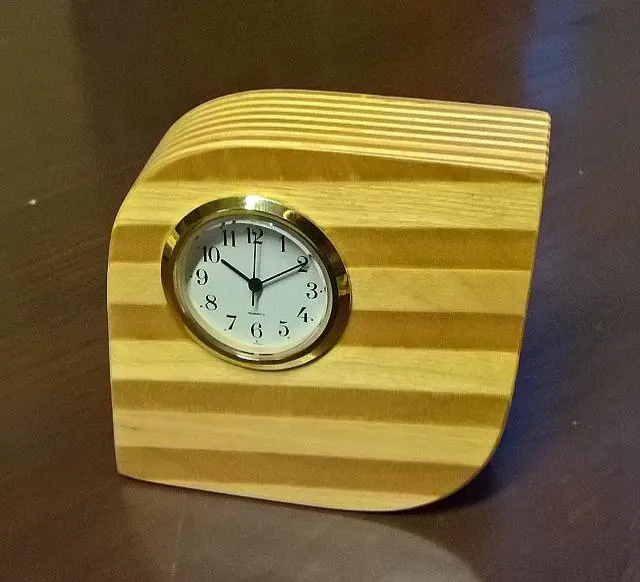
Table clock by Valmistaja / Suunnittelija: Martti Hyppänen, Finland, 2005?
- Maker / attribution
- Valmistaja / Suunnittelija: Martti Hyppänen (maker)
- Date
- 2005?
- Historical period
- Mechanical Renaissance (1990 – 2010)
- Country of origin
- Finland
- Place
- Finland, Hartola
- Object type
- Table clock
- Materials / technique
- wood, walnut, metal, plastic, cardboard
- Dimensions
- Kello: height 12,6 cm, width 18,5 cm, thickness 3,8 cm. Pakkaus: length 13 cm, width 20,1 cm, height 6,5 cm.
- Holding institution
- Lusto – Suomen Metsämuseo
- Accession / object no.
- E10002:38
- Credit line
- Lusto – Suomen Metsämuseo (via Finna)
- Catalogue title (original)
- Pöytäkello (Finnish)
View the source record ↗ (opens another website in a new tab)Suggest a correction
Record summary
Held and catalogued by Lusto – Suomen Metsämuseo (object number E10002:38), this is a table clock by Valmistaja / Suunnittelija: Martti Hyppänen, made in Finland, Hartola, dated 2005?. The Atlas places it in the Mechanical Renaissance period (1990 – 2010) of its Clocks collection. Materials and techniques recorded by the source: wood, walnut, metal, plastic, cardboard. Recorded dimensions: Kello: height 12,6 cm, width 18,5 cm, thickness 3,8 cm. Pakkaus: length 13 cm, width 20,1 cm, height 6,5 cm. The record is illustrated with 3 photographs.
Assembled from the source record's structured fields. Dates and attributions are given as the source states them; where a field is missing the Atlas leaves it blank rather than estimating.
Catalogue description
Description — Lusto – Suomen Metsämuseo
Kolmikulmainen pöytäkello. Kellon reunat ovat ulospäin kaartuvat. Kello seisoo pystyssä pisimmällä reunallaan, ja kaartumisen takia sen saa keinumaan. Kellotaulu on tasainen ja siinä on keskellä mustat viisarit. Kellotaulussa on vasemmassa alakulmassa kirjoitus Ecolam. Kellon takasivussa on halkaisijaltaan pyöreä ulkoneva kappale, jonka saa irti. Sisällä on muovinen kappale, josta kellon voi säätää ja jossa on paikka paristolle. Pöytäkello on pakattu pahviseen suorakulmion muotoiseen pakkaukseen.
Shown in the original language of the source catalogue. An editor-reviewed English translation has not yet been published; we do not publish machine translations as authoritative text.
Inscriptions & marks
Kellotaulun alhaalla vasemmalla puolella on teksti Ecolam.
Historical context
Mechanical Renaissance (1990 – 2010)
Mechanical watches return as cultural objects; independent watchmaking flourishes.
Mechanical clocks returned as luxury and craft objects, alongside radio-controlled and designer quartz clocks. Independent makers and restorers revived traditional techniques, and museums increasingly documented industrial and electric clocks as heritage.
Read the period in the timelineMore clocks from this periodEarlier: Quartz Revolution
Atlas type guide
Bracket, table and spring-driven clocks
Spring-driven clocks freed timekeeping from the hanging weight. The coiled mainspring, documented from the fifteenth century, made portable table clocks possible; to even out its declining force, makers used the fusee, a conical pulley connected to the barrel by a gut line or chain. Renaissance table clocks from Augsburg and Nuremberg — drum-shaped, square or tower-shaped in gilt brass — were luxury scientific objects, often with astronomical dials and alarms.
After the pendulum, English makers developed the bracket clock: a wooden case with a carrying handle, a short pendulum with a verge escapement, and often repeating work to sound the hours on demand at night. Later examples use the anchor escapement. In the nineteenth century, 'table clock' became a broad term for spring clocks of every nationality.
What to look for
- A fusee in the movement (cone-shaped pulley) and the type of line — gut or chain.
- Verge escapement with a short bob pendulum, often with a decoratively engraved backplate.
- Repeat cords or buttons that make the clock strike again on demand.
- Gilt-brass engraved cases and horizontal dials on Renaissance pieces.
- Case shapes: inverted bell, bell top, break-arch, lancet or balloon.
Dating clues
- Drum and tower table clocks: c. 1520–1650.
- Ebony veneered English bracket clocks with verge escapements: c. 1670–1800.
- Engraved backplates were usual on English clocks until c. 1800, then generally plain.
General guidance written by the Atlas editors about this kind of object. It is not a statement about this particular piece; for that, rely on the source record above and on physical examination.
Related records
Clocks · early 1980s
Clock by Valmistaja / Suunnittelija: Martti Hyppänen, Finland, early 1980s
Lusto – Suomen Metsämuseo
Pocket Watches · early 1990s
Watch by Valmistaja / Suunnittelija: Martti Hyppänen, Finland, early 1990s
Lusto – Suomen Metsämuseo
Clocks · (2000-l)
Clock by Valmistaja / Suunnittelija: Martti Hyppänen, Finland, (2000-l)
Lusto - The Finnish Forest Museum
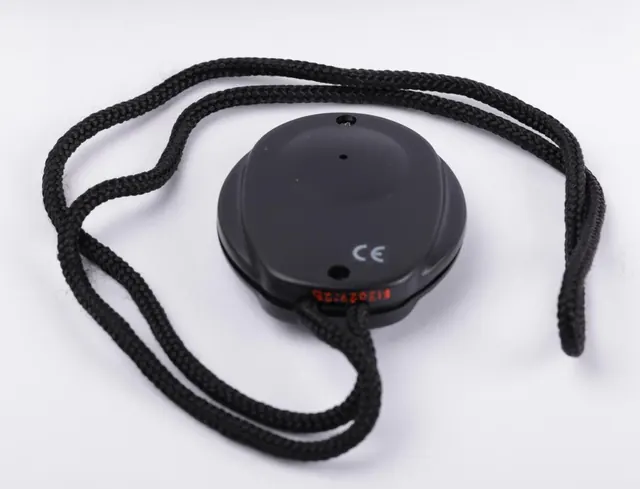
Clocks · 1990–2010
Timer clock commissioned by Stora Enso, Finland, 1990–2010
Lusto - The Finnish Forest Museum
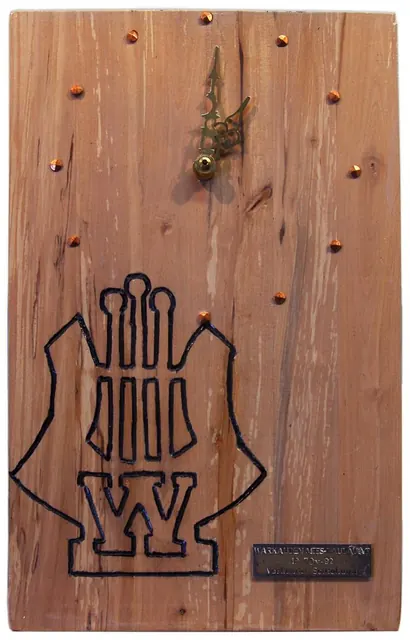
Clocks · 1992
Wall clock, Finland, 1992
Varkauden museokeskus Konsti
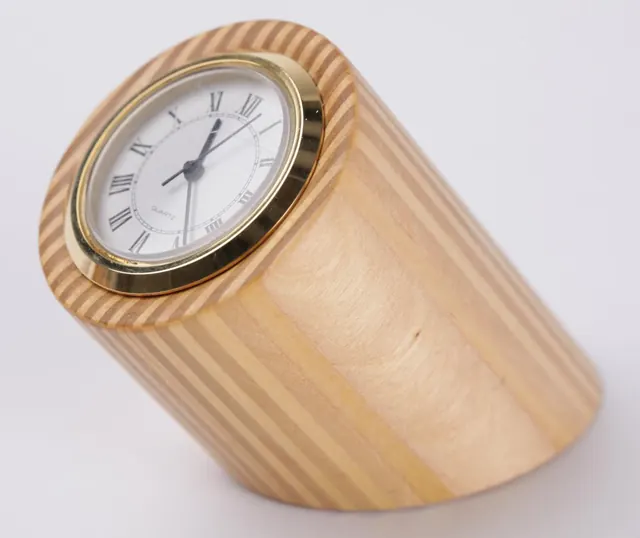
Clocks · 1990s
Table clock by Martti Hyppänen, Finland, 1990s
Lusto – Suomen Metsämuseo
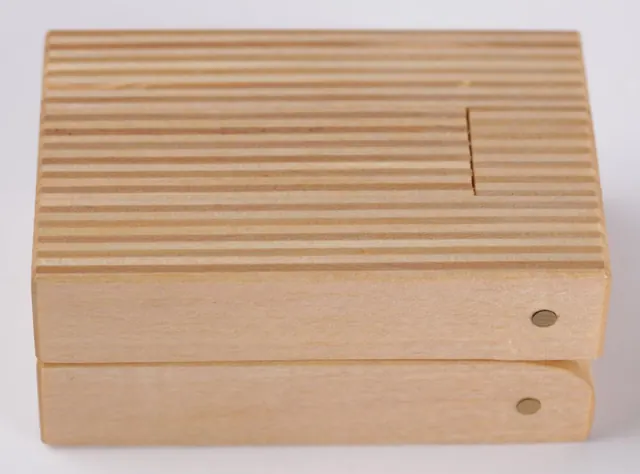
Clocks · 1990s (estimated)
Travelling clock by Martti Hyppänen, Finland, 1990stimated
Lusto – Suomen Metsämuseo
Clocks · 1990–2010
Table clock, Finland, 1990–2010
Heinolan museot