
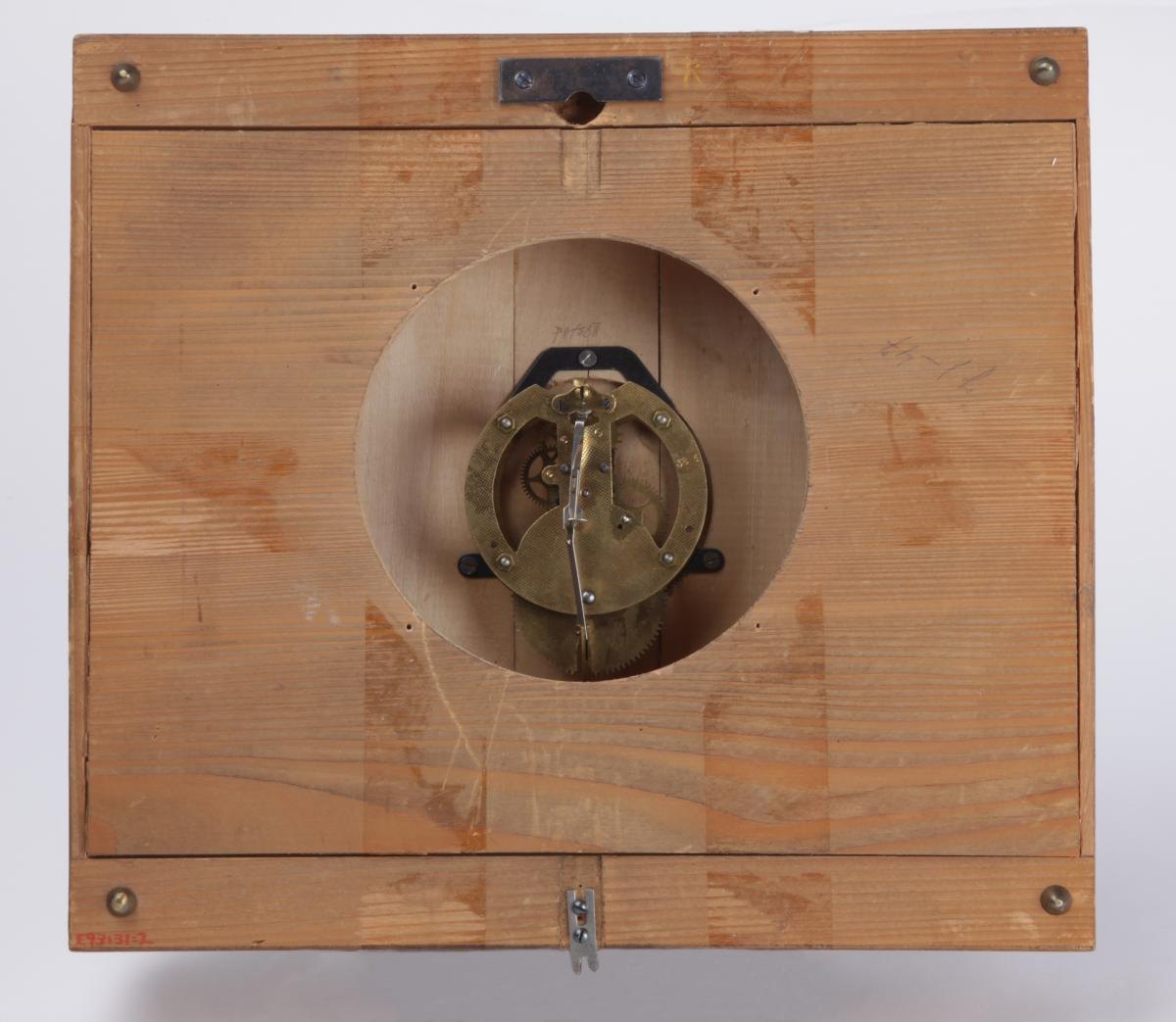
Clocks · Wall clock
Wall clock by Junghans, Germany, 1940stimated
- Maker / attribution
- Junghans (maker)
- Date
- 1940s (estimated)
- Historical period
- Golden Age of Mechanical Watchmaking (1900 – 1945)
- Country of origin
- Germany
- Place
- Germany
- Object type
- Wall clock
- Materials / technique
- wood, metal, glass
- Dimensions
- height: 29 cm, width: 32 cm, depth: 9,5 cm.
- Holding institution
- Lusto – Suomen Metsämuseo
- Accession / object no.
- E93131:2
- Credit line
- Lusto – Suomen Metsämuseo (via Finna)
- Catalogue title (original)
- Kello; Seinäkello; Junghans-seinäkello (Finnish)
View the source record ↗ (opens another website in a new tab)Suggest a correction
Record summary
Held and catalogued by Lusto – Suomen Metsämuseo (object number E93131:2), this is a wall clock by Junghans, made in Germany, dated 1940s (estimated). The Atlas places it in the Golden Age of Mechanical Watchmaking period (1900 – 1945) of its Clocks collection. Materials and techniques recorded by the source: wood, metal, glass. Recorded dimensions: height: 29 cm, width: 32 cm, depth: 9,5 cm. The record is illustrated with 6 photographs.
Assembled from the source record's structured fields. Dates and attributions are given as the source states them; where a field is missing the Atlas leaves it blank rather than estimating.
Catalogue description
Description — Lusto – Suomen Metsämuseo
Vaakasuuntaisen suorakaiteen - lähes neliön - mallinen puukuorinen seinäkello, jossa on avaimella vedettävä mekanismi. Kellon reunat ja takasivu ovat suorat, etusivun ala- ja yläkulma on pyöristetty. Etusivun päällä on kookas, puulla reunustettu lasi, joka avautuu kahden lyhyen yläreunaan asetetun saranan varassa alhaalta ylöspäin. Lasikehyksen pystyreunat on pyöristetty, ala- ja yläsivut ovat suorat. Lasin alla on puuhun liimattu metallista leikattu, vaaleaksi päällystetty rengas, johon on painettu numerot 1 - 12. Renkaan ulkoreunassa on kullanvärinen rengas, jossa minuutit on merkitty lyhyin mustin viivoin. Myös renkaan sisäreunassa on kullanvärinen rengas. Renkaan sisäpuolella, numeron 12:n alla, on kellon puukuoreen kiinnitetty kullanvärinen kohoteksti Junghans. Numero 6:n yläpuolella on metallireunusteinen rengas, jossa on keskellä kulmikas vetotappi. Lasikannen kiinnittävä ohut tappi sujahtaa kellon kuoreen numero 6:n alapuolelle tehtyyn pieneen metallireunusteiseen reikään. Kellon takasivun keskellä on kookas pyöreä reikä, josta päästään käsiksi kellon koneistoon. Aukon peittona on ruskeaksi maalattu metallilevy. Levyn reunassa on neljä pientä reikää, ja samalla kohdalla puussa on myös reiät - nauloja ei levyä kuitenkaan enää ole kiinnittämässä. Takasivussa on suorakaiteen mallinen puulevy, joka on hieman reunoja korkeammalla. Takasivun kulmiin on painettu kapenevakärkiset metalliniitit. Takasivun yläreunan keskelle on tehty pyöreä reikä ripustamista varten. Reiän yläpuolelle on pienillä urakantaisilla ruuveilla kiinnitetty metallilevy, joka peittää reiän osittain. Takasivun alareunan keskelle on kiinnitetty kahdella kupukantaisella uraruuvilla pieni, pystysuuntainen metallinauha, joka ulottuu alareunan alapuolelle. Nauhan alareunassa on keskellä kapea aukko ja kulmat on loivasti pyöristetty. Kellon mekanismissa on (irrallinen) pyöreä, litteä ja painava kullanvärinen heiluri lyhyessä varressa. Kellon kookas vetoavain on tehty teräksestä ja siinä on lyhyen tapin päässä litteä, kaksikorvainen levy.
Shown in the original language of the source catalogue. An editor-reviewed English translation has not yet been published; we do not publish machine translations as authoritative text.
Inscriptions & marks
Kellotaulun keskelle on kiinnitetty kullanvärinen kohoteksti Junghans. Kellon mekanismin suojana olevaan metallilevyyn on käsin raaputettu merkinnät: 9964KYM / 266Puyy. Puiseen takasivuun on käsin lyijykynällä kirjoitettu merkintä: J / -47. Kellon sisässä on koneiston yläpuolelle kirjoitettu puuhun lyijykynällä merkintä: P8f(tai t)s58.
Historical context
Golden Age of Mechanical Watchmaking (1900 – 1945)
The wristwatch displaces the pocket watch; waterproof cases, self-winding and grand complications.
Between 1900 and 1945 clocks were electrified: master-clock systems ran factories and offices, synchronous mains clocks entered homes, and the Shortt free-pendulum clock set new standards of accuracy before the first quartz clocks (1927). Art Deco design reshaped mantel and table clocks.
Read the period in the timelineMore clocks from this periodEarlier: Industrial Revolution
Atlas type guide
Regulators, wall and Vienna clocks
A regulator is a precision pendulum clock used as a time standard in observatories, workshops and railway offices. Typical features are a deadbeat or Graham escapement, a temperature-compensated pendulum (mercury jar, gridiron or later invar), maintaining power and a regulator dial that separates hours, minutes and seconds. George Graham's deadbeat escapement (c. 1715) and his mercury pendulum, together with Harrison's gridiron, set the pattern for two centuries.
Wall clocks span a much wider range: the elegant Viennese Laterndluhr and Dachluhr of the Biedermeier period, the Dutch stoelklok and staartklok, English 'dial' clocks used in schools, offices and railway stations, and mass-produced spring and weight wall clocks from Germany (Gustav Becker, Junghans, Kienzle) and America.
What to look for
- Deadbeat escapement and compensated pendulum (gridiron rods, mercury jar or wood rod).
- A regulator dial with a large central minute hand and separate hour and seconds dials.
- Vienna regulators: glazed cases, slender pendulum, small weights, enamel two-piece dials.
- German factory trademarks stamped on the backplate (e.g. Gustav Becker anchor and crown, Junghans star).
Dating clues
- Graham-type deadbeat regulators: from c. 1720.
- Viennese Laterndluhr: c. 1800–1850.
- German factory 'Vienna-style' regulators: c. 1870–1930; Gustav Becker serial numbers allow close dating.
General guidance written by the Atlas editors about this kind of object. It is not a statement about this particular piece; for that, rely on the source record above and on physical examination.
Read next:Deadbeat escapementAnchor (recoil) escapementGrasshopper escapement
Related records
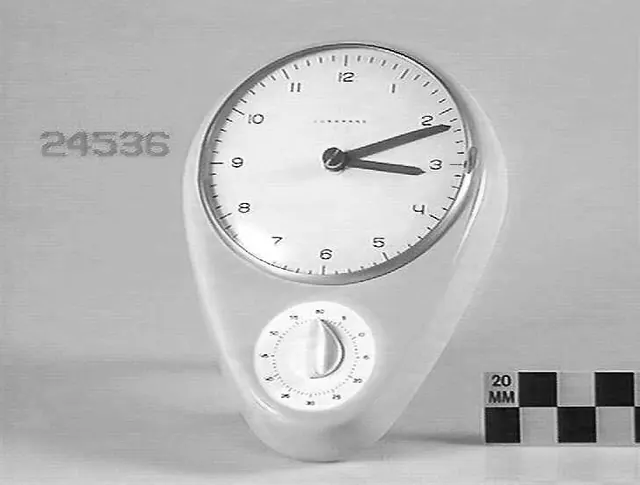
Clocks · c. 1955
Electric Clock - Junghans, 'Electora', c. 1955
Museums Victoria, Melbourne
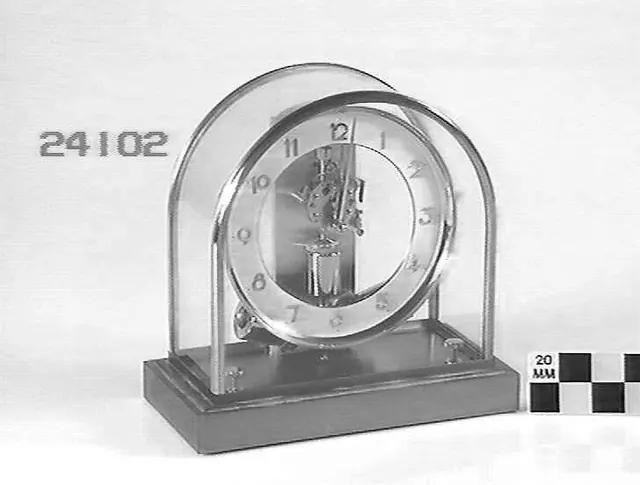
Clocks · 1956
Electric Clock - Junghans, 'ATO, Germany, 1956
Museums Victoria, Melbourne
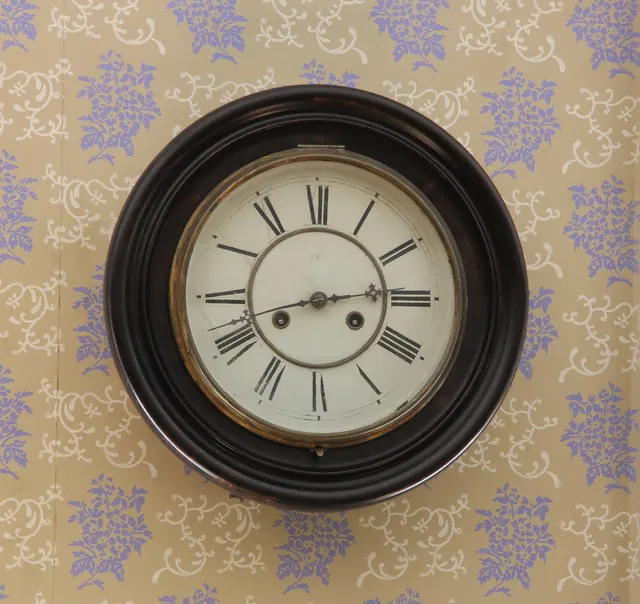
Clocks · 1888–1900
Clock by Junghans, Sweden, 1888–1900
Skansen
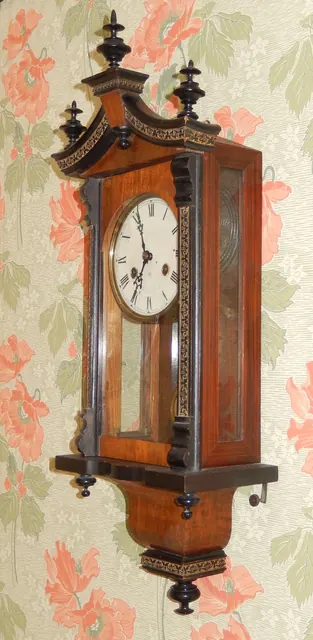
Clocks · 1890–1910
Clock by Junghans, Sweden, 1890–1910
Skansen
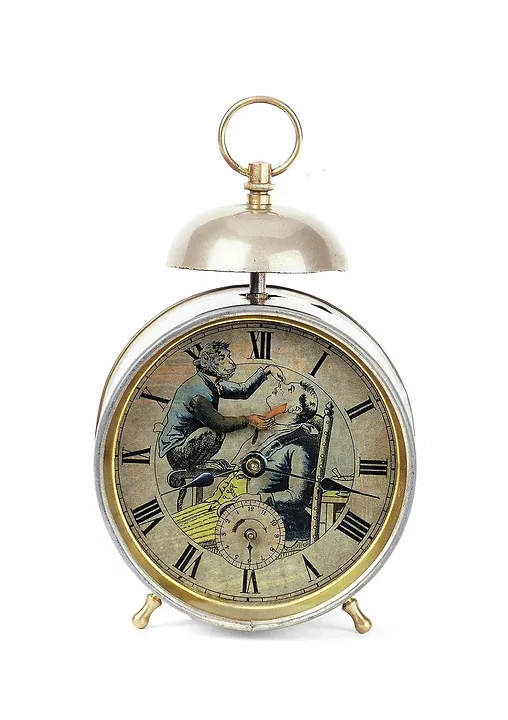
Clocks · c. 1900
Alarm clock by Union Clock Company, Germany, c. 1900
German Clock Museum
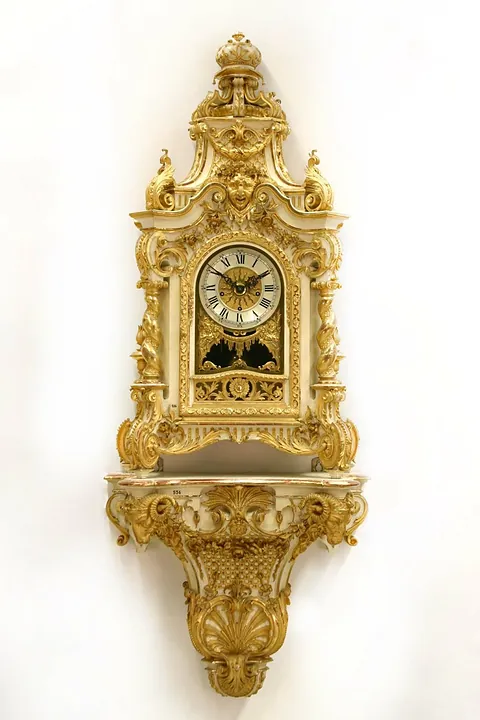
Clocks · 1900
Clock by Josef Münzer, Germany, 1900
German Clock Museum
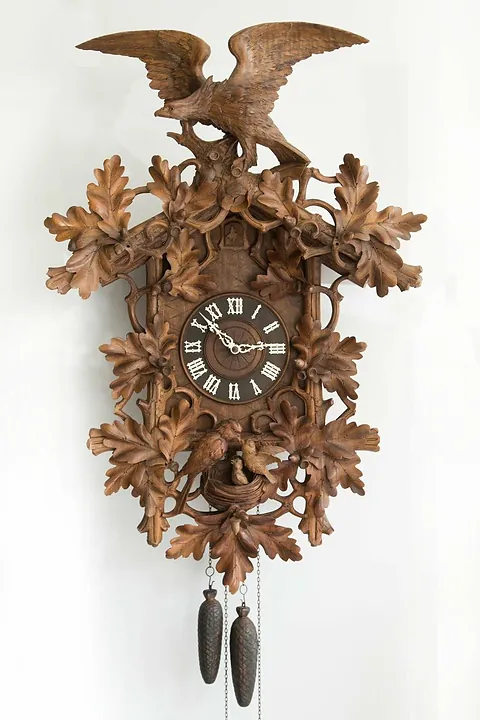
Clocks · c. 1900
Cuckoo / black forest clock by Gebr. Lehnis, Germany, c. 1900
German Clock Museum
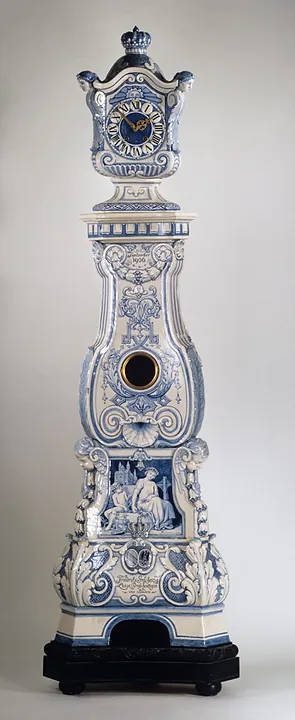
Clocks · 1900–1999
Longcase clock by Staatliche Majolika-Manufaktur Karlsruhe, Germany, 1900–1999
Badisches Landesmuseum Karlsruhe