
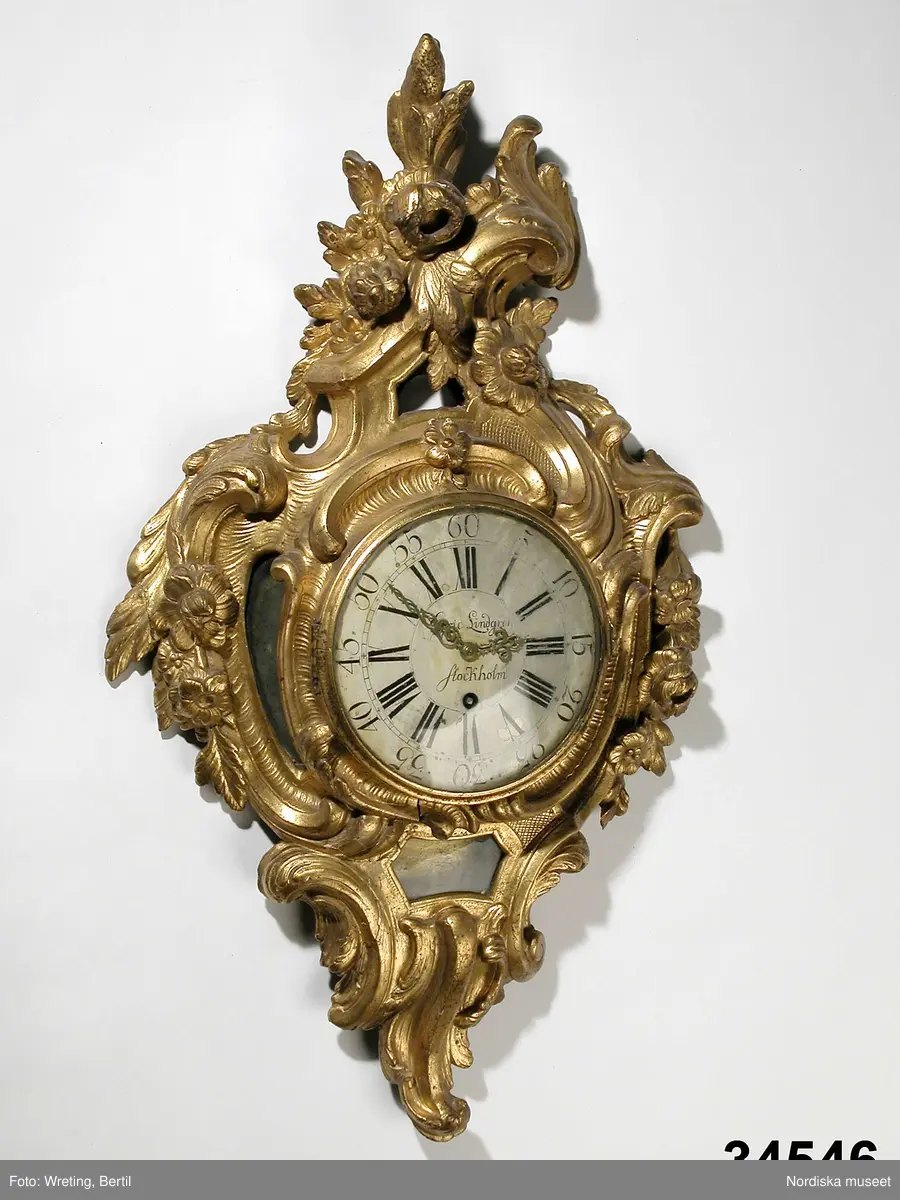
Clocks · Wall clock
Wall clock by Erik Dy Lindgren, Sweden, 1760–1769
- Maker / attribution
- Erik Dy Lindgren (Maker)
- Date
- 1760–1769
- Historical period
- Precision & Scientific Horology (1750 – 1850)
- Country of origin
- Sweden
- Place
- Sverige Stockholm Stockholm Stockholm
- Object type
- Wall clock
- Materials / technique
- Glas Furu
- Dimensions
- Bredd 48.0 cm
- Holding institution
- Nordic Museum Foundation
- Accession / object no.
- NM.0034546
- Credit line
- Nordic Museum Foundation
- Catalogue title (original)
- Väggur (Swedish)
View the source record ↗ (opens another website in a new tab)Suggest a correction
Record summary
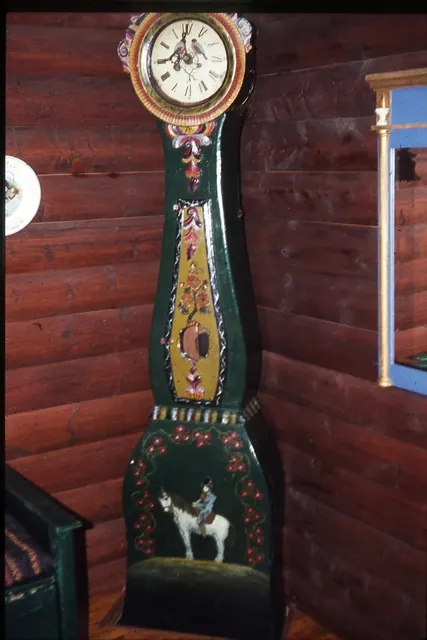
Held and catalogued by Nordic Museum Foundation (object number NM.0034546), this is a wall clock by Erik Dy Lindgren, made in Sverige Stockholm Stockholm Stockholm, Sweden, dated 1760–1769. The Atlas places it in the Precision & Scientific Horology period (1750 – 1850) of its Clocks collection. Materials and techniques recorded by the source: Glas Furu. Recorded dimensions: Bredd 48.0 cm. The record is illustrated with 1 photograph.
Assembled from the source record's structured fields. Dates and attributions are given as the source states them; where a field is missing the Atlas leaves it blank rather than estimating.
Catalogue description
Catalogue description from Nordic Museum Foundation
Väggur, rokoko, 1760-tal, av furu. Rikt skuren och förgylld dekor; rocailler, rosor och blad m m. Urtavlan signerad "Eric Lindgren/Stockholm". /Anna Womack 2015-01-27 Huvudliggaren (år 1882-1883): "Klocka. Märkt 'Eric Lindgren Stockholm'. Nyckeln saknas. Ink. hos juvelerare C. Hammer i Stockh. 29/1 1883 - 100 kr" Katalogkort: "Cartel af snidad och förgylld fur. 1760-tal. Stockholm. Eric Lindegren d.y. H 0,84m. B. 0,48 m. Urhuset snidadt af fur och förgylldt. Urtaflan betecknad: 'Eric Lindgren Stockholm'. På urhusets baksida ett rött lacksigill af utseende som teckningen visar, Stockholms överståthållareämbetes lacksigill. Nyckel saknas. Inköpt hos juveleraren Chr. Hammer, Stockholm för 100 kr - 29.I.1883 Eric Lindgren d y, urmakare, mästare i Stockholm 1754-86. Litt ref: Per Falck, Tidsfodral. Svenska urfodral från fyra sekel, 1997, s. 53, 56 samt Pipping, Sidenbladh, Elfström, Urmakare och klockor i Sverige och Finland, 1997. /Anna Womack 2015-01-27
Shown in the original language of the source catalogue. An editor-reviewed English translation has not yet been published; we do not publish machine translations as authoritative text.
Historical context
Precision & Scientific Horology (1750 – 1850)
Harrison solves longitude; Mudge invents the lever; Breguet's Paris workshop defines the modern watch.
The age of the deadbeat escapement, compensated pendulums and observatory regulators. Domestic clocks spread through the middle classes: English longcase and bracket clocks, French gilt-bronze mantel clocks, Viennese Biedermeier wall clocks, Black Forest painted-shield clocks, and the first American shelf clocks.
Read the period in the timelineMore clocks from this periodEarlier: Early Modern Horology
Atlas type guide
Regulators, wall and Vienna clocks
A regulator is a precision pendulum clock used as a time standard in observatories, workshops and railway offices. Typical features are a deadbeat or Graham escapement, a temperature-compensated pendulum (mercury jar, gridiron or later invar), maintaining power and a regulator dial that separates hours, minutes and seconds. George Graham's deadbeat escapement (c. 1715) and his mercury pendulum, together with Harrison's gridiron, set the pattern for two centuries.
Wall clocks span a much wider range: the elegant Viennese Laterndluhr and Dachluhr of the Biedermeier period, the Dutch stoelklok and staartklok, English 'dial' clocks used in schools, offices and railway stations, and mass-produced spring and weight wall clocks from Germany (Gustav Becker, Junghans, Kienzle) and America.
What to look for
- Deadbeat escapement and compensated pendulum (gridiron rods, mercury jar or wood rod).
- A regulator dial with a large central minute hand and separate hour and seconds dials.
- Vienna regulators: glazed cases, slender pendulum, small weights, enamel two-piece dials.
- German factory trademarks stamped on the backplate (e.g. Gustav Becker anchor and crown, Junghans star).
Dating clues
- Graham-type deadbeat regulators: from c. 1720.
- Viennese Laterndluhr: c. 1800–1850.
- German factory 'Vienna-style' regulators: c. 1870–1930; Gustav Becker serial numbers allow close dating.
General guidance written by the Atlas editors about this kind of object. It is not a statement about this particular piece; for that, rely on the source record above and on physical examination.
Read next:Deadbeat escapementAnchor (recoil) escapementGrasshopper escapement
Related records
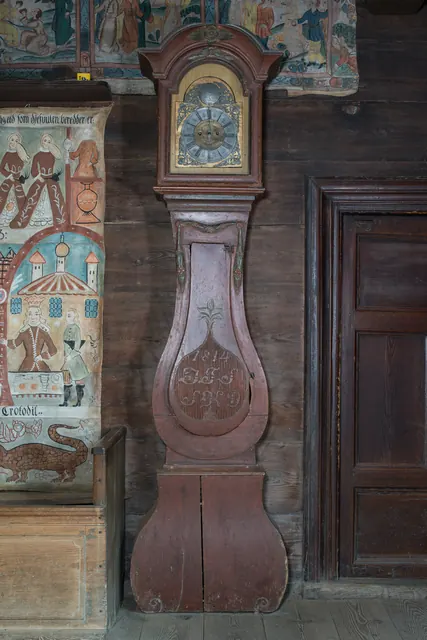
Clocks · 1814
Clock by Ola Svensson, Sweden, 1814
Skansen
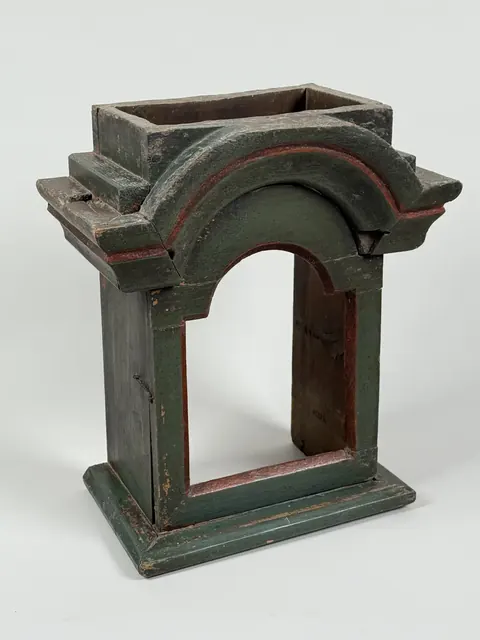
Clocks · 1833
Clock, Sweden, 1833
Skansen
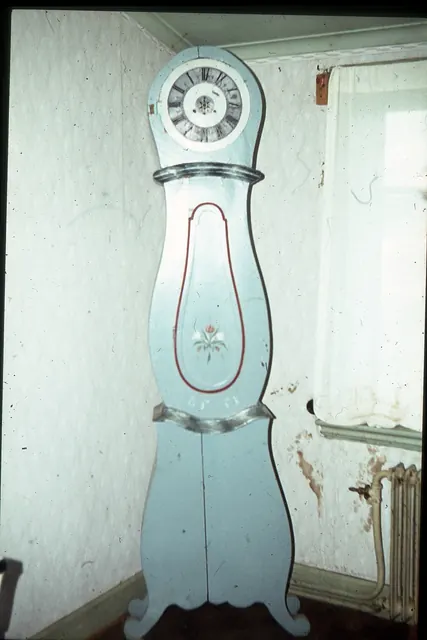
Clocks · 1775
Longcase clock, Sweden, 1775
National Association of Swedish Handicraft Societies
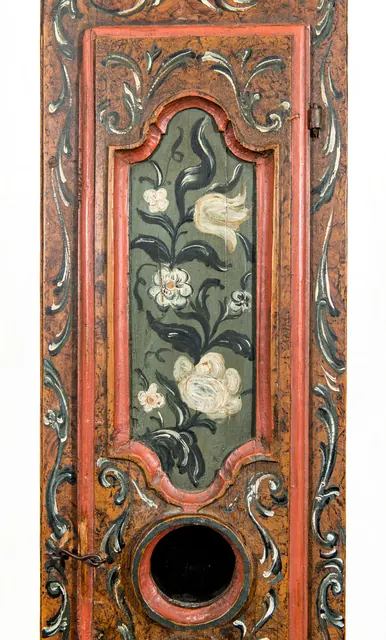
Clocks · 1772
Longcase clock, Sweden, 1772
Skelleftea museum
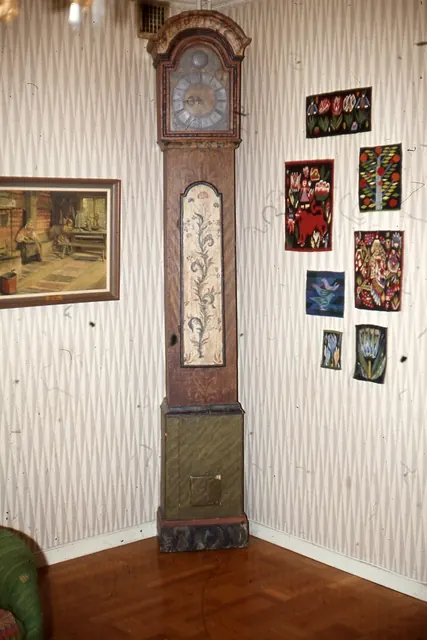
Clocks · 1775
Longcase clock, Sweden, 1775
National Association of Swedish Handicraft Societies
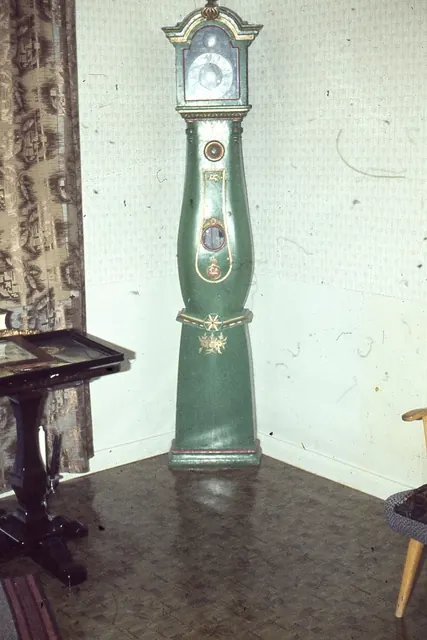
Clocks · 1799
Longcase clock, Sweden, 1799
National Association of Swedish Handicraft Societies
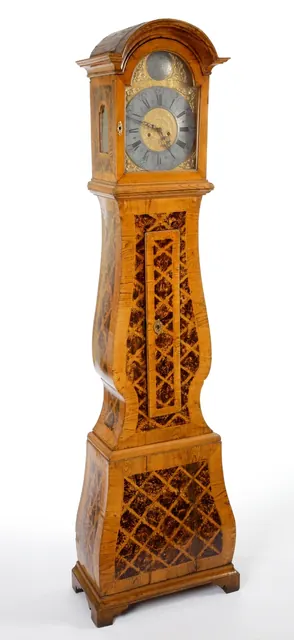
Clocks · 1766
Longcase clock by Sven Fogelberg, Sweden, 1766
Kulturparken Småland
Clocks · 1761
Longcase clock, Sweden, 1761
National Association of Swedish Handicraft Societies