
Wristwatches · Wristwatch
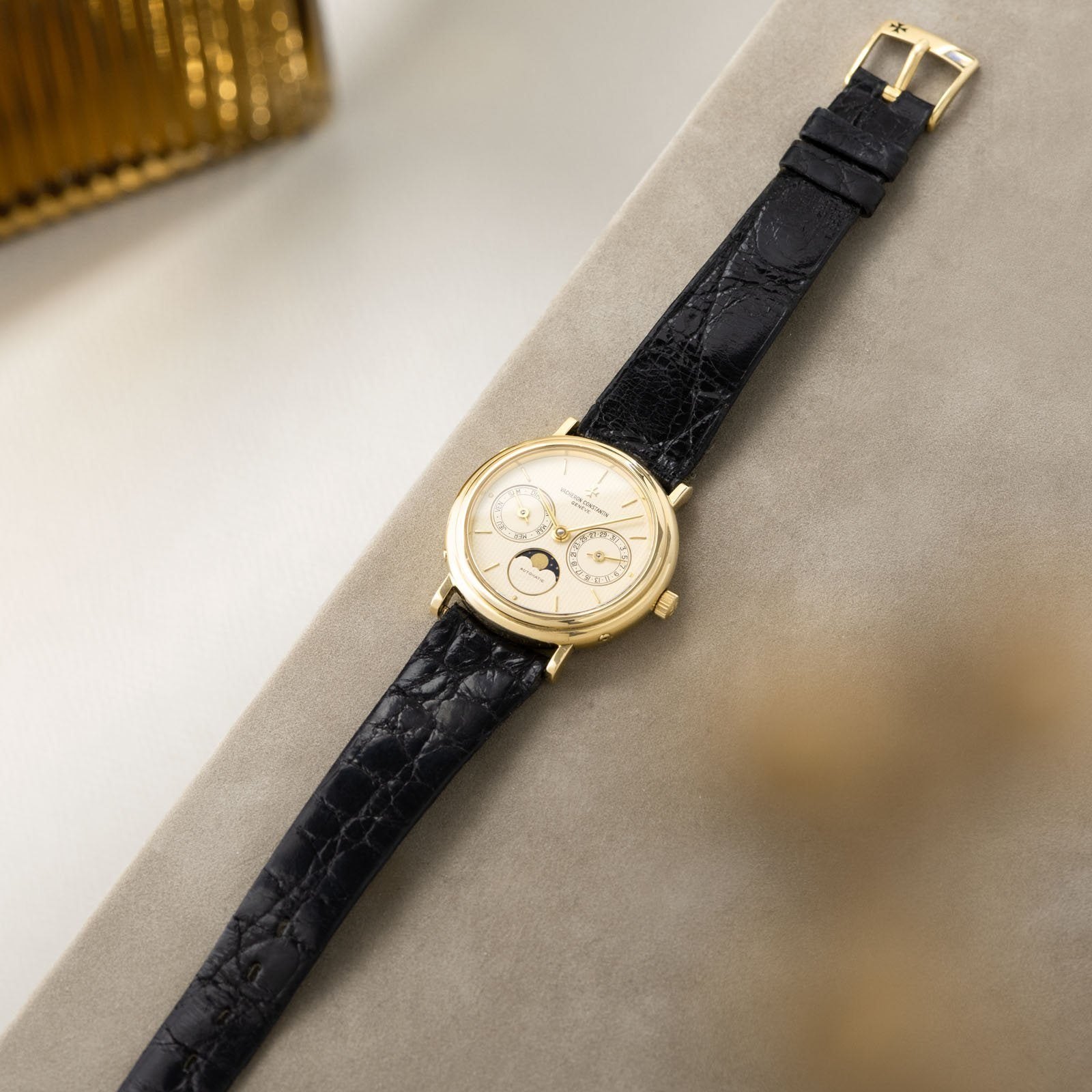
Vacheron Constantin Patrimony Day Date Moonphase Yellow Gold Ref 47009-0003-J, mid 1990s
- Maker / attribution
- Vacheron & Constantin (maker)
- Date
- mid 1990s
- Historical period
- Mechanical Renaissance (1990 – 2010)
- Country of origin
- Switzerland
- Object type
- Wristwatch
- Materials / technique
- yellow gold
- Dimensions
- Case 35 mm
- Stock no.
- W-945
- Credit line
- Dealer listing, Bulang & Sons (W-945)
- Catalogue title (original)
- Vacheron Constantin Patrimony Day Date Moonphase Yellow Gold Ref 47009-0003-J (English)
View the source record (dealer listing) ↗ (opens another website in a new tab)Suggest a correction
Record summary
Catalogued by Bulang & Sons (dealer), Copenhagen (stock number W-945), this is a wristwatch by Vacheron & Constantin, made in Switzerland, dated mid 1990s. The Atlas places it in the Mechanical Renaissance period (1990 – 2010) of its Wristwatches collection. Materials and techniques recorded by the source: yellow gold. Recorded dimensions: Case 35 mm. The record is illustrated with 6 photographs.
Assembled from the source record's structured fields. Dates and attributions are given as the source states them; where a field is missing the Atlas leaves it blank rather than estimating.
Catalogue description
Dealer description — Bulang & Sons
A Patrimony with hobnail dial… We are delighted to offer a watch from one of the most highly esteemed haute horology houses – Vacheron Constantin. This 35mm yellow gold watch features an automatic movement, date and day subdials and a moonphase indicator. The dial has a 'Clous De Paris' hobnail dial in all original and stunning condition. The three o’clock register shows the date, the nine o’clock register the day and the moonphase cut-out is at six o’clock. The dial has applied hour markers and an applied VC Maltese-cross logo. The yellow gold case is in superb condition and features a fixed stepped bezel design. The automatic Vacheron & Constantin calibre 1126 automatic movement has been fully serviced by our watchmaker. This is a very special watch for the discerning collector! The watch comes on an original VC lizard strap that has the original 18kt yellow VC gold buckle. Specifications - Vacheron Constantin Patrimony Day –date moonphase - 35mm 18k yellow gold case - Serial 58xxxx dating to the mid 1990s - 'Clous De Paris' hobnail dial - Day and date sub dials - Moonphase window - VC calibre 1126 automatic movement - Comes on a VC lizard strap with 18kt VC buckle - Fully serviced by our watchmaker - Includes a handmade single leather watch pouch
Historical context
Mechanical Renaissance (1990 – 2010)
Mechanical watches return as cultural objects; independent watchmaking flourishes.
Mechanical watches returned as cultural and luxury objects. Complications, tourbillons and new materials proliferated; independent watchmakers such as George Daniels, F.P. Journe and Philippe Dufour revived artisanal watchmaking; collecting vintage watches became a major field.
Read the period in the timelineMore wristwatches from this periodEarlier: Quartz Revolution
Atlas type guide
Calendar, moon-phase and perpetual calendar watches
Calendar complications range from a simple date to the perpetual calendar, which automatically allows for months of different lengths and leap years until 2100. Pocket watches with perpetual calendars were made in the eighteenth and nineteenth centuries; Patek Philippe made the first perpetual calendar wristwatch in 1925, and series production followed in 1941. The annual calendar (Patek Philippe, 1996) needs correction only once a year.
Moon-phase displays use a disc with two moons and 59 teeth advanced daily, approximating the 29.5-day lunation; more precise trains reduce the error to one day in over a century.
What to look for
- Apertures or subsidiary dials for day, date, month and leap year.
- Moon disc under a 'bosom' shaped aperture.
- Recessed correctors on the case band for setting the calendar.
Dating clues
- Triple-date wristwatches: popular c. 1940–1955.
- Perpetual calendar wristwatches: from 1925 (unique) and 1941 (series).
General guidance written by the Atlas editors about this kind of object. It is not a statement about this particular piece; for that, rely on the source record above and on physical examination.
Related records
Movements & Components · 1800–1899
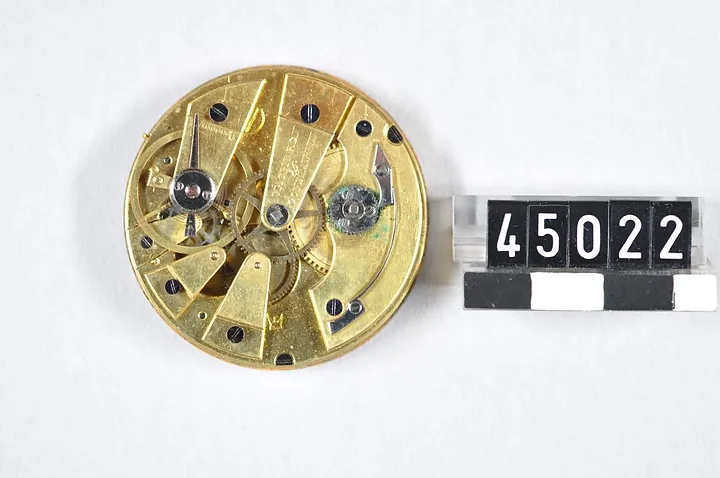
Watch movement by Vacheron & Constantin, 1800–1899
Swedish National Museum of Science and Technology
Instruments · c. 1940
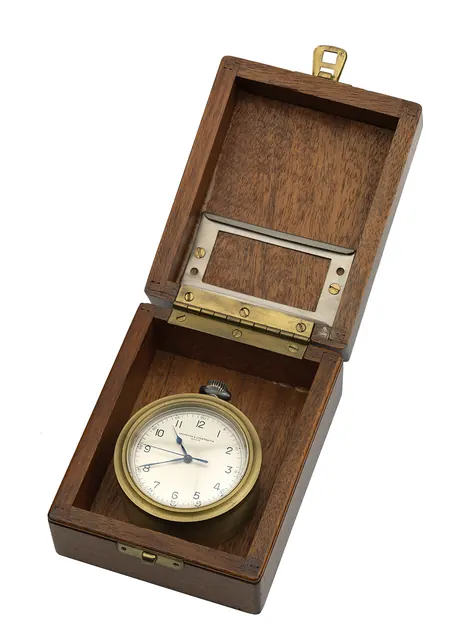
Deck watch no. 54965 by Vacheron & Constantin
Royal Museums Greenwich
Instruments · c. 1943
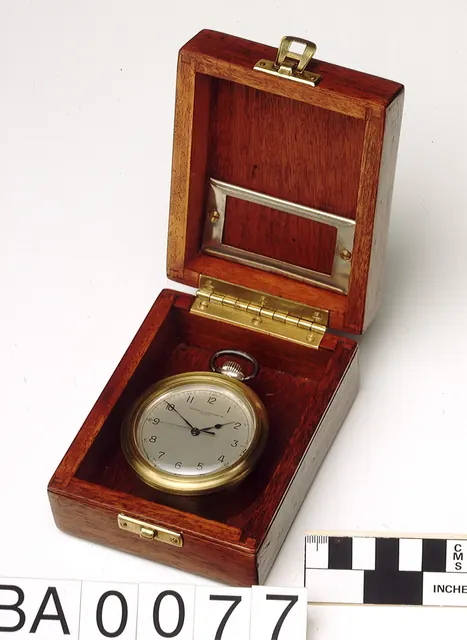
Deck watch no. 54847 by Vacheron & Constantin
Royal Museums Greenwich
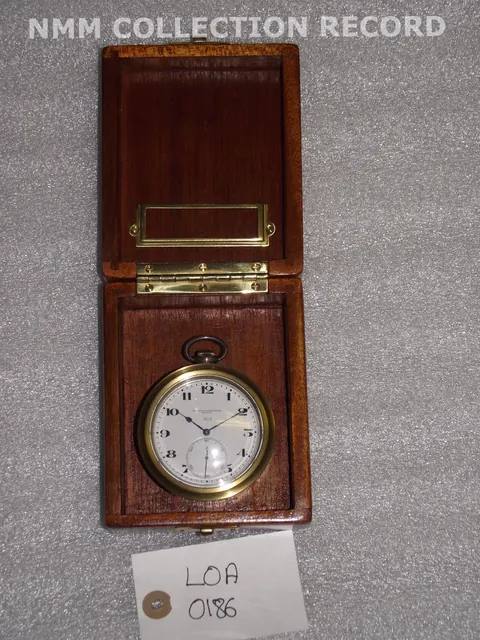
Instruments · 1930
Deck watch no. 9612 by Vacheron & Constantin
Royal Museums Greenwich

Wristwatches · 2008
Wristwatch by Breitling?, 2008
Museum Rotterdam

Wristwatches · c. 1990s
Audemars Piguet Bamboo, c. 1990s
Antiquorum auction archive, Geneva

Wristwatches · c. 1990
Audemars Piguet Huitieme Perpetual Calendar, ref. 25696PT, c. 1990
Antiquorum auction archive, Geneva

Wristwatches · c. 1990
Breitling Chronomat, ref. b13050.1, c. 1990
Antiquorum auction archive, Geneva