
Wristwatches · Wristwatch
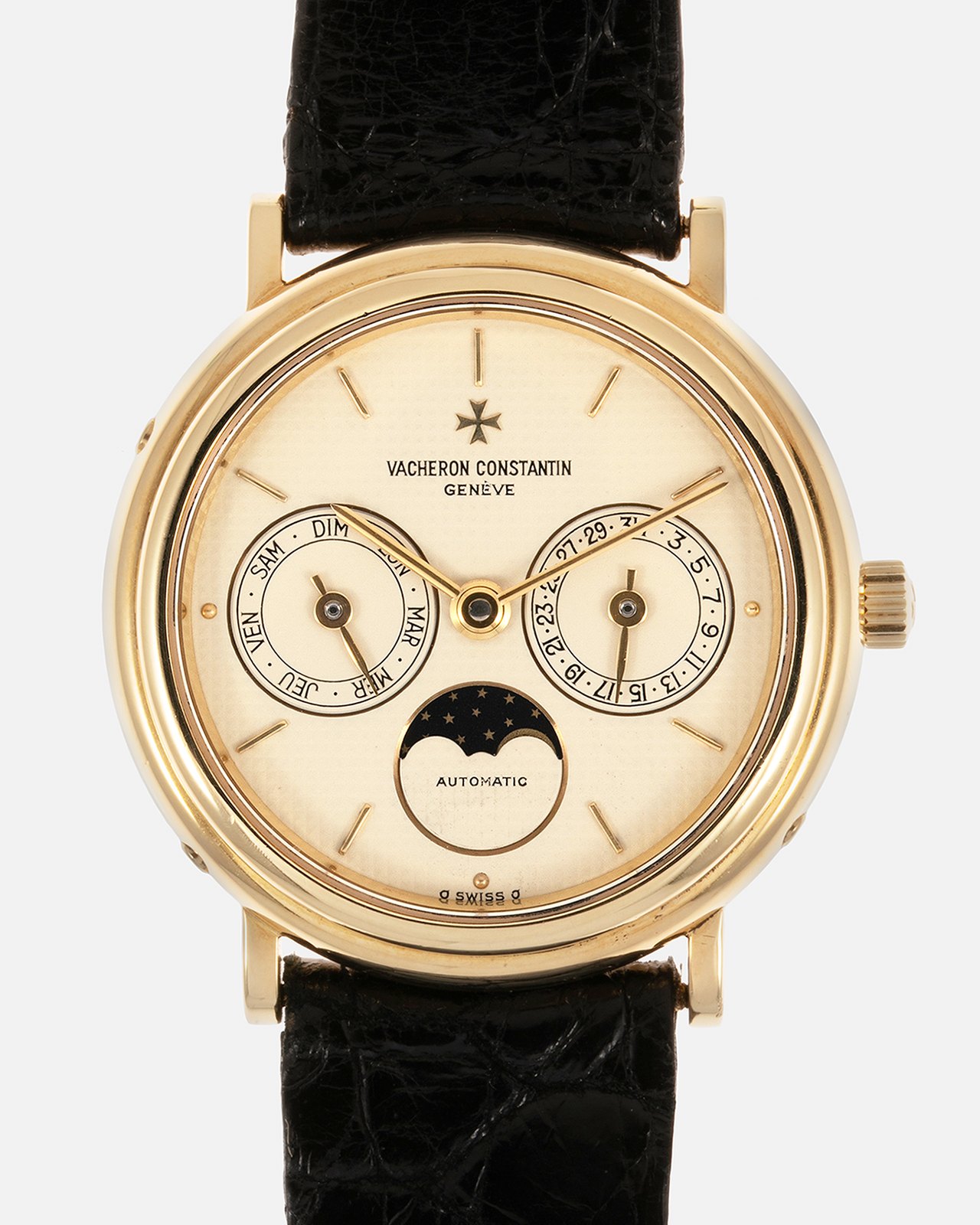
Vacheron Constantin Day-Date Moonphase Ref. 46009, 1990s
- Maker / attribution
- Vacheron Constantin (maker)
- Date
- 1990s
- Historical period
- Mechanical Renaissance (1990 – 2010)
- Country of origin
- Switzerland
- Object type
- Wristwatch
- Dimensions
- Case 34 mm
- Stock no.
- Product 6943733907543
- Credit line
- Dealer listing, S.Song Watches (product 6943733907543)
- Catalogue title (original)
- Vacheron Constantin Day-Date Moonphase Ref. 46009 (English)
View the source record (dealer listing) ↗ (opens another website in a new tab)Suggest a correction
Record summary
Catalogued by S.Song Watches (dealer), Seattle (stock number Product 6943733907543), this is a wristwatch by Vacheron Constantin, made in Switzerland, dated 1990s. The Atlas places it in the Mechanical Renaissance period (1990 – 2010) of its Wristwatches collection. Recorded dimensions: Case 34 mm. The record is illustrated with 6 photographs.
Assembled from the source record's structured fields. Dates and attributions are given as the source states them; where a field is missing the Atlas leaves it blank rather than estimating.
Catalogue description
Dealer description — S.Song Watches
Beloved by collectors for their classical approach to watchmaking, Vacheron Constantin is the most traditional of the three Holy Trinity watchmakers thanks to their old-time aesthetic, heritage-inspired design, and traditionalist view of mechanics. With this, some of Vacheron's timepieces offer a wonderful view of the timepieces that came generations before the modern watches of today and the Ref. 46009 Day-Date Moonphase I have here today is one such fine example. Starting with the Ref. 46009’s understated, 34mm 18-carat yellow gold case, I personally find it quite well-proportioned. While I understand there may be a few who argue that the case size here is somewhat on the diminutive side, its slightly elongated straight lugs ensure that it remains wearable by today’s modern sizing standards. Featuring a beautiful stepped bezel design, this perfectly round case is interrupted solely by a discreet small crown and three adjustment pushers. Following the case design, the Ref. 46009's dial also exhibits a well-balanced format, thanks to its symmetrical dial layout. Positioned at 3 o'clock, you will find the date indication register, while the day indicator is situated at 9 o'clock, and a moon phase indicator graces the 6 o'clock position. Upon closer inspection, you will also find that the dial is adorned with a discreet Clous de Paris guilloché, which imparts an elegant tapisserie -like motif to the off-white colored dial's surface. Adding to its charm, the dial also features slender gold baton-style hands and appliqué baton indexes serving as hour markers, seamlessly complementing the overall balanced case design. A splendid watch on the outside, the Ref. 46009 is an alluring piece of work on the inside too. While fitted with a solid caseback, it houses Vacheron Constantin’s self-winding Cal. 1126 QS, a workhorse movement celebrated for its overall reliability, durability, and precision. As a complete ensemble, the Vacheron Constantin Ref. 46009 offers an incredibly delightful wearing experience. Its unassuming 34mm case size lends it an understated quality, allowing it to remain inconspicuous on the wrist without drawing too much undue attention. For me, the pinnacle of luxury lies in this discreet demeanor – a sense of opulence that doesn't need to flaunt itself but is appreciated by those who recognize it. That’s just the way I like it, but I digress.
Historical context
Mechanical Renaissance (1990 – 2010)
Mechanical watches return as cultural objects; independent watchmaking flourishes.
Mechanical watches returned as cultural and luxury objects. Complications, tourbillons and new materials proliferated; independent watchmakers such as George Daniels, F.P. Journe and Philippe Dufour revived artisanal watchmaking; collecting vintage watches became a major field.
Read the period in the timelineMore wristwatches from this periodEarlier: Quartz Revolution
Atlas type guide
Calendar, moon-phase and perpetual calendar watches
Calendar complications range from a simple date to the perpetual calendar, which automatically allows for months of different lengths and leap years until 2100. Pocket watches with perpetual calendars were made in the eighteenth and nineteenth centuries; Patek Philippe made the first perpetual calendar wristwatch in 1925, and series production followed in 1941. The annual calendar (Patek Philippe, 1996) needs correction only once a year.
Moon-phase displays use a disc with two moons and 59 teeth advanced daily, approximating the 29.5-day lunation; more precise trains reduce the error to one day in over a century.
What to look for
- Apertures or subsidiary dials for day, date, month and leap year.
- Moon disc under a 'bosom' shaped aperture.
- Recessed correctors on the case band for setting the calendar.
Dating clues
- Triple-date wristwatches: popular c. 1940–1955.
- Perpetual calendar wristwatches: from 1925 (unique) and 1941 (series).
General guidance written by the Atlas editors about this kind of object. It is not a statement about this particular piece; for that, rely on the source record above and on physical examination.
Related records
Pocket Watches · c. 1896
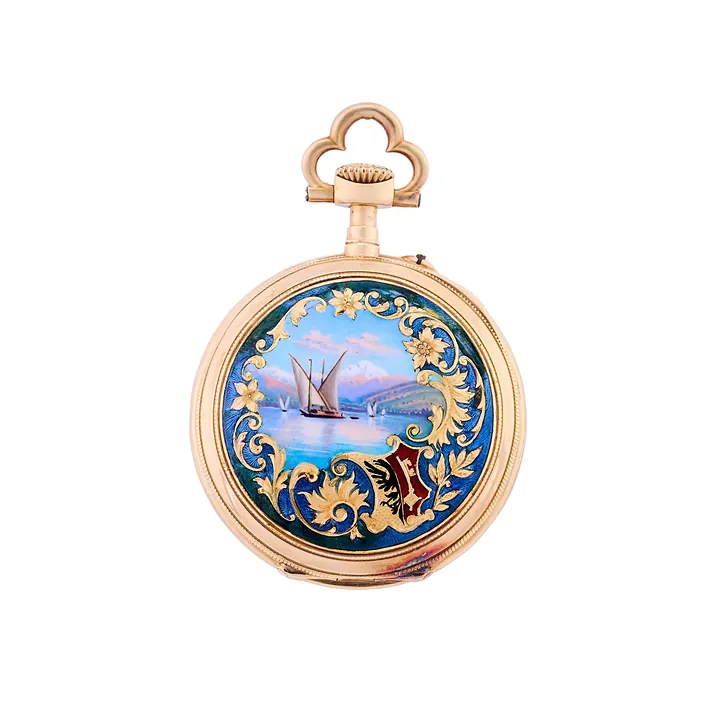
Vacheron Constantin “grand TIR de L’exposition Nationale, Genève 1896, c. 1896
Antiquorum auction archive, Geneva
Pocket Watches · c. 1940
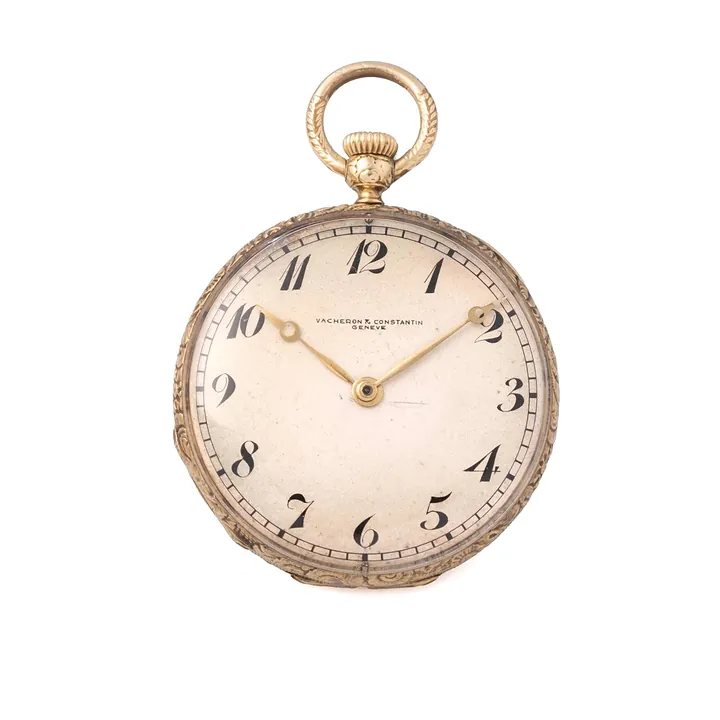
Vacheron Constantin pocket watch, ref. 345, c. 1940
Antiquorum auction archive, Geneva
Pocket Watches · c. 1945
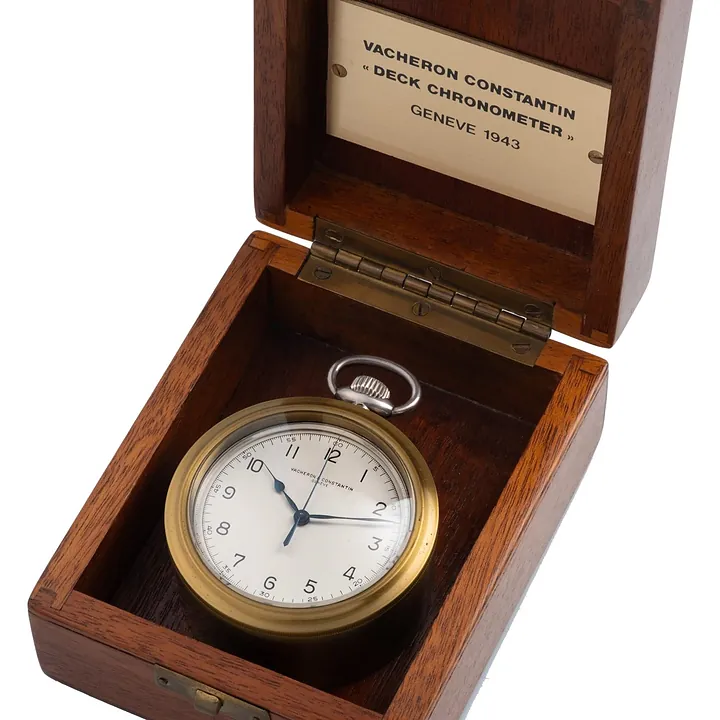
Vacheron Constantin pocket chronometer, c. 1945
Antiquorum auction archive, Geneva
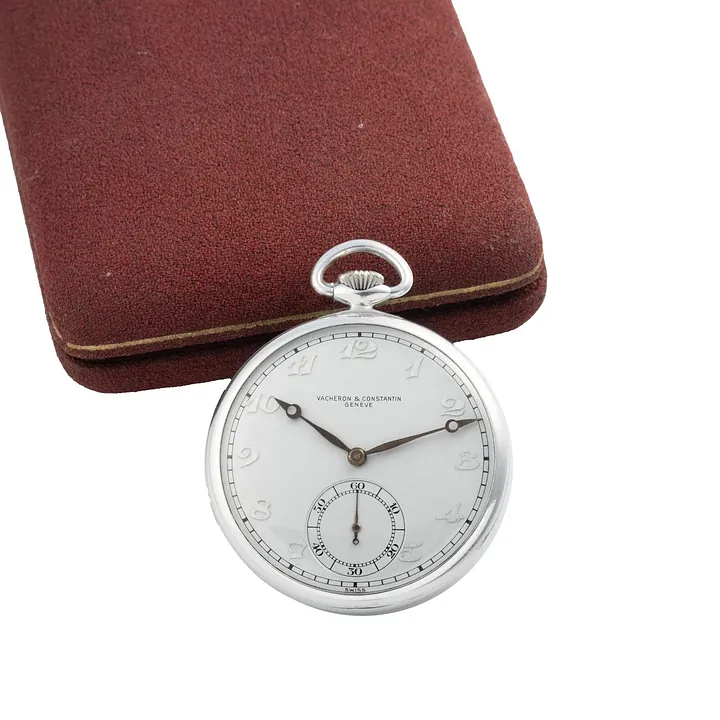
Pocket Watches · c. 1945
Vacheron Constantin watch, c. 1945
Antiquorum auction archive, Geneva

Wristwatches · 2008
Wristwatch by Breitling?, 2008
Museum Rotterdam

Wristwatches · c. 1990s
Audemars Piguet Bamboo, c. 1990s
Antiquorum auction archive, Geneva

Wristwatches · c. 1990
Audemars Piguet Huitieme Perpetual Calendar, ref. 25696PT, c. 1990
Antiquorum auction archive, Geneva

Wristwatches · c. 1990
Breitling Chronomat, ref. b13050.1, c. 1990
Antiquorum auction archive, Geneva