
Wristwatches · Wristwatch
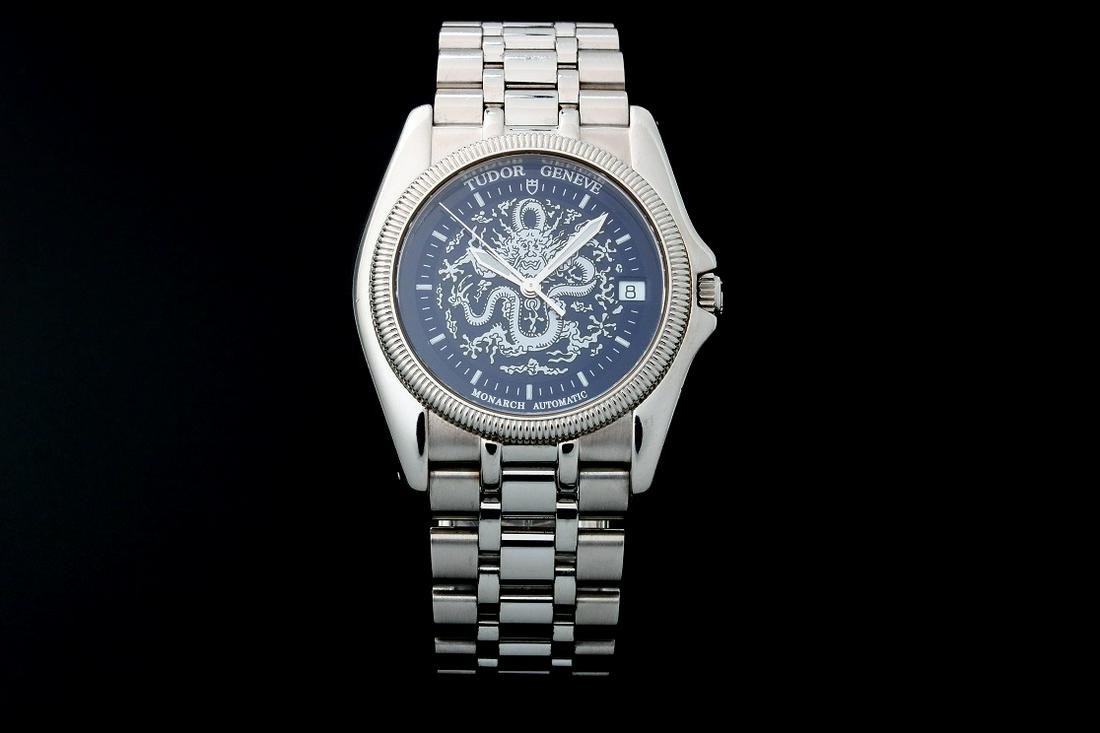
Tudor Dragon Monarch Date Watch 38630 Unusual, c. 1990
- Maker / attribution
- TUDOR (maker)
- Date
- c. 1990
- Historical period
- Mechanical Renaissance (1990 – 2010)
- Country of origin
- Unrecorded in source
- Object type
- Wristwatch
- Materials / technique
- sapphire, stainless steel
- Auction house
- LiveAuctioneers auction archive
- Lot
- Item 76473760
- Credit line
- Auction lot record: lot 3229, Fine Vintage & Modern Timepieces, Baer & Bosch Auctioneers Inc (2019), via LiveAuctioneers
- Catalogue title (original)
- Tudor Dragon Monarch Date Watch 38630 Unusual (English)
View the source record (auction lot) ↗ (opens another website in a new tab)Suggest a correction
Record summary
Catalogued by LiveAuctioneers auction archive (lot Item 76473760), this is a wristwatch by TUDOR, dated c. 1990. The Atlas places it in the Mechanical Renaissance period (1990 – 2010) of its Wristwatches collection. Materials and techniques recorded by the source: sapphire, stainless steel. The record is illustrated with 4 photographs.
Assembled from the source record's structured fields. Dates and attributions are given as the source states them; where a field is missing the Atlas leaves it blank rather than estimating.
Catalogue description
Lot description — Baer & Bosch Auctioneers Inc
Vintage stainless steel men`s Tudor Monarch wristwatch with date, ref #38630, circa 1990`s. Blue Tudor Geneve dial with a grey Dragon design, luminous baton hour markers. Coin edge bezel. Sapphire crystal. Rolex screw down crown. Swiss made, automatic self winding movement. Comes on a stainless steel Tudor Jubilee bracelet. Accompanied by a fitted Tudor watch box, Tudor warranty papers (no longer valid), red Tudor hang tang with matching reference and serial numbers, and a Tudor manual. Approximate diameter is 36mm. Has superficial scratches due to normal wear and age. Overall condition is good. Running at the time of inspection, however not checked for accuracy nor water resistance/proofness. An overhaul is always recommended for used watches. In 1905, Hans Wilsdorf and his brother-in-law, Alfred Davis, founded their company Wilsdorf & Davis Ltd. In 1908, they registered Rolex and became Rolex Watch Co Ltd in 1915. After moving their headquarters to Geneva, Switzerland, the company name was changed to Montres Rolex S.A. in 1920. Rolex introduced the first waterproof Rolex Oyster in 1926. The following year, Mercedes Gleitze swam for 10 hours across the English Channel wearing a Rolex Oyster. Rolex invented the first self-winding automatic movement with rotor in 1931. Rolex watches became popular in the fields of aviation, motor racing, sports, and expeditions. Some notable models are the Rolex Datejust, the Rolex Explorer, the Rolex Submariner, the Rolex GMT-Master, the Rolex Day-Date (aka “President”), the Rolex Milgauss, the Rolex Lady Datejust, the Rolex Deep Sea Special, the Rolex Cosmograph Daytona, the Rolex Sea-Dweller, the Rolex Explorer II, the Rolex Sea-Dweller 4000, the Rolex Pearlmaster (aka “Masterpiece”), the Rolex Yacht-Master, the Rolex Yacht-Master II, the Rolex Deepsea, the Rolex Sky-Dweller, the Rolex Air-King, the Rolex Oyster Perpetual, and the Rolex Cellini. Montres Tudor SA designed, manufactured, and marketed Tudor brand watches since March 6, 1946. Hans Wilsdorf, the founder of Rolex, created the Tudor Watch Company line to offer a more affordable watch with the same reliability and dependability of a Rolex. Tudor’s current line include the Tudor Black Bay, Tudor North Flag, Tudor Fastrider Black Shield, Tudor Pelagos, Tudor Glamour, Tudor Heritage Chrono, Tudor Heritage Ranger, Tudor 1926, and Tudor Classic.
Historical context
Mechanical Renaissance (1990 – 2010)
Mechanical watches return as cultural objects; independent watchmaking flourishes.
Mechanical watches returned as cultural and luxury objects. Complications, tourbillons and new materials proliferated; independent watchmakers such as George Daniels, F.P. Journe and Philippe Dufour revived artisanal watchmaking; collecting vintage watches became a major field.
Read the period in the timelineMore wristwatches from this periodEarlier: Quartz Revolution
Atlas type guide
Wristwatches
Bracelet watches were worn by women from the early nineteenth century — Breguet made one for Caroline Murat, Queen of Naples, in 1810–12 — but the wristwatch only became a man's instrument with military use and aviation in the early twentieth century. Between the World Wars it overtook the pocket watch; the 1920s and 1930s brought rectangular Art Deco cases, water-resistant cases and the first automatic winding systems.
After 1945 the wristwatch became a carrier of identity — dress watches, sports and dive watches, chronographs, calendars — produced by Swiss, American, Japanese, German, Soviet and Chinese industries. The quartz revolution after 1969 and the mechanical renaissance since the 1990s, including the rise of independent watchmakers, complete the story.
What to look for
- The reference number (between the lugs or inside the case back) and serial number, the starting point for dating.
- The calibre: its maker and number are often stamped under the dial or on the bridge.
- Originality of dial, hands and crown — refinished ('redial') dials are common.
- Case material marks: 18K/750, 14K/585, stainless steel, gold-filled, plated.
Dating clues
- Wire-lug cases: before c. 1925.
- Water-resistant screw-down cases: from 1926.
- Quartz movements: from 1969; sapphire crystals widespread after c. 1980.
General guidance written by the Atlas editors about this kind of object. It is not a statement about this particular piece; for that, rely on the source record above and on physical examination.
Related records
Wristwatches · c. 1998
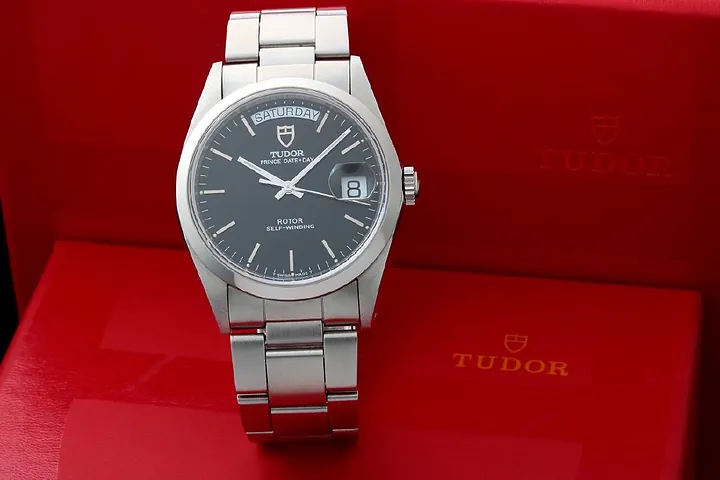
Stainless Steel Men`s Tudor Prince Date Day Watch, c. 1998
LiveAuctioneers auction archive
Wristwatches · c. 1980
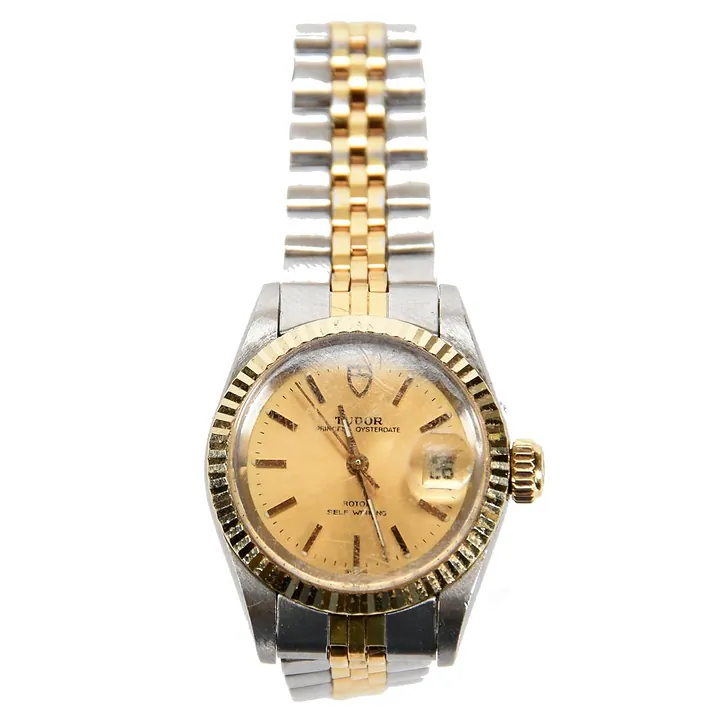
Ladies Vintage Tudor Wristwatch by Rolex, c. 1980
LiveAuctioneers auction archive
Wristwatches · 1940s
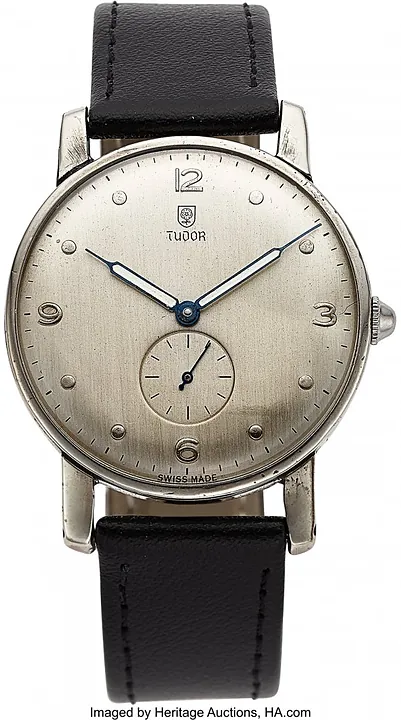
Tudor Stainless Steel Manual Wind Dress Wristwat, 1940s
LiveAuctioneers auction archive
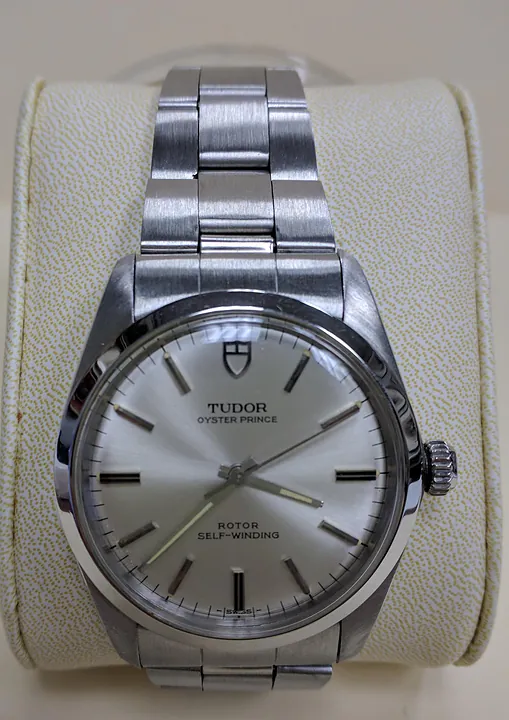
Wristwatches · c. 1965
Tudor Oyster Prince wristwatch, c. 1965
LiveAuctioneers auction archive
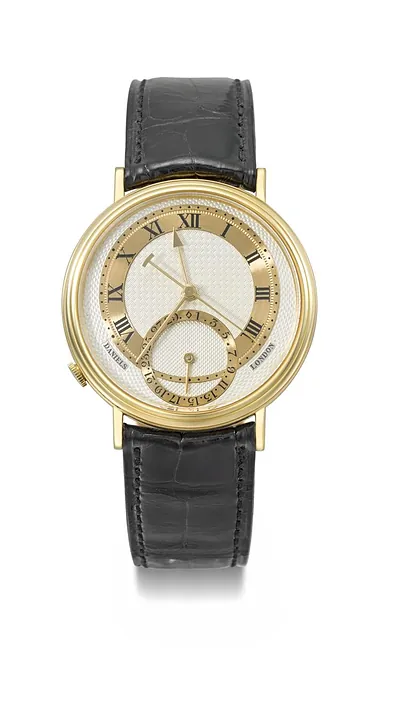
Wristwatches · 1999
'Millennium' co-axial wristwatch by George Daniels and Omega, England, 1999
Science Museum Group, London

Wristwatches · 2008
Wristwatch by Breitling?, 2008
Museum Rotterdam
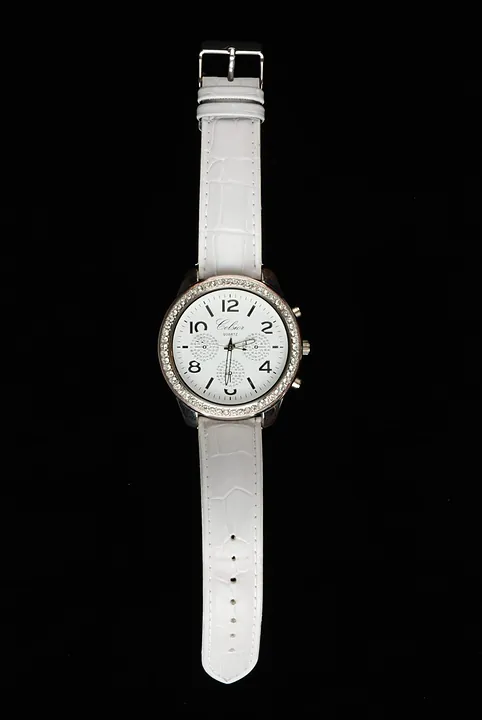
Wristwatches · 2008
Wristwatch by Celsior Quartz, 2008
Museum Rotterdam
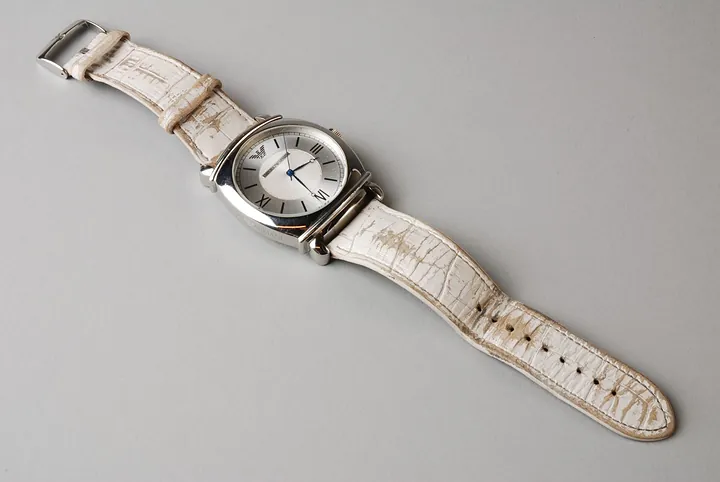
Wristwatches · 2008
Wristwatch possibly by Emporio Armani, 2008
Museum Rotterdam