
Wristwatches · Wristwatch
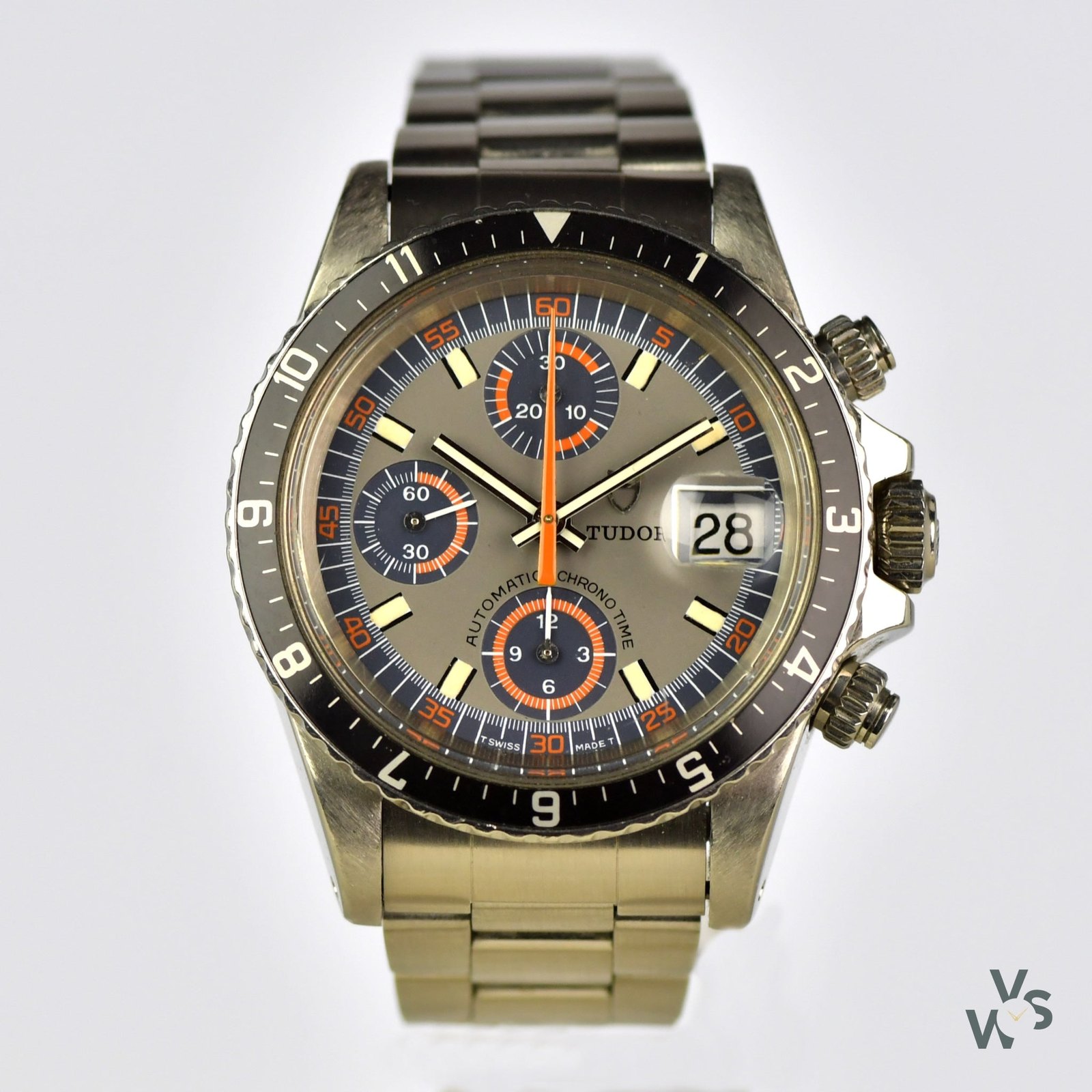
Tudor Automatic Chrono Time, Big Block 'Exotic' Monte Carlo Dial, Square Guards, ref. 94210, circa 1978
- Maker / attribution
- Tudor (maker)
- Date
- c. 1978
- Historical period
- Quartz Revolution (1969 – 1990)
- Country of origin
- Switzerland
- Object type
- Wristwatch
- Dimensions
- Case 40 mm
- Stock no.
- vws1819
- Credit line
- Dealer listing, Vintage Watch Specialist (vws1819)
- Catalogue title (original)
- Tudor Automatic Chrono Time - Big Block 'Exotic' Monte Carlo Dial - Square Guards - c.1978 - Reference 94210 ***NOW SOLD*** (English)
View the source record (dealer listing) ↗ (opens another website in a new tab)Suggest a correction
Record summary
Catalogued by Vintage Watch Specialist (dealer), United Kingdom (stock number vws1819), this is a wristwatch by Tudor, made in Switzerland, dated c. 1978. The Atlas places it in the Quartz Revolution period (1969 – 1990) of its Wristwatches collection. Recorded dimensions: Case 40 mm. The record is illustrated with 6 photographs.
Assembled from the source record's structured fields. Dates and attributions are given as the source states them; where a field is missing the Atlas leaves it blank rather than estimating.
Catalogue description
Dealer description — Vintage Watch Specialist
A circa. 1978, Vintage Tudor 94210, Big Block 'Exotic' Square Guards Automatic Chrono Time in Excellent Condition. Inside caseback Reference 9420 Caliber: Base, Valjoux 7750 with Original Box and Booklets. Rolex Oyster Bracelet, Case, and Crown also Marked Rolex. We Are Sorry But This Watch Is Now Sold - If However You Are Looking To Buy Or Sell Something Similar Then Please Email Sales@Vintagewatchspecialist.Com Or Whatsapp/Call +44 7831 454658. Thanks The Tudor trademark was registered in 1926 by Swiss watchmaking company “Veuve de Philippe Hüther” on behalf of Hans Wilsdorf, the founder of Rolex watches. In 1936, Wilsdorf took it over himself and went on to found the company Montres TUDOR SA in 1946. The year 1976 saw the launch of the third family of TUDOR chronographs, known as “Big Block” in the watch collection milieu, and the introduction of an important innovation - with the Prince Oysterdate models, the brand presented its first chronographs equipped with a self-winding mechanical movement. TUDOR offered immediately recognisable chronographs with excellent technical qualities. What’s On Offer This beautiful and rather rare TUDOR is equipped with a unique alternative square-shaped type of protection for the winding crown, a specific feature known among collectors as 'Square Guards' and which definitely add to the already robust proportions. The case, which is in excellent order with no notable marks or blemishes, has retained the general lines of previous TUDOR families, however, it is thicker in order to accommodate the rotor of the self-winding movement - this is where the nickname 'Big Block' transcends from. The rarest of the dial variants (grey) shown here is affectionately nicknamed 'Exotic' or the Monte Carlo. Grey with blue subdials and orange accents, it is reminiscent of a colour combination made famous by the TUDOR Oysterdate 'Montecarlo'. In another nod to previous TUDOR chronograph dials, the hour markers are painted and remain in excellent condition along with the rest of the dial furniture with the threesome of counters towards the left of the dial, and the date aperture to 3 o’clock, balancing the dial out. These dials were known to suffer from damage and it is rare to find one like ours in such incredibly good condition! The 12-hour bi-directional bezel insert which is a rarer feature than the alternative steel engraved bezel, is also in excellent shape and completes a really stunning watch. The watch is paired with its original Rolex signed bracelet (ref; 98360) which is in great condition with only minor signs of wear - certainly nothing obvious to the naked eye. A very collectible package offered for sale, the substantial proportions, robust design, and sought-after colourway not to mention its excellent condition, make this watch a true gem. Additional information Made from Case: Stainless Steel Dial: Grey Monte Carlo, Exotic Crystal: Plexiglass Bracelet: Steel Rolex Oyster Bracelet Technical specifications Winding: Automatic Movement Type: Mechanical Caliber: Valjoux 7750 Jewels: 17 Waterproof: When New Power reserve: 46hrs Purchase Details Condition: Excellent - 9.5/10 Model Reference: 94210 Date of issue: c.1978 Guarantee: 12 Months by VWS Dimensions Width: 40mm Lug width (without crown): 20mm Lug height: (lug to lug) 47mm Wrist size: Full-Size Bracelet (13 links)
Historical context
Quartz Revolution (1969 – 1990)
Seiko's Astron begins mass quartz timekeeping; traditional industries contract sharply.
Quartz and digital watches transformed the market after 1969. Swiss employment collapsed, Japanese and Hong Kong production soared, and the Swatch (1983) helped the Swiss industry recover; mechanical watches survived as luxury goods.
Read the period in the timelineMore wristwatches from this periodEarlier: Modern Mechanical Horology
Atlas type guide
Automatic (self-winding) watches
Self-winding watches use the wearer's motion to wind the mainspring. Abraham-Louis Perrelet and Breguet made 'perpétuelle' pocket watches with oscillating weights in the late eighteenth century, but the principle only became practical in the wristwatch. John Harwood patented a bumper automatic in 1923; Rolex's Perpetual rotor (1931) winding in one direction, and later bidirectional rotors (Eterna, Felsa Bidynator), established the modern form. Micro-rotors (Universal Genève, Buren) and peripheral rotors made automatic watches thinner.
What to look for
- A semicircular rotor turning 360° over the movement, or a 'bumper' weight that rebounds between springs.
- 'Automatic', 'Perpetual' or 'Self-winding' on the dial.
- A sealed screw-back case, since automatic watches are wound less often by the crown.
Dating clues
- Bumper automatics: 1923–c. 1955.
- Full rotors: from 1931 (Rolex); widespread after c. 1950.
- Micro-rotors: from 1954–1958.
General guidance written by the Atlas editors about this kind of object. It is not a statement about this particular piece; for that, rely on the source record above and on physical examination.
Related records
Wristwatches · c. 1973
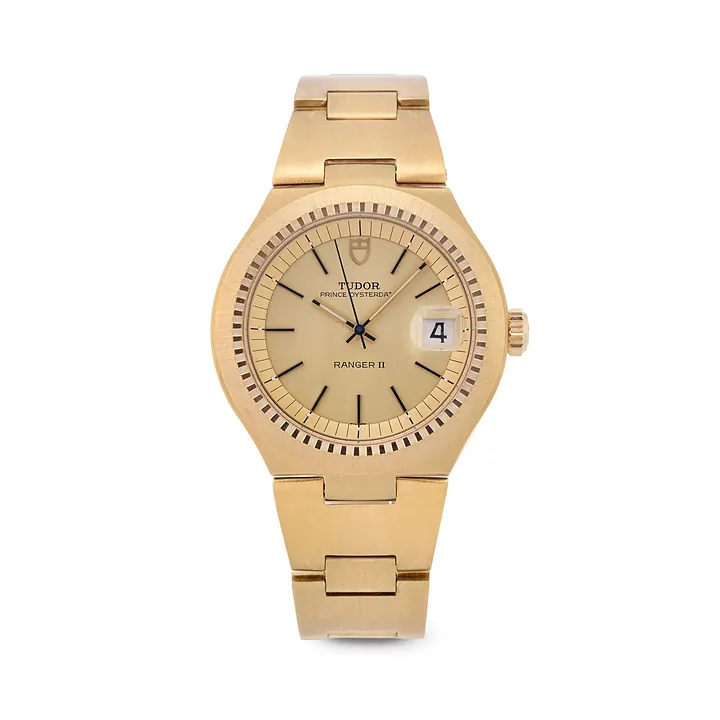
Tudor Prince Oysterdate Ranger II, ref. 9101/1, c. 1973
Antiquorum auction archive, Geneva
Wristwatches · c. 1973
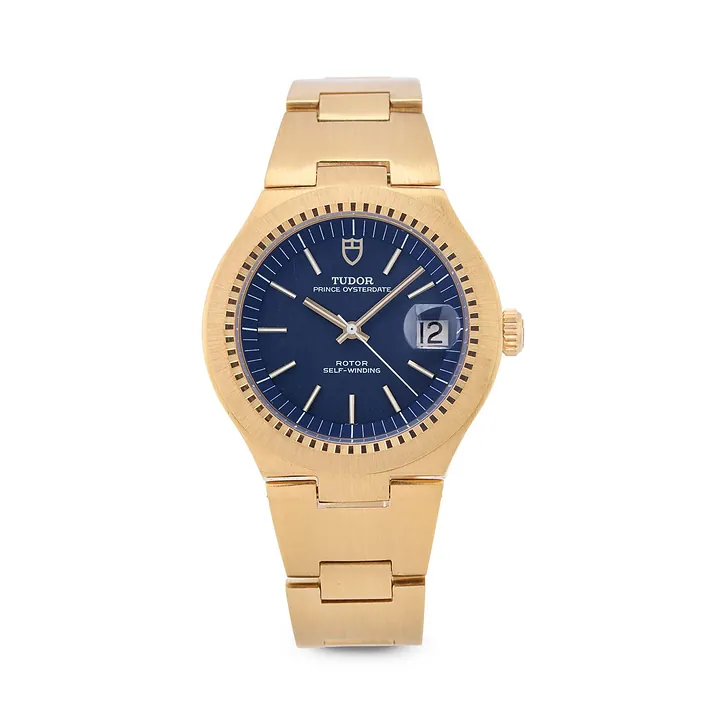
Tudor Prince Oysterdate, ref. 9101/1, c. 1973 (Antiquorum Lot 389-114)
Antiquorum auction archive, Geneva
Wristwatches · c. 1973
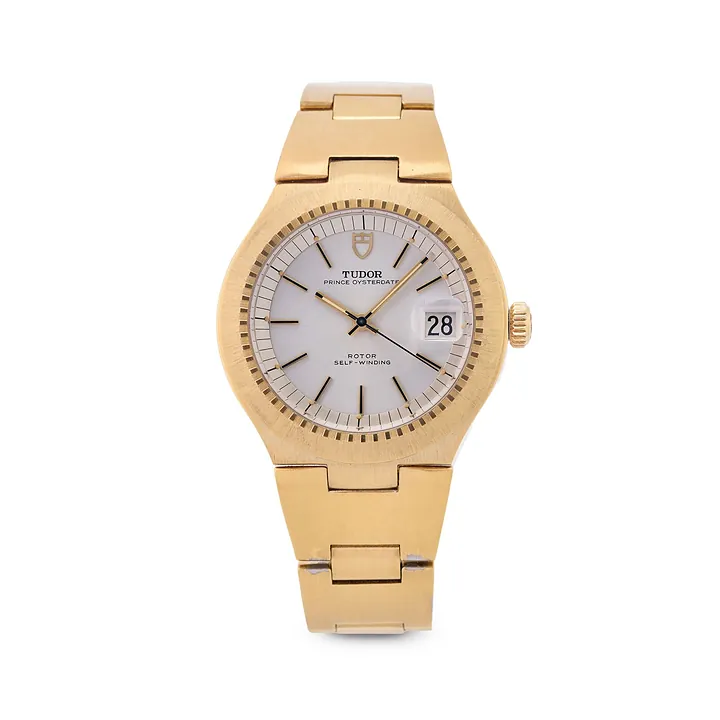
Tudor Prince Oysterdate, ref. 9101/1, c. 1973 (Antiquorum Lot 389-115)
Antiquorum auction archive, Geneva
Wristwatches · c. 1974
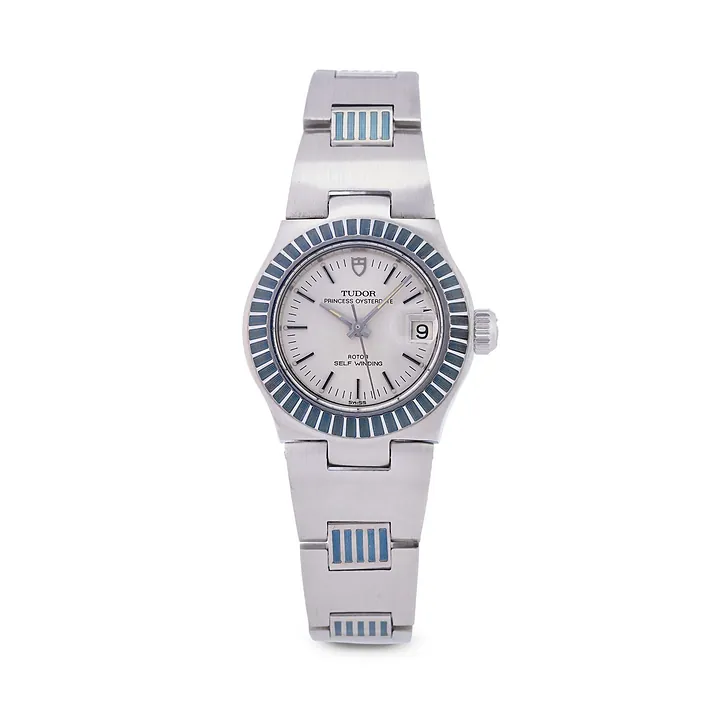
Tudor Princess Oysterdate, ref. 9311/0, c. 1974
Antiquorum auction archive, Geneva

Wristwatches · 1970
Wristwatch by Heno, Switzerland, 1970
Museum Rotterdam

Wristwatches · 1960–1986
'Tri-Compax' calendar chronograph wristwatch in gold case, by Universal, Geneva, Switzerland, 1960–1986.
Science Museum Group, London

Wristwatches · 1969–1970
Beta 21 Quartz wristwatch movement, made in Switzerland, 1970.
Science Museum Group, London

Wristwatches · c. 1969
Omega Speedmaster Moonwatch, ref. 145022-69st, c. 1969
Antiquorum auction archive, Geneva