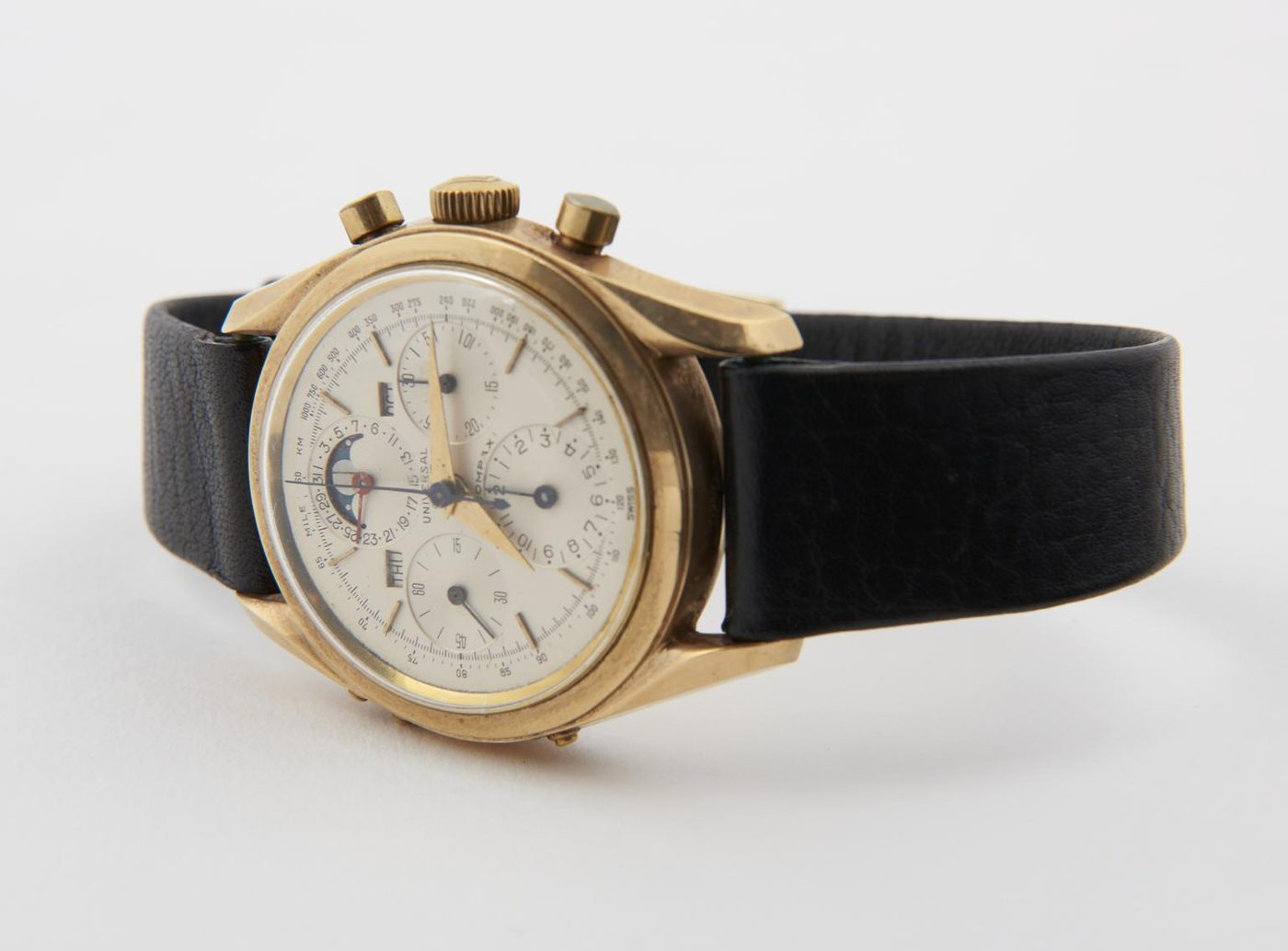
Wristwatches · Wrist-watch; calendar watch
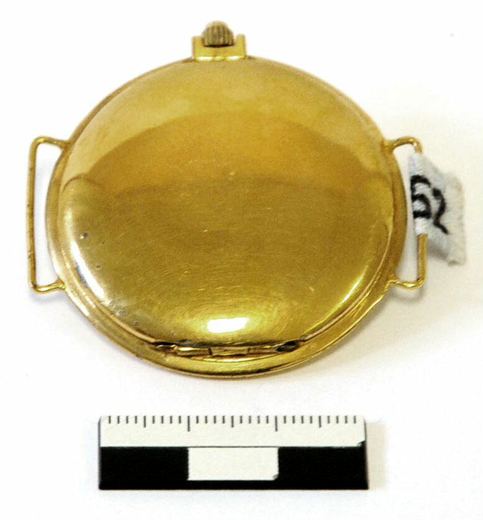
'Tri-Compax' calendar chronograph wristwatch in gold case, by Universal, Geneva, Switzerland, 1960-1986.
- Maker / attribution
- Universal (maker) (maker)
- Date
- 1960-1986
- Historical period
- Quartz Revolution (1969 – 1990)
- Country of origin
- Switzerland
- Place
- Geneva, Switzerland, Geneva
- Object type
- Wrist-watch; calendar watch
- Dimensions
- overall: 12 mm x 226 mm x 37 mm, .05kg
- Holding institution
- Science Museum Group, London
- Accession / object no.
- 1986-91
- Credit line
- Walter, D.
- Catalogue title (original)
- Universal 'Tri-Compax' chronographic wrist watch
Record summary
Held and catalogued by Science Museum Group, London (object number 1986-91), this is a wrist-watch; calendar watch by Universal (maker), made in Geneva, Switzerland, Geneva, dated 1960-1986. The Atlas places it in the Quartz Revolution period (1969 – 1990) of its Wristwatches collection. Recorded dimensions: overall: 12 mm x 226 mm x 37 mm, .05kg. The record is illustrated with 1 photograph.
Assembled from the source record's structured fields. Dates and attributions are given as the source states them; where a field is missing the Atlas leaves it blank rather than estimating.
Catalogue description
The source record does not include a narrative description. The structured fields above are reproduced from it.
Inscriptions & marks
; ;
Historical context
Quartz Revolution (1969 – 1990)
Seiko's Astron begins mass quartz timekeeping; traditional industries contract sharply.
Quartz and digital watches transformed the market after 1969. Swiss employment collapsed, Japanese and Hong Kong production soared, and the Swatch (1983) helped the Swiss industry recover; mechanical watches survived as luxury goods.
Read the period in the timelineMore wristwatches from this periodEarlier: Modern Mechanical Horology
Atlas type guide
Calendar, moon-phase and perpetual calendar watches
Calendar complications range from a simple date to the perpetual calendar, which automatically allows for months of different lengths and leap years until 2100. Pocket watches with perpetual calendars were made in the eighteenth and nineteenth centuries; Patek Philippe made the first perpetual calendar wristwatch in 1925, and series production followed in 1941. The annual calendar (Patek Philippe, 1996) needs correction only once a year.
Moon-phase displays use a disc with two moons and 59 teeth advanced daily, approximating the 29.5-day lunation; more precise trains reduce the error to one day in over a century.
What to look for
- Apertures or subsidiary dials for day, date, month and leap year.
- Moon disc under a 'bosom' shaped aperture.
- Recessed correctors on the case band for setting the calendar.
Dating clues
- Triple-date wristwatches: popular c. 1940–1955.
- Perpetual calendar wristwatches: from 1925 (unique) and 1941 (series).
General guidance written by the Atlas editors about this kind of object. It is not a statement about this particular piece; for that, rely on the source record above and on physical examination.
Related records
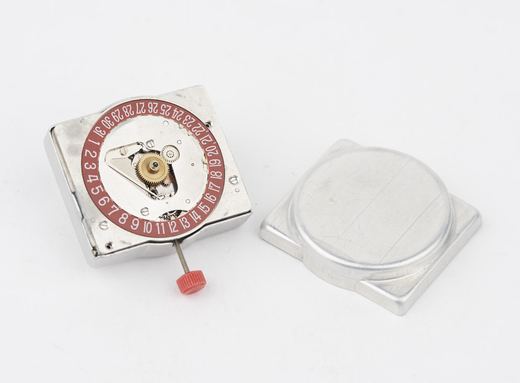
Wristwatches · 1969-1970
Beta 21 Quartz wristwatch movement, made in Switzerland, 1970.
Science Museum Group, London
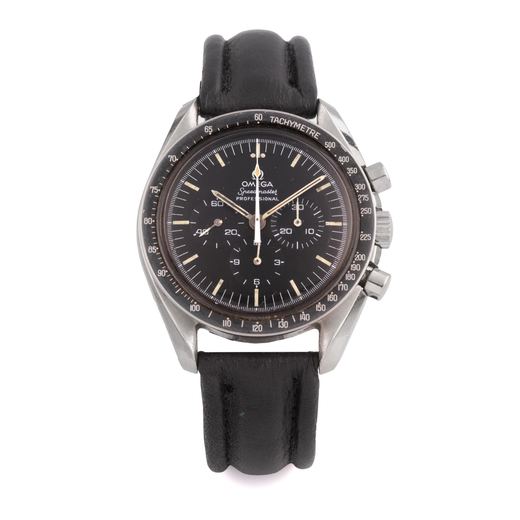
Wristwatches · circa 1969
Omega Speedmaster Moonwatch, ref. 145022-69st, circa 1969
Antiquorum auction archive, Geneva
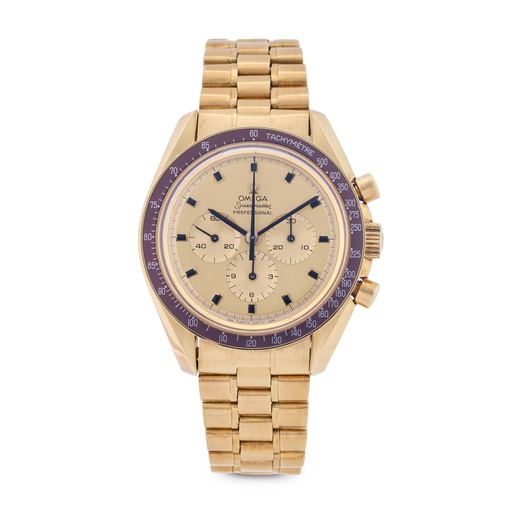
Wristwatches · circa 1969
Omega Speedmaster Professional Apollo XI, ref. 145.022-69, circa 1969
Antiquorum auction archive, Geneva
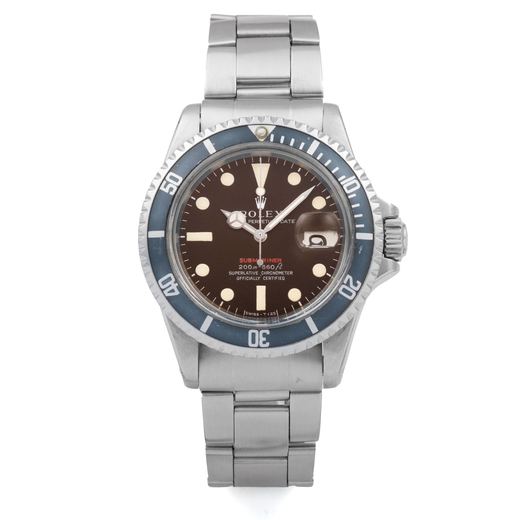
Wristwatches · 1969
Rolex "red" Submariner, ref. 1680, 1969
Antiquorum auction archive, Geneva
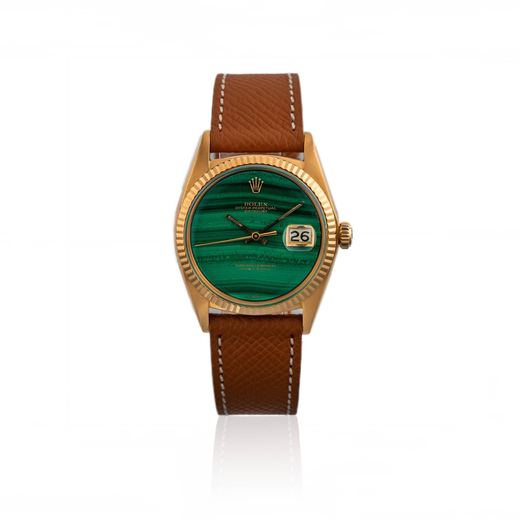
Wristwatches · circa 1969
Rolex Date Just, ref. 1601, circa 1969
Antiquorum auction archive, Geneva
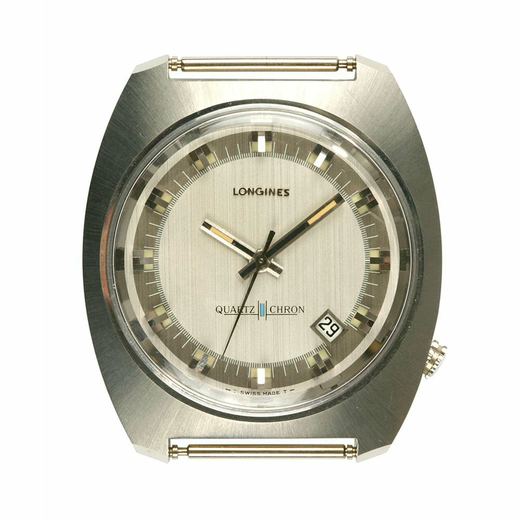
Wristwatches · 1969
Wristwatch by Francillon und Cie (Longines), Switzerland, 1969
German Clock Museum
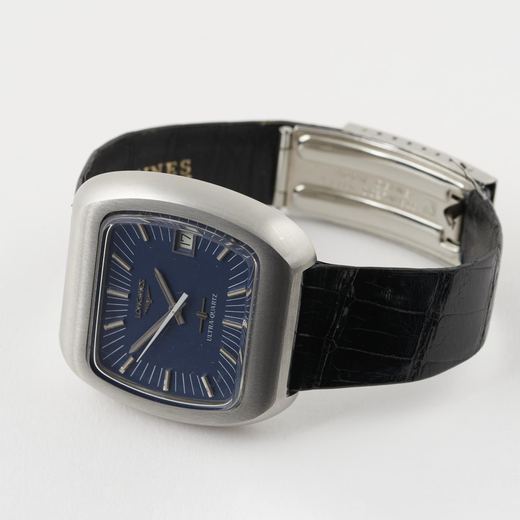
Wristwatches · 1969-1970
Wristwatch by Longines Watch Company, Francillon Ltd, Switzerland, 1969-1970
Science Museum Group, London
Wristwatches · 1969
Wristwatch, Switzerland, 1969
Montanhistorisches Dokumentationszentrum