
Clocks · Dashboard clock
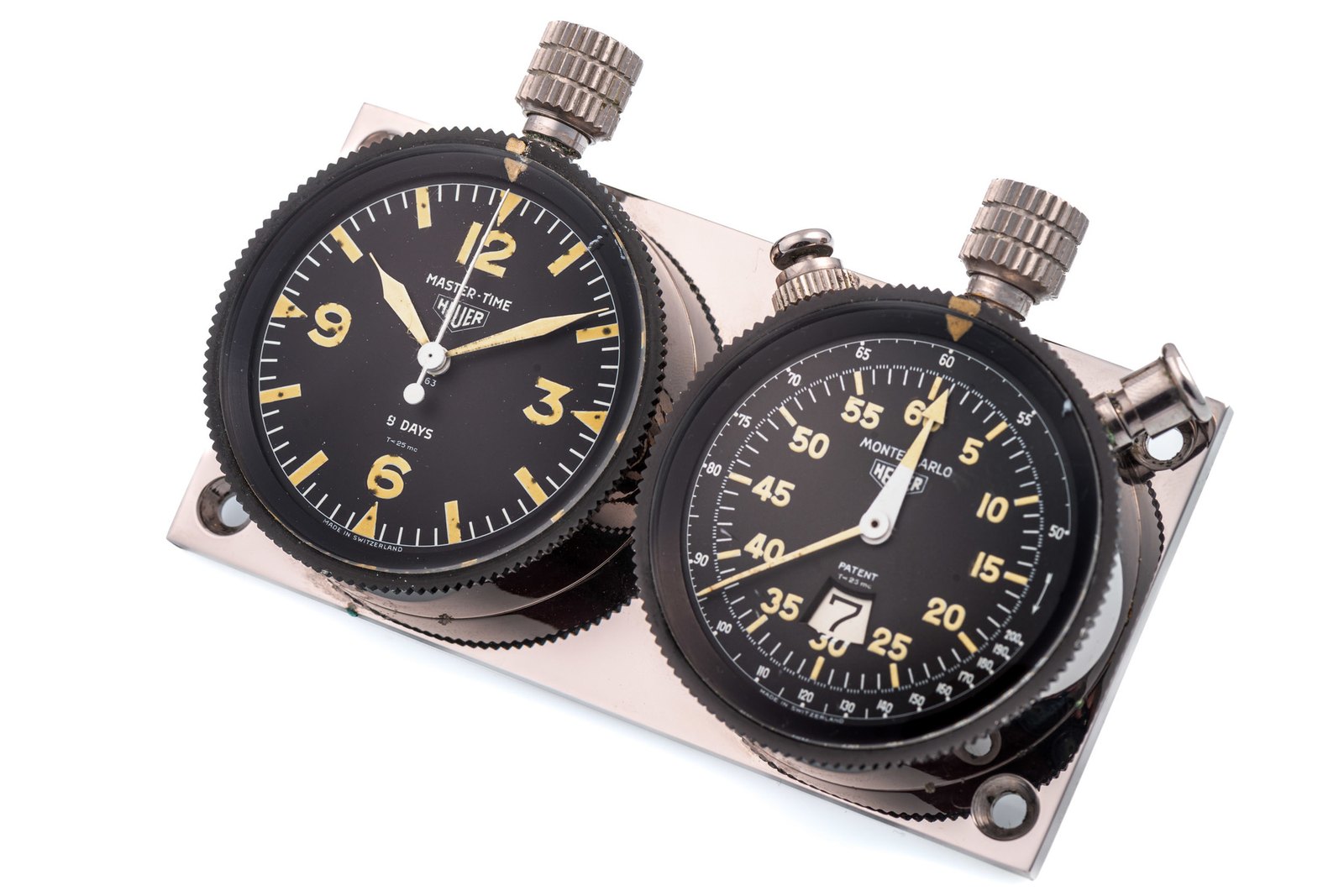
TAG Heuer dashboard clock, Dashboard classic rally pair, Made between 1958 and 1967
- Maker / attribution
- TAG Heuer (brand / maker)
- Date
- Made between 1958 and 1967
- Historical period
- Modern Mechanical Horology (1945 – 1969)
- Country of origin
- Switzerland
- Object type
- Dashboard clock
- Dimensions
- thickness 20 mm
- Auction house
- Antiquorum auction archive, Geneva
- Lot
- Lot 347-11
- Credit line
- Auction lot record: LOT 11, Monaco, January 18, 2022
- Catalogue title (original)
- TAG Heuer. Master-time & Monte-Carlo date, Dashboard classic rally pair (English)
View the source record (auction lot) ↗ (opens another website in a new tab)Suggest a correction
Record summary
Catalogued by Antiquorum auction archive, Geneva (lot Lot 347-11), this is a dashboard clock by TAG Heuer, made in Switzerland, dated Made between 1958 and 1967. The Atlas places it in the Modern Mechanical Horology period (1945 – 1969) of its Clocks collection. Recorded dimensions: thickness 20 mm. The record is illustrated with 1 photograph.
Assembled from the source record's structured fields. Dates and attributions are given as the source states them; where a field is missing the Atlas leaves it blank rather than estimating.
Catalogue description
Antiquorum catalogue description
Two, fine, chromed manual winding dashboard clocks with center-seconds meantime 8-day going clock and a 60-second chronograph race timer with progressive 60-minute register and digital 12-hour register, made between 1958-1967,Case one: circular on a square backplate drilled for mounting, reeded rotating bezel, large winding crown. Black dial with luminous Arabic numerals and baton indexes, outer minute track. Luminous leaf hands. Case two: circular on a square backplate drilled for mounting, reeded rotating bezel, large winding crown for start/stop, button at 2 for reset, button at 11 for advancing the digital 12-hour register. Black dial with luminous Arabic 60-minute numerals for the 60-minute register, outer minute track with fifths of a second divisions, aperture for the 12-hour register. Luminous arrow and baton hands.
Lot specifications (Antiquorum)
Model: Master-Time & Monte-Carlo; Case No.: Heuer Leonidas S.A Swiss; Caliber: 1666 & 28H Arogno; Dimensions: 118 x 73 mm.; Thickness: 20 mm.; Weight: 472,29 gr. (approx.); Signature: Case, dial and movement
Inscriptions & marks
Case, dial and movement
Historical context
Modern Mechanical Horology (1945 – 1969)
Tool watches for divers, pilots and astronauts; electric watches anticipate the electronic age.
Post-war clocks combined new materials and industrial design: plastic and metal cases, battery-powered transistor movements from the late 1950s, and design classics by George Nelson, Max Bill and others. The first caesium atomic clock (1955) moved the definition of time from astronomy to physics.
Read the period in the timelineMore clocks from this periodEarlier: Golden Age of Mechanical Watchmaking
Atlas type guide
Domestic clocks
A clock combines four systems: a source of power (falling weight, coiled spring, or later electricity), a gear train that divides time, an escapement and oscillator that regulate it (foliot, pendulum or balance), and an indicating system of dial and hands or a bell. Its history runs from the large iron weight-driven clocks of the late thirteenth century to Renaissance spring-driven table clocks, the pendulum revolution of 1656, the factory clocks of the nineteenth century and electric and quartz clocks of the twentieth.
Domestic clocks also reflect regional furniture and decorative traditions — English longcase and bracket clocks, French pendules, Viennese regulators, Black Forest and American shelf clocks — and therefore record changing tastes as much as technical progress.
What to look for
- How the clock is powered: weights, spring barrel, fusee, electric coil.
- The oscillator: foliot, short pendulum, long seconds pendulum or balance.
- Whether it strikes: hour only (count wheel) or hours and quarters (rack striking).
- The maker or retailer's name on dial and movement, and any factory trademarks.
- Signs of alteration — replaced dials, converted escapements, 'married' cases.
Dating clues
- Before 1656 clocks used foliots or balances; after, most domestic clocks have pendulums.
- Anchor escapements spread after c. 1670; minute hands became common at the same time.
- Factory production in America and Germany transformed prices after c. 1840.
General guidance written by the Atlas editors about this kind of object. It is not a statement about this particular piece; for that, rely on the source record above and on physical examination.
Related records
Wristwatches · c. 2000
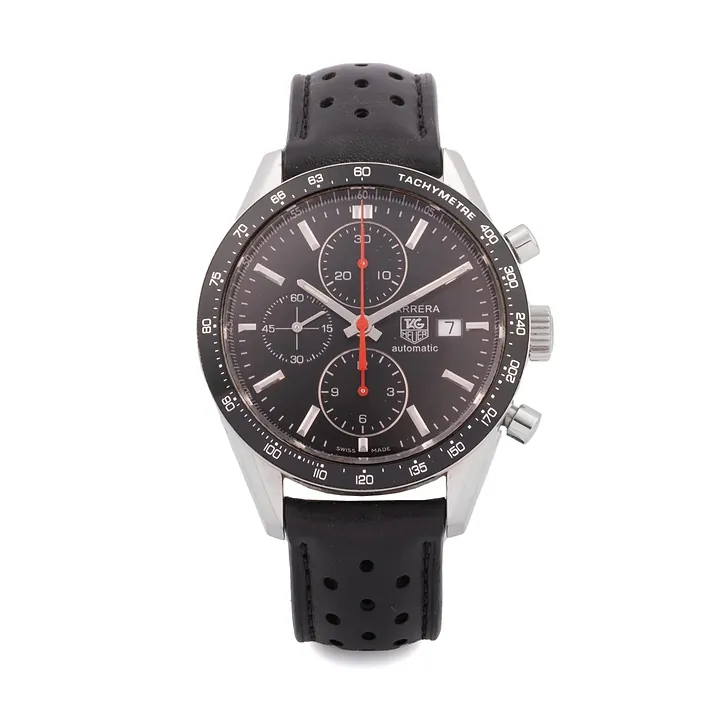
TAG Heuer wristwatch, ref. cv2014-2, c. 2000
Antiquorum auction archive, Geneva
Wristwatches · c. 2010s
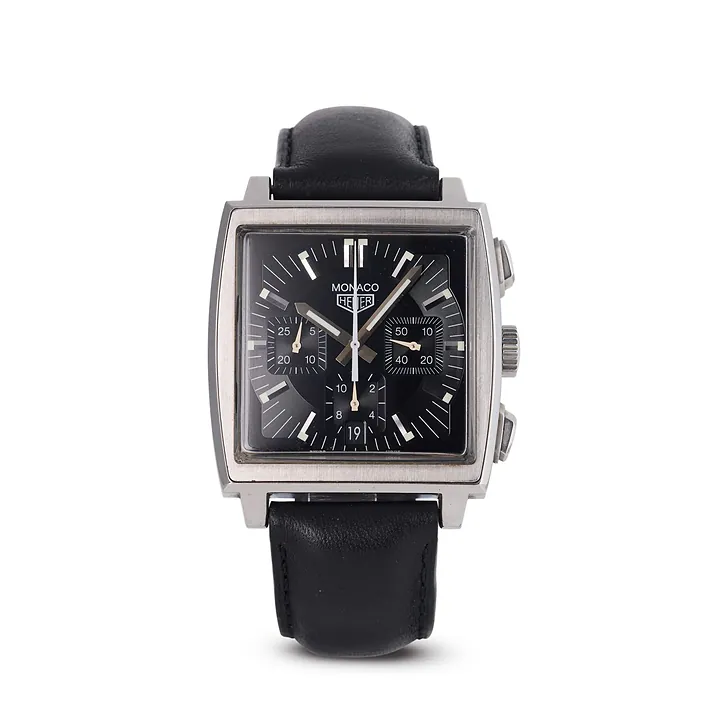
TAG Heuer Monaco, ref. CS2111, c. 2010s
Antiquorum auction archive, Geneva
Wristwatches · c. 2014
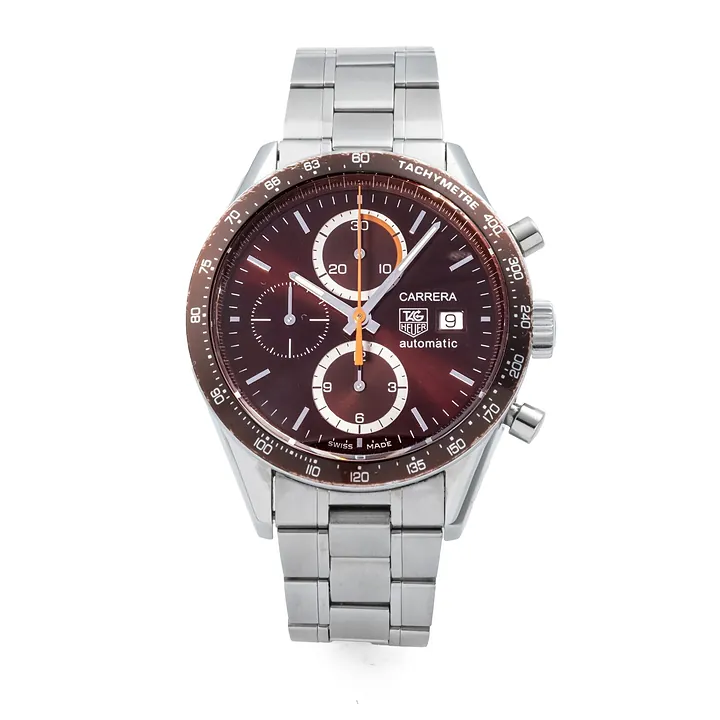
TAG Heuer Carrera 1860, ref. CV2013.BA0794, c. 2014
Antiquorum auction archive, Geneva

Wristwatches · Sold in March 2018
TAG Heuer Carrera, ref. CAR201V, Sold in March 2018
Antiquorum auction archive, Geneva
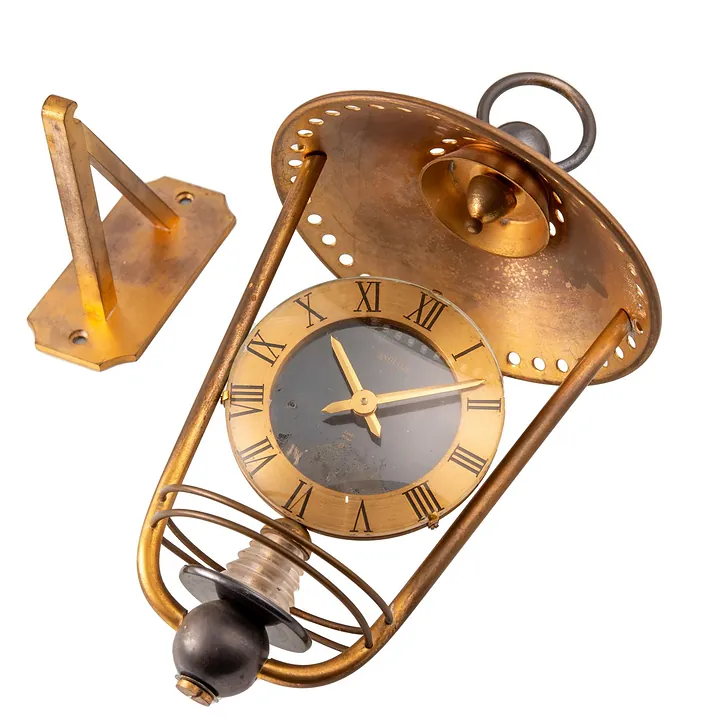
Clocks · c. 1950
Angelus Retailed by Gobbi, Milano, c. 1950
Antiquorum auction archive, Geneva
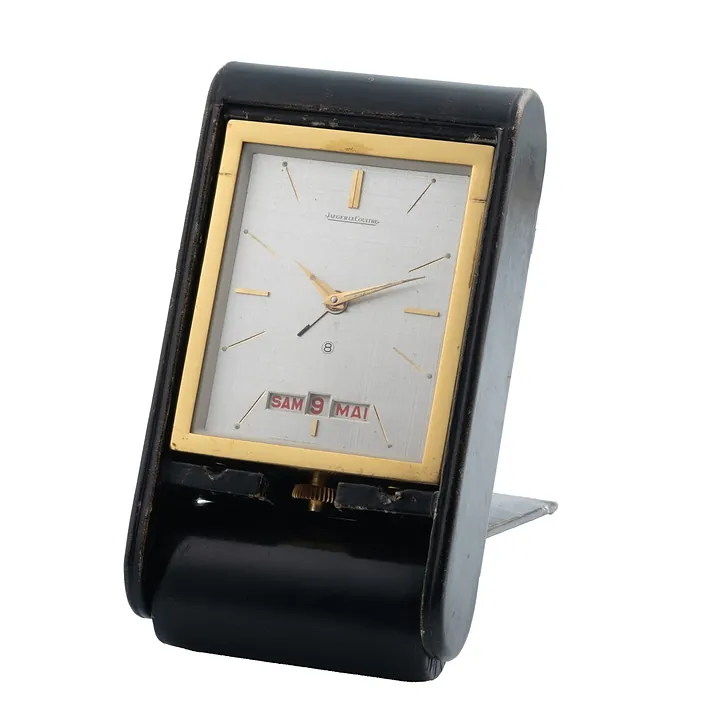
Clocks · c. 1960s
Jaeger Lecoultre Ados Calendrier, c. 1960s
Antiquorum auction archive, Geneva
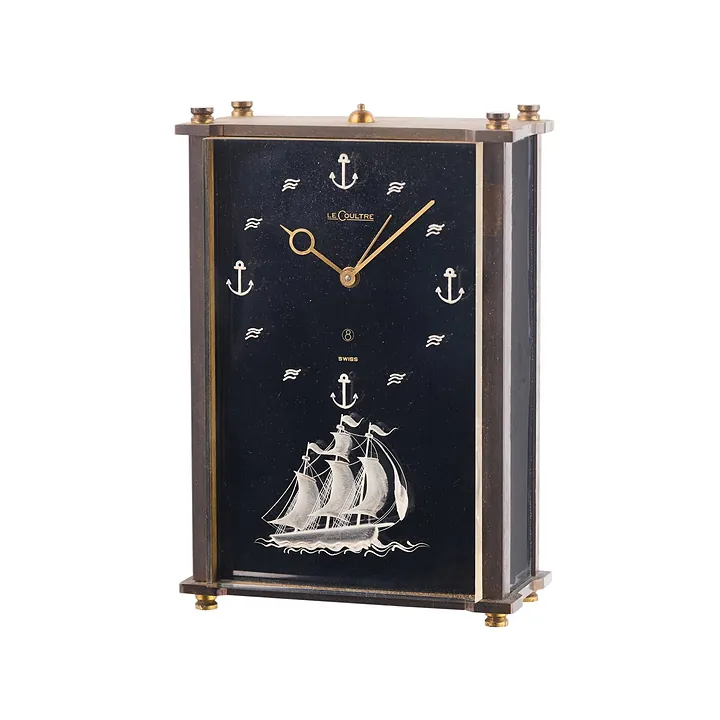
Clocks · c. 1960s
Lecoultre Music Alarm, ref. 2163, c. 1960s
Antiquorum auction archive, Geneva
Clocks · 1953
Mantel Clock - Jaeger-LeCoultre, Switzerland, 1953
Museums Victoria, Melbourne