
Wristwatches · Wristwatch
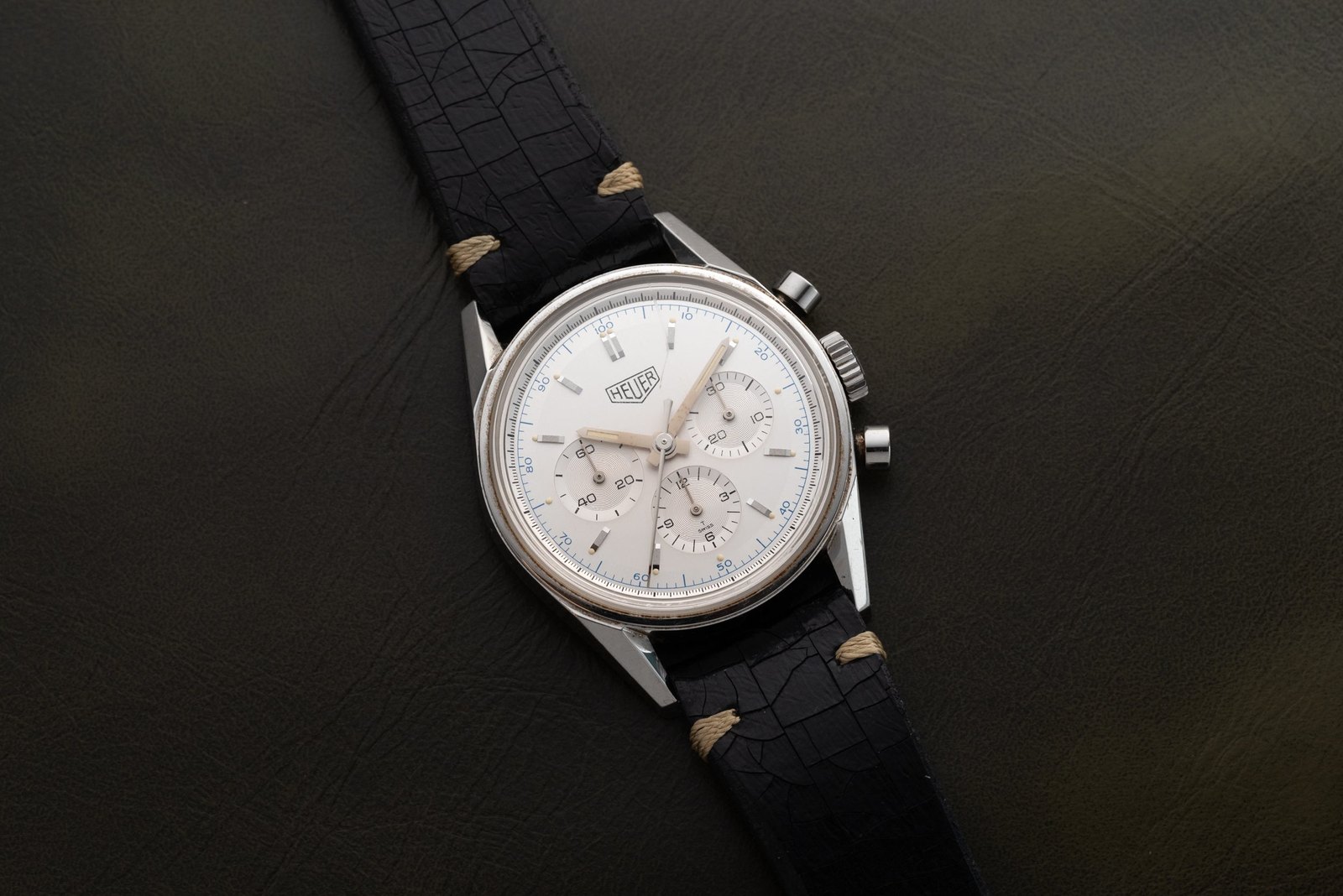
TAG Heuer Carrera Reissue, mid 1990s
- Maker / attribution
- TAG Heuer (maker)
- Date
- mid 1990s
- Historical period
- Mechanical Renaissance (1990 – 2010)
- Country of origin
- Switzerland
- Object type
- Wristwatch
- Dimensions
- Case 36 mm
- Stock no.
- 40991930
- Credit line
- Dealer listing, Analog/Shift (40991930)
- Catalogue title (original)
- TAG Heuer Carrera Reissue (English)
View the source record (dealer listing) ↗ (opens another website in a new tab)Suggest a correction
Record summary
Catalogued by Analog/Shift (dealer), New York (stock number 40991930), this is a wristwatch by TAG Heuer, made in Switzerland, dated mid 1990s. The Atlas places it in the Mechanical Renaissance period (1990 – 2010) of its Wristwatches collection. Recorded dimensions: Case 36 mm. The record is illustrated with 6 photographs.
Assembled from the source record's structured fields. Dates and attributions are given as the source states them; where a field is missing the Atlas leaves it blank rather than estimating.
Catalogue description
Dealer description — Analog/Shift
The original Heuer Carrera ran from the 1960s to the 1980s, its look shifting slightly as trends changed, ultimately taking on the cushion case design and automatic movements of the late 1960s and 1970s. In the 1980s, after Heuer was bought by Technique Avant Garde (TAG), the Carrera line was discontinued. However, in the mid-1990s TAG Heuer realized that its classic designs still held value in the commercial market, and decided to re-release two historical watches: the square-cased Monaco and the Carrera. As a whole, the 1964 Carrera Re-Edition remained true to the look of its predecessor, featuring a 36mm case defined by its long faceted lugs and a bold, open dial with recessed subsidiary registers. While triple register '60s Carreras were powered by the Valjoux 72, the Re-Edition references used the Lemania Calibre 1873. This example, a Reference CS3110, dates to the mid 1990s and features a stainless steel case, barrel chronograph pushers, a signed Heuer crown and a gloss silver Tritium dial with blue accents and applied indices, as well a matching luminous handset. Fitted to a black alligator leather strap with a ‘B’ signed pin buckle, this piece remains in fantastic shape with a strong, unpolished case and a dial that has charm for days. The 1964 Carrera Re-Edition is important in that it set a precedent for TAG Heuer — and perhaps the industry at large — by reissuing one of its classic designs, a practice that has become widespread in the two and half decades since. By re-introducing their legacy designs, TAG Heuer exposed the brand's own history to a new generation of watch collectors, instead of letting it languish in their archives. It's a testament to Jack Heuer's leadership in design that the Carrera remains popular — and will certainly continue to be for generations to come. This neo-vintage Heuer is as attractive as they come and houses one of the more adored, hand-cranking chronograph movements to boot! Snag this versatile piece today!
Historical context
Mechanical Renaissance (1990 – 2010)
Mechanical watches return as cultural objects; independent watchmaking flourishes.
Mechanical watches returned as cultural and luxury objects. Complications, tourbillons and new materials proliferated; independent watchmakers such as George Daniels, F.P. Journe and Philippe Dufour revived artisanal watchmaking; collecting vintage watches became a major field.
Read the period in the timelineMore wristwatches from this periodEarlier: Quartz Revolution
Atlas type guide
Wristwatches
Bracelet watches were worn by women from the early nineteenth century — Breguet made one for Caroline Murat, Queen of Naples, in 1810–12 — but the wristwatch only became a man's instrument with military use and aviation in the early twentieth century. Between the World Wars it overtook the pocket watch; the 1920s and 1930s brought rectangular Art Deco cases, water-resistant cases and the first automatic winding systems.
After 1945 the wristwatch became a carrier of identity — dress watches, sports and dive watches, chronographs, calendars — produced by Swiss, American, Japanese, German, Soviet and Chinese industries. The quartz revolution after 1969 and the mechanical renaissance since the 1990s, including the rise of independent watchmakers, complete the story.
What to look for
- The reference number (between the lugs or inside the case back) and serial number, the starting point for dating.
- The calibre: its maker and number are often stamped under the dial or on the bridge.
- Originality of dial, hands and crown — refinished ('redial') dials are common.
- Case material marks: 18K/750, 14K/585, stainless steel, gold-filled, plated.
Dating clues
- Wire-lug cases: before c. 1925.
- Water-resistant screw-down cases: from 1926.
- Quartz movements: from 1969; sapphire crystals widespread after c. 1980.
General guidance written by the Atlas editors about this kind of object. It is not a statement about this particular piece; for that, rely on the source record above and on physical examination.
Related records
Wristwatches · c. 2000
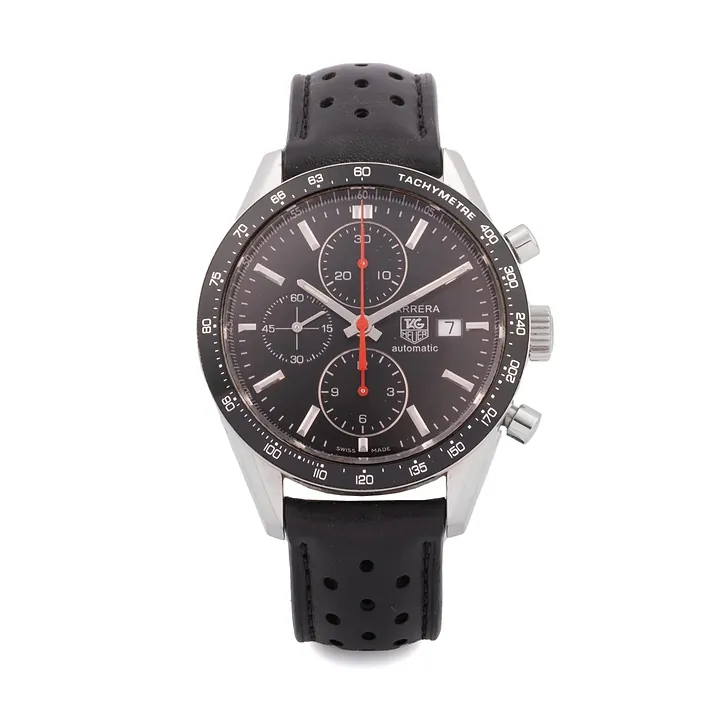
TAG Heuer wristwatch, ref. cv2014-2, c. 2000
Antiquorum auction archive, Geneva
Wristwatches · c. 2010s
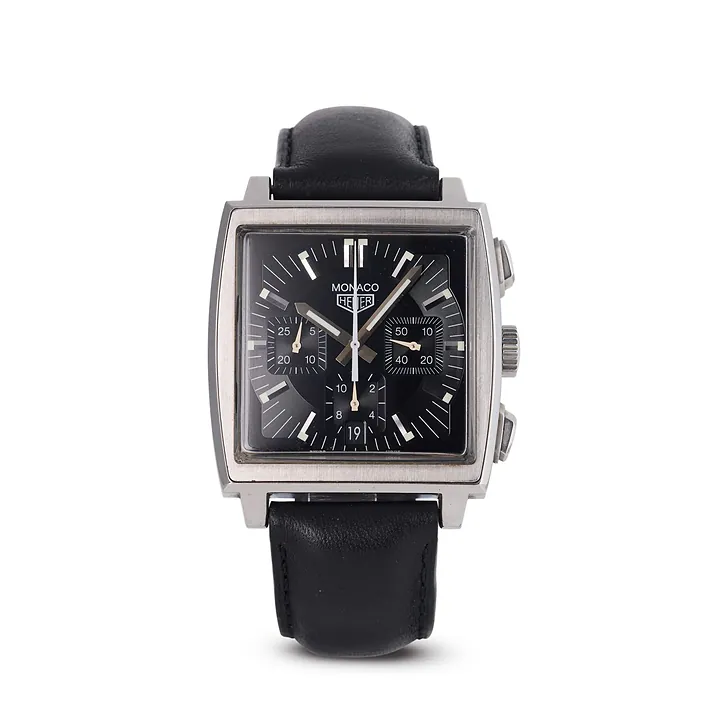
TAG Heuer Monaco, ref. CS2111, c. 2010s
Antiquorum auction archive, Geneva
Wristwatches · c. 2014
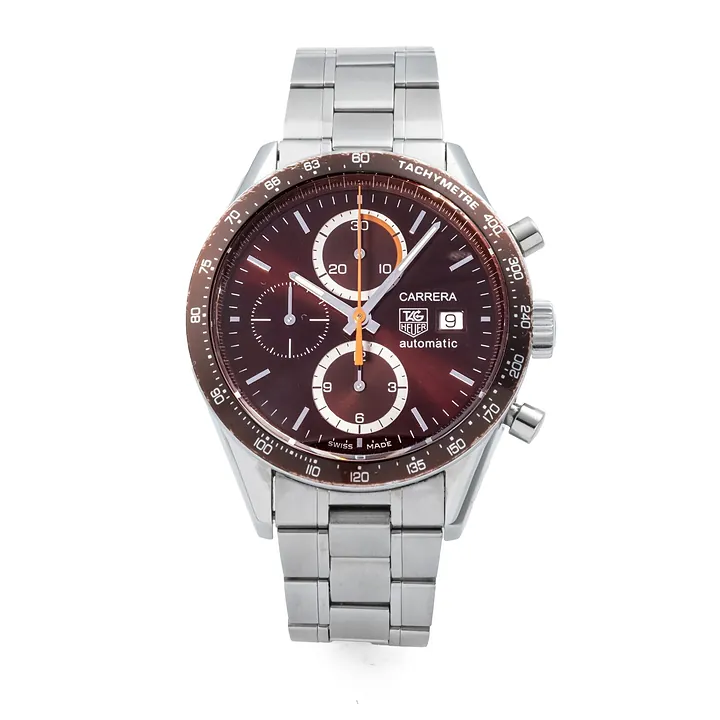
TAG Heuer Carrera 1860, ref. CV2013.BA0794, c. 2014
Antiquorum auction archive, Geneva

Wristwatches · Sold in March 2018
TAG Heuer Carrera, ref. CAR201V, Sold in March 2018
Antiquorum auction archive, Geneva

Wristwatches · 2008
Wristwatch by Breitling?, 2008
Museum Rotterdam

Wristwatches · c. 1990s
Audemars Piguet Bamboo, c. 1990s
Antiquorum auction archive, Geneva

Wristwatches · c. 1990
Audemars Piguet Huitieme Perpetual Calendar, ref. 25696PT, c. 1990
Antiquorum auction archive, Geneva

Wristwatches · c. 1990
Breitling Chronomat, ref. b13050.1, c. 1990
Antiquorum auction archive, Geneva