
Clocks · Clock
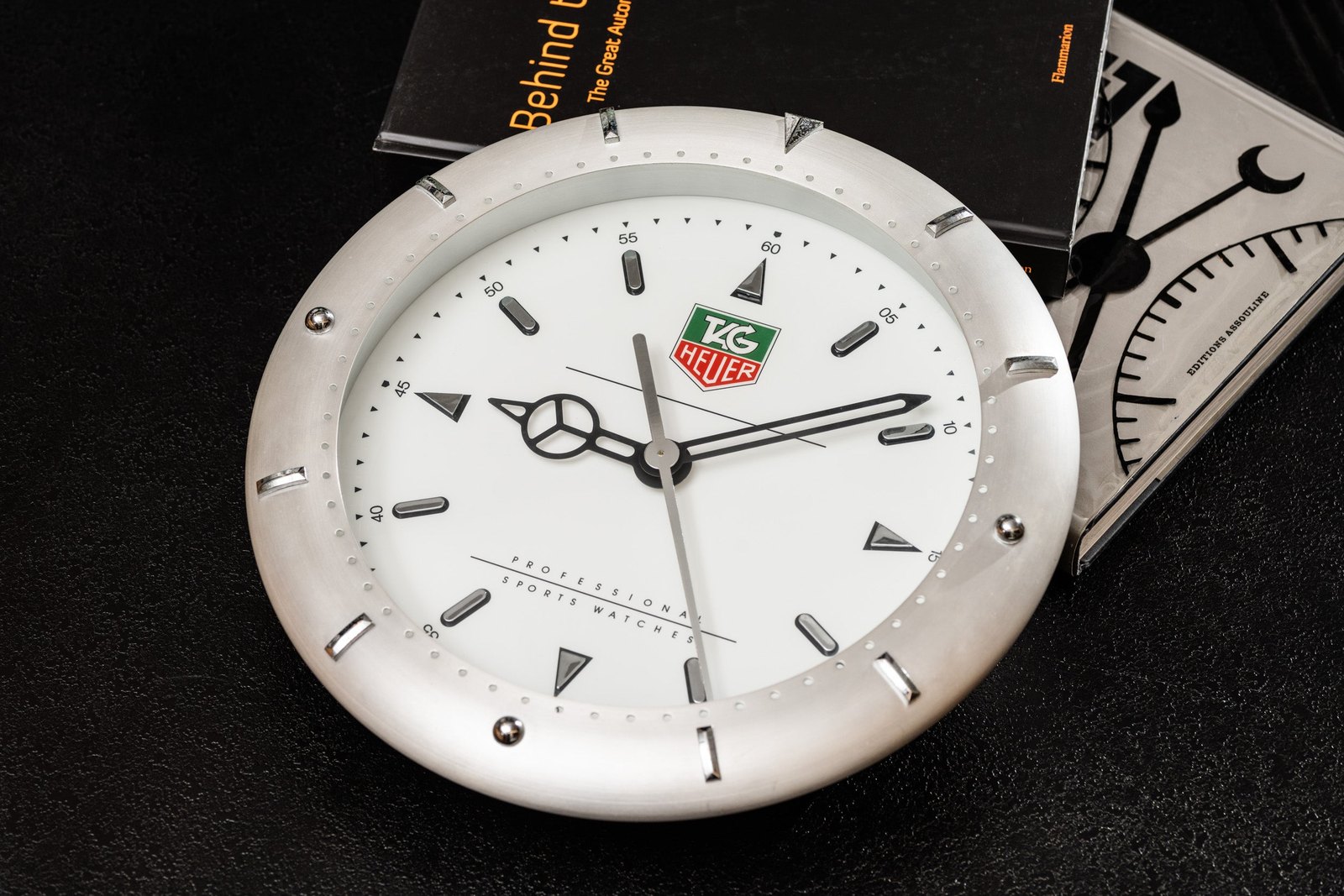
TAG Heuer Aquaracer Wall Clock, 1997
- Maker / attribution
- TAG Heuer (maker)
- Date
- 1997
- Historical period
- Mechanical Renaissance (1990 – 2010)
- Country of origin
- Switzerland
- Object type
- Clock
- Stock no.
- Product 6818126790743
- Credit line
- Dealer listing, Analog/Shift (product 6818126790743)
- Catalogue title (original)
- TAG Heuer Aquaracer Wall Clock (English)
View the source record (dealer listing) ↗ (opens another website in a new tab)Suggest a correction
Record summary
Catalogued by Analog/Shift (dealer), New York (stock number Product 6818126790743), this is a clock by TAG Heuer, made in Switzerland, dated 1997. The Atlas places it in the Mechanical Renaissance period (1990 – 2010) of its Clocks collection. The record is illustrated with 2 photographs.
Assembled from the source record's structured fields. Dates and attributions are given as the source states them; where a field is missing the Atlas leaves it blank rather than estimating.
Catalogue description
Dealer description — Analog/Shift
Sure, Analog:Shift is a business built around the love of watches — mostly mechanical watches. But, in essence, it’s our love for timepieces and timekeeping in general that are the common themes throughout the items we procure. And that includes the love of clocks in general: pocket watches, travel clocks, and more. After all, in the couple hundred years before the First World War, personal timekeeping was all about the pocket watch, and before that, it was larger clocks that were front and center, horologically. We still believe a good clock — such as a classic travel model from the 1920s or 1930s — has a place in the watch lover’s collection. This particular timepiece is a TAG Heuer wall clock in the guise of an Aquaracer wristwatch. Dating to 1997, it measures 14” x 14” x 15” in a stainless steel case with an Aquaracer bezel and features a white dial with applied indices, a matching, skeletonized ‘Mercedes’ handset, and an outer minute track. Powered by a AA battery and made in Japan, it even features its intact factory sticker on the back. If you’re a TAG Heuer fan, what better way to accent a wall than with this handsome clock?
Historical context
Mechanical Renaissance (1990 – 2010)
Mechanical watches return as cultural objects; independent watchmaking flourishes.
Mechanical clocks returned as luxury and craft objects, alongside radio-controlled and designer quartz clocks. Independent makers and restorers revived traditional techniques, and museums increasingly documented industrial and electric clocks as heritage.
Read the period in the timelineMore clocks from this periodEarlier: Quartz Revolution
Atlas type guide
Regulators, wall and Vienna clocks
A regulator is a precision pendulum clock used as a time standard in observatories, workshops and railway offices. Typical features are a deadbeat or Graham escapement, a temperature-compensated pendulum (mercury jar, gridiron or later invar), maintaining power and a regulator dial that separates hours, minutes and seconds. George Graham's deadbeat escapement (c. 1715) and his mercury pendulum, together with Harrison's gridiron, set the pattern for two centuries.
Wall clocks span a much wider range: the elegant Viennese Laterndluhr and Dachluhr of the Biedermeier period, the Dutch stoelklok and staartklok, English 'dial' clocks used in schools, offices and railway stations, and mass-produced spring and weight wall clocks from Germany (Gustav Becker, Junghans, Kienzle) and America.
What to look for
- Deadbeat escapement and compensated pendulum (gridiron rods, mercury jar or wood rod).
- A regulator dial with a large central minute hand and separate hour and seconds dials.
- Vienna regulators: glazed cases, slender pendulum, small weights, enamel two-piece dials.
- German factory trademarks stamped on the backplate (e.g. Gustav Becker anchor and crown, Junghans star).
Dating clues
- Graham-type deadbeat regulators: from c. 1720.
- Viennese Laterndluhr: c. 1800–1850.
- German factory 'Vienna-style' regulators: c. 1870–1930; Gustav Becker serial numbers allow close dating.
General guidance written by the Atlas editors about this kind of object. It is not a statement about this particular piece; for that, rely on the source record above and on physical examination.
Read next:Deadbeat escapementAnchor (recoil) escapementGrasshopper escapement
Related records
Wristwatches · c. 2000
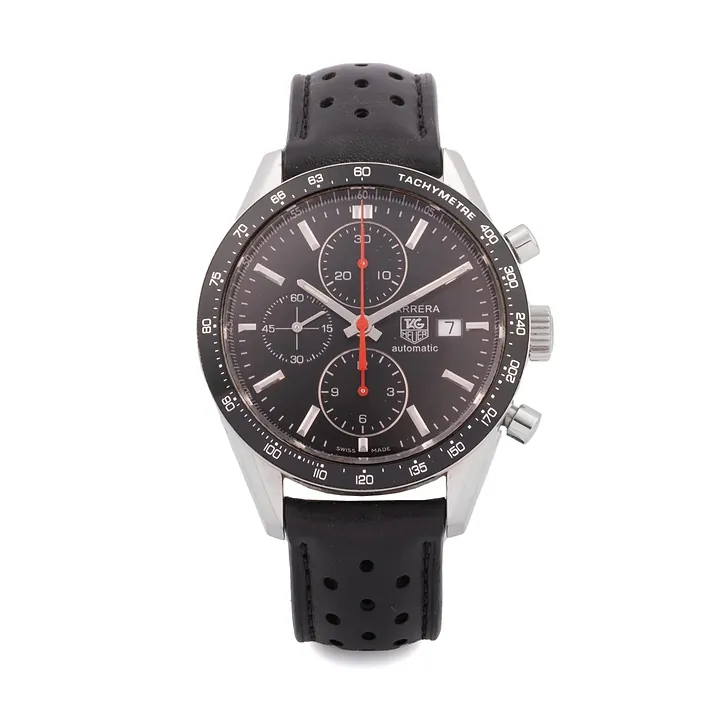
TAG Heuer wristwatch, ref. cv2014-2, c. 2000
Antiquorum auction archive, Geneva
Wristwatches · c. 2010s
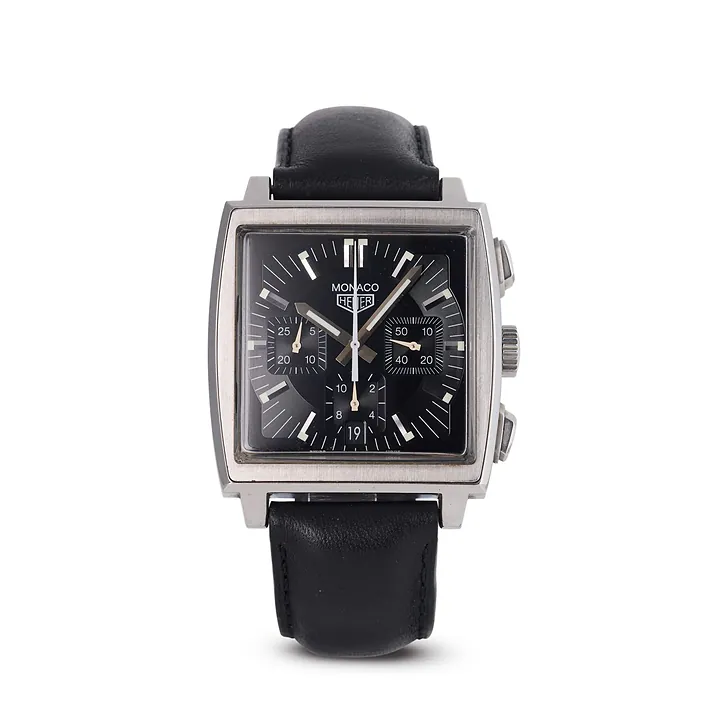
TAG Heuer Monaco, ref. CS2111, c. 2010s
Antiquorum auction archive, Geneva
Wristwatches · c. 2014
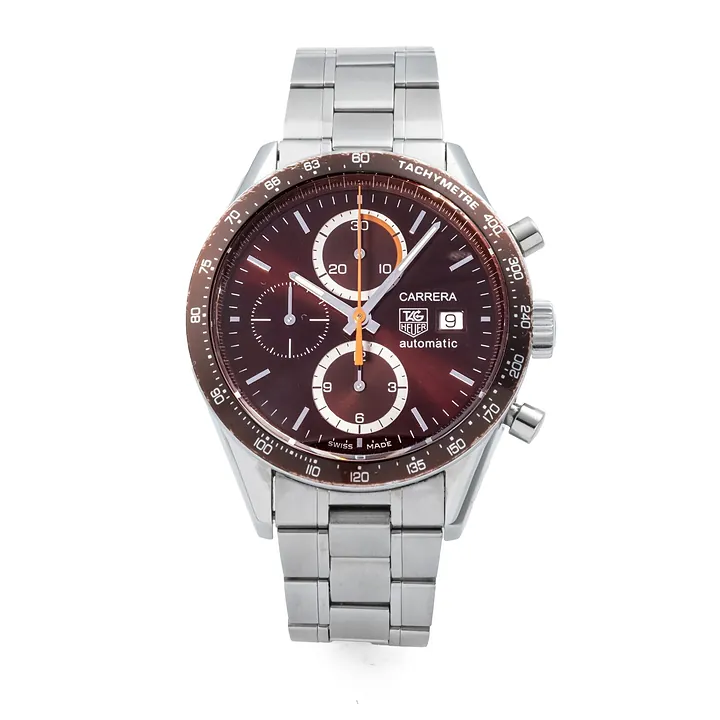
TAG Heuer Carrera 1860, ref. CV2013.BA0794, c. 2014
Antiquorum auction archive, Geneva

Wristwatches · Sold in March 2018
TAG Heuer Carrera, ref. CAR201V, Sold in March 2018
Antiquorum auction archive, Geneva
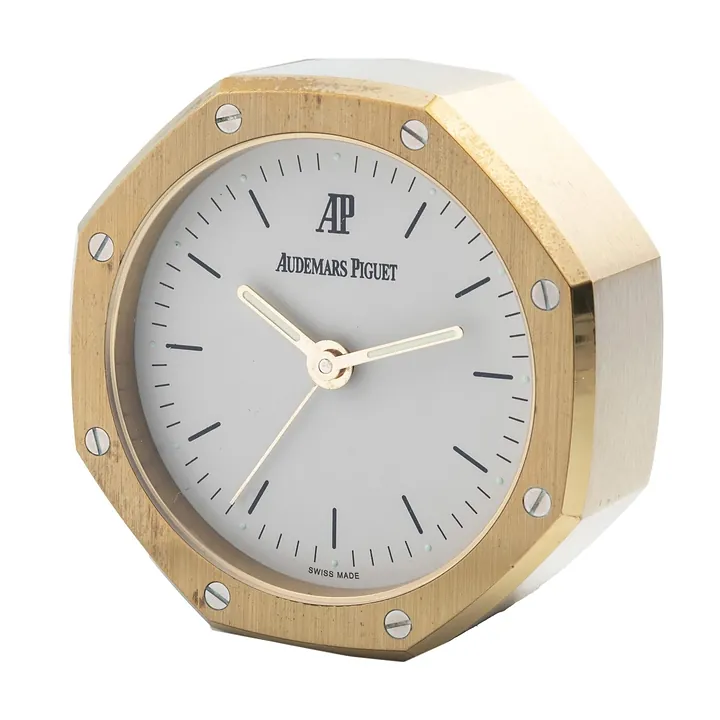
Clocks · c. 1990s
Audemars Piguet Royal Oak, c. 1990s
Antiquorum auction archive, Geneva
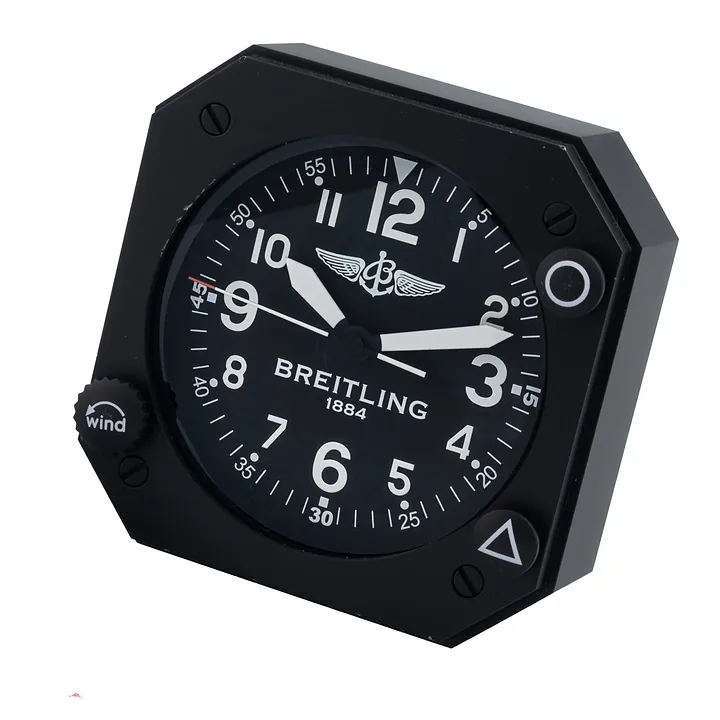
Clocks · c. 1990s
Breitling clock, c. 1990s (Antiquorum Lot 389-18)
Antiquorum auction archive, Geneva
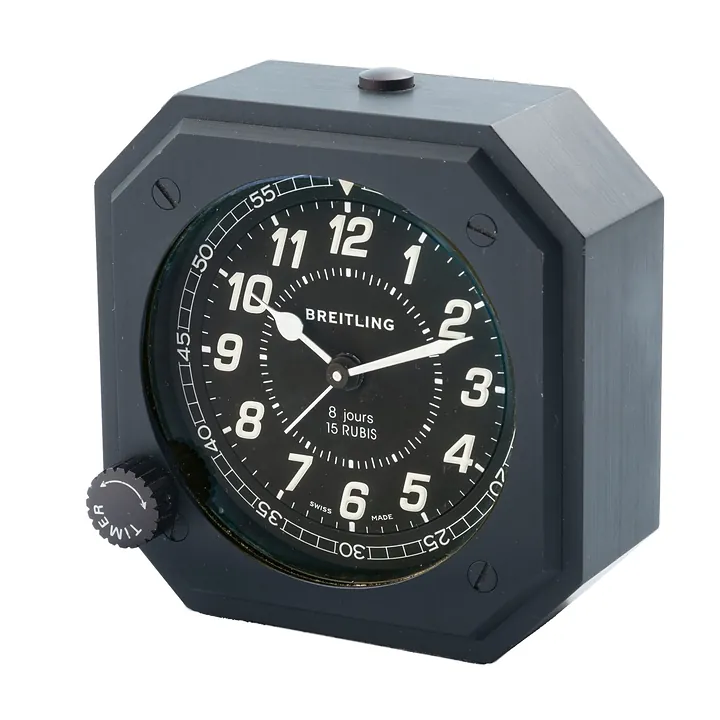
Clocks · c. 1990s
Breitling clock, c. 1990s (Antiquorum Lot 389-20)
Antiquorum auction archive, Geneva
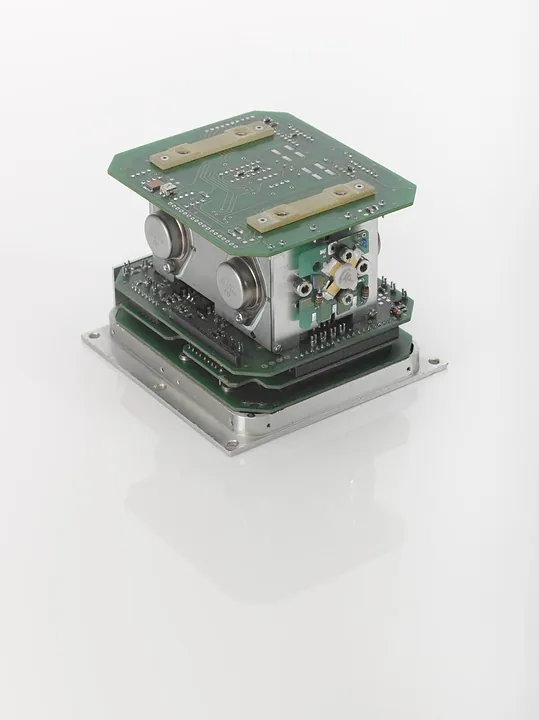
Clocks · 2002
Prototype atomic clock for use with the Galileo communications satellite, manufactured by Temex Neuchâtel Time SA, Switzerland, 2002
Science Museum Group, London