
Instruments · Sunclock
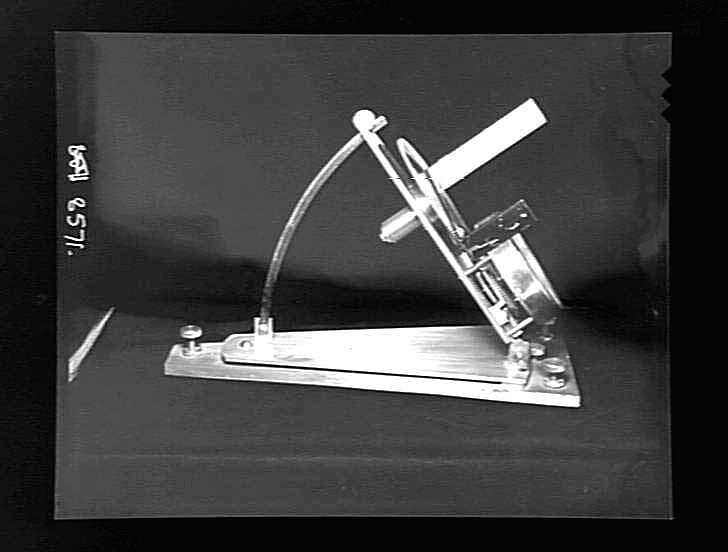
Sunclock - William Ernest Cooke, Sydney, New South Wales, c. 1922
- Maker / attribution
- Unrecorded in source
- Date
- c. 1922
- Historical period
- Golden Age of Mechanical Watchmaking (1900 – 1945)
- Country of origin
- Unrecorded in source
- Object type
- Sunclock
- Dimensions
- 26 cm (Length), 11 cm (Width), 20 cm (Height); 25.7 cm (Length), 11.3 cm (Width), 18 cm (Height)
- Holding institution
- Museums Victoria, Melbourne
- Accession / object no.
- ST 19074
- Catalogue title (original)
- Sunclock - William Ernest Cooke, Sydney, New South Wales, circa 1922 (English)
View the source record ↗ (opens another website in a new tab)Suggest a correction
Record summary
Held and catalogued by Museums Victoria, Melbourne (object number ST 19074), this is a sunclock, dated c. 1922. The Atlas places it in the Golden Age of Mechanical Watchmaking period (1900 – 1945) of its Instruments collection. Recorded dimensions: 26 cm (Length), 11 cm (Width), 20 cm (Height); 25.7 cm (Length), 11.3 cm (Width), 18 cm (Height). The record is illustrated with 2 photographs.
Assembled from the source record's structured fields. Dates and attributions are given as the source states them; where a field is missing the Atlas leaves it blank rather than estimating.
Catalogue description
Summary — Museums Victoria
Sunclock or heliochronometer, designed and made by William Ernest Cooke, Government Astronomer of New South Wales, about 1922. The sunclock allowed quite accurate reading of the time through careful adjustment for latitude, time of year and standard time. The arms are moved so that a beam of sunlight passes through the hole in one arm onto the line on the other. This moves the hands of the clock to show Standard Time. Cooke originally designed a similar sunclock around 1907, when Government Astronomer of Western Australia. This improved model was designed in about 1922, patents obtained from 1923, and a company, Cooke's Sunclocks Limited, formed in 1926 to manufacture and sell the clocks. Several hundred clocks were sold in Australia and a few overseas, but the cost of marketing and distribution proved too great and production ceased after a few years.
Physical description — Museums Victoria
Brass, hands of clock are connected by train of gears to 2 arms, arms are moved so that a beam of sun passes through a hole in one arm onto a scale on the other and this moves hands to standard time.
Inscriptions & marks
Dial marked 'W. E. Cooke's Sunclock patent applied for'
Provenance
Loan & Subsequent Bequest from Mr John Askew, 30 May 1933
Historical context
Golden Age of Mechanical Watchmaking (1900 – 1945)
The wristwatch displaces the pocket watch; waterproof cases, self-winding and grand complications.
Timing instruments became electrical and specialised: industrial time recorders, sports timers and aviation instruments.
Read the period in the timelineMore instruments from this periodEarlier: Industrial Revolution
Atlas type guide
Scientific and navigational instruments
Timekeeping has always been tied to astronomy, navigation and measurement. Observatories used transit instruments to determine the exact moment a star crossed the meridian, and set their regulators by it; navigators combined sextant observations with chronometers to find longitude; surveyors, engineers and physicians used counters, pedometers and timers derived from watch and clock technology.
Instruments in this collection show how time measurement supported science and everyday technical life. Their makers were often the same workshops that produced clocks and watches, and their scales and dials document changing units and standards.
What to look for
- Engraved scales and verniers; the units used (degrees, hours, decimal divisions).
- Makers' signatures and town names, often on the main plate or limb.
- Accessories and fitted cases that indicate the intended use.
- Inventory or institutional marks from observatories, navies or schools.
Dating clues
- Vernier scales spread after the seventeenth century; dividing engines after Ramsden (1770s) made fine scales common.
- Mass-produced instruments with patent numbers belong mostly to the nineteenth and twentieth centuries.
General guidance written by the Atlas editors about this kind of object. It is not a statement about this particular piece; for that, rely on the source record above and on physical examination.
Related records
Instruments · Undated (20th century)
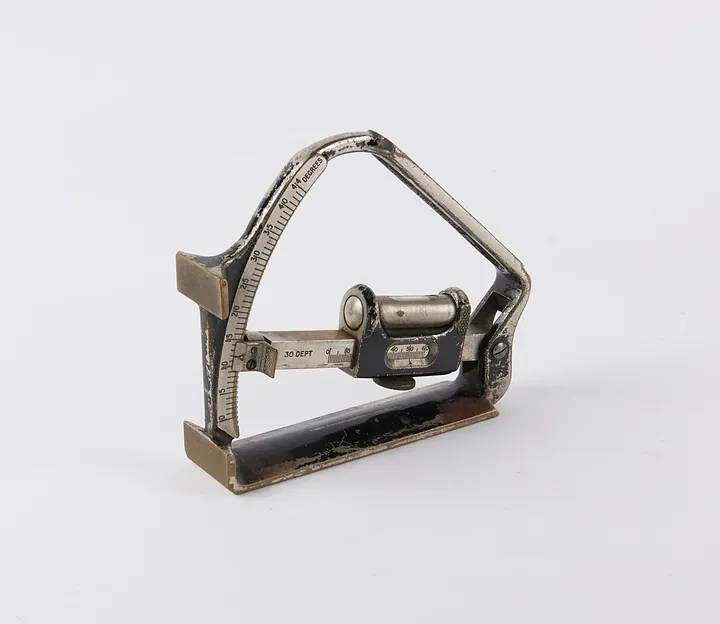
Field chronometer, Mark IV, no. 1621, by Taylor & Hobson Ltd.
Science Museum Group, London
Instruments · 1880–1920
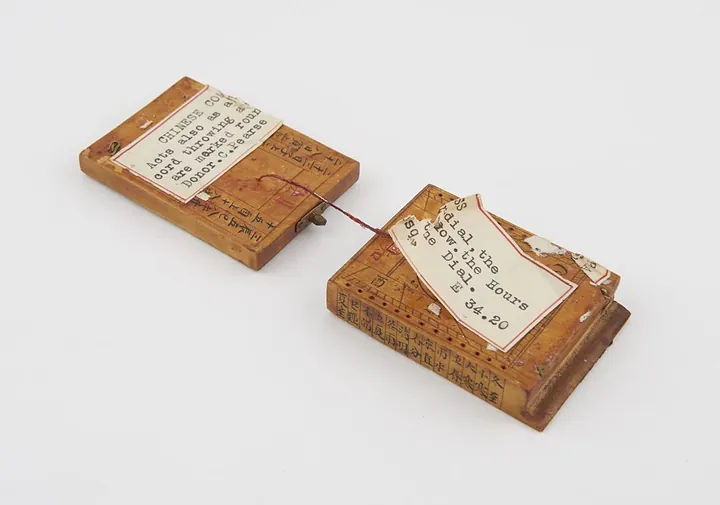
Compass and sundial, two hinged wooden blocks, compass needle set into one, covered with glass windows, painted with Chinese characters, Chinese, 1880–1920
Science Museum Group, London
Instruments · 1890–1930
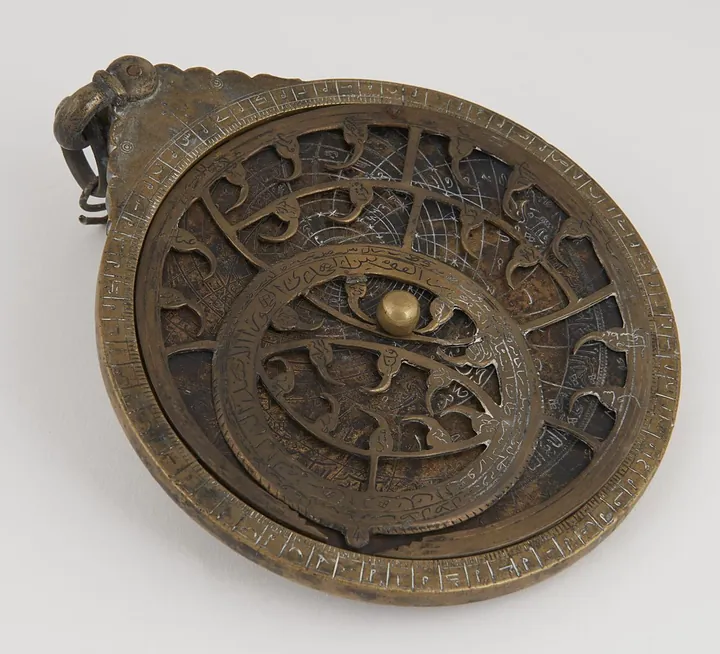
Decorative fake Islamic astrolabe with four plates and sightless alidade, pin missing.
Science Museum Group, London
Instruments · 1890–1930
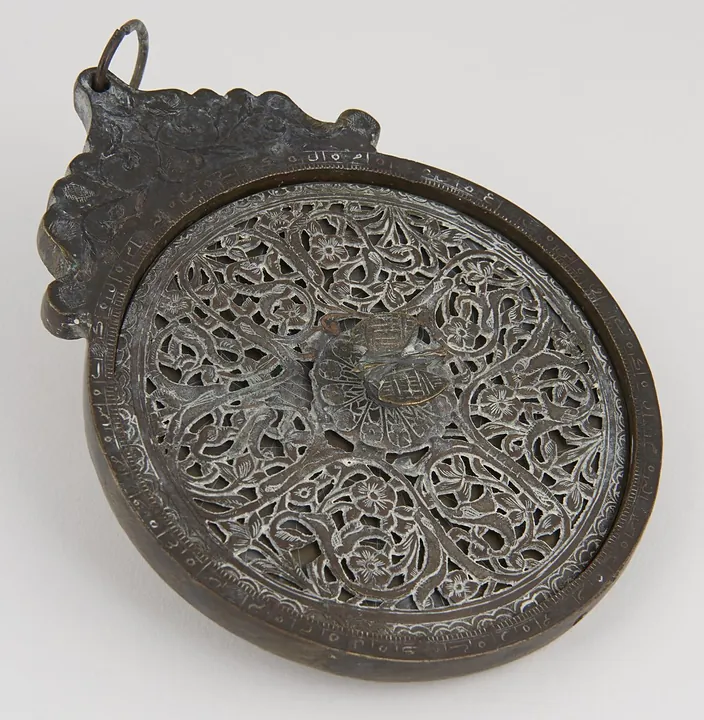
Decorative fake Islamic astrolabe, Arabic origin, brass, with four plates and foliate cover.
Science Museum Group, London
Instruments · 1890–1930
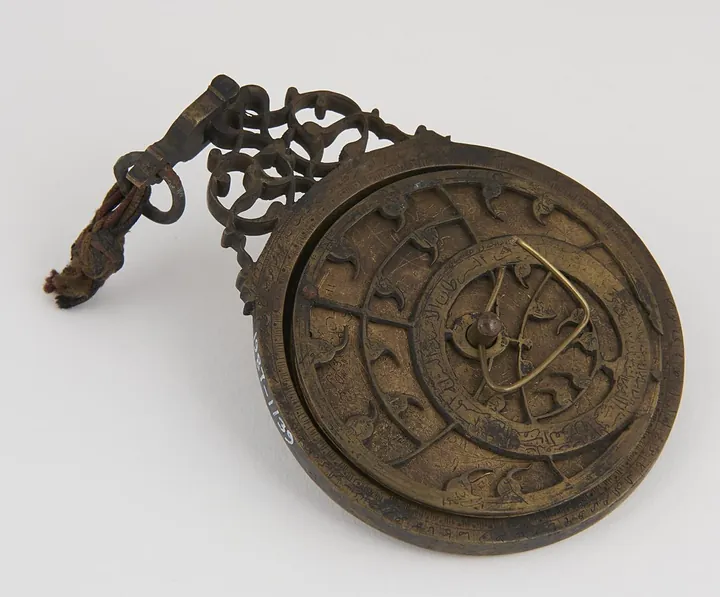
Decorative fake Islamic astrolabe, brass, with four plates, cursive kursi, and sightless alidade, pin missing.
Science Museum Group, London
Instruments · 1890–1945
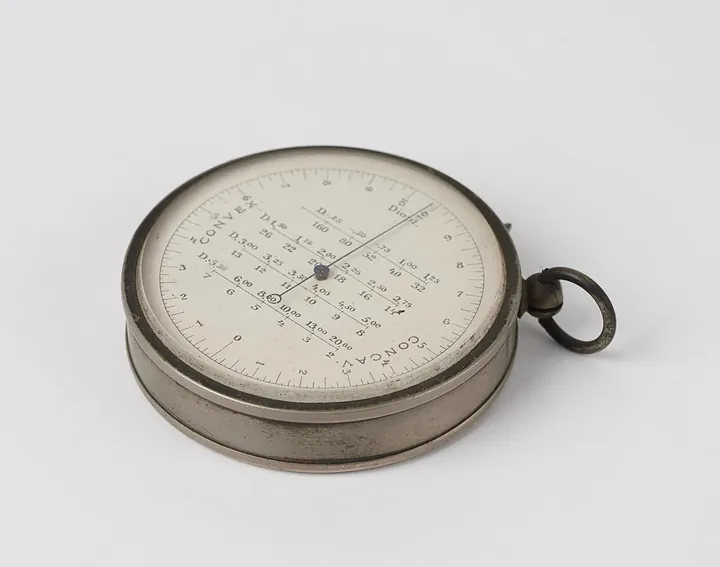
Optometer(?), stop-watch form, scaled circular face to measure concanity,[.........] of lenses, English, 1890–1945
Science Museum Group, London
Instruments · 1890–1950
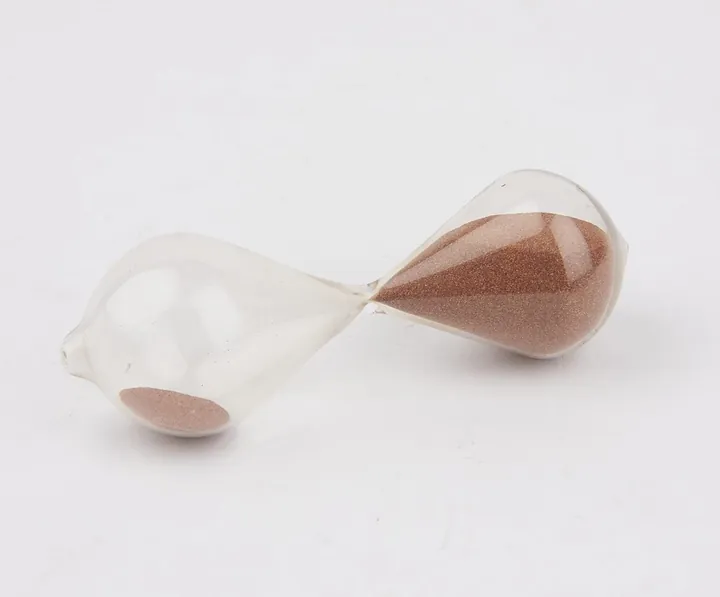
Single sand-glass unmounted, showing complete seal. 15 mins. Abbot Horne. No. Type C., 1890–1950
Science Museum Group, London
Instruments · 1890–1950
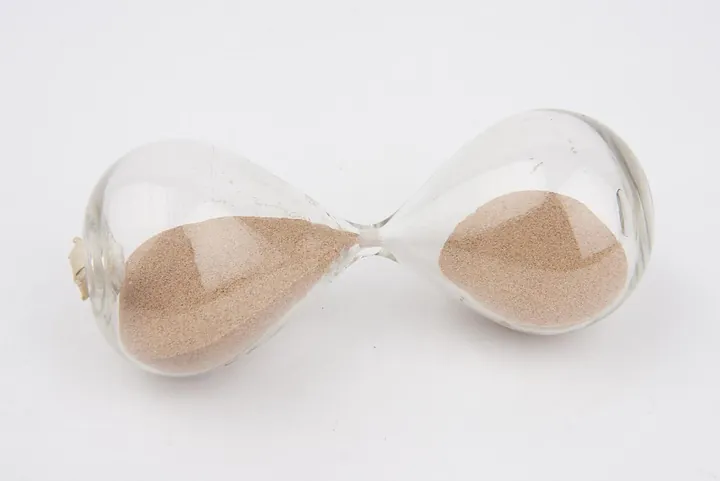
Single sand-glass unmounted, showing corked entry hole. 2 1/2 mins. Abbot Horne. Type B, 1890–1950
Science Museum Group, London