
Wristwatches · Wristwatch
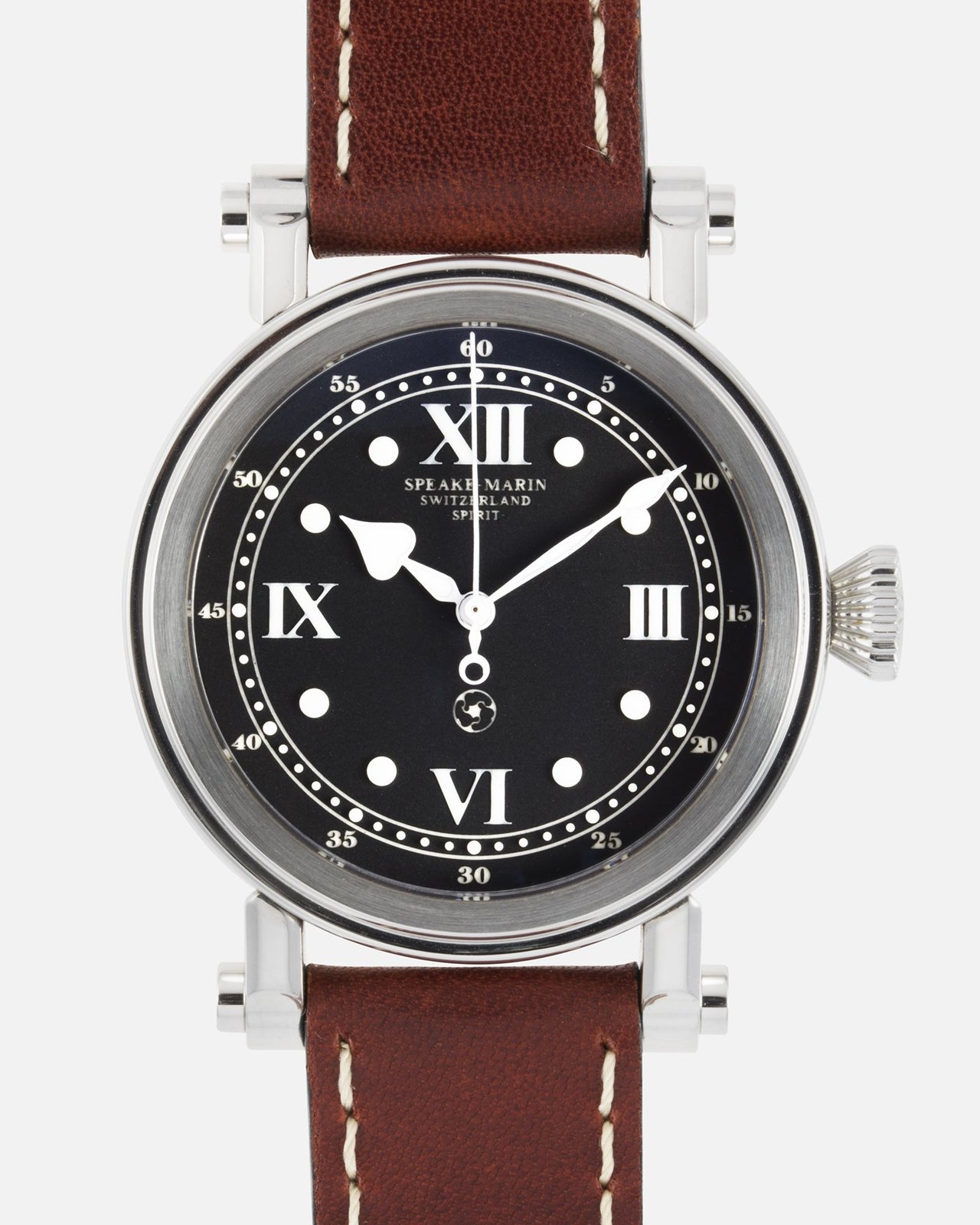
Speake Marin Spirit II, 2013
- Maker / attribution
- Speake-Marin (maker)
- Date
- 2013
- Historical period
- Contemporary Horology (2010 – Present)
- Country of origin
- Unrecorded in source
- Object type
- Wristwatch
- Dimensions
- Case 42 mm
- Stock no.
- Product 1603815276631
- Credit line
- Dealer listing, S.Song Watches (product 1603815276631)
- Catalogue title (original)
- Speake Marin Spirit II (English)
View the source record (dealer listing) ↗ (opens another website in a new tab)Suggest a correction
Record summary
Catalogued by S.Song Watches (dealer), Seattle (stock number Product 1603815276631), this is a wristwatch by Speake-Marin, dated 2013. The Atlas places it in the Contemporary Horology period (2010 – Present) of its Wristwatches collection. Recorded dimensions: Case 42 mm. The record is illustrated with 6 photographs.
Assembled from the source record's structured fields. Dates and attributions are given as the source states them; where a field is missing the Atlas leaves it blank rather than estimating.
Catalogue description
Dealer description — S.Song Watches
Speak-Marin is a brand that was founded by the eponymous watchmaker in 2002, producing exclusive watches in low quantities. One of the most well known independent watchmakers, Peter Speake-Marin has also collaborated with other big names such as Daniel Roth, Christopher Claret, Harry Winston, MB & F, Roger Dubuis and Maitres du Temps. The Speak Marin Spirit II is a reincarnation of the original Spirit Pioneer and its inspiration came from an early 20th-century military watch that was modified by Peter when he was in his younger days. Housed in a 42mm stainless steel case, Speake-Marin has developed a very distinctive design language for his brand that is instantly recognisable. The circular drum-like case shape is very unique to the brand and it was inspired by the movement holders that Peter Speake-Marin worked with when he was developing complications for Audemars Piguet early in his career at Renaud & Papi. Furthermore, the case, which is known as the ‘Picadilly case’ features protruding screwed lugs, a fluted crown and a stepped bezel. The name of this case originates from Speake-Marin’s time in London when he was restoring watches at Somlo Antiques in the Burlington Arcade, which incidentally is off Piccadilly Road. Speake-Marin’s Spirit II features a black lacquered dial with a unique three-dimensional relief luminescent dial. This adds a really nice depth to the watch and furthermore, everything that is white on the dial is luminescent, including the text. This watch is powered by the TT738 self-winding movement and it incorporates twin barrels offering a very generous 120 hours of power reserve.
Historical context
Contemporary Horology (2010 – Present)
Silicon components, connected watches, optical-lattice research clocks and a thriving independent scene.
Smartwatches became the world's best-selling watches, while mechanical watchmaking focuses on craft, innovation (silicon components, new escapements) and independent makers.
Read the period in the timelineMore wristwatches from this periodEarlier: Mechanical Renaissance
Atlas type guide
Wristwatches
Bracelet watches were worn by women from the early nineteenth century — Breguet made one for Caroline Murat, Queen of Naples, in 1810–12 — but the wristwatch only became a man's instrument with military use and aviation in the early twentieth century. Between the World Wars it overtook the pocket watch; the 1920s and 1930s brought rectangular Art Deco cases, water-resistant cases and the first automatic winding systems.
After 1945 the wristwatch became a carrier of identity — dress watches, sports and dive watches, chronographs, calendars — produced by Swiss, American, Japanese, German, Soviet and Chinese industries. The quartz revolution after 1969 and the mechanical renaissance since the 1990s, including the rise of independent watchmakers, complete the story.
What to look for
- The reference number (between the lugs or inside the case back) and serial number, the starting point for dating.
- The calibre: its maker and number are often stamped under the dial or on the bridge.
- Originality of dial, hands and crown — refinished ('redial') dials are common.
- Case material marks: 18K/750, 14K/585, stainless steel, gold-filled, plated.
Dating clues
- Wire-lug cases: before c. 1925.
- Water-resistant screw-down cases: from 1926.
- Quartz movements: from 1969; sapphire crystals widespread after c. 1980.
General guidance written by the Atlas editors about this kind of object. It is not a statement about this particular piece; for that, rely on the source record above and on physical examination.
Related records
Wristwatches · 2010
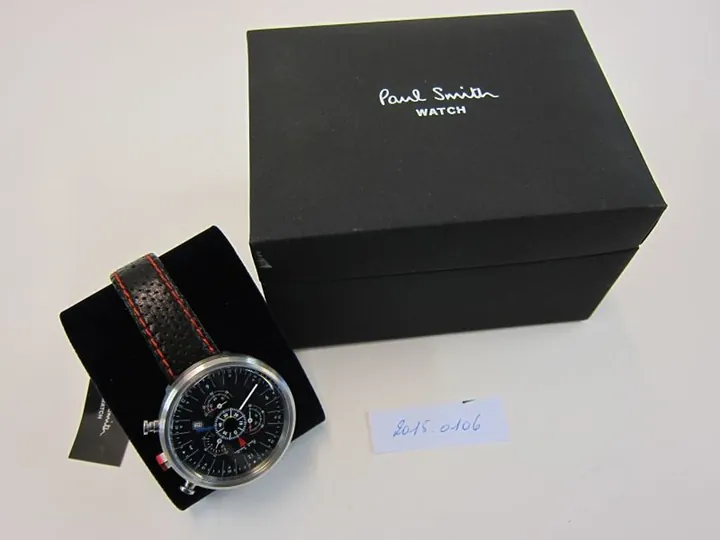
Wristwatch, 2010
Modemuseum Hasselt
Wristwatches · 2018 (Series 4 released in September 2018; '1977' in the source is the model number A1977)
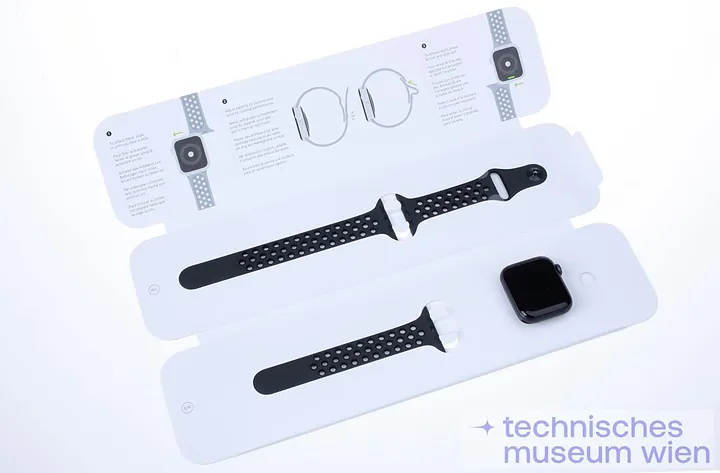
Apple Watch Series 4 (GPS, 40 mm, model A1977), 2018
Vienna Museum of Science and Technology
Wristwatches · c. 2010s
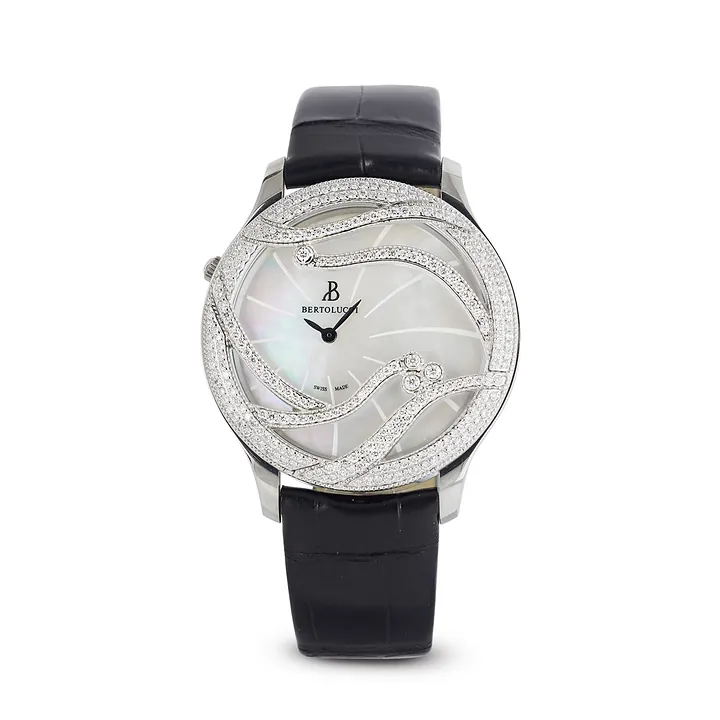
Bertolucci Stria III, ref. 11513.50.45.B88.6C1.501, c. 2010s
Antiquorum auction archive, Geneva
Wristwatches · c. 2010s
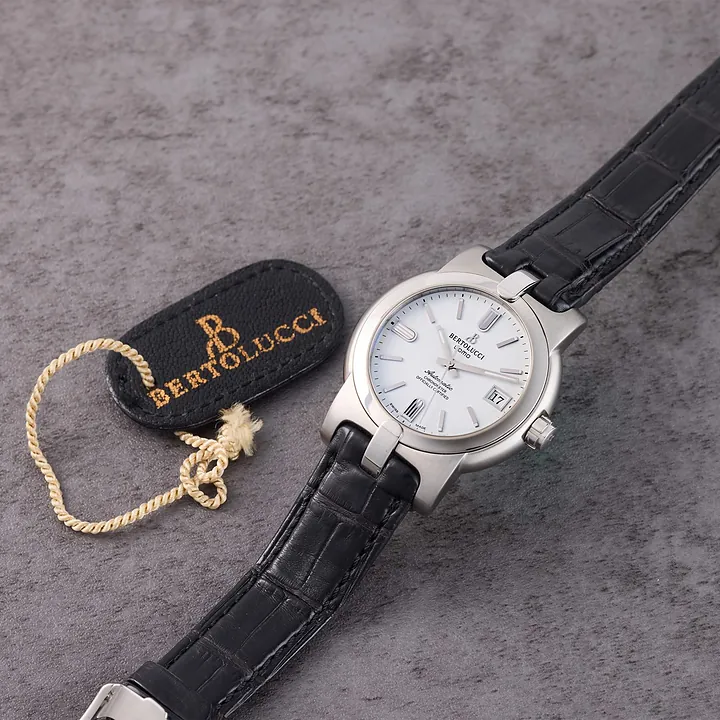
Bertolucci Uoma, ref. 824.51.41.10B, c. 2010s
Antiquorum auction archive, Geneva

Wristwatches · c. 2010s
Breguet Type XXI, ref. 3810, c. 2010s (Antiquorum Lot 381-24)
Antiquorum auction archive, Geneva

Wristwatches · c. 2010s
Breguet Type XXI, ref. 3810, c. 2010s (Antiquorum Lot 386-229)
Antiquorum auction archive, Geneva

Wristwatches · Sold in September 2010
Breitling Cosmonaute, ref. A 22322, Sold in September 2010
Antiquorum auction archive, Geneva
Wristwatches · c. 2010s
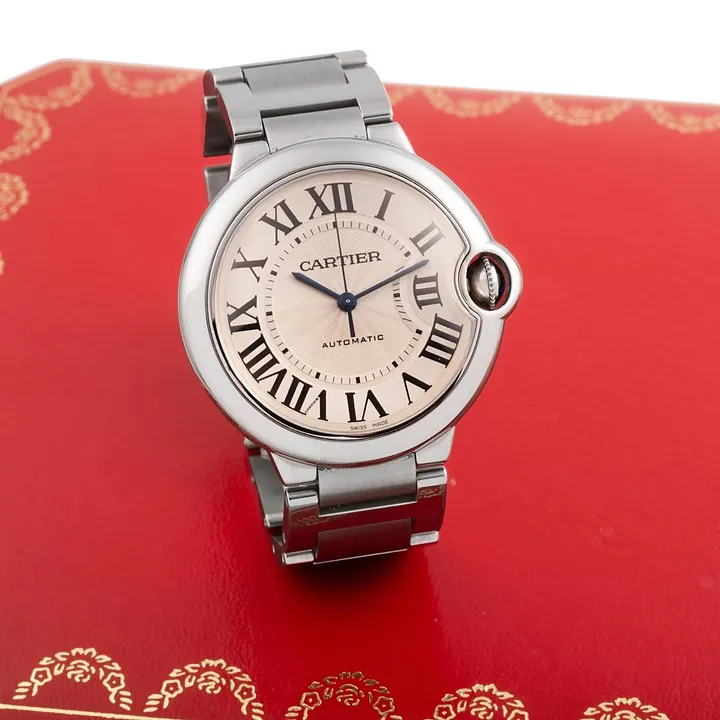
Cartier Ballon Bleu, ref. 3284, c. 2010s
Antiquorum auction archive, Geneva