
Clocks · Longcase clock
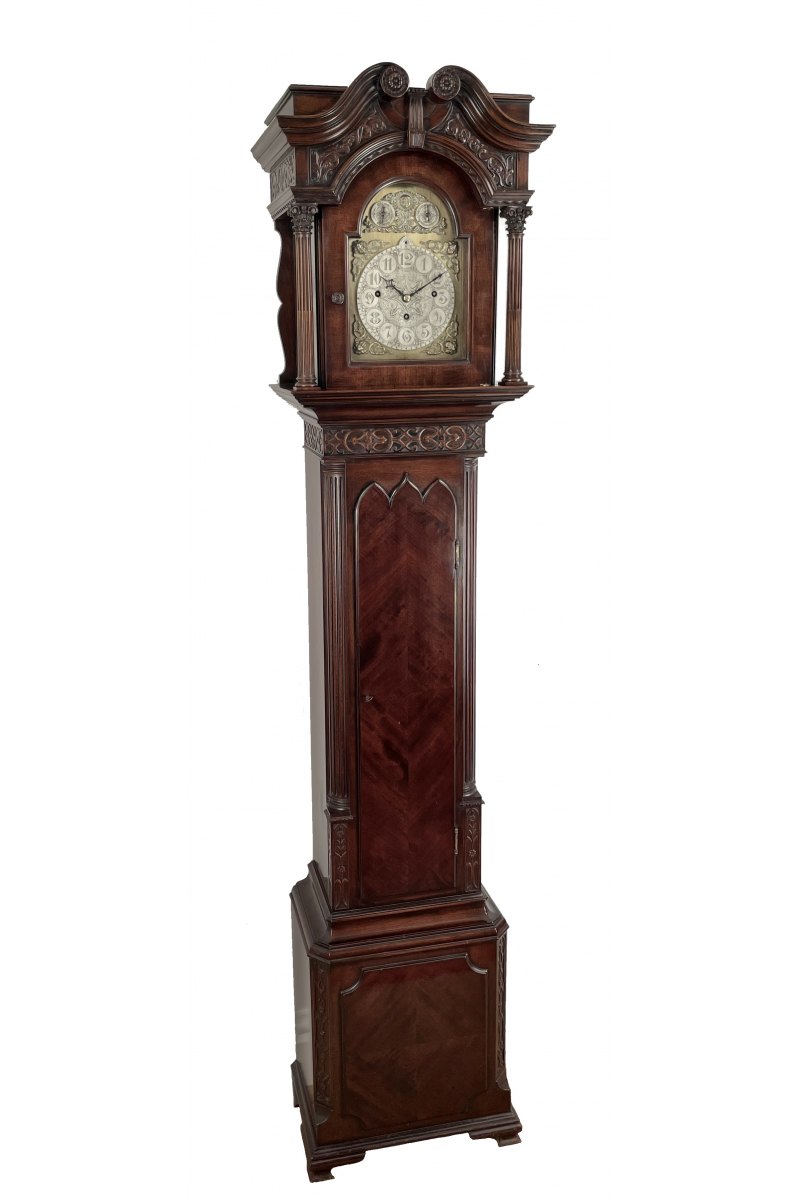
Small grandmother clock by Hunt & Roskell, London, c. 1870
- Maker / attribution
- Hunt & Roskell (maker)
- Date
- c. 1870
- Historical period
- Industrial Revolution (1850 – 1900)
- Country of origin
- England
- Place
- London
- Object type
- Longcase clock
- Materials / technique
- mahogany
- Dimensions
- Height 5 ft 8 in (173 cm)
- Stock no.
- Product 551
- Credit line
- Dealer listing, P A Oxley (product 551)
- Catalogue title (original)
- Small Grandmother clock by Hunt & Roskell of London (English)
View the source record (dealer listing) ↗ (opens another website in a new tab)Suggest a correction
Record summary
Catalogued by P A Oxley (dealer), Wiltshire (stock number Product 551), this is a longcase clock by Hunt & Roskell, made in London, England, dated c. 1870. The Atlas places it in the Industrial Revolution period (1850 – 1900) of its Clocks collection. Materials and techniques recorded by the source: mahogany. Recorded dimensions: Height 5 ft 8 in (173 cm). The record is illustrated with 5 photographs.
Assembled from the source record's structured fields. Dates and attributions are given as the source states them; where a field is missing the Atlas leaves it blank rather than estimating.
Catalogue description
Dealer description — P A Oxley
An extremely unusual & high quality Grandmother clock. Unusually this particular example features a triple fusee movement rather ran being weight driven. The reason is almost certainly because the three large weights required would be unable to fit in such a slim case. The movement also features half deadbeat escapement, maintaining power, strike/silent and a chime selection for Whittington and Cambridge striking on a row of bells. The main hour is struck on a coiled gong. The dial is beautifully engraved and features a solid centre, blued steel hands and brass spandrels. To the arch there are two subsidiary dials which control the strike/silent and chime selection. There is also a regulation adjustment above number XII. The dial is also signed by the maker, Hunt & Roskell, London. The mahogany case is of exceptional quality and points towards some of the finest Cabinetmakers of the late 19th century. Both the trunk door and base panel are veneered with bookmatched mahogany. The case is also decorated with extensive and finely cut carving featuring flowers, leaves and acorns. The base finishes with small ogee feet and also canted corners to the sides. The swan neck top to the hood is reminiscent of the 18th century longcase clocks made in Northern England. The Corinthian capitals to the turned pillars are of the highest quality. Note: The movement is currently in working order but before delivery it will be fully serviced and overhauled and then guaranteed for 3 years Although this movement is of the highest quality there are features within the mechanism that show that it started life as a bracket clock movement. It’s very plausible that as a large Clock Manufacturer, Hunt & Roskell may have made large numbers of standard movements for their bracket clocks. These were then placed in storage until required for an order. Hunt & Roskell was a renowned jewellers and silversmiths on Bond Street in London who for many years held the Royal Warrant of Queen Victoria. The firm was the successor to the celebrated silversmith Paul Storr who had left Rundell, Bridge & Rundell to set up his own workshop on Harrison Street near Clerkenwell in 1819. They exhibited at the Great Exhibition held in 1851 at the Crystal Palace in London's Hyde Park where they were noted for the splendour of their display, reputedly worth a total of £100,000.
Historical context
Industrial Revolution (1850 – 1900)
American interchangeable-parts manufacture; railroad time standards; Swiss and German factory systems.
Factory production transformed the clock into an everyday object. American makers (Seth Thomas, Ansonia, Waterbury) and German factories (Junghans, Gustav Becker, Lenzkirch) sold millions of shelf, wall and alarm clocks worldwide; France produced standardised Paris movements and carriage clocks; electric time distribution began.
Read the period in the timelineMore clocks from this periodEarlier: Precision & Scientific Horology
Atlas type guide
Longcase (tall-case or grandfather) clocks
The longcase clock was born from two seventeenth-century innovations: Christiaan Huygens's pendulum (1656–57) and the anchor escapement (c. 1670). A long seconds pendulum, nearly a metre long, swings with a small arc, and enclosing it together with the driving weights in a tall wooden case protected the mechanism and created a new piece of furniture. London makers such as Ahasuerus Fromanteel, Thomas Tompion and Joseph Knibb set the pattern.
By the eighteenth century longcase clocks were made throughout Britain, the Netherlands, Scandinavia (the Swedish Mora clock), France (the Comtoise from the Franche-Comté), Germany and colonial America. Eight-day movements with two weights became standard in better clocks; thirty-hour clocks with one weight and a rope or chain were cheaper alternatives.
What to look for
- Winding holes in the dial: two (eight-day, going and striking) or none (thirty-hour, pulled up by a chain).
- Brass dials with applied chapter rings (earlier) versus painted iron 'white' dials (after c. 1770 in Britain).
- Moon-phase arches, date apertures, seconds dials and maker's name on the dial.
- Case woods and style: ebonised, walnut marquetry, lacquer, oak or mahogany; regional styles from London, Lancashire, Scotland or America.
- Whether the movement and dial match the case — 'marriages' are common.
Dating clues
- Square brass dials suggest c. 1670–1720; arched brass dials c. 1715–1790.
- Painted (white) dials were made by Birmingham dial-makers from about 1772.
- Comtoise clocks with repoussé pendulums are mostly nineteenth century.
General guidance written by the Atlas editors about this kind of object. It is not a statement about this particular piece; for that, rely on the source record above and on physical examination.
Related records
Pocket Watches · 1853 (hallmarked London)
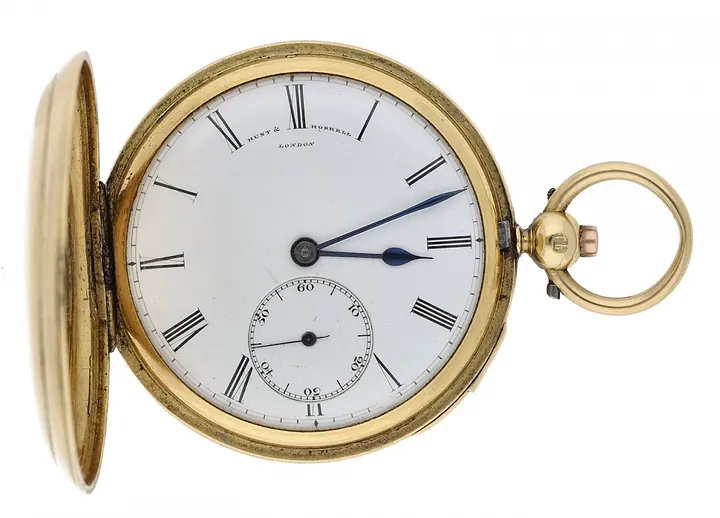
Victorian small 18ct quarter repeating lever hunter pocket watch by Hunt & Roskell, London, hallmarked London 1853
Gardiner Houlgate (auction house), Corsham
Clocks · 1830–1870
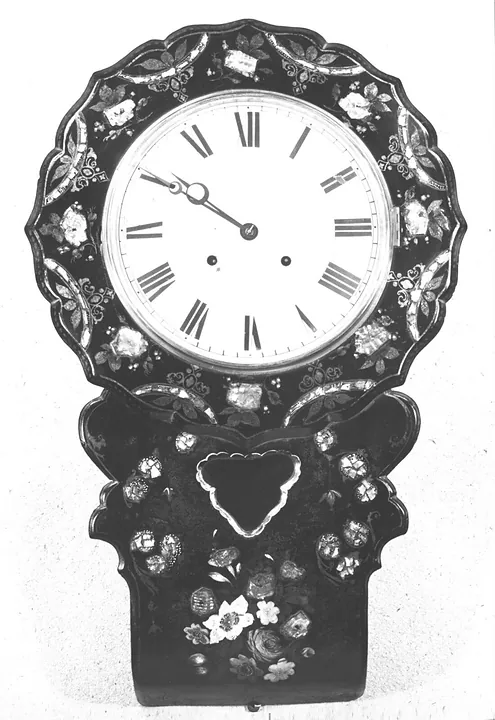
Wall clock in a papier mâché case with painted decoration. English, mid 19th century.
Victoria and Albert Museum, London
Clocks · 1840–1900
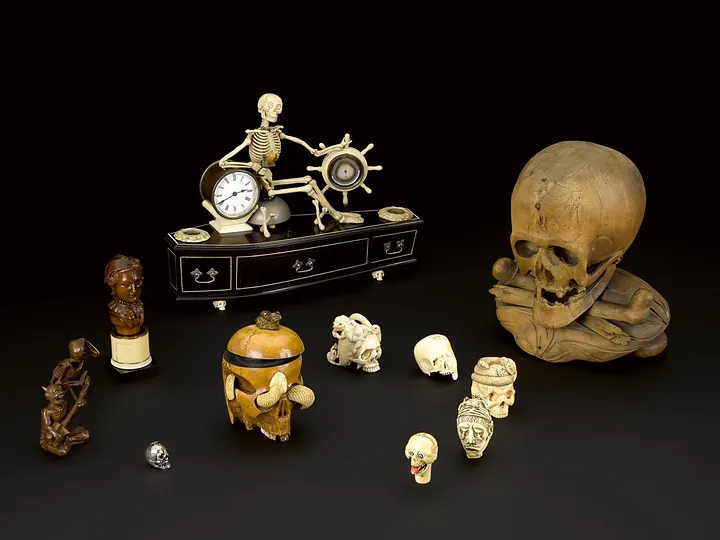
Alarm clock, mounted on model of coffin with skeleton, probably English, 1840–1900
Science Museum Group, London
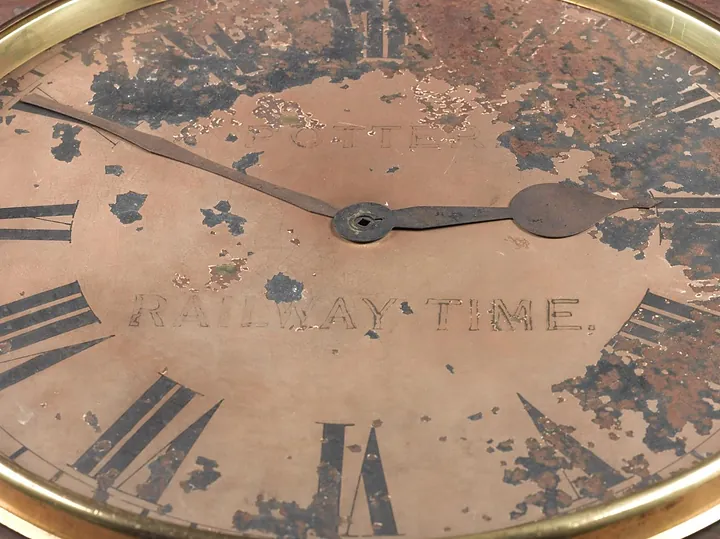
Clocks · 1840–1880
Clock dial marked "Potter, Railway Time" with two hands, unknown maker, British, 1840–1880
Science Museum Group, London
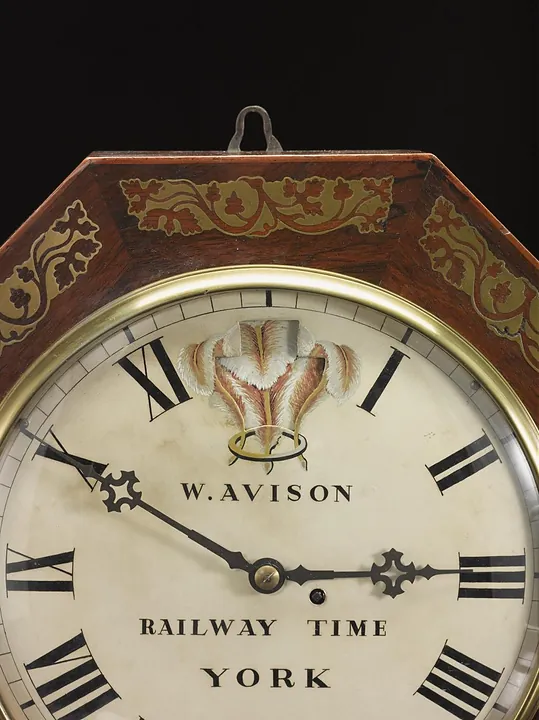
Clocks · 1840–1880
Wall Clock in octagonal case with Prince of Wales Feathers above makers name "W. Avison, Railway Time, York", made by William Avison, England, 1840–1880.
Science Museum Group, London
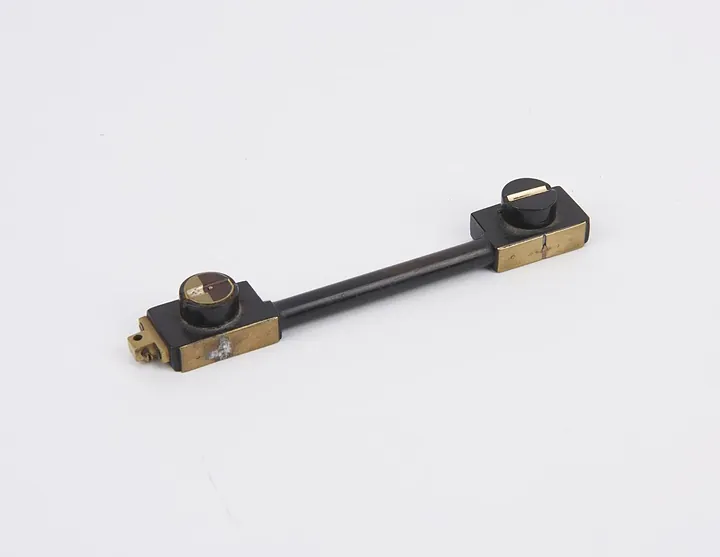
Clocks · 1841–1870
Contact bar from electric clock, unsigned, London, England, 1841–1870
Science Museum Group, London
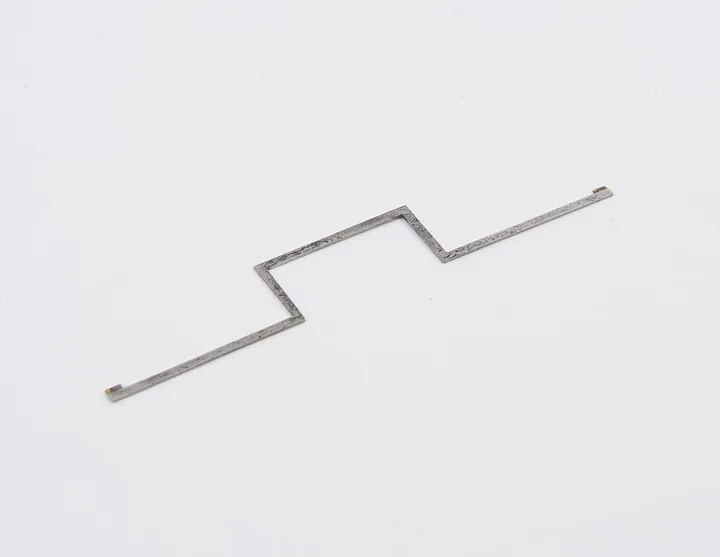
Clocks · 1841–1870
Contactor from electric clock, unsigned, London, England, 1841–1870
Science Museum Group, London
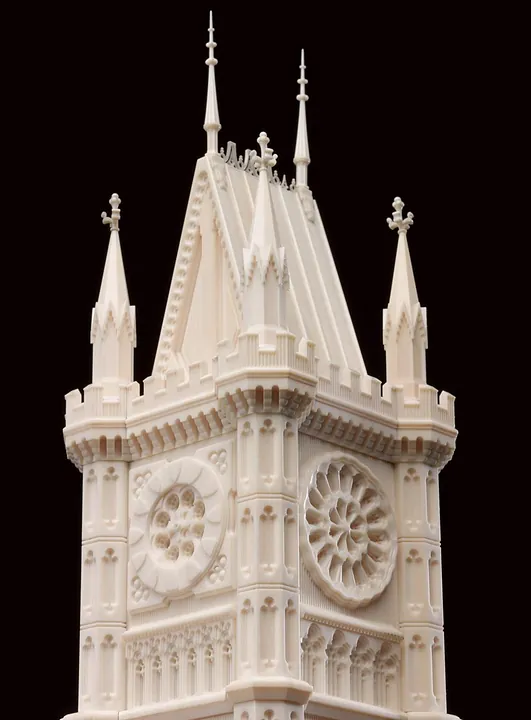
Clocks · 1843–1884
One ivory gothic clock tower & travelling case, by Holtzapffel and Company, London, England, 1843–1884
Science Museum Group, London