
Pocket Watches · Pocket watch
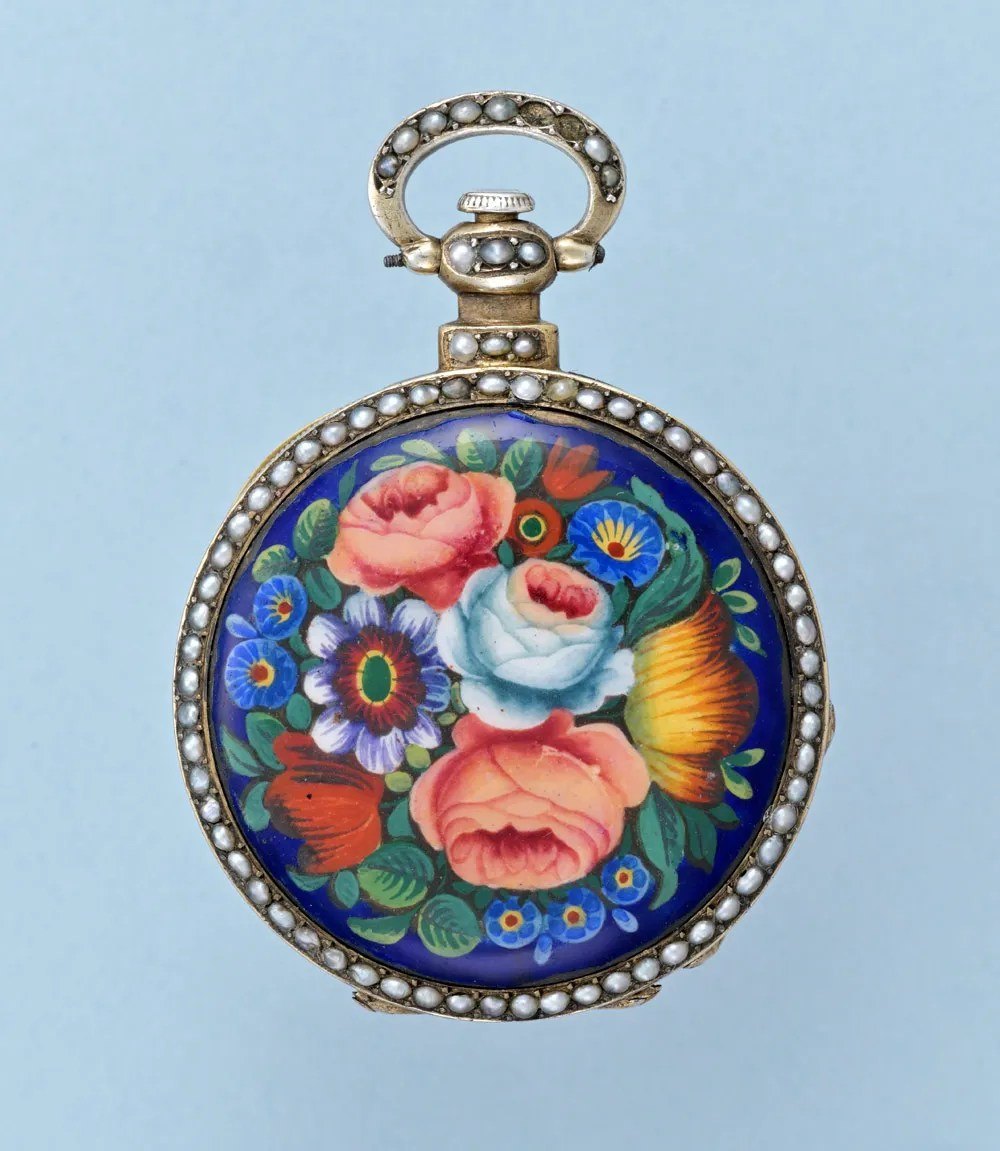
Small Gilt and Enamel Chinese Market Watch, circa 1860
- Maker / attribution
- Unrecorded in source
- Date
- c. 1860
- Historical period
- Industrial Revolution (1850 – 1900)
- Country of origin
- Unrecorded in source
- Object type
- Pocket watch
- Materials / technique
- gilt, enamel
- Stock no.
- A1312
- Credit line
- Dealer listing, Pieces of Time (A1312)
- Catalogue title (original)
- Small Gilt and Enamel Chinese Market Watch (English)
View the source record (dealer listing) ↗ (opens another website in a new tab)Suggest a correction
Record summary
Catalogued by Pieces of Time (dealer), London (stock number A1312), this is a pocket watch, dated c. 1860. The Atlas places it in the Industrial Revolution period (1850 – 1900) of its Pocket Watches collection. Materials and techniques recorded by the source: gilt, enamel. The record is illustrated with 5 photographs.
Assembled from the source record's structured fields. Dates and attributions are given as the source states them; where a field is missing the Atlas leaves it blank rather than estimating.
Catalogue description
Dealer description — Pieces of Time
A mid 19 th Century Swiss cylinder in a pearl set silver gilt and enamel case made for the Chinese market. Keywind gilt bar movement with suspended going barrel. Plain cock with polished steel regulator, plain three arm gilt balance with blue steel spiral hairspring. Polished steel cylinder, steel escape wheel. Signed engine turned silver dial, Roman numerals, blue steel hands. Silver gilt and enamel open face case, the bezels, oval pendant and bow set with split pearls. Polychrome enamel back decorated with flowers and foliage on a dark blue ground. Wound and set through the silver gilt cuvette engraved with initials.
Historical context
Industrial Revolution (1850 – 1900)
American interchangeable-parts manufacture; railroad time standards; Swiss and German factory systems.
Machine production with interchangeable parts, pioneered by Waltham (1850s) and adopted by Elgin, Longines, Omega and others, made reliable lever watches widely affordable. Keyless winding became standard, railroad watch standards were introduced (1890s), and Swiss and American industries competed globally.
Read the period in the timelineMore pocket watches from this periodEarlier: Precision & Scientific Horology
Atlas type guide
Watches for the Chinese and Ottoman markets
From the late eighteenth century English and Swiss makers produced watches specifically for export to China and the Ottoman Empire. For China, Fleurier houses such as Bovet, Juvet and Vrard made matching pairs of watches with richly engraved and decorated movements, often with the duplex escapement whose centre seconds hand jumps in full seconds. For Ottoman buyers, London makers such as George Prior and Markwick Markham supplied verge watches with Turkish numerals in triple or quadruple cases of tortoiseshell and silver.
These watches reflect global trade networks and the tastes of distant markets, and are important evidence for cross-cultural exchange in horology.
What to look for
- Engraved, fully decorated movements visible under a glass back.
- Duplex escapement with a jumping centre seconds hand.
- Chinese characters on the movement (e.g. the maker's name in transliteration).
- Turkish (Ottoman) numerals on the dial and multiple protective outer cases.
Dating clues
- Chinese-market Fleurier watches: c. 1820–1900.
- English Ottoman-market watches: c. 1770–1850.
General guidance written by the Atlas editors about this kind of object. It is not a statement about this particular piece; for that, rely on the source record above and on physical examination.
Read next:Verge escapement
Related records
Pocket Watches · 1880
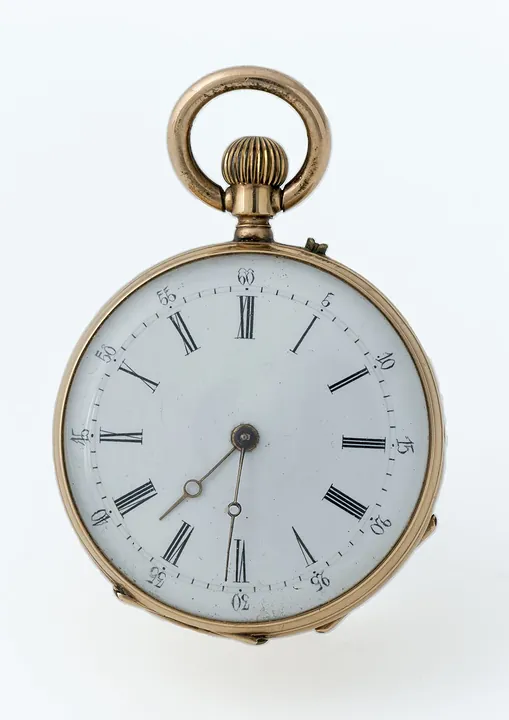
Pocket watch, 1880
Museum Rotterdam
Pocket Watches · mid 19th century
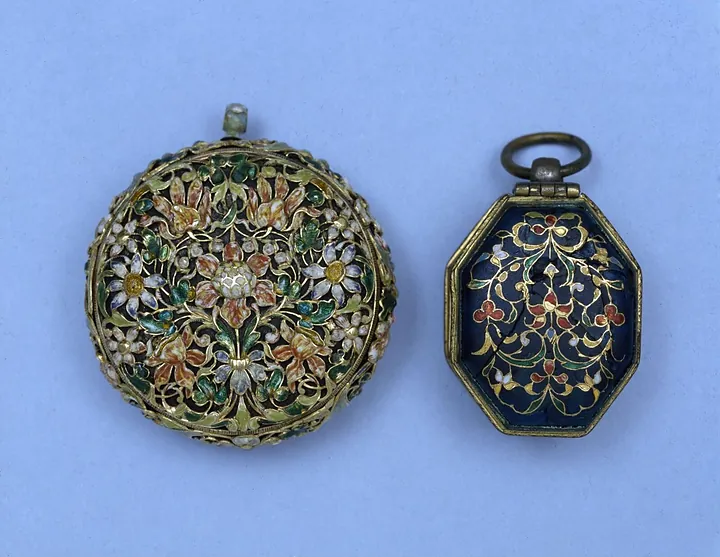
Watch, enamelled gilt brass of floral design, signed 'A Bloys.', France, in an early 17th century style but possibly mid 19th century
Victoria and Albert Museum, London
Pocket Watches · 1835–1875
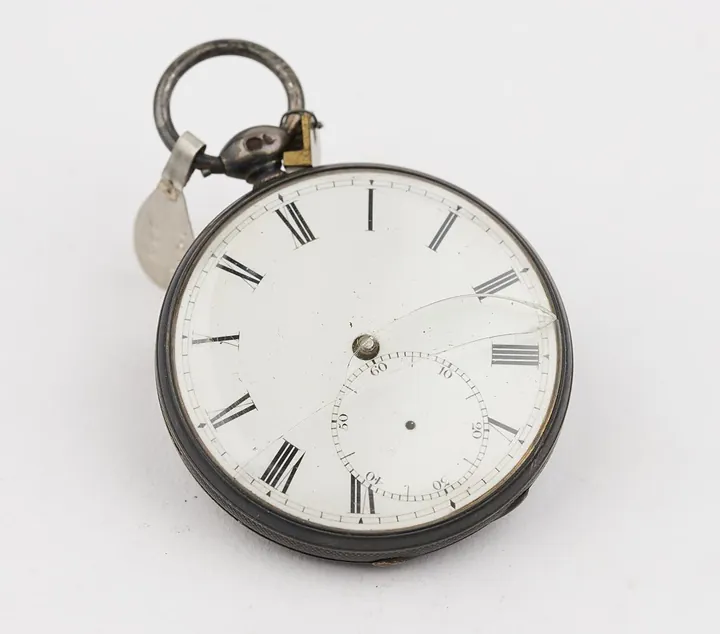
Pocket watch by Cornelius Brooks Holliday, England, 1835–1875
Science Museum Group, London
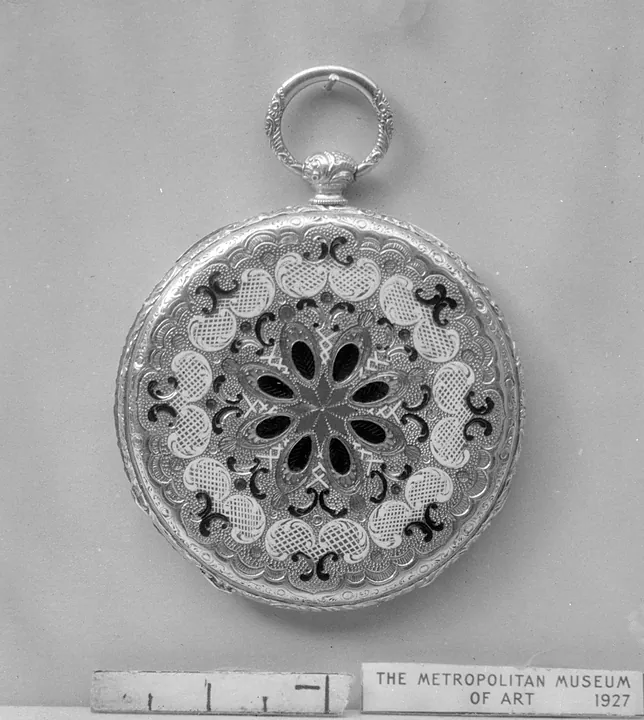
Pocket Watches · c. 1840–60
Watch by Callaud, c. 1840–60
The Metropolitan Museum of Art, New York
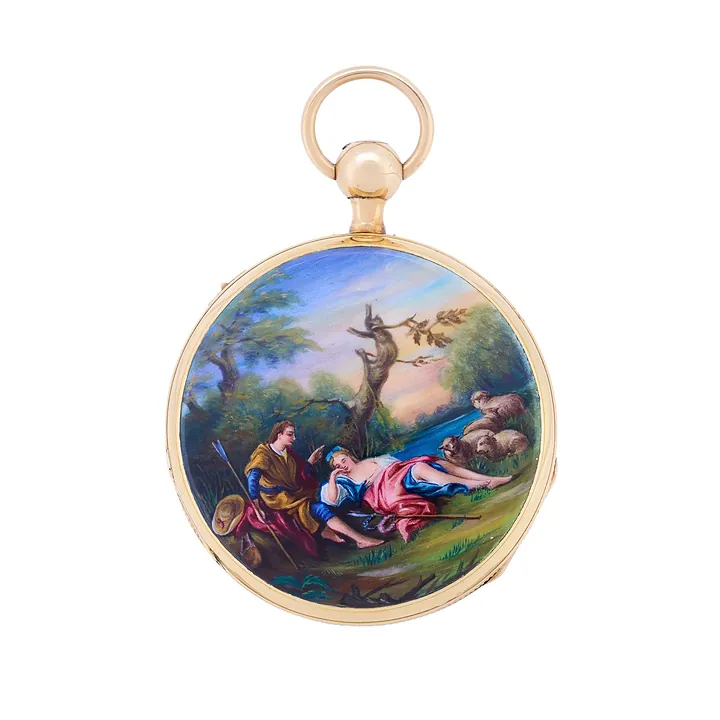
Pocket Watches · c. 1840-1860s
G.H. Berblinger pocket watch, c. 1840-1860s
Antiquorum auction archive, Geneva
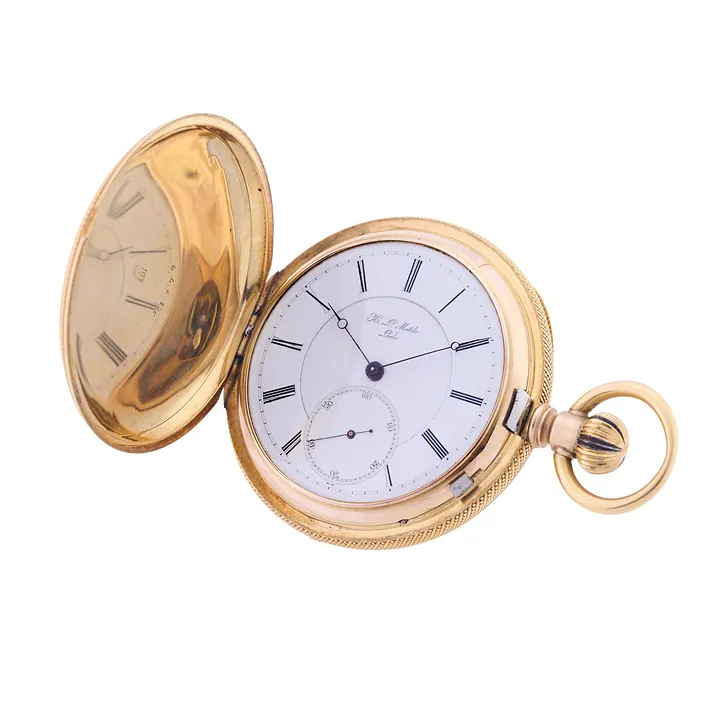
Pocket Watches · c. 1840-1860s
H.L Matile Locle pocket watch, c. 1840-1860s
Antiquorum auction archive, Geneva
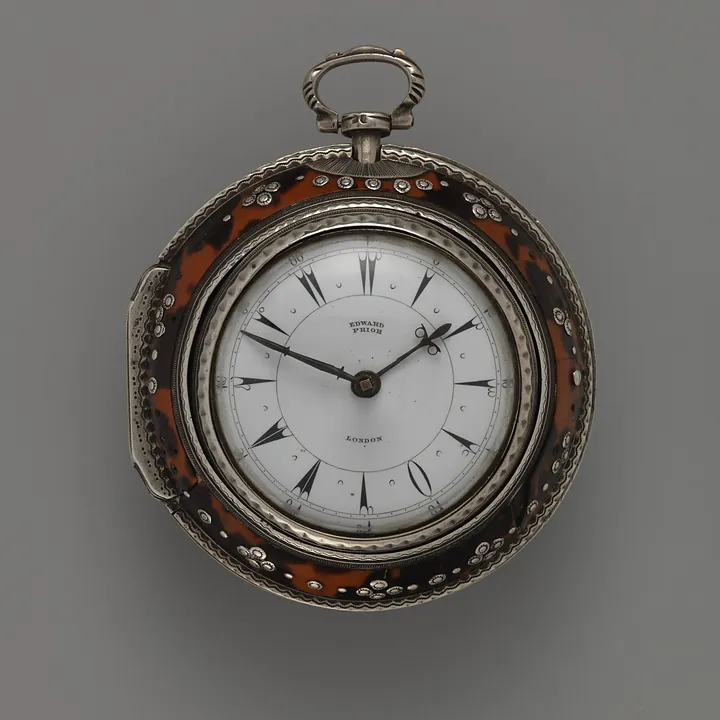
Pocket Watches · c. 1849–50
Watch by Edward Prior, England, c. 1849–50
The Metropolitan Museum of Art, New York
Pocket Watches · 1845–1855
Pocket watch, 1845–1855
Museum of City History Leipzig