
Pocket Watches · Skull watch
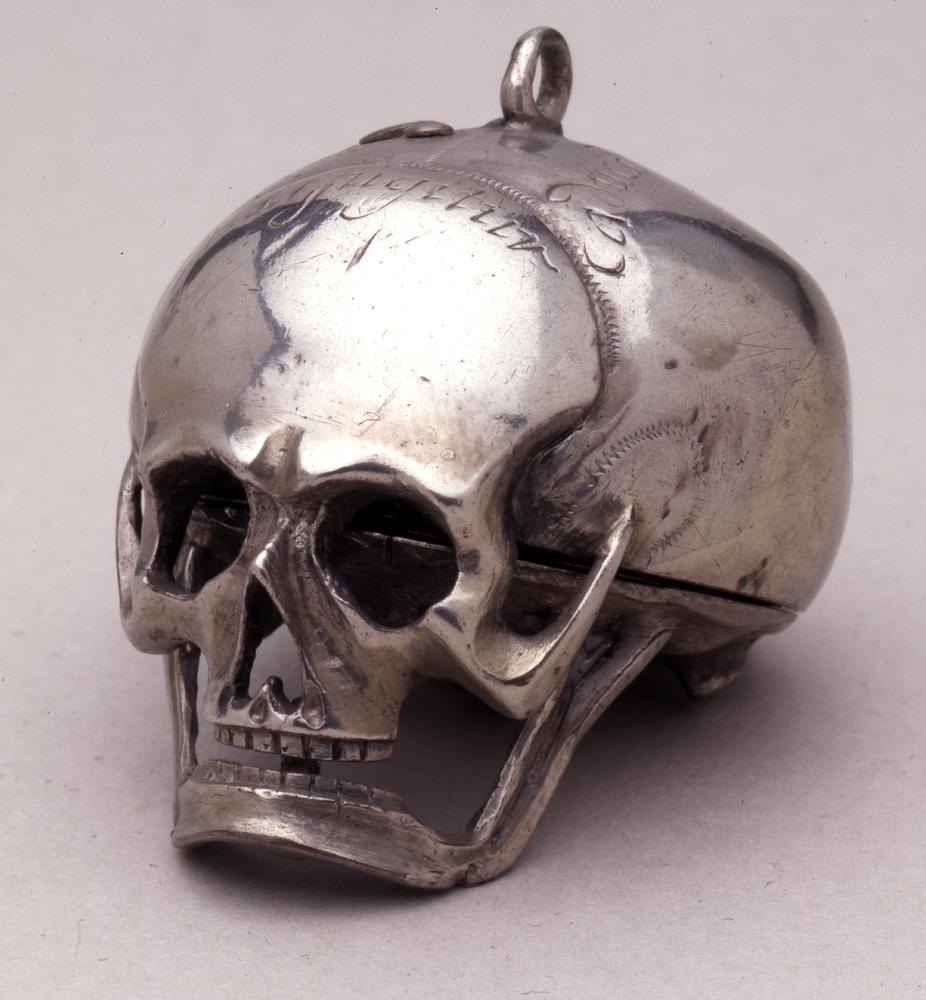
Silver cased verge watch in the form of a human skull
- Maker / attribution
- J C Vuolf (Made by)
- Date
- 1660–1670
- Historical period
- Early Modern Horology (1600 – 1750)
- Country of origin
- Germany
- Place
- Germany
- Object type
- Skull watch
- Materials / technique
- silver
- Dimensions
- Height: 38.50 millimetres (case, including loop) Thickness: 36.50 millimetres Width: 32 millimetres
- Holding institution
- British Museum
- Accession / object no.
- 1874,0718.41
- Credit line
- British Museum, London
- Catalogue title (original)
- Silver cased verge watch in the form of a human skull (English)
View the source record ↗ (opens another website in a new tab)Suggest a correction
Record summary
Held and catalogued by British Museum (object number 1874,0718.41), this is a skull watch by J C Vuolf, made in Germany, dated 1660–1670. The Atlas places it in the Early Modern Horology period (1600 – 1750) of its Pocket Watches collection. Materials and techniques recorded by the source: silver. Recorded dimensions: Height: 38.50 millimetres (case, including loop) Thickness: 36.50 millimetres Width: 32 millimetres. The record is illustrated with 5 photographs.
Assembled from the source record's structured fields. Dates and attributions are given as the source states them; where a field is missing the Atlas leaves it blank rather than estimating.
Catalogue description
Description — British Museum
Movement frame: Full-plate with circular gilt-brass plates and four baluster pillars. Mainspring & set-up: Gilt-brass barrel with tangent-screw set-up mounted on the potence-plate. Fusee & stop-work: Gilt-brass fusee with chain and English stop-work. Train: Four wheel train, the contrate wheel solid. Escapement & balance: Verge escapement, the crown wheel running between riveted potence and counter-potence. There have been extensive alterations to both potence and counter-potence suggesting that the crown wheel is most likely to be a replacement. Verge and steel 2-arm balance not original. The pierced and engraved gilt-brass foliate balance cock is also a replacement. There are a number of vacant holes,both threaded and plain, in the potence-plate where it appears that the original balance cock was replaced by a balance bridge and balance spring. Dial & hand: An engraved border on the front of the pillar-plate surrounds the pinned-on silver dial which has Roman hours I-XII, arrow-head half-hour marks and a quarter circle. The blued-steel hand is a replacement. : CASE: Silver case in the form of a human skull, the lower plate, including the lower jaw being hinged at the back. On top there is a cover for the winding hole. Silver hanging loop. There are inscriptions in various places on the outside of the skull. Movement hinged to case at XII.
Curator's comments — British Museum
Text from 'Watches', by David Thompson, London, 2008, p. 46-47. Johann Conrad Wolf SILVER CASED VERGE WATCH IN THE FORM OF A SKULL DONAUWÖRTH, GERMANY, c. 1660 SIGNED: 'J C Vuolf The miniature human skull as a memento mori and symbol of death has a long history dating back to the medieval period. During the seventeenth century there was a fashion for watches in this form, which were perhaps taken more seriously than they might be today. Quite a number of examples survive, perhaps the most famous of which is the so-called 'Mary Queen of Scots' skull watch, now in the collections of the Worshipful Company of Clockmakers at the Guildhall in London. Recently this has been shown to be spurious: although a genuine example of a large-scale seventeenth-century skull watch, it had no connection with Mary Stuart, who was executed nearly two centuries before the watch was made. This watch is signed 'J C Vuolf'; probably this was Johann Conrad Wolf, who was born in Worms but is recorded in 1638 in the town of Donauwörth, just to the north of Augsburg, in the direction of Nuremberg and close to Friedberg. The movement of this watch does not inspire any great interest, being a standard verge with fusee. The existence of a four-wheel going train and a fusee chain suggests that the watch dates from the second half of the seventeenth century, but from before the introduction of the balance spring: a date of 1660-70 would be appropriate. There are also a number of now vacant holes in the movement's back plate where a balance bridge and geared regulator were fixed when the watch was modernized to operate with a balance spring. All these added components have since been removed and a new balance cock and balance installed, which give a seventeenth-century appearance but are nonetheless modern. The early modernization also necessitated the modification of the right-hand blued-steel set-up bracket, which is now riveted to the plate, unlike its left-hand partner, which is properly screwed on. A plain dial with only an engraved chapter ring is also a feature found in German watches of this period, particularly in Friedberg and Augsburg, two active centres of watchmaking at the time. More interesting than the movement and dial is the cast silver skull itself. The construction is typical, with the lower jaw and bottom of the skull opening to reveal the dial and all three elements - movement, upper skull and lower skull - hinging together at the back. Around the top of the skull are four inscriptions: 'vita fugitur' (life is fleeting), engraved across the front temple; 'caduca despice' (look down upon a fallen thing), over the right side; 'aesterna respice' (look upon eternity), over the top of the left side; and finally, at the back of the skull, an engraving of an hour glass flanked by the words 'incerta hora' (the hour [of death] is uncertain). All these phrases provide timely reminders of the fleeting nature of life and are, of course, fully in keeping with a memento mori skull watch. A similar watch, containing a movement by Johann Georg Engelschalk, now in the Württembergisches Landesmuseum in Stuttgart, has similar Latin inscriptions on the skull, including 'caduca despice' and 'aeterna respice'. While not identical, these two watches would seem to come from a common tradition and it is possible that the two skulls were made by the same craftsman, perhaps in Augsburg. View more about curator's comments Bibliography: Good, Richard, WATCHES IN COLOUR, Poole 1978, plate 3.
Inscriptions & marks
signature; J C Vuolf [potence-plate]; inscription; all on the outside of the skull.; vita fugitur; aesterna respice; caduca despice; incertita hora (with an engraved sand-glass]; see curators comment for translation
Provenance
Previous owner/ex-collection:, Sir Charles Fellows; Bequeathed by:, Lady Harriet Fellows
Historical context
Early Modern Horology (1600 – 1750)
Huygens' pendulum and balance spring transform accuracy; English makers develop the anchor and deadbeat escapements.
The balance spring (c. 1675) improved watches dramatically and introduced the minute hand. English pair-cased verge watches with pierced balance cocks and French oignons were typical; enamel painting at Blois and Geneva, and the repeating watch (1680s), made watches objects of great refinement.
Read the period in the timelineMore pocket watches from this periodEarlier: Renaissance Horology
Atlas type guide
Early spring-driven watches
Portable spring-driven timepieces appeared in southern Germany, France and Italy in the early sixteenth century; Peter Henlein of Nuremberg is traditionally credited, although the historical record is complex. These early watches were worn as pendants or carried, had iron or brass movements with a verge escapement and a foliot or small balance, and used a stackfreed or fusee to equalise spring force. They indicated hours only and were notoriously inaccurate.
From the later sixteenth century watches were made in Blois, Paris, Geneva, London and Augsburg in oval, octagonal, cruciform, skull and other 'form' cases of rock crystal, gilt brass, silver and enamel. They were jewellery and status objects as much as timekeepers.
What to look for
- A single hour hand and often a touch-pin hour ring for feeling the time.
- Stackfreed (a cam and spring) instead of a fusee on German watches.
- Pierced and engraved cocks over the balance, fine gut fusee lines.
- Rock-crystal, enamelled or engraved form cases.
Dating clues
- Drum-shaped German watches: c. 1530–1580.
- Oval and form watches: c. 1580–1650.
- Before c. 1675 there is no balance spring; watches can vary by many minutes a day.
General guidance written by the Atlas editors about this kind of object. It is not a statement about this particular piece; for that, rely on the source record above and on physical examination.
Read next:FoliotThe Melanchthon watch
Related records
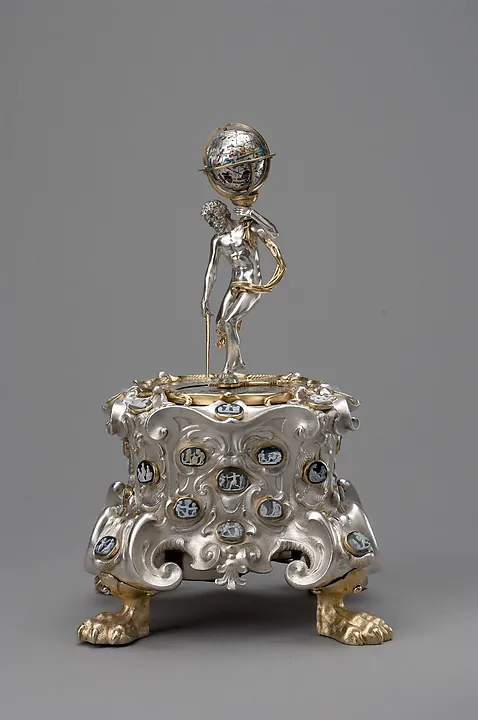
Pocket Watches · 1600–1699
Pocket watch by Georg Ernst, Germany, 1600–1699
Fine Arts Museum Vienna
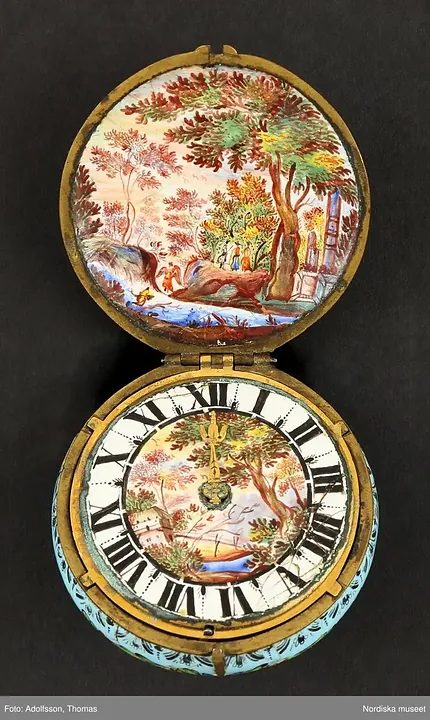
Pocket Watches · 1600–1699
Pocket watch by Johan Etmiller, Germany, 1600–1699
Nordic Museum Foundation
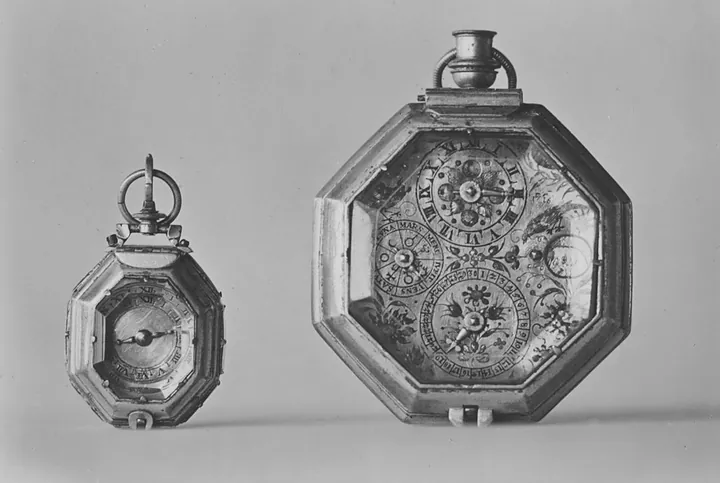
Pocket Watches · early 17th century
Watch with gilt brass case, crystal and blue glass panels signed 'Conradt Kreizer', Germany, early 17th century
Victoria and Albert Museum, London
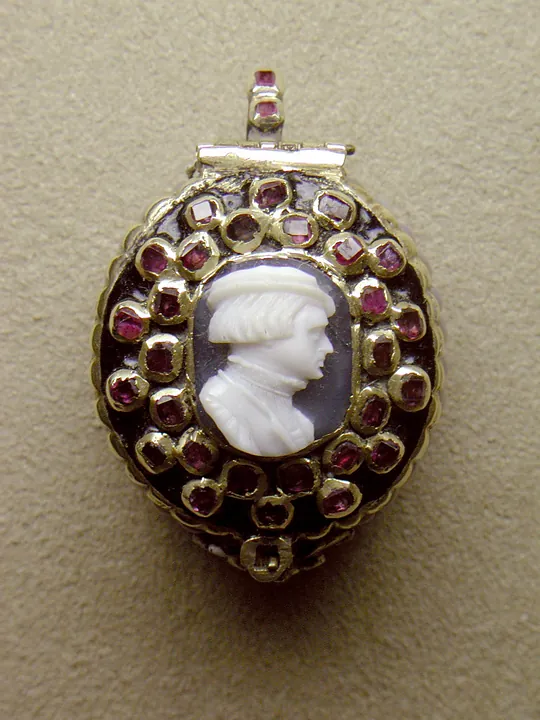
Pocket Watches · watch c. 1650, cameo 16th–17th century
Watch by Wilhelm Peffenhauser, Germany, watch c. 1650, cameo 16th–17th century
The Metropolitan Museum of Art, New York
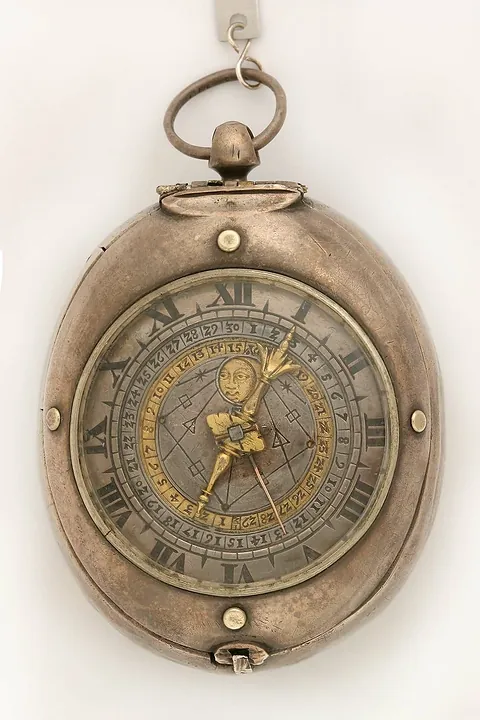
Pocket Watches · c. 1650
Pocket watch by Johann Sayller, Germany, c. 1650
German Clock Museum
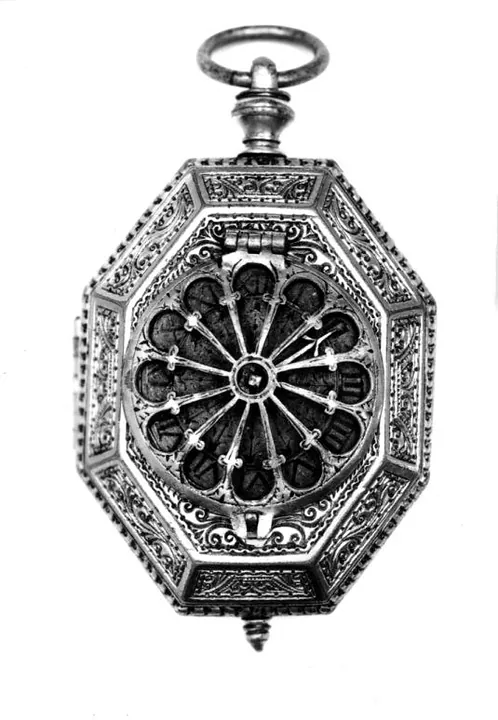
Pocket Watches · 1650–1699
Pocket watch, Germany, 1650–1699
Badisches Landesmuseum Karlsruhe
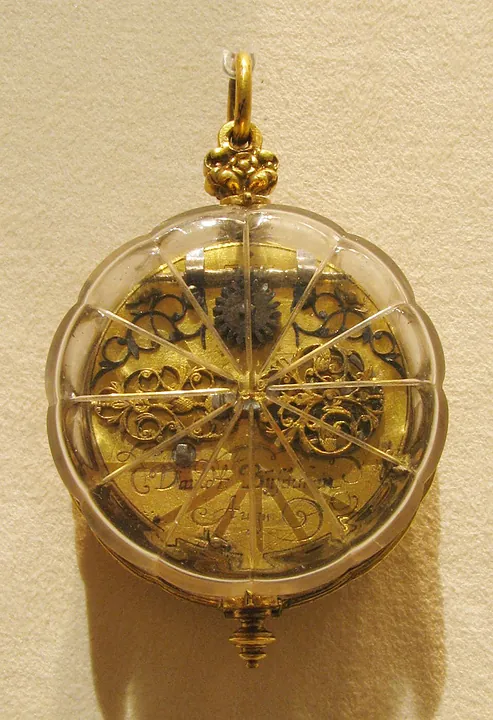
Pocket Watches · probably after 1657
Watch by David Buschman, Germany, probably after 1657
The Metropolitan Museum of Art, New York
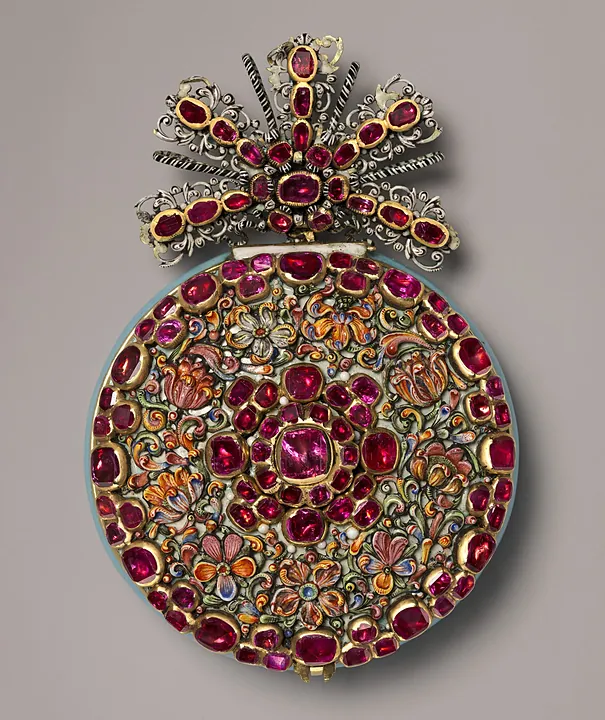
Pocket Watches · c. 1670
Watch by Nicolaus Rugendas the Younger, Germany, c. 1670
The Metropolitan Museum of Art, New York