
Pocket Watches · Pocket watch
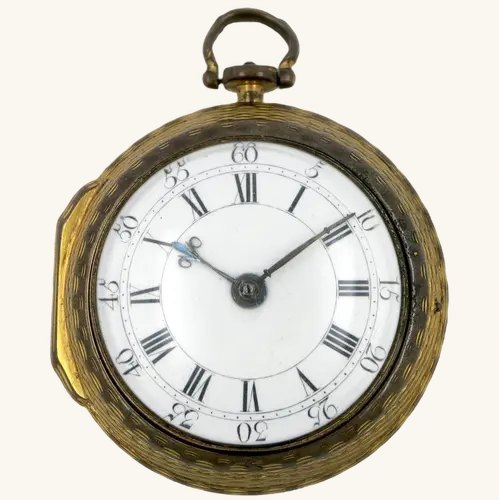
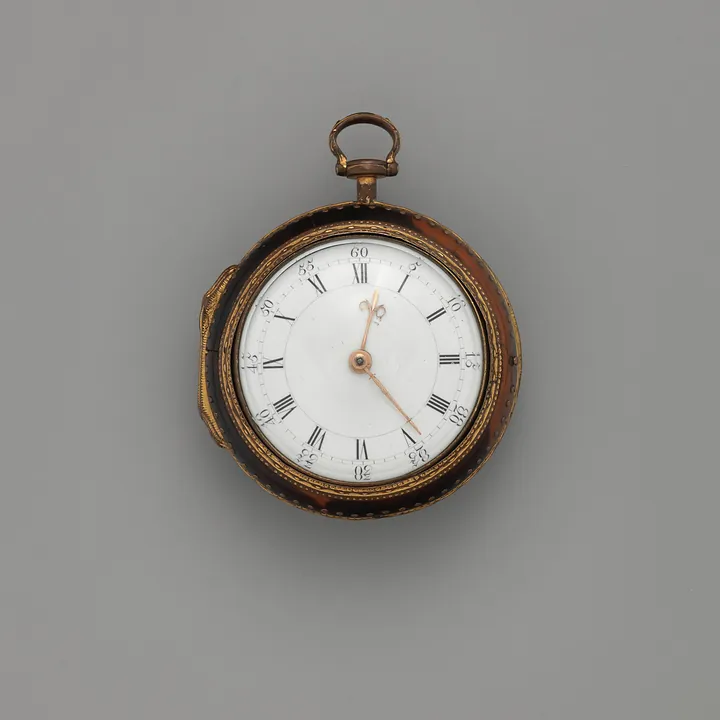
Shropshire verge Pocket Watch, 1790
- Maker / attribution
- Unrecorded in source
- Date
- 1790
- Historical period
- Precision & Scientific Horology (1750 – 1850)
- Country of origin
- England
- Object type
- Pocket watch
- Dealer
- WatchMuseum.org shop
- Stock no.
- Product 5977
- Credit line
- Dealer listing, WatchMuseum.org shop (product 5977)
- Catalogue title (original)
- Shropshire verge Pocket Watch (English)
View the source record (dealer listing) ↗ (opens another website in a new tab)Suggest a correction
Record summary
Catalogued by WatchMuseum.org shop (stock number Product 5977), this is a pocket watch, made in England, dated 1790. The Atlas places it in the Precision & Scientific Horology period (1750 – 1850) of its Pocket Watches collection. The record is illustrated with 6 photographs.
Assembled from the source record's structured fields. Dates and attributions are given as the source states them; where a field is missing the Atlas leaves it blank rather than estimating.
Catalogue description
Dealer description — WatchMuseum.org shop
Introducing our latest innovation, the EcoSmart Hydration Bottle, a perfect blend of functionality, sustainability, and style designed to revolutionize your hydration experience. Crafted from high-quality, BPA-free stainless steel, this bottle is not only durable but also environmentally friendly, ensuring you can enjoy your favorite beverages without compromising on health or the planet. Its sleek, modern design is complemented by a double-wall vacuum insulation technology that keeps your drinks cold for up to 24 hours or hot for up to 12 hours, making it an ideal companion for any adventure, whether it’s a hike in the mountains or a day at the office. The EcoSmart Hydration Bottle features a leak-proof, easy-to-open lid with a convenient carry handle, allowing for effortless transport wherever you go. With a generous capacity of 750ml, it ensures you stay hydrated throughout the day without the need for constant refills. Available in a range of vibrant colors and finishes, this bottle is not just a practical accessory but also a stylish statement piece. Embrace a sustainable lifestyle with the EcoSmart Hydration Bottle, where innovation meets eco-conscious living, and make a positive impact on the environment one sip at a time. This beautiful London verge watch dates back to the late 18th century. It features engraved gilt brass pair cases which are in excellent condition. The watch is powered by a gilt fusee movement with a verge escapement. The balance cock is intricately engraved and pierced, and it has four square baluster pillars and blued screws. The silver regulator disk adds an extra touch of elegance. The movement is signed by Issac Wood of Salop (Shrewsbury) and is numbered 945. It is running smoothly and is in very good condition overall. The watch has a flawless white enamel dial that is almost perfect. There is only some minor rubbing on the edge at 2 o’clock and a small flake from the center, but otherwise, it is in great shape. It also features 18th-century steel beetle and poker hands. The inner case of the watch is made of gilt brass and is marked by J.A. It is in very good condition with some wear to the gilding. The high dome bull’s eye crystal is intact and adds to the watch’s charm. The outer case is also made of gilt brass and has been beautifully engraved on both the bezel and back. It is in good condition with some wear to the gilding and to the catch button. The hinge and catch are complete and the case closes securely. Isaac Wood was a respected watchmaker from Shrewsbury, Shropshire, and his workmanship on this timepiece is evident. Born in 1735, he was the son of Richard Wood and passed away around 1801. This watch is a testament to his skill and attention to detail. Creator: Isaac Wood Place of Origin: Salop Date of Manufacture: 1790 Gilt pair cases, 47 mm Verge escapement Condition: Good
Historical context
Precision & Scientific Horology (1750 – 1850)
Harrison solves longitude; Mudge invents the lever; Breguet's Paris workshop defines the modern watch.
From 1750 to 1850 the watch became a precision instrument. Mudge's lever escapement, the cylinder escapement, Lépine's thin bar calibre, Breguet's innovations (overcoil, tourbillon, perpétuelle) and the pocket chronometer of Arnold and Earnshaw all date from this period, while verge watches remained common in cheaper production.
Read the period in the timelineMore pocket watches from this periodEarlier: Early Modern Horology
Atlas type guide
Verge and pair-cased watches
After Christiaan Huygens and Robert Hooke applied the balance spring around 1675, the verge watch became a reasonably reliable timekeeper and the minute hand became standard. Through the eighteenth century the typical English watch was a pair-cased verge: a fusee movement with a pierced, engraved balance cock, housed in an inner case and a separate protective outer case, often of repoussé gold, shagreen, tortoiseshell or enamel.
French watches of the same period were thicker 'oignons', later replaced by elegant thinner watches following Jean-Antoine Lépine's bar-bridge calibre of c. 1770. Dutch, Swiss and German makers supplied international markets, and verge watches were made until the mid-nineteenth century as cheaper alternatives to the cylinder and lever.
What to look for
- The pierced balance cock on the backplate: winged (continental) or with a foot (English); its style dates the watch.
- Fusee and chain visible through the movement; key winding through the dial (early) or case back.
- Hallmarks inside English silver or gold cases, which give a date letter.
- Maker's name and serial number engraved on the backplate; watch papers inside outer cases.
- Enamel dials (after c. 1720) versus earlier champlevé metal dials.
Dating clues
- Champlevé dials: c. 1680–1730; white enamel dials thereafter.
- English case hallmarks give the year of assay to within a year.
- Verge watches persisted in cheap production until c. 1850.
General guidance written by the Atlas editors about this kind of object. It is not a statement about this particular piece; for that, rely on the source record above and on physical examination.
Related records
Pocket Watches · c. 1740–60
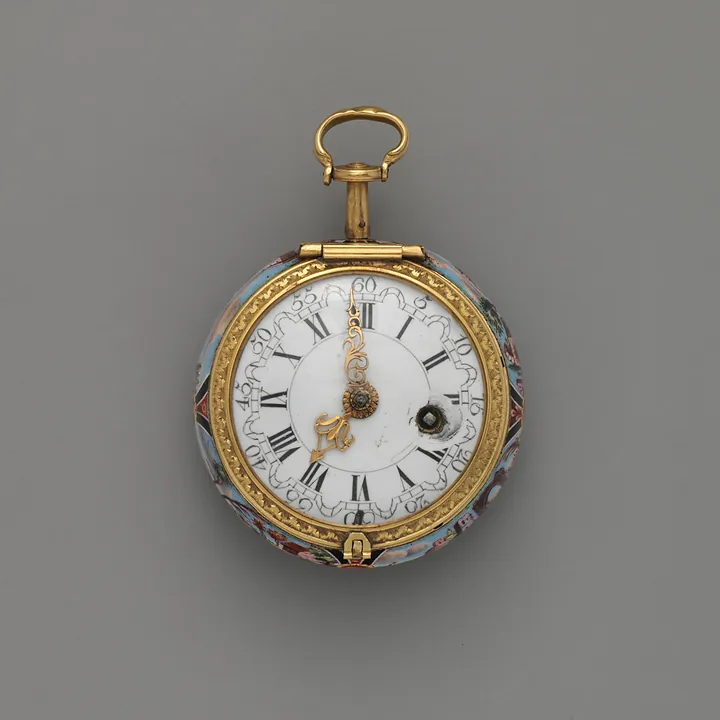
Watch by Charles Cabrier II, England, c. 1740–60 (The Met 17.190.1458)
The Metropolitan Museum of Art, New York
Pocket Watches · c. 1740–60
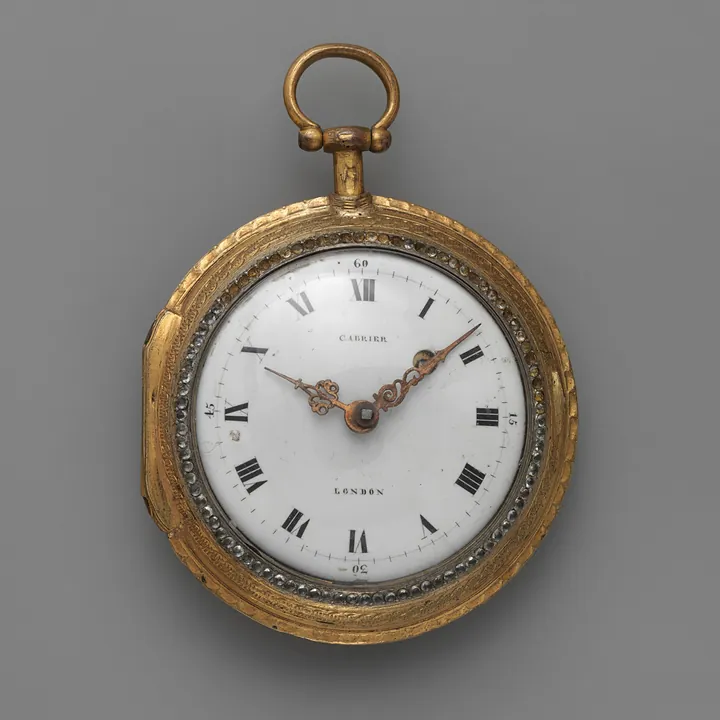
Watch by Charles Cabrier II, England, c. 1740–60 (The Met 17.190.1461)
The Metropolitan Museum of Art, New York
Pocket Watches · c. 1751–52
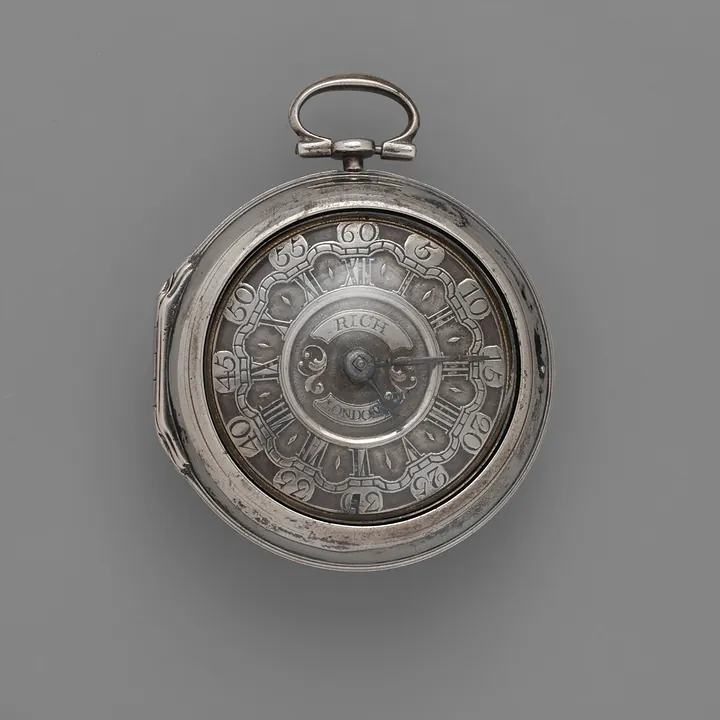
Watch by John Rich, England, c. 1751–52
The Metropolitan Museum of Art, New York
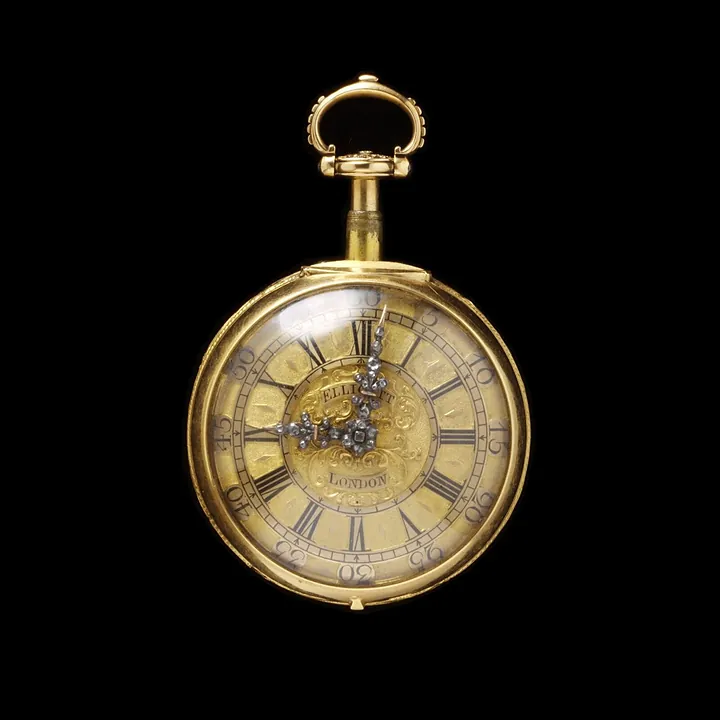
Pocket Watches · c. 1753
Gold watch, signed 'Jno. Ellicott, London, 3719', the inner case pierced and engraved, with a casemaker's mark 'JB', London, about 1753
Victoria and Albert Museum, London
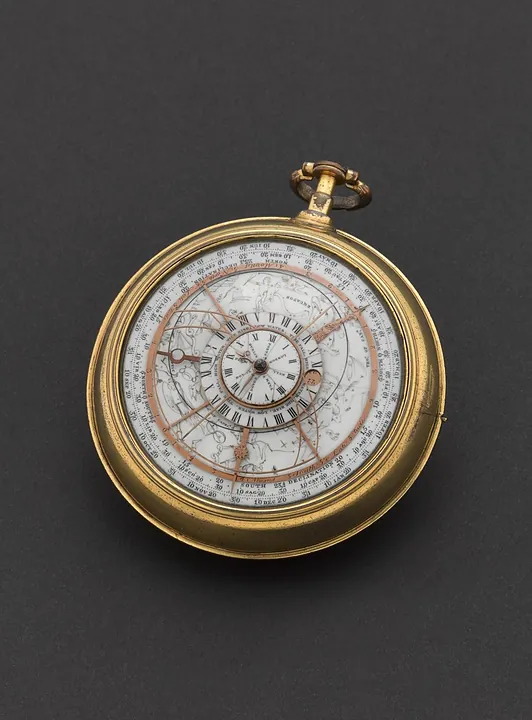
Pocket Watches · 1750–1810
Astronomical watch by George Margetts No.3043 in pair case, 1750–1810
Science Museum Group, London
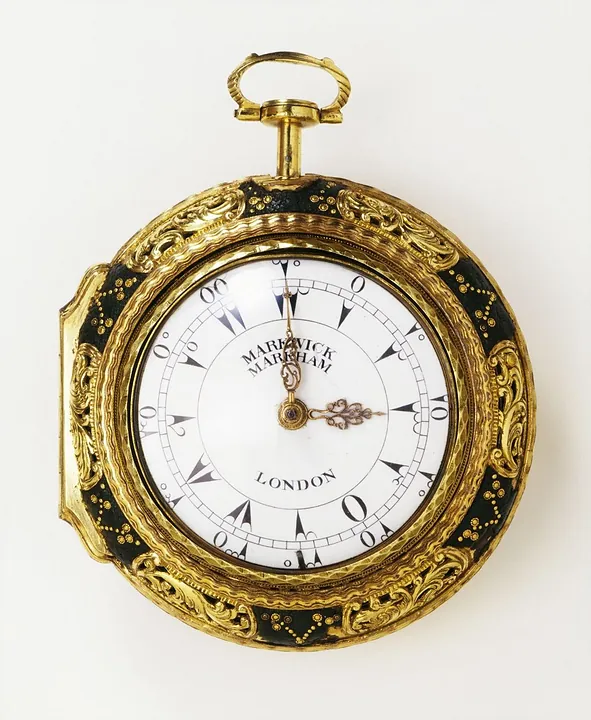
Pocket Watches · 1750–1775
Watch made for the Turkish market
Victoria and Albert Museum, London
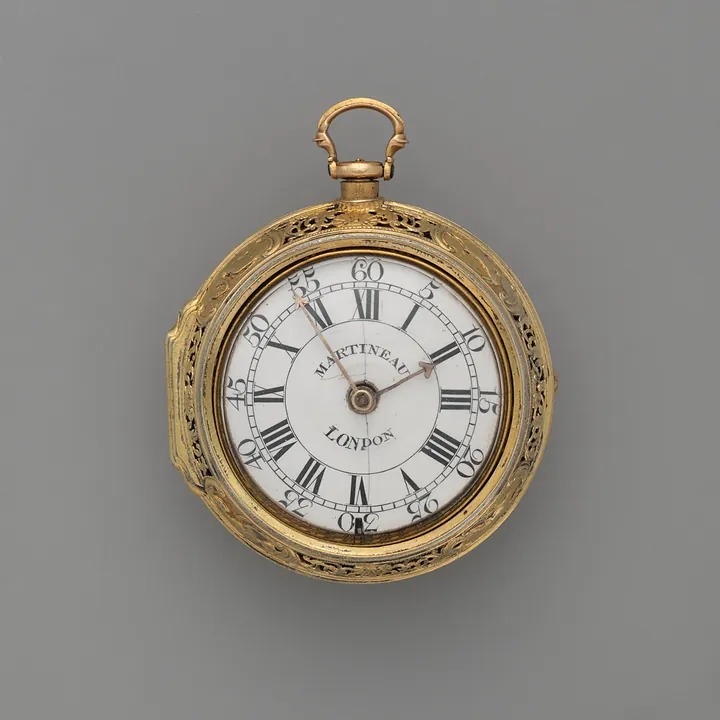
Pocket Watches · c. 1760
Clock-watch by Sr. Joseph Martineau, England, c. 1760
The Metropolitan Museum of Art, New York
Pocket Watches · c. 1760
Watch by John Ellicott, England, c. 1760
The Metropolitan Museum of Art, New York