
Clocks · Skeleton clock
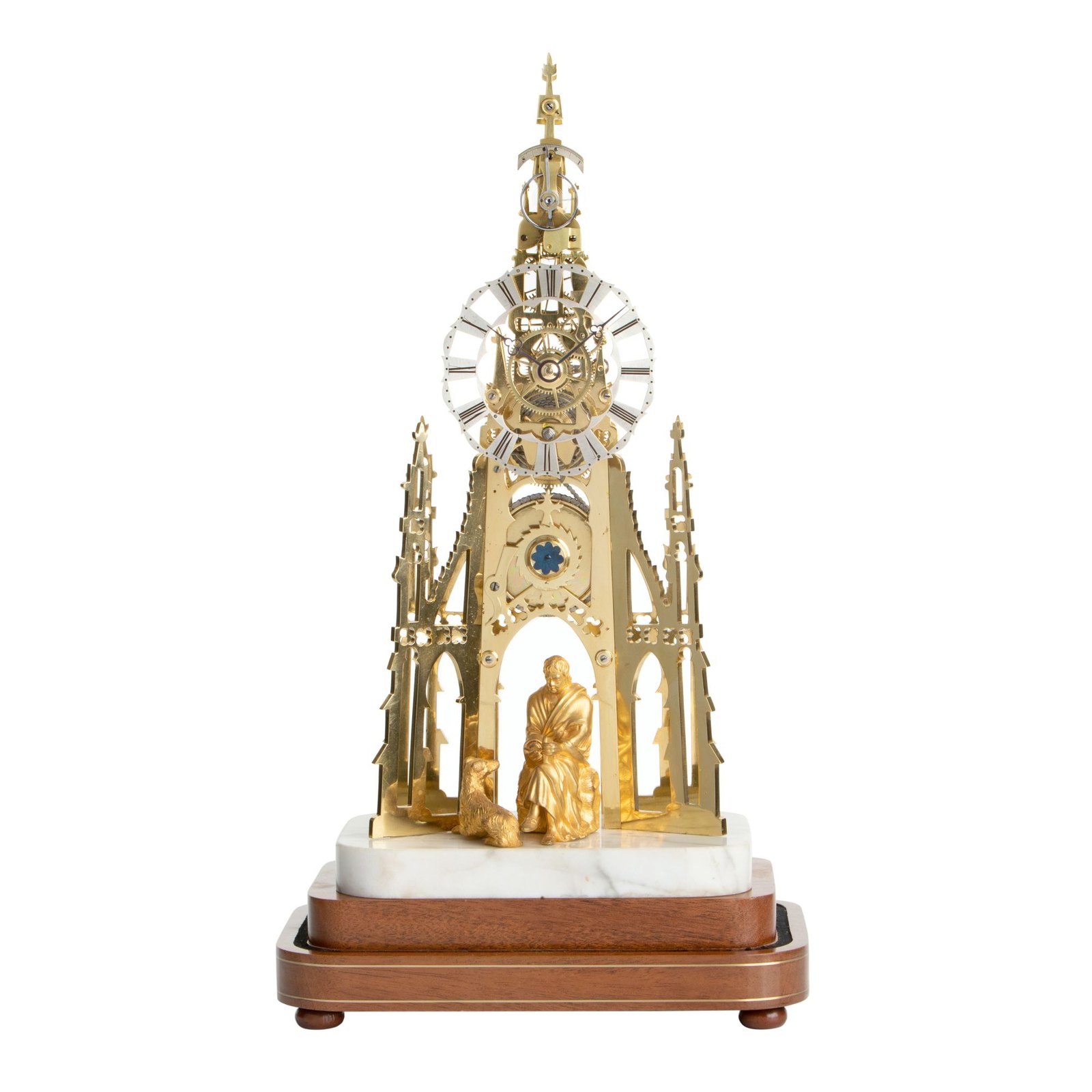
Scott Memorial skeleton clock timepiece with balance escapement
- Maker / attribution
- Unrecorded in source
- Date
- c. 1850
- Historical period
- Industrial Revolution (1850 – 1900)
- Country of origin
- Scotland
- Object type
- Skeleton clock
- Dimensions
- Height 50 cm
- Stock no.
- Product 2243
- Credit line
- Dealer listing, The Antique Clock Company (product 2243)
- Catalogue title (original)
- SCOTT MEMORIAL SKELETON CLOCK TIMEPIECE WITH BALANCE ESCAPEMENT (English)
View the source record (dealer listing) ↗ (opens another website in a new tab)Suggest a correction
Record summary
Catalogued by The Antique Clock Company (dealer), Dorset (stock number Product 2243), this is a skeleton clock, made in Scotland, dated c. 1850. The Atlas places it in the Industrial Revolution period (1850 – 1900) of its Clocks collection. Recorded dimensions: Height 50 cm. The record is illustrated with 2 photographs.
Assembled from the source record's structured fields. Dates and attributions are given as the source states them; where a field is missing the Atlas leaves it blank rather than estimating.
Catalogue description
Dealer description — The Antique Clock Company
This superb skeleton clock is one of the highest quality made by W. F. Evans of Birmingham. The clock is based upon the Sir Walter Scott memorial in Edinburgh, Scotland. This clock being a timepiece with a single chained fusee movement, maintaining power and mono metallic balance escapement, which is mounted vertically at the top of the central tower. In 1850 Evans produced this famous skeleton clock based upon the Sir Walter Scott Memorial which he later exhibited at the Great Exhibition of 1851. The original was presented to the retiring Postmaster of Handsworth. Following his death Evans bought the clock back and it remained in the family before being presented to Birmingham City Museum and Art Gallery where it sits today. Height: 19 ¾” or 50cm Including dome: 22″ or 56cm *This clock is delivered and set up for free within the UK. We regularly ship clocks all over the world with our approved and well-established Antiques and Fine Art Packers & Shippers. Please ask for a quote should you require this service.
Historical context
Industrial Revolution (1850 – 1900)
American interchangeable-parts manufacture; railroad time standards; Swiss and German factory systems.
Factory production transformed the clock into an everyday object. American makers (Seth Thomas, Ansonia, Waterbury) and German factories (Junghans, Gustav Becker, Lenzkirch) sold millions of shelf, wall and alarm clocks worldwide; France produced standardised Paris movements and carriage clocks; electric time distribution began.
Read the period in the timelineMore clocks from this periodEarlier: Precision & Scientific Horology
Atlas type guide
Skeleton clocks
A skeleton clock displays its movement: the plates are pierced to a minimum so that wheels, escapement and fusee can be seen, usually under a glass dome. French makers produced fine skeleton clocks in the late eighteenth century; in Victorian England they became popular showpieces, with frames in the shapes of cathedrals and famous buildings.
What to look for
- Pierced brass plates in scroll or architectural shapes.
- A glass dome and wooden or marble base.
- Fusee movements and sometimes passing strike on a bell.
Dating clues
- French skeleton clocks: c. 1780–1830.
- English cathedral-style skeleton clocks: c. 1840–1890.
General guidance written by the Atlas editors about this kind of object. It is not a statement about this particular piece; for that, rely on the source record above and on physical examination.
Read next:Anchor (recoil) escapement
Related records
Clocks · c. 1850
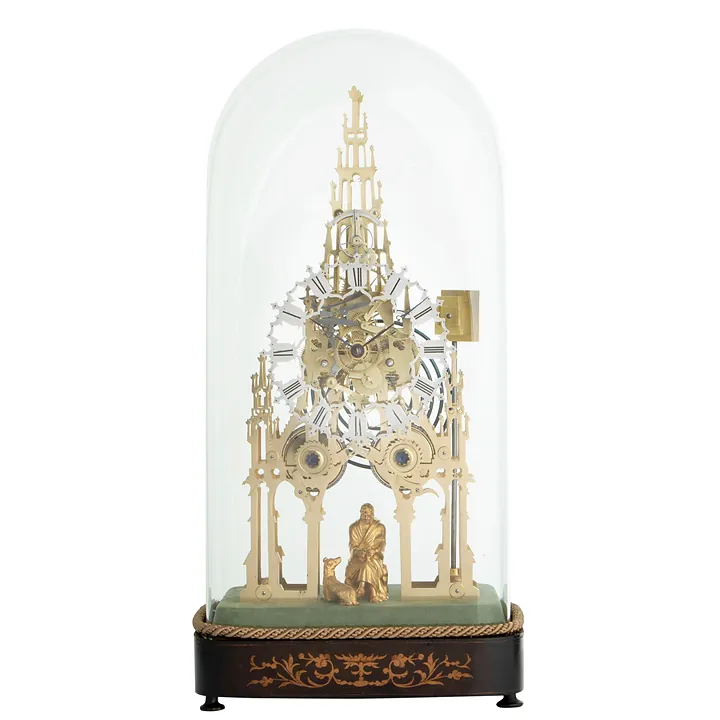
Scott Memorial striking skeleton clock with balance escapement
The Antique Clock Company (dealer), Dorset
Clocks · c. 1850
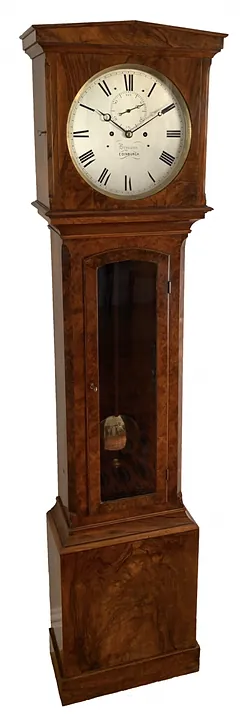
Burr walnut regulator longcase clock by Brysons, Edinburgh, c. 1850
P A Oxley (dealer), Wiltshire
Clocks · c. 1850
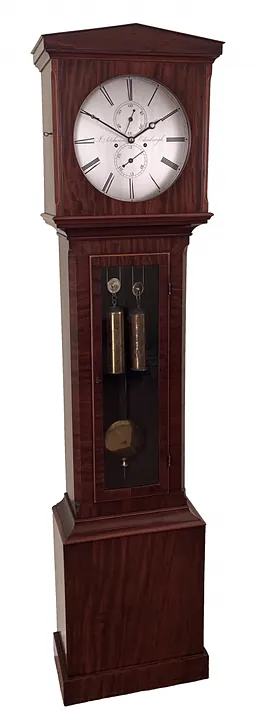
Scottish longcase clock by Aitchison, Edinburgh, c. 1850
P A Oxley (dealer), Wiltshire
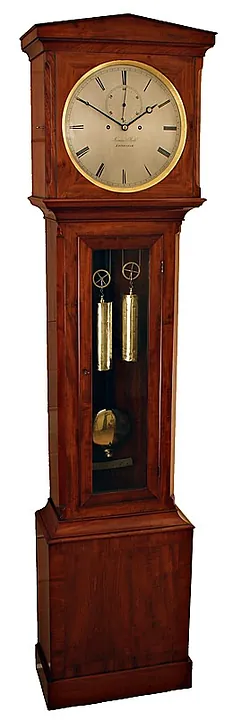
Clocks · c. 1850
Domestic regulator longcase clock by James Bell, Edinburgh, c. 1850
P A Oxley (dealer), Wiltshire
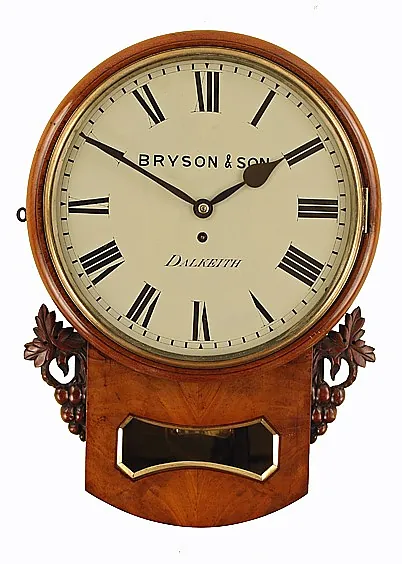
Clocks · c. 1885
Drop dial wall clock by Bryson & Son, Dalkeith, c. 1885
P A Oxley (dealer), Wiltshire
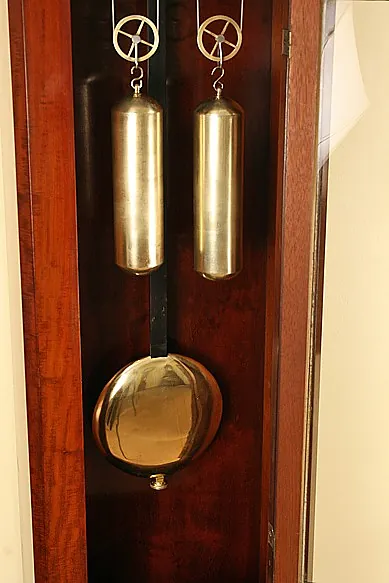
Clocks · c. 1860
Regulator grandfather clock by Barrie, Edinburgh, c. 1860
P A Oxley (dealer), Wiltshire
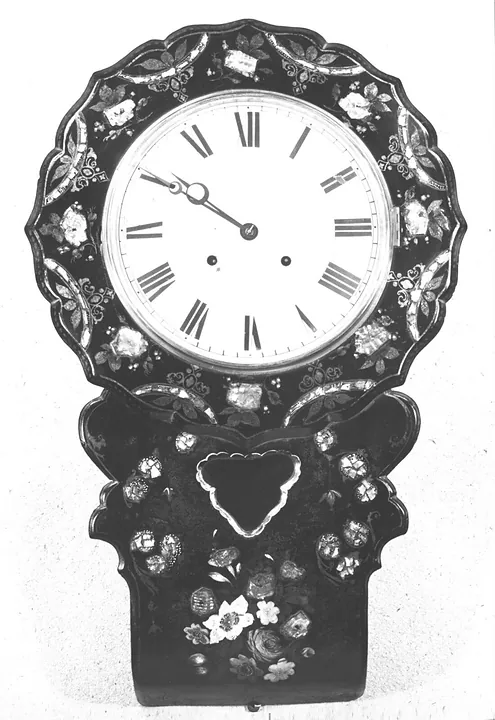
Clocks · 1830–1870
Wall clock in a papier mâché case with painted decoration. English, mid 19th century.
Victoria and Albert Museum, London
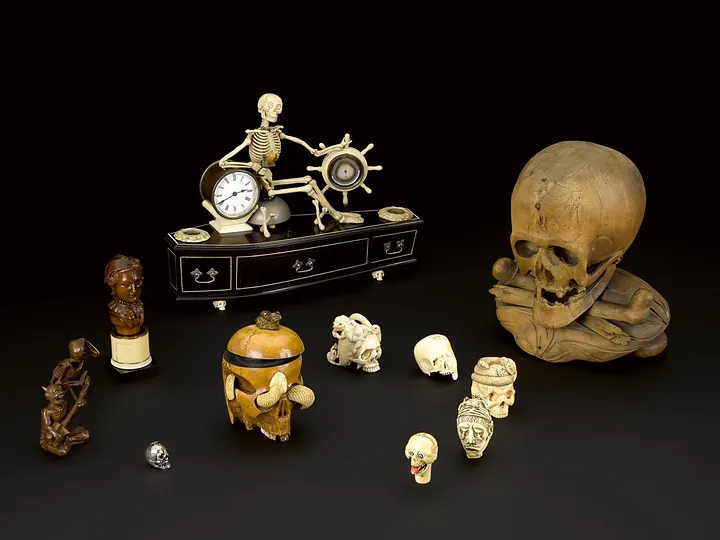
Clocks · 1840–1900
Alarm clock, mounted on model of coffin with skeleton, probably English, 1840–1900
Science Museum Group, London