
Wristwatches · Wristwatch
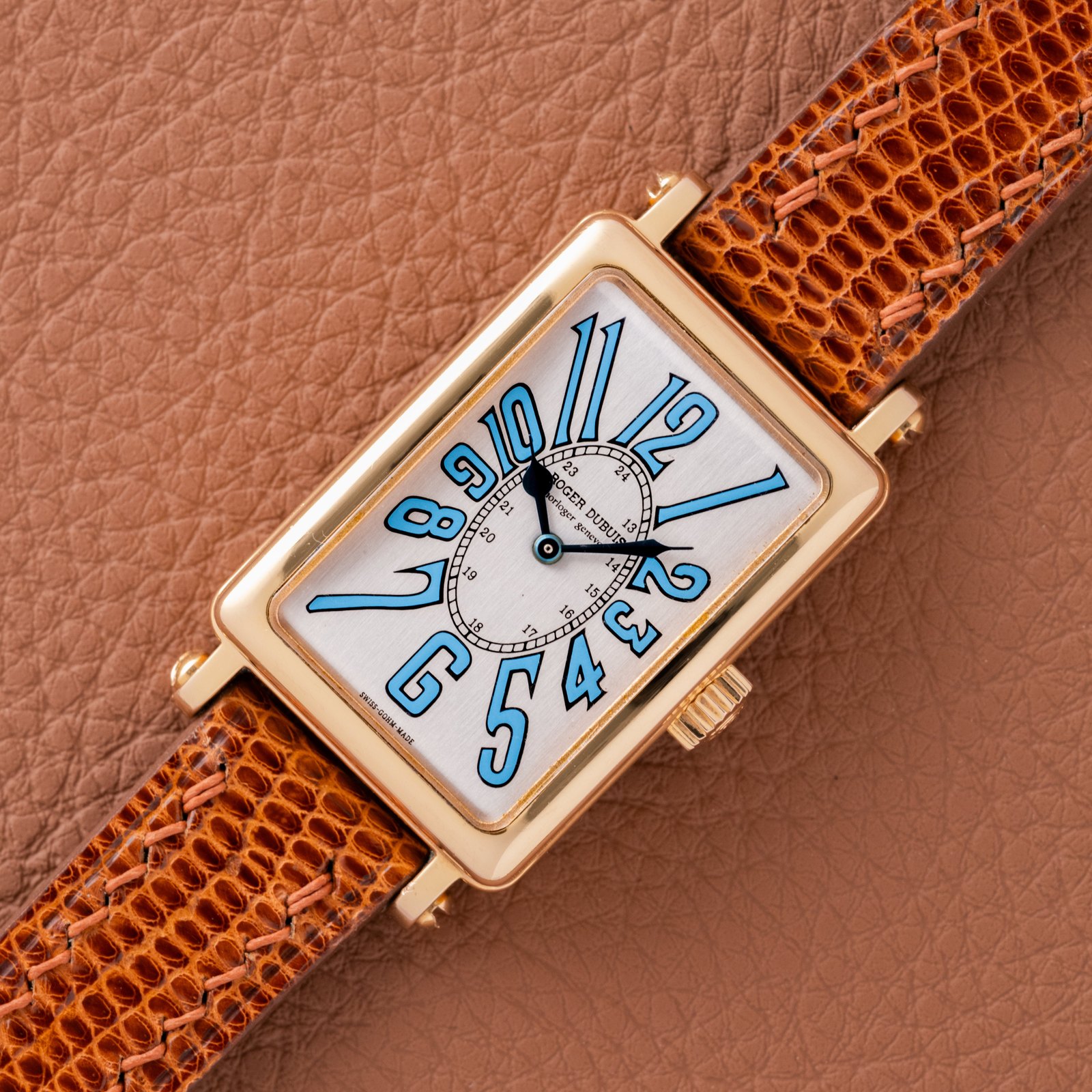
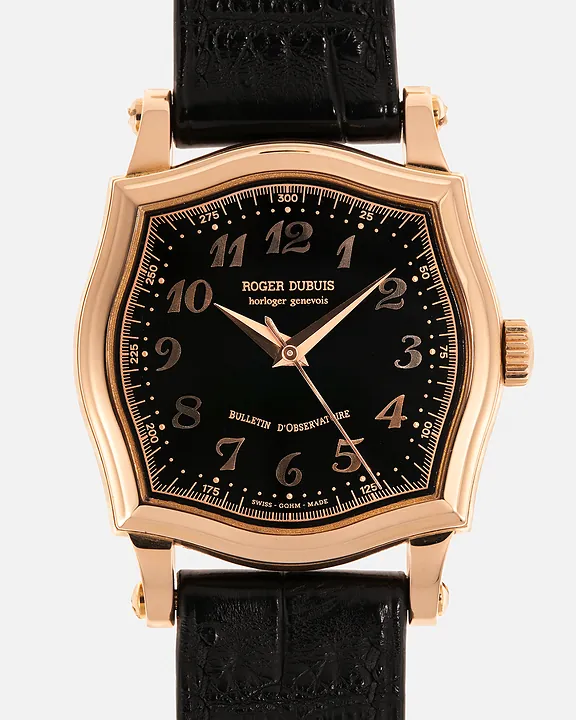
Roger Dubuis MuchMore Tiffany Dial (Ref. M22), 2000s
- Maker / attribution
- Roger Dubuis (maker)
- Date
- 2000s
- Historical period
- Mechanical Renaissance (1990 – 2010)
- Country of origin
- Switzerland
- Object type
- Wristwatch
- Dimensions
- Case 22 mm
- Stock no.
- Product 8708866801847
- Credit line
- Dealer listing, Huntington Company (product 8708866801847)
- Catalogue title (original)
- 2000s Roger Dubuis MuchMore Tiffany Dial (Ref. M22) (English)
View the source record (dealer listing) ↗ (opens another website in a new tab)Suggest a correction
Record summary
Catalogued by Huntington Company (dealer) (stock number Product 8708866801847), this is a wristwatch by Roger Dubuis, made in Switzerland, dated 2000s. The Atlas places it in the Mechanical Renaissance period (1990 – 2010) of its Wristwatches collection. Recorded dimensions: Case 22 mm. The record is illustrated with 6 photographs.
Assembled from the source record's structured fields. Dates and attributions are given as the source states them; where a field is missing the Atlas leaves it blank rather than estimating.
Catalogue description
Dealer description — Huntington Company
History and Significance Before Roger Dubuis became associated with oversized cases and highly theatrical modern watches, the manufacture looked very different. The company was founded in 1995, and its earliest production combined traditional Geneva watchmaking with an independence that allowed Dubuis to make some genuinely unusual decisions. Small production numbers, unconventional dials, precious-metal cases, and beautifully finished mechanical movements defined an era that collectors have increasingly begun to separate from the brand that followed. The MuchMore is perhaps one of the best representations of that freedom. Its elongated rectangular case is unmistakably a dress watch, yet almost nothing about the dial is traditional. Large turquoise Arabic numerals are scattered around the perimeter, a smaller 24-hour scale sits toward the center, and the entire composition feels closer to graphic design than conventional Swiss watchmaking. Set against an 18k rose gold case measuring just 22mm across, the result is eccentric without becoming oversized or loud. What makes early Roger Dubuis especially fascinating is how little standardization existed compared with larger manufacturers. References appeared in tiny runs with different metals, dial executions, and configurations, sometimes leaving only a handful of examples of a particular variation. This M22 belongs to a run of just 28 pieces with this dial configuration, and this is the first one. The case is individually numbered 01/28 . On an already unusual early independent watch, that small engraving transforms the story. It isn't simply one of 28. It is the example that began the series. Writer’s Thoughts Early Roger Dubuis is one of those areas of watch collecting where there still seems to be something new to discover. You can spend years looking at watches and then encounter a MuchMore you've never seen before. This reference M22 is exactly that kind of piece. There are so many little details I like here, but the turquoise numerals are what make the watch. Against the silver dial and rose gold case they shouldn't necessarily work, yet somehow they do. Turn the Roger Dubuis over and the manually wound movement provides the traditional watchmaking counterpoint to everything unconventional happening on the front. Then there is 01/28 . Being the first numbered example of this dial variation is the sort of detail that matters on a watch already produced in such tiny quantities. We've fitted it to a new unworn generic leather strap while retaining the original Roger Dubuis buckle. This is not the obvious choice for someone looking for a rectangular dress watch, and that's precisely why we like it. Our Promise Every watch is thoroughly vetted, carefully described with complete transparency, and guaranteed authentic. Each piece is offered in honest condition, ensuring collectors receive a timepiece that reflects both originality and integrity. Specifications Brand: Roger Dubuis Model: MuchMore Year: Circa 2000s Case Material: 18k rose gold Case Size: 22mm Dial: Silver dial with turquoise Arabic hour markers and central 24-hour scale Movement: Manual wind Strap/Bracelet: New unworn generic leather strap Buckle/Clasp: Original Roger Dubuis buckle Contents: Watch with box Condition Case: Rose gold case presents very well with strong proportions and light signs of wear consistent with age. The caseback engravings remain clearly defined, including the 01/28 individual numbering. Dial: Original silver dial is exceptionally well preserved with crisp printing and vibrant turquoise Arabic hour markers. Hands: Original hands present cleanly with no notable distractions. Crystal: Crystal is clean overall with no significant damage visible. Strap/Bracelet: New unworn generic leather strap. Buckle/Clasp: Original Roger Dubuis buckle presents well with light signs of wear.
Historical context
Mechanical Renaissance (1990 – 2010)
Mechanical watches return as cultural objects; independent watchmaking flourishes.
Mechanical watches returned as cultural and luxury objects. Complications, tourbillons and new materials proliferated; independent watchmakers such as George Daniels, F.P. Journe and Philippe Dufour revived artisanal watchmaking; collecting vintage watches became a major field.
Read the period in the timelineMore wristwatches from this periodEarlier: Quartz Revolution
Atlas type guide
Wristwatches
Bracelet watches were worn by women from the early nineteenth century — Breguet made one for Caroline Murat, Queen of Naples, in 1810–12 — but the wristwatch only became a man's instrument with military use and aviation in the early twentieth century. Between the World Wars it overtook the pocket watch; the 1920s and 1930s brought rectangular Art Deco cases, water-resistant cases and the first automatic winding systems.
After 1945 the wristwatch became a carrier of identity — dress watches, sports and dive watches, chronographs, calendars — produced by Swiss, American, Japanese, German, Soviet and Chinese industries. The quartz revolution after 1969 and the mechanical renaissance since the 1990s, including the rise of independent watchmakers, complete the story.
What to look for
- The reference number (between the lugs or inside the case back) and serial number, the starting point for dating.
- The calibre: its maker and number are often stamped under the dial or on the bridge.
- Originality of dial, hands and crown — refinished ('redial') dials are common.
- Case material marks: 18K/750, 14K/585, stainless steel, gold-filled, plated.
Dating clues
- Wire-lug cases: before c. 1925.
- Water-resistant screw-down cases: from 1926.
- Quartz movements: from 1969; sapphire crystals widespread after c. 1980.
General guidance written by the Atlas editors about this kind of object. It is not a statement about this particular piece; for that, rely on the source record above and on physical examination.
Related records
Wristwatches · c. 2010
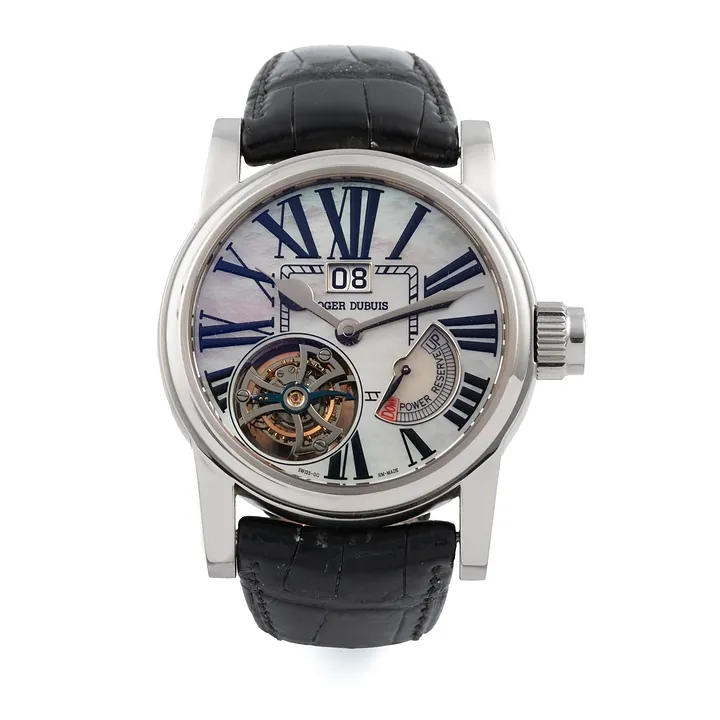
Roger Dubuis Hommage Tourbillon Marine, ref. H043 03 0 N1C.7A, c. 2010
Antiquorum auction archive, Geneva
Wristwatches · 2007
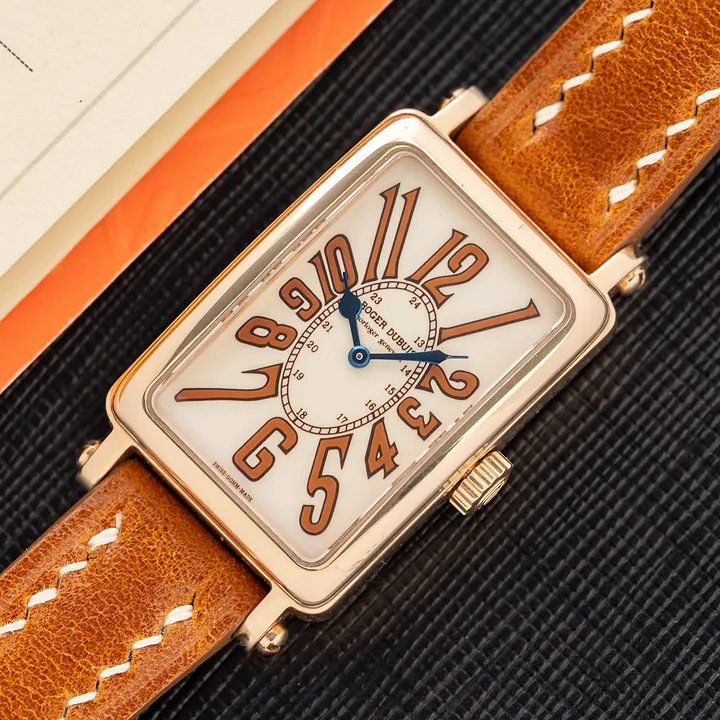
Roger Dubuis Much More M22 - 18K Rose Gold - Unpolished w/ Papers, 2007
Huntington Company (dealer)
Wristwatches · 2001
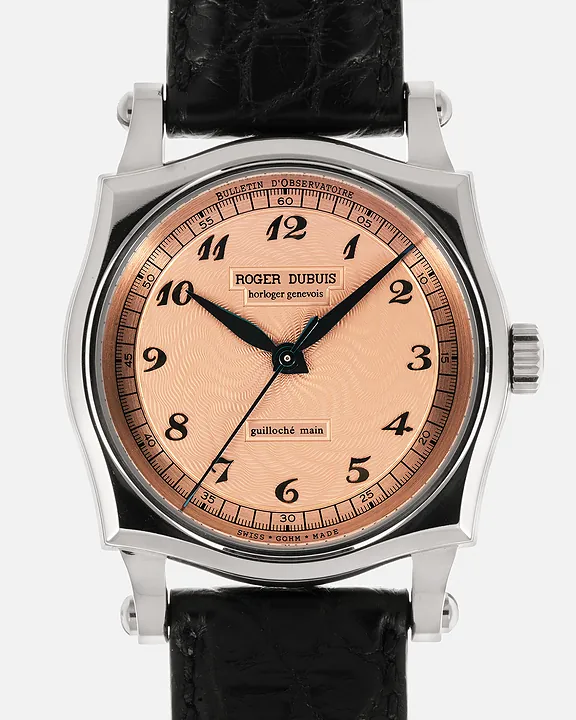
Roger Dubuis Sympathie 37 Salmon Guilloche No.01, 2001
S.Song Watches (dealer), Seattle
Wristwatches · 2000s
Roger Dubuis Sympathie 37 Breguet Numerals, 2000s
S.Song Watches (dealer), Seattle

Wristwatches · 2008
Wristwatch by Breitling?, 2008
Museum Rotterdam

Wristwatches · c. 1990s
Audemars Piguet Bamboo, c. 1990s
Antiquorum auction archive, Geneva

Wristwatches · c. 1990
Audemars Piguet Huitieme Perpetual Calendar, ref. 25696PT, c. 1990
Antiquorum auction archive, Geneva

Wristwatches · c. 1990
Breitling Chronomat, ref. b13050.1, c. 1990
Antiquorum auction archive, Geneva