
Pocket Watches · Calendar watch
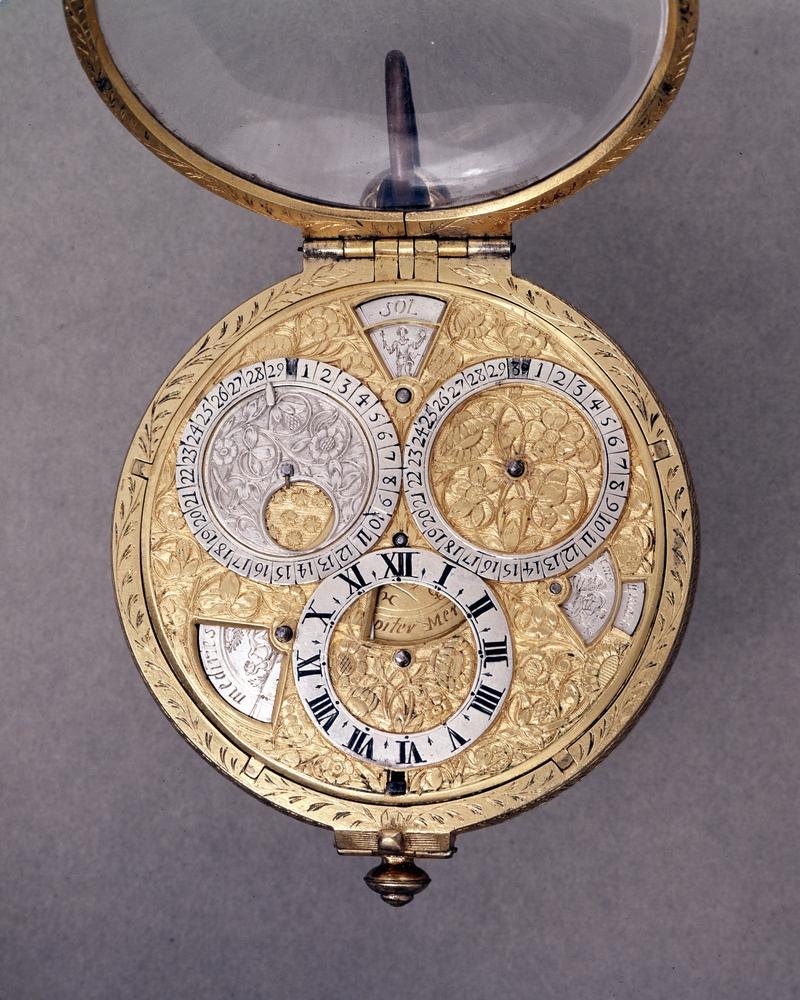
Rock crystal cased verge watch with calendar
- Maker / attribution
- Jean Gaspard Girod (Made by)
- Date
- 1645–1655
- Historical period
- Early Modern Horology (1600 – 1750)
- Country of origin
- Switzerland
- Place
- Geneva (city)
- Object type
- Calendar watch
- Materials / technique
- brass, gold, silver
- Dimensions
- Diameter: 61.30 millimetres (case)
- Holding institution
- British Museum
- Accession / object no.
- 1888,1201.213
- Credit line
- British Museum, London
- Catalogue title (original)
- Rock crystal cased verge watch with calendar (English)
View the source record ↗ (opens another website in a new tab)Suggest a correction
Record summary
Held and catalogued by British Museum (object number 1888,1201.213), this is a calendar watch by Jean Gaspard Girod, made in Geneva (city), Switzerland, dated 1645–1655. The Atlas places it in the Early Modern Horology period (1600 – 1750) of its Pocket Watches collection. Materials and techniques recorded by the source: brass, gold, silver. Recorded dimensions: Diameter: 61.30 millimetres (case). The record is illustrated with 2 photographs.
Assembled from the source record's structured fields. Dates and attributions are given as the source states them; where a field is missing the Atlas leaves it blank rather than estimating.
Catalogue description
Description — British Museum
Movement frame: Circular gilt-brass plates with four pierced Egyptian pillars without decoration. Engraved foliage around the verge aperture. A hole in the pillar-plate for the foot of the potence. Mainspring &-up: Gilt-brass barrel with dovetailed cap and riveted steel hook. Ratchet and click set-up with a pierced blued-steel click and a large diameter blued steel ratchet wheel. Fusee & stop-work: Gilt-brass fusee with original chain and English stop-work. Train: Four wheel going train, the second and third wheels with turned gilt-brass collets, the contrate wheel probably a replacement. Escapement & balance: Verge escapement with a crown wheel running between a riveted potence with engraved decoration on the visible side and a screwed-on counter-potence. Pierced and engraved foliate balance cock screwed to the potence-plate. The verge and wide rimmed balance are not original. Dial and hands: Gilt-brass dial pinned to the pillar-plate and engraved all over with realistic flowers. At the top a double sector aperture showing the day of the week by its planetary sign, both in name and in picture. In the upper left an applied silver subsidiary chapter ring engraved 1-29 plus a hatched half division, for the age of the moon surrounding a rotating silver disc engraved with realistic flowers. An aperture in the disc shows the moon's phase and a pointer shows its age. To the right is another applied silver chapter ring engraved 1-30 for the date, the number 30 being hatched over. In the lower part of the dial a subsidiary silver chapter ring is engraved I-XII for the hours, with arrow-head half-hour marks and a circle of twelve dots at the hours. Within this chapter ring is a further aperture, beneath which rotates a gilt-brass disc engraved with the days of the week in Latin and some of the signs of the zodiac. The aperture and the disc below it do not appear to be original. To the left another aperture shows the four parts of the day, 'NOCTUS, ORORE, MEDIRIES [sic] and VESPERS' each with a pictorial representation. To the right a double sector aperture shows the months and the seasons, the latter also with a pictorial representation. The blued-steel date hand survives, but the hour hand is missing. CASE: The gilt-brass rims with hatched decoration survive but the original rock-crystal case has been replaced by a plain silver box. Gilt-brass pendant and finial, the pendant ring replaced. Case catch: The dial has four lugs in its edge which locate in four recesses in the case band. The case catch consists of a gilt-brass spring and steel catch mounted on the inside of the pillar-plate. The dial is hinged to the case at XII o'clock. Calendar work: Pinion of report [A] = 11 Dial wheel [B] = 22 - hour hand rotates once in12 hours. Pinion [C] (on arbor [B]) = 11 Pinion [D] (on arbor [B]) = 4 . Pinion [C] drives:- Wheel [E] = 22 - carries 1/4 day disc rotates once/day. Underneath wheel E an index operates a sprung lever to index a seven-point star wheel which carries the days of the week disc. Rotates once in 7 days. Pinion [D] drives:- Wheel [F] = 56 rotates once in 7 days. this disc is not original. Pinion [G] on wheel [F] = 14 rotates once in 7 days. Pinion [G] drives:- Wheel [H] = 59 - rotates once in 29.5 days, carries lunar disc. Wheel [I] = 60 - rotates once in 30 days carries date hand. On the underside of wheel [I] an index operates a sprung lever which advances a 12-point star wheel which carries the month disc and rotates once in 12 months.
Curator's comments — British Museum
Bibliography: Good, Richard, WATCHES IN COLOUR, Poole 1978, plate 4.
Inscriptions & marks
signature; J Gaspard Girod Á Genève [potence plate]
Provenance
Bequeathed by:, Octavius Morgan; Acquired 1888
Historical context
Early Modern Horology (1600 – 1750)
Huygens' pendulum and balance spring transform accuracy; English makers develop the anchor and deadbeat escapements.
The balance spring (c. 1675) improved watches dramatically and introduced the minute hand. English pair-cased verge watches with pierced balance cocks and French oignons were typical; enamel painting at Blois and Geneva, and the repeating watch (1680s), made watches objects of great refinement.
Read the period in the timelineMore pocket watches from this periodEarlier: Renaissance Horology
Atlas type guide
Calendar, moon-phase and perpetual calendar watches
Calendar complications range from a simple date to the perpetual calendar, which automatically allows for months of different lengths and leap years until 2100. Pocket watches with perpetual calendars were made in the eighteenth and nineteenth centuries; Patek Philippe made the first perpetual calendar wristwatch in 1925, and series production followed in 1941. The annual calendar (Patek Philippe, 1996) needs correction only once a year.
Moon-phase displays use a disc with two moons and 59 teeth advanced daily, approximating the 29.5-day lunation; more precise trains reduce the error to one day in over a century.
What to look for
- Apertures or subsidiary dials for day, date, month and leap year.
- Moon disc under a 'bosom' shaped aperture.
- Recessed correctors on the case band for setting the calendar.
Dating clues
- Triple-date wristwatches: popular c. 1940–1955.
- Perpetual calendar wristwatches: from 1925 (unique) and 1941 (series).
General guidance written by the Atlas editors about this kind of object. It is not a statement about this particular piece; for that, rely on the source record above and on physical examination.
Related records
Pocket Watches · 1630
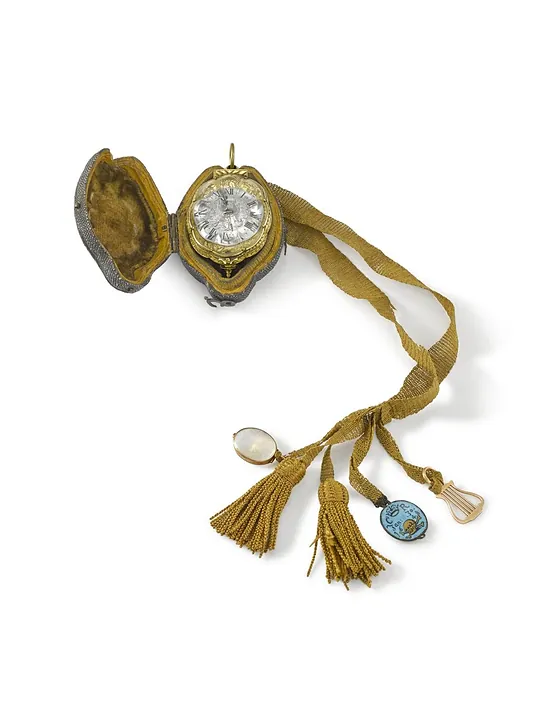
Pocket watch by A. Senebier, Switzerland, 1630
Science Museum Group, London
Pocket Watches · 1635-50
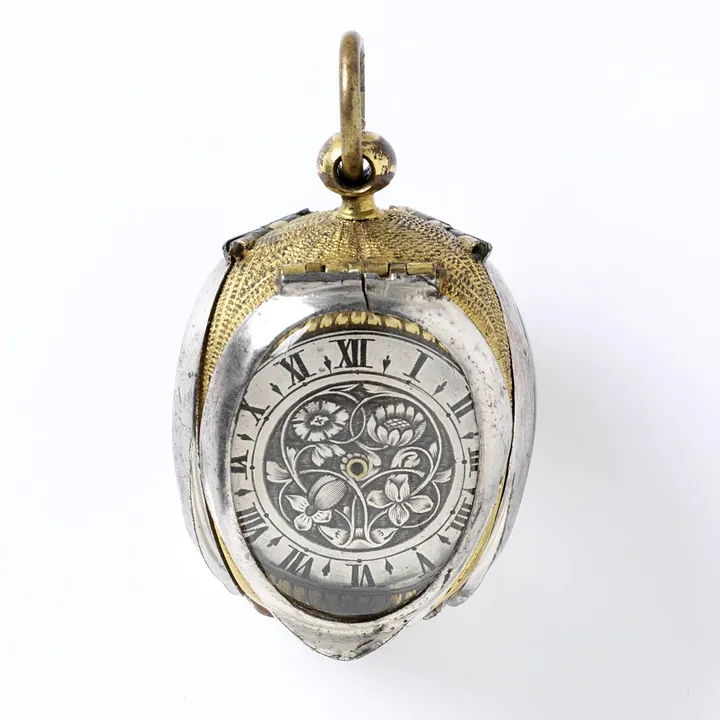
Silver, gilt brass and rock crystal watch in the form of a tulip, movement signed 'Senebier', Geneva, Switzerland, 1635-50
Victoria and Albert Museum, London
Pocket Watches · 1640-50
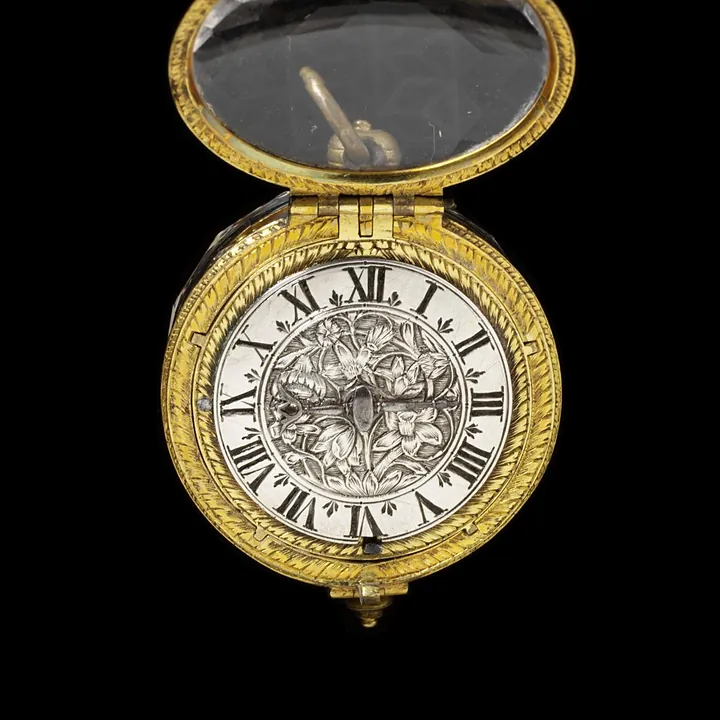
Gilt brass and crystal watch with an engraved silver dial, movement signed 'Charles Bobinet', Switzerland (Geneva), 1640-50
Victoria and Albert Museum, London
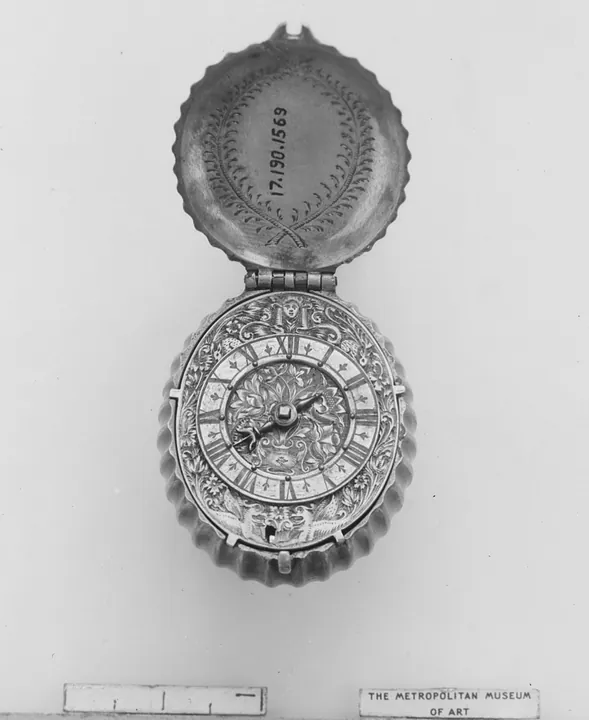
Pocket Watches · c. 1650
Watch by Denis Bordier, Switzerland, c. 1650
The Metropolitan Museum of Art, New York
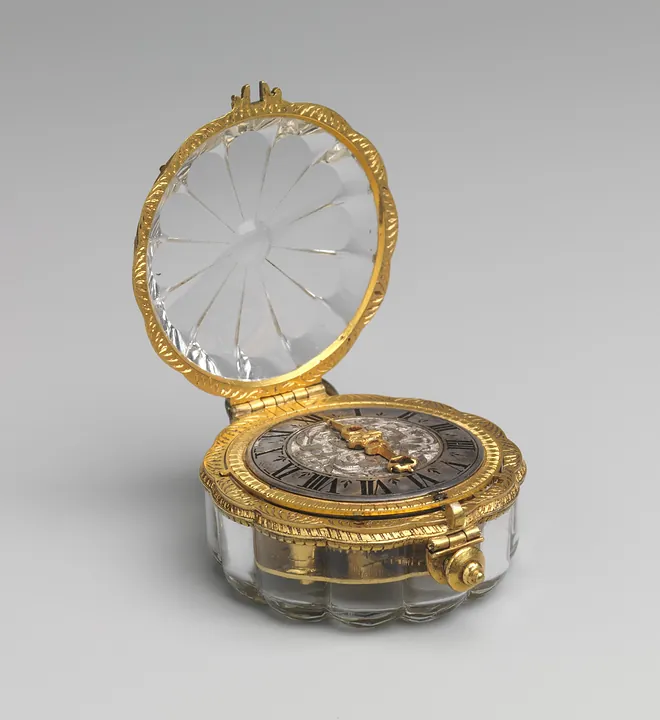
Pocket Watches · c. 1650–60
Watch probably by Jean Rousseau the Younger, Switzerland, c. 1650–60
The Metropolitan Museum of Art, New York
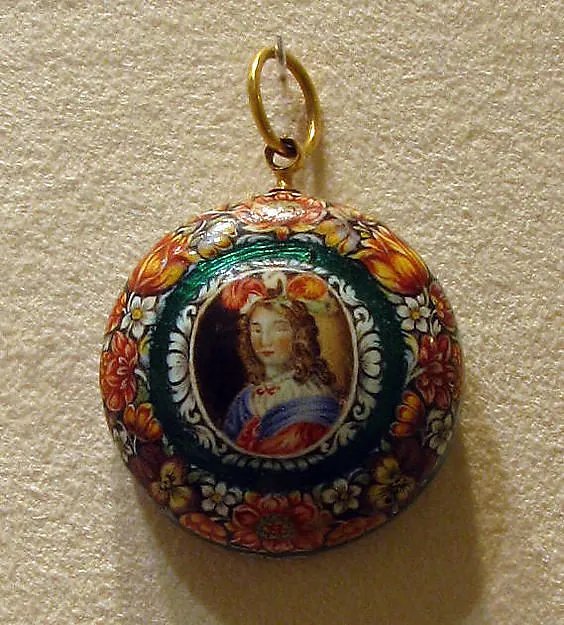
Pocket Watches · c. 1660–80
Watch by Pierre Duhamel, Switzerland, c. 1660–80
The Metropolitan Museum of Art, New York
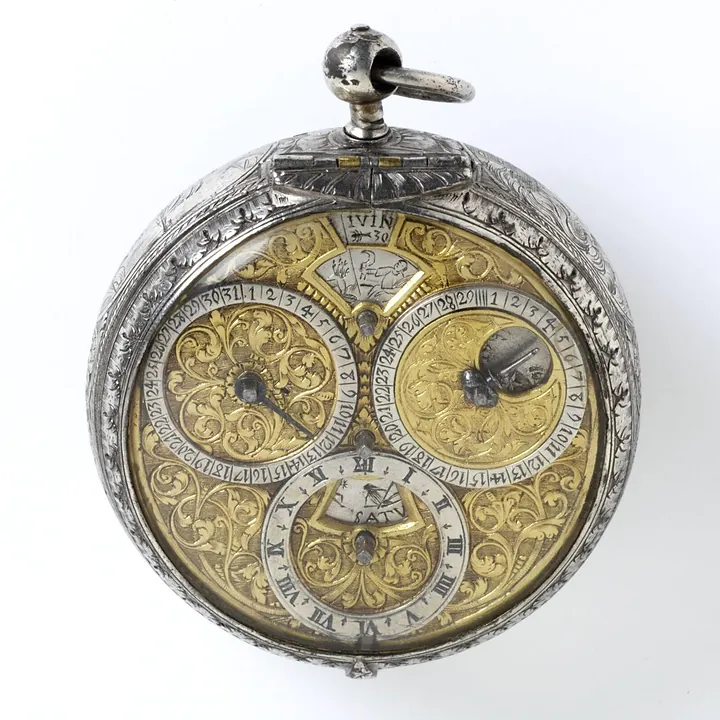
Pocket Watches · 1660–1670
Engraved silver watch with a gilt brass dial, signed 'Jean Rousseau', Switzerland (Geneva), 1660-70
Victoria and Albert Museum, London
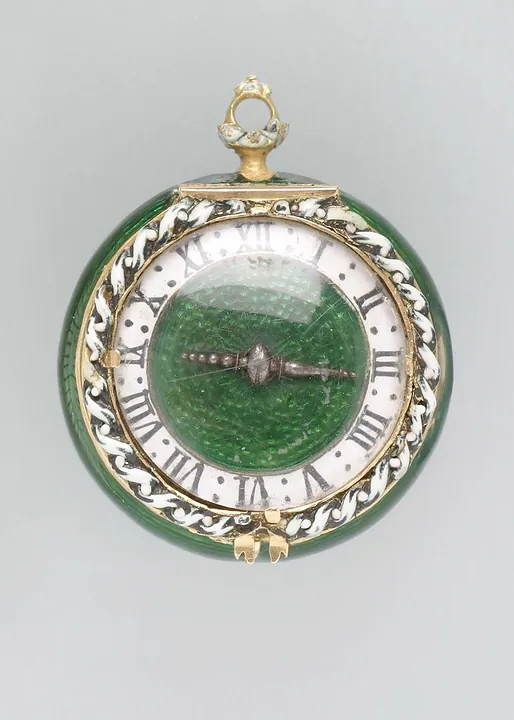
Pocket Watches · c. 1675
Pocket watch by Abraham Caillatte, Switzerland, c. 1675
German Clock Museum