
Wristwatches · Wristwatch
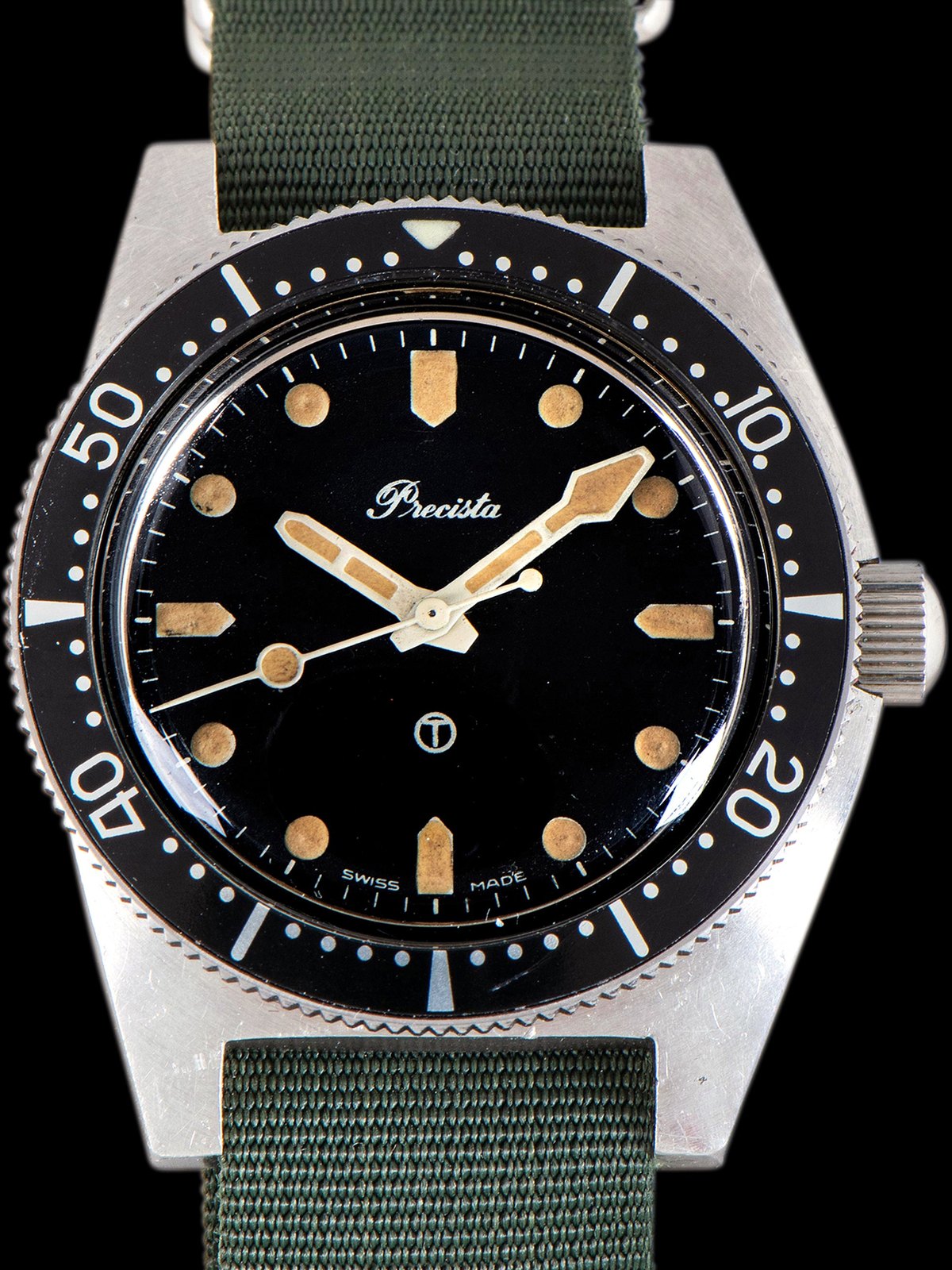
Precista Royal Navy Issue Diver "Snake Head" 0552/923-7697, 1982
- Maker / attribution
- Precista (maker)
- Date
- 1982
- Historical period
- Quartz Revolution (1969 – 1990)
- Country of origin
- Unrecorded in source
- Object type
- Wristwatch
- Stock no.
- PRRND82-1
- Credit line
- Dealer listing, Craft & Tailored (PRRND82-1)
- Catalogue title (original)
- 1982 Precista Royal Navy Issue Diver "Snake Head" 0552/923-7697 (English)
View the source record (dealer listing) ↗ (opens another website in a new tab)Suggest a correction
Record summary
Catalogued by Craft & Tailored (dealer), Los Angeles (stock number PRRND82-1), this is a wristwatch by Precista, dated 1982. The Atlas places it in the Quartz Revolution period (1969 – 1990) of its Wristwatches collection. The record is illustrated with 6 photographs.
Assembled from the source record's structured fields. Dates and attributions are given as the source states them; where a field is missing the Atlas leaves it blank rather than estimating.
Catalogue description
Dealer description — Craft & Tailored
The 1982 Precista Royal Navy Diver represents one of the final chapters in the history of Britain's issued automatic military dive watches. Produced for only a brief period before the Royal Navy completed its transition to quartz, it embodies everything the British Ministry of Defense required from a professional diving instrument: uncompromising reliability, exceptional legibility, and purpose-driven design. More than four decades later, it has become one of the rarest military-issued dive watches ever produced. By the early 1980s, the Ministry of Defense had begun moving away from the expensive Rolex Military Submariner, with Cabot Watch Company (CWC) supplying the first automatic Royal Navy divers before the introduction of the Precista in 1982. Produced under what appears to have been a single Ministry of Defense contract or possibly as a transitional procurement before the Royal Navy fully standardized on quartz, the 1982 Precista retained all of the hallmarks expected of a professional military dive watch: a robust stainless steel case with fixed spring bars, a highly legible tritium dial, and the proven Swiss ETA Cal. 2783 automatic movement. Based on observed issue numbers, it is generally believed that approximately 250 examples were procured under the 1982 Ministry of Defense contract. Its rarity cannot be overstated. At the time of publishing, our research has identified just six original issued examples that have surfaced publicly through recognized auction houses or established vintage watch dealers. The present watch represents the seventh publicly documented example to emerge on the open market. While additional examples, of course, exist, they remain tucked away in long-held private collections or with the families of their original military recipients. The fact that only seven examples have surfaced in more than four decades speaks to just how elusive this reference truly is. Opportunities to acquire one are exceptionally rare. What sets the 1982 Precista apart are the details. Unlike the contemporary CWC Royal Navy divers and the earlier Omega Seamaster 300, which followed the Ministry of Defense specification with a prominent triangle at 12 o'clock and Arabic numerals at 3, 6, and 9, the Precista returned to a simpler dot and baton dial layout reminiscent of the Rolex Military Submariner. The handset is equally distinctive, pairing a large lollipop sweep seconds hand with broad hour and spear-shaped minute hands. The latter has become known among collectors as the "Snakehead" hand, its broad, pointed profile providing exceptional underwater legibility while giving the watch its enduring nickname. Equally distinctive is the Racine-manufactured case, identifiable by the "RACINE SWISS" stamp found inside the caseback of original examples. Its heavily asymmetrical profile, integrated crown guards, and asymmetrical screw-down caseback give it a design language that feels strikingly similar to the American-issued Benrus Type I and Type II military dive watches. While no documented relationship between the two designs has been established, the resemblance is unmistakable. Interestingly, the same basic case architecture also appeared on both civilian and issued dive watches produced under the Jules Racine and Gallet names before evolving into the case design later used on Precista's issued quartz Royal Navy divers throughout the 1990s. SPECS Stock # PRRND82-1 Brand Precista Style Military Diver Model 0552/923-7697 Serial 130X/82 Size Men's Material Stainless Steel Dial Matte Black Millimeters 39.5 Strap Phoenix O.D. Green NATO Strap CASE & BRACELET The case remains in sharp, unpolished condition, retaining the original brushing on the top side of the case and a sharp overall feel. The case exhibits honest wear consistent with military service. The fixed strap bars remain fully intact, showing no evidence of bending or damage. The original bezel and fully graduated insert remain in sharp condition, showing no major fading or marks. The screw-down caseback retains legible military issue markings, including the original NSN and issuance numbers, showing slight wear from use on a strap. This example also retains its original acrylic domed crystal, which is free from scratches or blemishes. The watch will come supplied on a new Phoenix strap in O.D. green. DIAL & HANDS The original matte black "Circle T" dial remains in excellent condition; under magnification, it shows subtle marks and spots from age, but overall, the dial remains very well-preserved and presents wonderfully. The tritium lume on both the dial and hands has aged evenly to a rich custard-like patina. When examined under ultraviolet light, the original tritium lume on the dial and in the hands exhibits no evidence of lume degradation or prior repairs. ACCESSORIES
Historical context
Quartz Revolution (1969 – 1990)
Seiko's Astron begins mass quartz timekeeping; traditional industries contract sharply.
Quartz and digital watches transformed the market after 1969. Swiss employment collapsed, Japanese and Hong Kong production soared, and the Swatch (1983) helped the Swiss industry recover; mechanical watches survived as luxury goods.
Read the period in the timelineMore wristwatches from this periodEarlier: Modern Mechanical Horology
Atlas type guide
Dive and water-resistant watches
Keeping water and dust out of a wristwatch was a long-standing challenge. Rolex's screw-down Oyster case (1926) and Omega's Marine (1932) were landmarks; in the early 1950s Blancpain's Fifty Fathoms and Rolex's Submariner defined the professional dive watch with rotating bezels for timing dives, luminous dials and high water resistance. The ISO 6425 standard (1982) later codified what a 'diver's watch' must do.
Dive watches became icons of post-war design and exploration, and their evolution — helium escape valves, ceramic bezels, saturation-diving depth ratings — records the history of underwater work.
What to look for
- Unidirectional or bidirectional rotating bezel with minute markings.
- Screw-down crown and case back; depth rating printed on the dial.
- Luminous hands and markers (radium before c. 1960, tritium c. 1960–1998, then Super-LumiNova).
- Reference numbers on the case between the lugs or inside the back.
Dating clues
- Screw-down Oyster cases: from 1926.
- Professional dive watches: from 1953.
- Tritium 'T' marks on dials: c. 1960–1998.
General guidance written by the Atlas editors about this kind of object. It is not a statement about this particular piece; for that, rely on the source record above and on physical examination.
Related records
Wristwatches · 1982
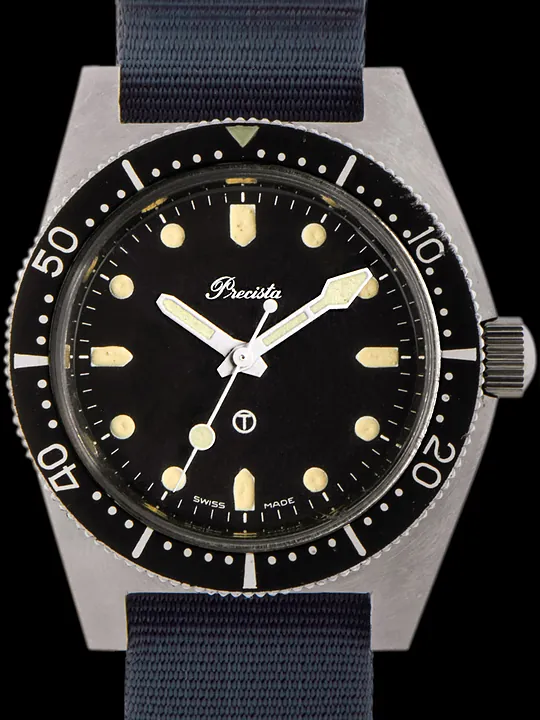
Precista Royal Navy Issue Diver "Snake Head" 0552/923-7697, 1982
Craft & Tailored (dealer), Los Angeles
Wristwatches · 1990s
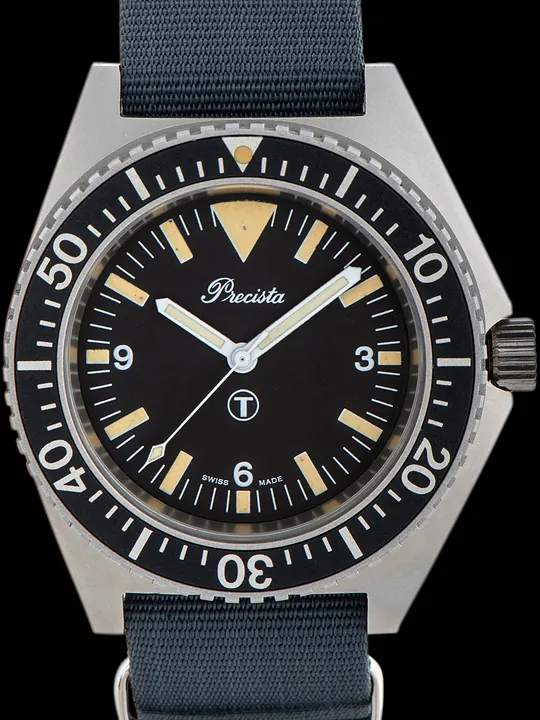
Precista Royal Navy Diver (6645-99-757-3314) “Sterile Case Back”, 1990s
Craft & Tailored (dealer), Los Angeles
Wristwatches · c. 1982
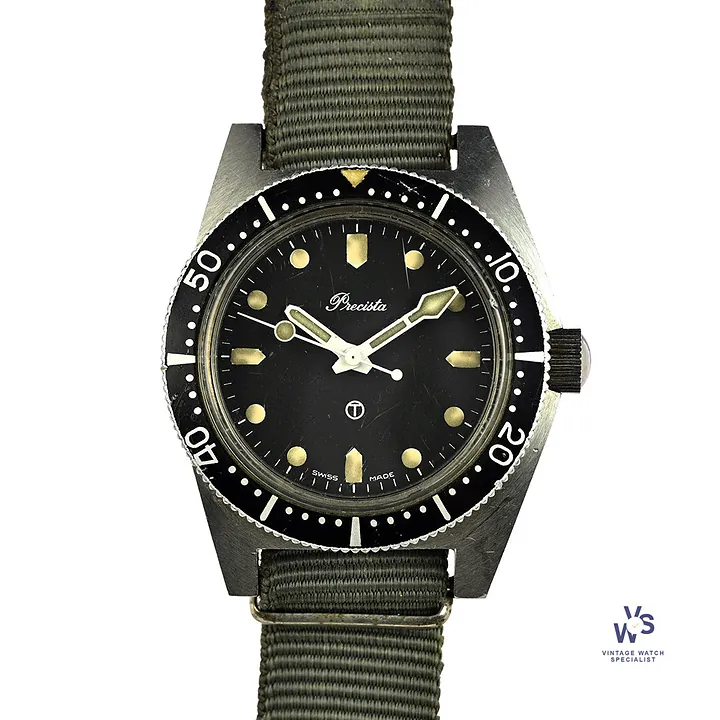
Royal Navy Issued Precista Dive Watch with 0552 Case Back Markings, 'Snakehead' Minute Hand, circa 1982
Vintage Watch Specialist (dealer), United Kingdom
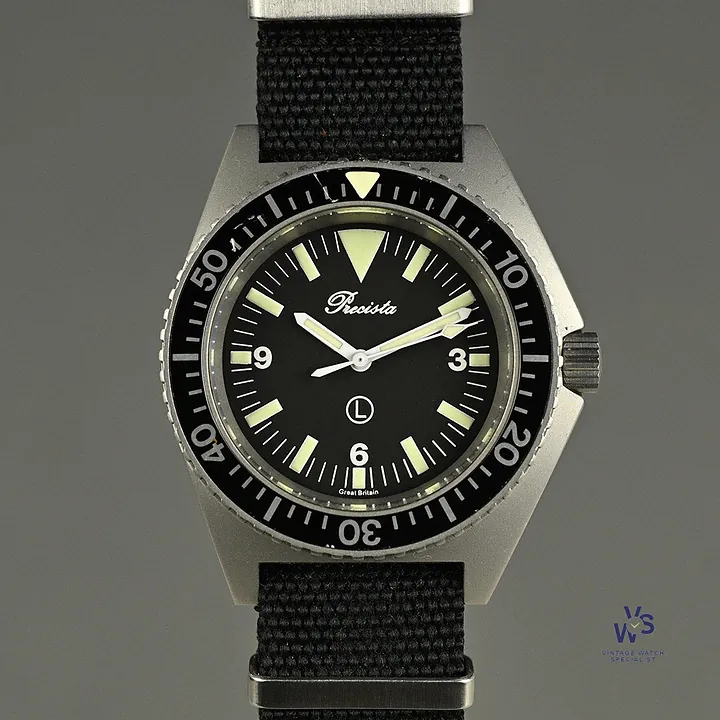
Wristwatches · c. 2011
Precista PRS-18Q 'Military' Diver, Royal Navy Inspired, ref. PRS-18-Q, circa 2011
Vintage Watch Specialist (dealer), United Kingdom

Wristwatches · 1970
Wristwatch by Heno, Switzerland, 1970
Museum Rotterdam
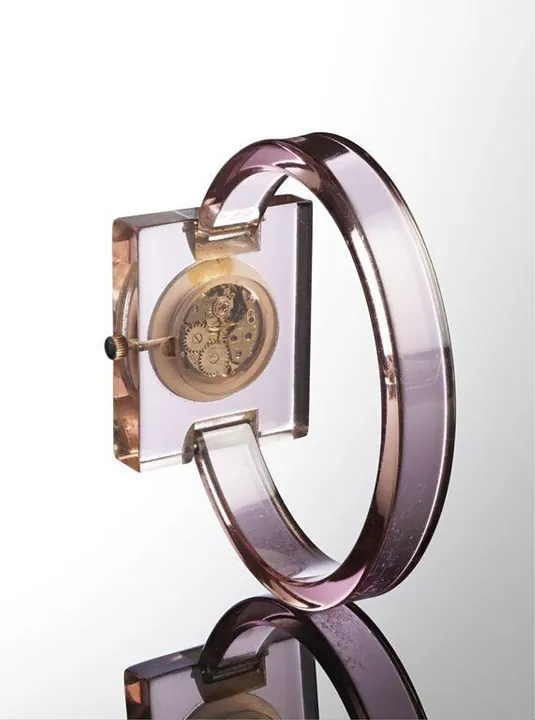
Wristwatches · 1970s
Wristwatch, plastic, by Gucci; Italy, 1970s.
Victoria and Albert Museum, London
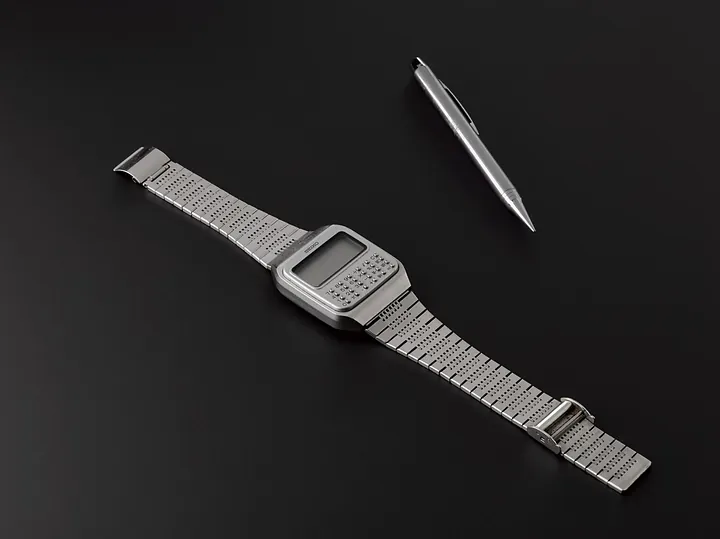
Wristwatches · 1978
Calculator wristwatch by Suwa Seikosha Co. Limited, Japan, 1978
Science Museum Group, London
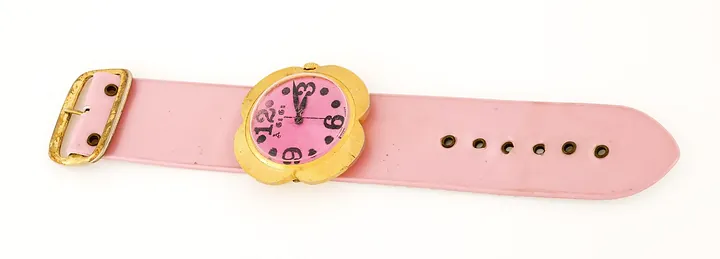
Wristwatches · 1980
Wristwatch, 1980 (no. 71413)
Museum Rotterdam