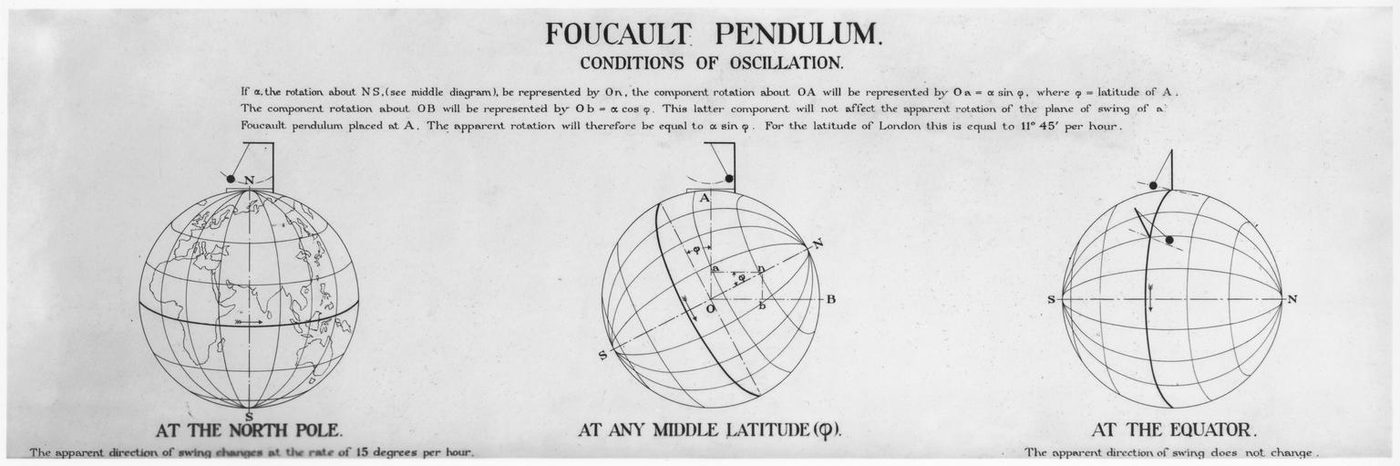
Movements & Components · Demonstration models: foucault pendulum demonstrations
Pendulum / regulating part by Royal College of Science, Great Britain; Science Museum, England, 1883
- Maker / attribution
- Royal College of Science, Great Britain; Science Museum (maker); Royal College of Science (maker); Science Museum (maker)
- Date
- 1883
- Historical period
- Industrial Revolution (1850 – 1900)
- Country of origin
- England
- Place
- London, London, England, United Kingdom
- Object type
- Demonstration models: foucault pendulum demonstrations
- Dimensions
- overall: 500 x 2230 x 930 x 160 mm
- Holding institution
- Science Museum Group, London
- Accession / object no.
- 1883-8
- Credit line
- Normal School of Science (Astronomical Laboratory)
- Catalogue title (original)
- Foucault Pendulum for demonstrating the Earth's rotation, with stand, divided arc, lapse clock, storage box
Record summary
Held and catalogued by Science Museum Group, London (object number 1883-8), this is a demonstration models: foucault pendulum demonstrations by Royal College of Science, Great Britain; Science Museum, made in London, London, England, United Kingdom, dated 1883. The Atlas places it in the Industrial Revolution period (1850 – 1900) of its Movements & Components collection. Recorded dimensions: overall: 500 x 2230 x 930 x 160 mm. The record is illustrated with 4 photographs.
Assembled from the source record's structured fields. Dates and attributions are given as the source states them; where a field is missing the Atlas leaves it blank rather than estimating.
Catalogue description
Science Museum Group description
Made in the workshops of the Royal College of Science (now Imperial College) in 1883, this Foucault Pendulum demonstrated the rotation of the Earth at the Science Museum until1988. Designed by Prof. Brian Pippard, its replacement that runs continually so avoiding the need to re-swing the pendulum each hour. In this 1988 view, the pendulum is shown being re-set by Rebecca Walker a member of staff. It is held at the end of its swing by a leather strap with cord attached to a hook. Once motionless, the pendulum is released by burning through the thread with a match. The French physicist Leon Foucault, who conceived the display, first demonstrated it at the Parisian Patheon in 1851.
Historical context
Industrial Revolution (1850 – 1900)
American interchangeable-parts manufacture; railroad time standards; Swiss and German factory systems.
Standardised calibres, interchangeable parts and machine tools allowed movements to be mass-produced in American and Swiss factories.
Read the period in the timelineMore movements & components from this periodEarlier: Precision & Scientific Horology
Atlas type guide
Pendulums, balances and balance springs
The oscillator determines a timekeeper's rate. Galileo observed the near-isochronism of the pendulum; Huygens applied it to clocks in 1656 and the balance spring to watches in 1675. Temperature changes alter pendulum length and balance-spring elasticity, so eighteenth- and nineteenth-century makers devised compensation: Graham's mercury pendulum, Harrison's gridiron, bimetallic split balances for chronometers and watches, and Charles-Édouard Guillaume's invar and elinvar alloys (Nobel Prize in Physics, 1920).
Balance springs evolved from flat spirals to Breguet's overcoil (1795) and helical springs for chronometers; twentieth-century alloys (Nivarox) and twenty-first-century silicon springs largely solved temperature and magnetism problems.
What to look for
- Compensated pendulums: multiple rods of steel and brass (gridiron), jars of mercury, or wood and invar rods.
- Bimetallic split balances with screws, versus monometallic (Glucydur) solid balances.
- Overcoil (Breguet) or flat hairsprings; regulator index arms.
- Material names stamped on the balance or spring (e.g. 'Nivarox', 'Glucydur').
Dating clues
- Gridiron and mercury pendulums: from c. 1720–1730.
- Cut bimetallic balances: c. 1780–1950.
- Monometallic balances with self-compensating springs: after c. 1930.
General guidance written by the Atlas editors about this kind of object. It is not a statement about this particular piece; for that, rely on the source record above and on physical examination.
Read next:Balance spring (hairspring)Anchor (recoil) escapement
Related records
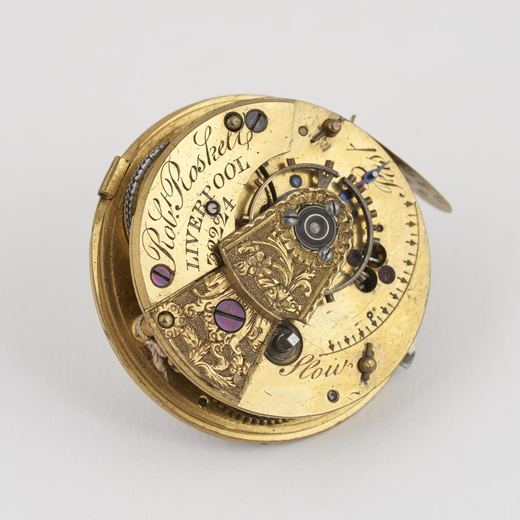
Movements & Components · 1840-1900
English lever, by Roskell, "banking" on escape wheel arbor, no.32224, 1840-1900
Science Museum Group, London
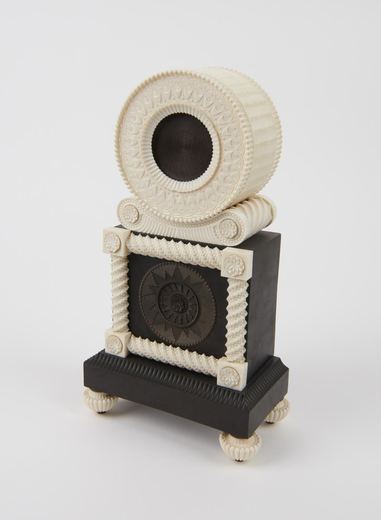
Movements & Components · 1843-1884
Ivory and blackwood clock case, by Holtzapffel and Company, London, England, 1843-1884
Science Museum Group, London
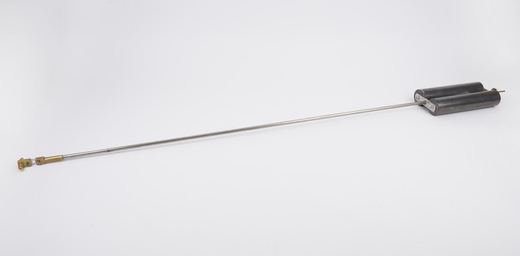
Movements & Components · 1844-1929
Pendulum from the electric master clock (no.663, seconds pendulum model), by Robert Mann Lowne, England, 1844-1929
Science Museum Group, London
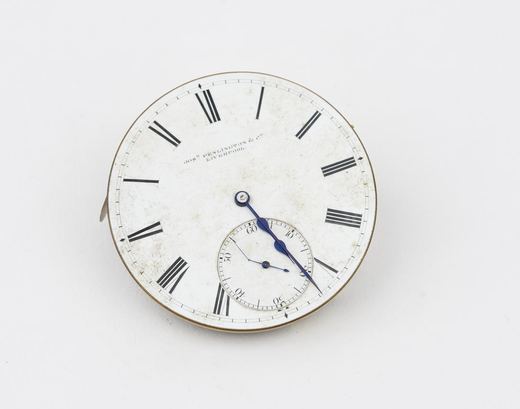
Movements & Components · 1848-1903
Watch movement by Josh Penlington, Liverpool, No.15231, with bi-metallic compensation balance and overcoil hairspring
Science Museum Group, London
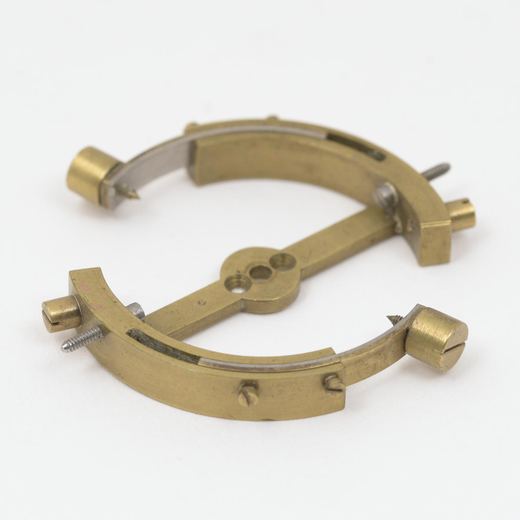
Movements & Components · 1850-1900
Compensation balance with sliding bi-metallic affixes
Science Museum Group, London
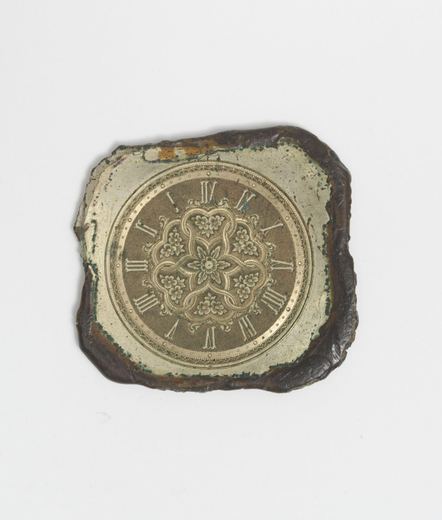
Movements & Components · 1850-1880
Gilt copper, electrotype, from original engraving by Jean Julien Faucherre, London, 1850-1880
Victoria and Albert Museum, London
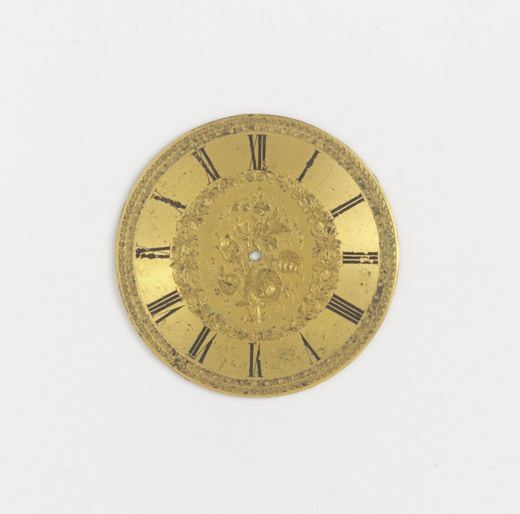
Movements & Components · 1850-1880
Gilt-metal, engraved by Jean Julien Faucherre, London, 1850-1880
Victoria and Albert Museum, London
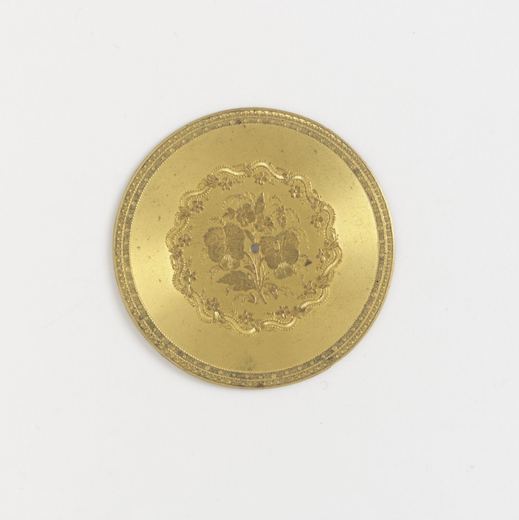
Movements & Components · 1850-1880
Gilt-metal, engraved by Jean Julien Faucherre, London,1850-1880
Victoria and Albert Museum, London